 Chromium Logo PNG
The Chromium logo reflects the browser’s technical reliability and openness. Its minimalist design highlights simplicity, speed, and user-friendliness.
Chromium began in 2006 as a confidential browser project inside Google, led by Sundar Pichai and backed by Larry Page and Sergey Brin. The team recruited engineers from Mozilla and Apple, including WebKit specialists. Their work centered on isolated tabs, a multiprocess architecture, stronger crash protection, and the V8 JavaScript engine, designed to run increasingly complex web applications faster.
On September 1, 2008, Scott McCloud’s technical comic introduced the browser’s architecture. Chrome entered public beta for Windows on September 2, while the source code was released under the Chromium name. The open model allowed outside developers to inspect, modify, and reuse the code. Versions for Mac and Linux followed in 2009, alongside the announcement of Chrome OS and a growing ecosystem of extensions and web applications.
In 2013, Chromium replaced WebKit with Blink after technical differences with Apple made joint development harder. Later releases added WebRTC, WebAssembly, and Progressive Web Apps, expanding support for browser-based communication, demanding software, and installable services.
In December 2018, Microsoft announced that Microsoft Edge would abandon EdgeHTML and move to Chromium. The rebuilt browser launched in January 2020 and became part of the standard Windows environment. By then, Opera, Brave, and Vivaldi used the same foundation, while Android relied on related Chromium code for mobile browsing.
Meaning and History
What is Chromium?
It is a free, open-source browser engine used to develop web browsers. Developers can modify the code freely and add custom features as needed. Many popular browsers use this engine independently of the original platform. Regularly updated, it serves as a testing ground for innovations that are later incorporated into commercial products.
2008 – 2011
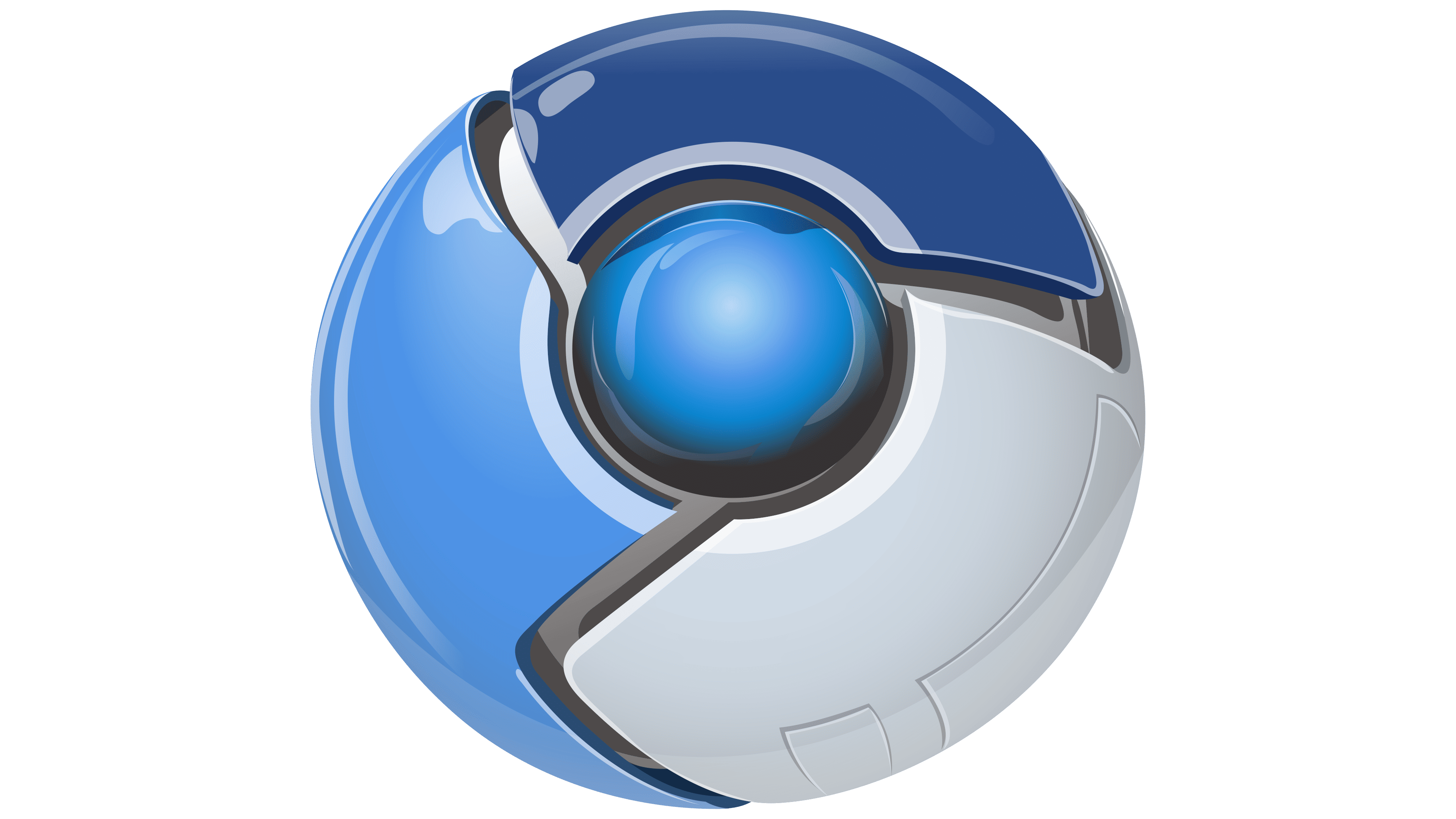
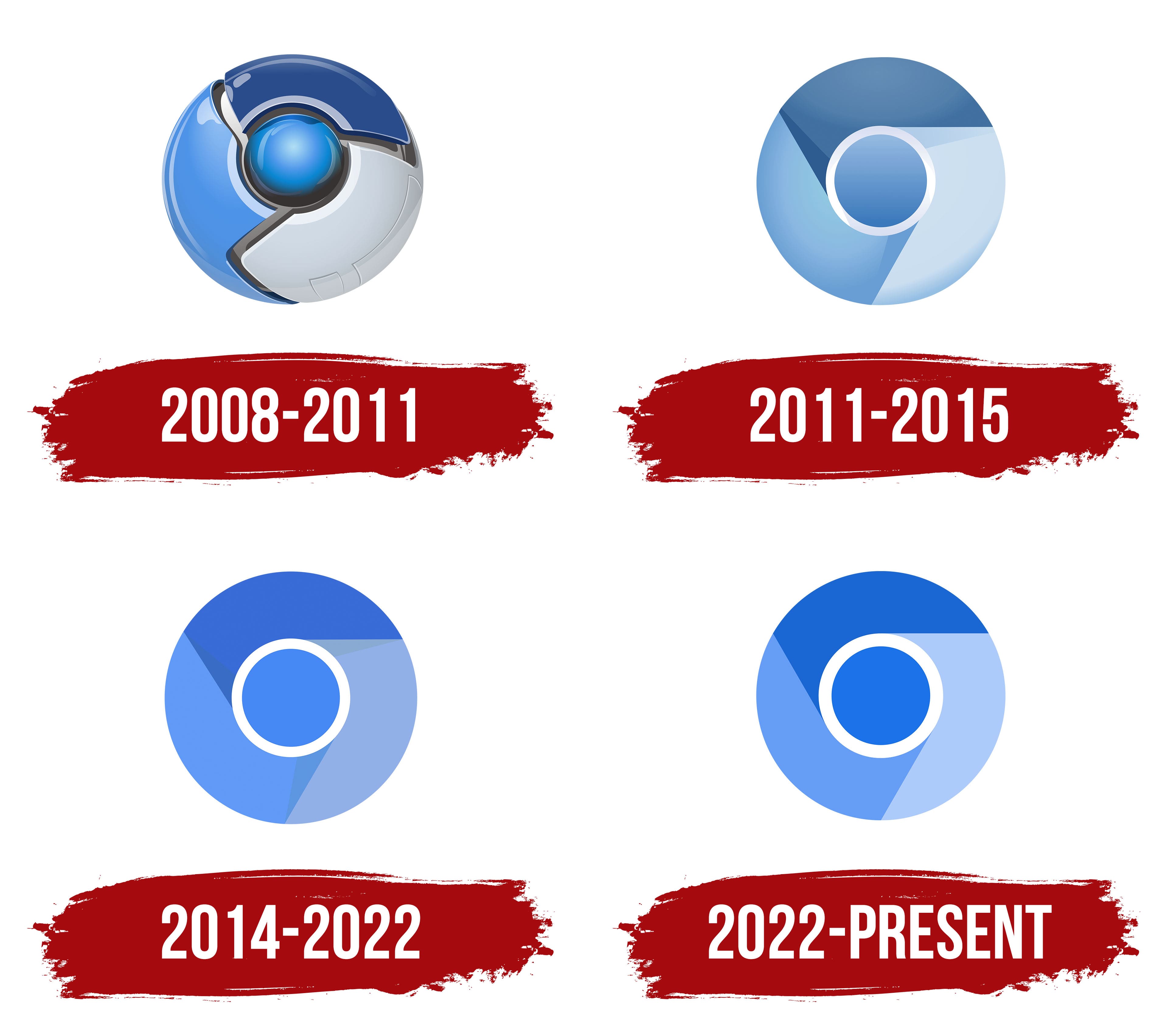
The first Chromium project logo is a three-dimensional graphic composition depicting a spherical object with metallic and glass textures. The emblem’s structure consists of three complexly shaped segments radiating from a central blue sphere, creating a visual effect of rotation or a swirling motion.
The logo’s forms are characterized by smooth lines and a glossy surface, stylized to resemble metallic components of an intricate mechanism. The detailed rendering of shadows, highlights, and reflections creates a sense of volume. It realistically renders glass and metal textures, emphasizing the project’s technical focus and innovation.
The color scheme combines cool blue and gray tones. The use of gradients ranging from light blue to indigo in the central sphere, along with light gray and dark blue shades in the outer elements, symbolizes code transparency, openness, and accessibility for the developer community. This was an intentional departure from the bright color palette of the original Google Chrome logo toward a more technological and professional perception.
The logo was created by Google Chrome’s in-house UX team, likely with the involvement of designers Jon Wiley, Glen Murphy, and Steve Rura, who also worked on the original Chrome identity. The graphics were technically produced in Adobe Illustrator and Photoshop, with an emphasis on achieving high detail and realism, which the company referred to as an “orb-based identity.”
During its use, the logo achieved strong recognition and popularity in the open-source community thanks to its striking 3D visualization and symbolic depth. Despite later stylistic changes, the original Chromium emblem remains popular in unofficial builds. It is still highly regarded by professional designers and developers.
2011 – 2015

The new Chromium logo for this period was created as part of a major visual identity redesign by Google Chrome’s UX team, led by Jon Wiley with contributions from Steve Rura and Glen Murphy. In March 2011, the emblem replaced the previous glossy, three-dimensional version with a completely new flat design.
The logo is a circular graphic mark divided into three segments in different shades of blue. The central area is rendered in light blue with a soft radial gradient that smoothly transitions to a richer blue toward the edges. The three segments are formed using sharp diagonals and straight lines, establishing a dynamic visual rhythm that underscores the browser’s speed, lightness, and simplicity.
Although the image appears flat, the logo is not entirely two-dimensional. The gradients used in the color transitions between the segments and the central part create a sense of depth, highlighting the transition from skeuomorphism to a fully flat UI. This stylistic approach is described as a “semi-flat” design, reflecting a balance between realism and minimalism.
The palette of blue shades reflects the technical nature of the Chromium project. It is associated with transparency, trust, and openness.
This version of the logo was first introduced in Chromium 11. It was used in both the Chromium browser and Chromium OS until the next update in 2014. It was part of a broader visual refresh across Google’s products (Google Apps, Android 4, Gmail), supporting the company’s unified design strategy.
2014 – 2022

The logo was the result of a consistent simplification of the visual concept, continuing the brand’s evolution in line with Google’s Material Design philosophy. The new mark is a circular geometric object divided into three segments in different shades of blue.
The shapes of the segments are constructed with clean, precise lines, forming sharp wedges that point toward a central circle outlined in white. The central area, in a lighter shade of blue, became smaller and visually lighter than in previous versions due to the narrower white border and the complete removal of gradients and shadows. These adjustments align with the principles of absolute flat design introduced by Google in 2014.
The color palette, chosen by Google Chrome’s UX team led by Sebastien Gabriel, with contributions from Steve Rura and Glen Murphy, includes three shades of blue. The primary deep blue (#4285F4) is used in the top segment, evoking the brand’s technological and authoritative character. The light blue (#AECBFA) on the right emphasizes openness and lightness. In contrast, the intermediate blue (#669DF6) on the left harmonizes the elements, ensuring visual unity in the composition.
The choice of blue symbolizes trust, reliability, and professionalism, reflecting Chromium’s open-source nature and its role as a project for developers and the technical community.
2022 – today
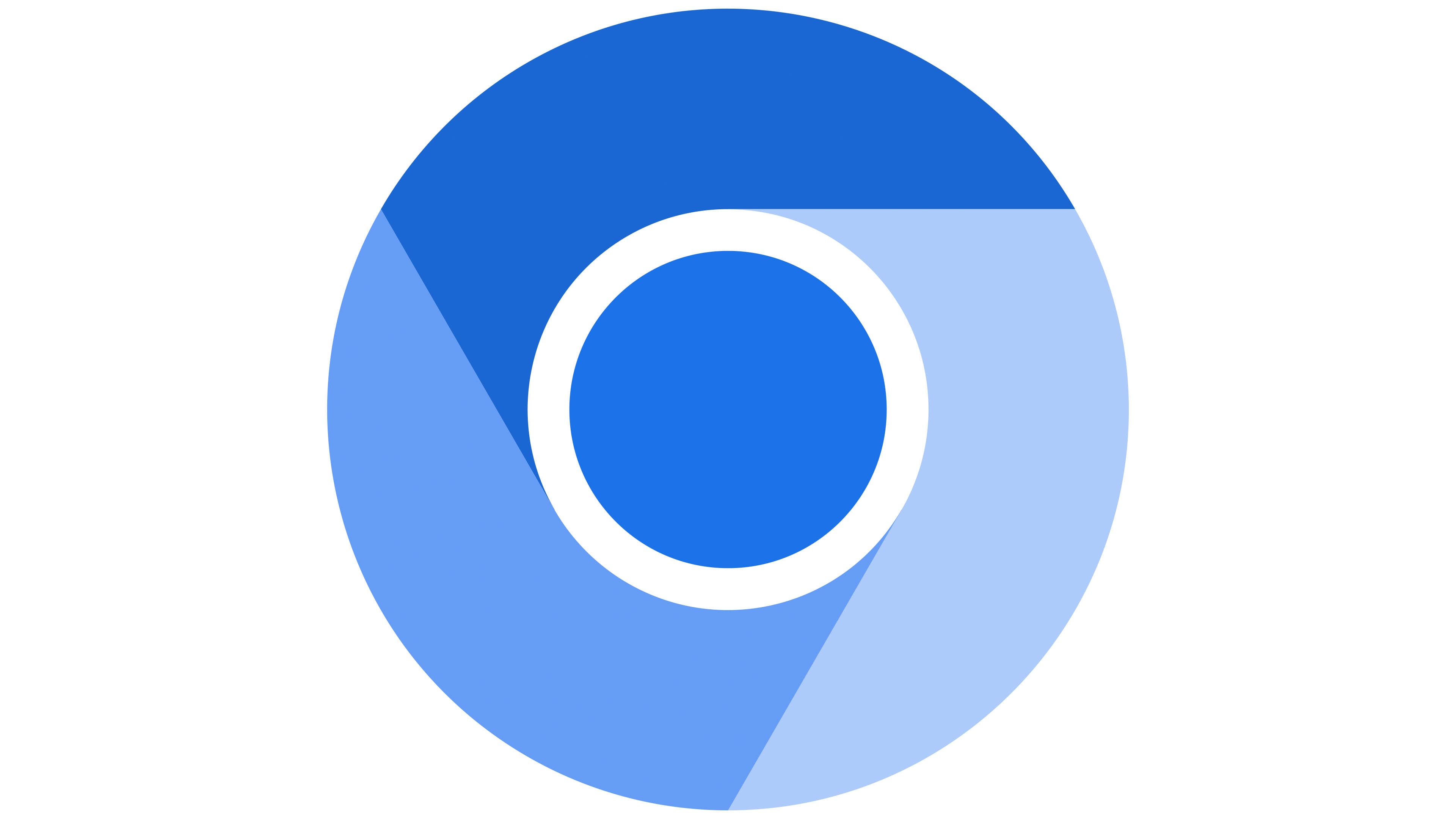
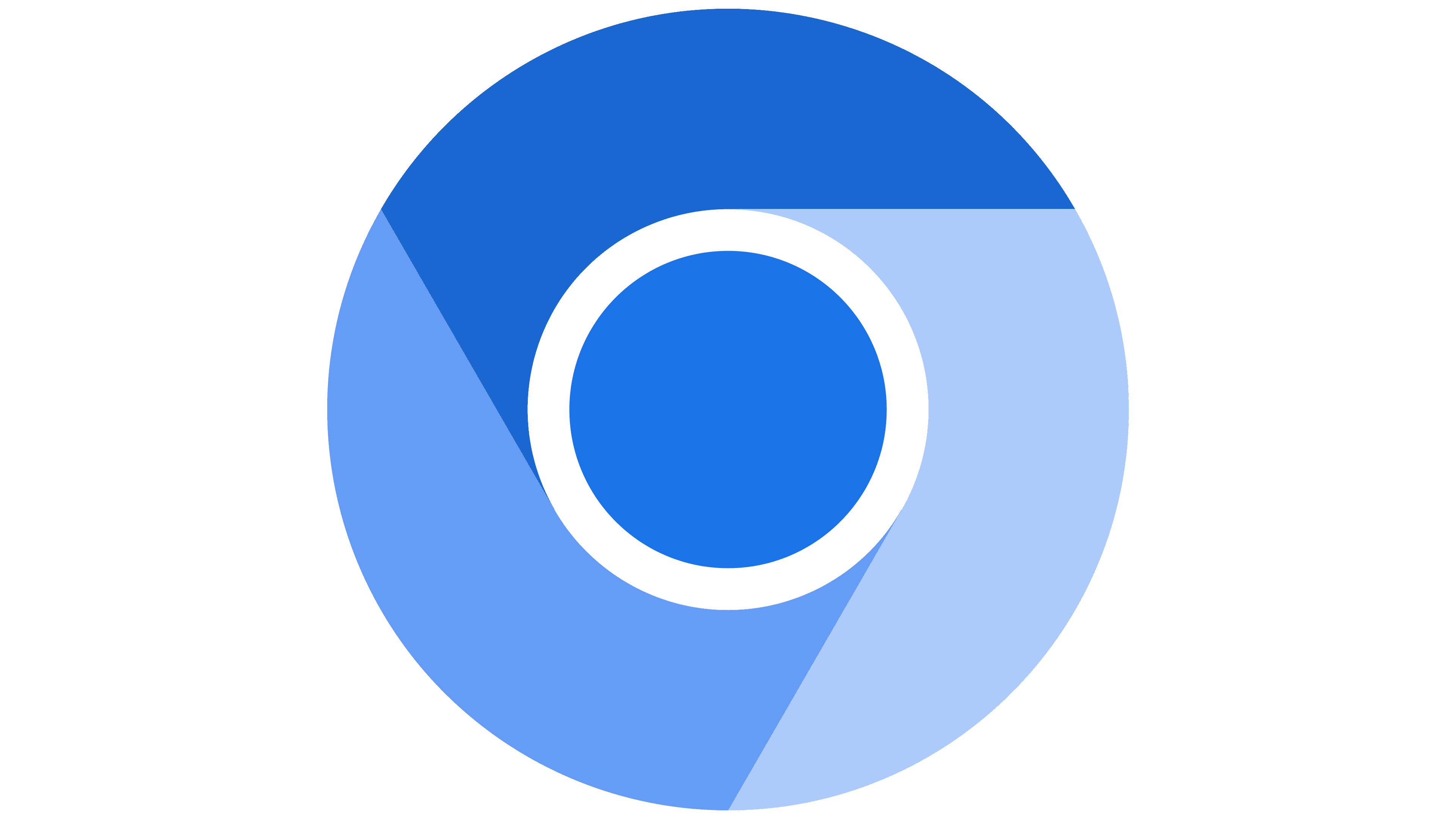
The Chromium logo, introduced in 2022, retained the geometric composition and color structure of the previous version but underwent significant optimization and stylistic refinement. The redesign, carried out by Google Chrome’s in-house UX team under the leadership of Sebastien Gabriel, was aimed at adapting the image for high-resolution modern Retina and HiDPI displays.
The shape is a perfect circle divided into three asymmetrical segments. The proportions of the segments were slightly adjusted to improve optical balance and ensure visual harmony when scaled. As a result, the segments gained a more balanced geometry with clean, precise lines, emphasizing minimalist aesthetics and ease of perception.
The central element, a small blue circle, is surrounded by a thinner white ring with a smooth contour. Reducing the ring’s thickness diminished the central area’s visual dominance, bringing it into balance with the rest of the composition and highlighting the design’s overall minimalism.
The color palette remains within blue tones but has been stripped of gradients and volumetric effects, moving fully into an absolutely flat design. The central circle is in bright blue (#2684FC), the top segment in deep saturated blue (#1A73E8), the left segment in medium blue (#42A5F5), and the right segment in the lightest blue shade (#AECBFA). The removal of gradients and shadows symbolically reflects the project’s openness, clarity, and transparency while underscoring the brand’s technological and practical character.
This update to the logo’s color and geometric logic ensures optimal display and sharpness across all device types and screens, maintaining consistent recognizability and seamless integration into Google’s digital environments.