 GNU Logo PNG
The GNU logo emphasizes the idea of free software. Its simple graphic design symbolizes the project’s independence and its role in promoting open-source code.
GNU began in 1983 when MIT programmer Richard Stallman announced a free Unix-compatible operating system. A printer maker refused to provide the source code needed to fix a bug. On September 27, 1983, he announced the project through Unix mailing groups. Its recursive name meant “GNU’s Not Unix.”
Stallman left MIT in January 1984 to keep the work independent. GNU Emacs became the first widely adopted program, followed by GCC. This compiler let people build software without proprietary tools. In 1985, he established the Free Software Foundation and published the GNU Manifesto, explaining the ethical basis of software freedom.
The first GNU General Public License appeared in 1989. Its copyleft terms allowed users to study, run, modify, and redistribute code while requiring derivative works to retain the same freedoms. By the early 1990s, the project had utilities, libraries, bash, and a compiler. Still, its Hurd kernel, under development from 1990, progressed slowly. Combining these components with Linux produced a working free operating system.
GNOME started within the project in 1997 as a free desktop alternative to KDE, whose Qt library then used licensing considered insufficiently free. It later became a standard desktop in Debian distributions. GPL version 3 arrived in 2007 with protection against hardware restrictions on modified software. Stallman left leadership posts in 2019 after public criticism and returned to the FSF board in March 2021, prompting another dispute.
Meaning and History
What is GNU?
This project aims to develop a free, open-source Unix-compatible operating system. The system comprises core components, including a compiler, text editors, a command shell, and other tools. Another famous open-source OS, Linux, later emerged from its development. The project’s primary goal is to enable users to freely use, modify, and distribute software without restrictions on commercial licenses.
1996 – 2003
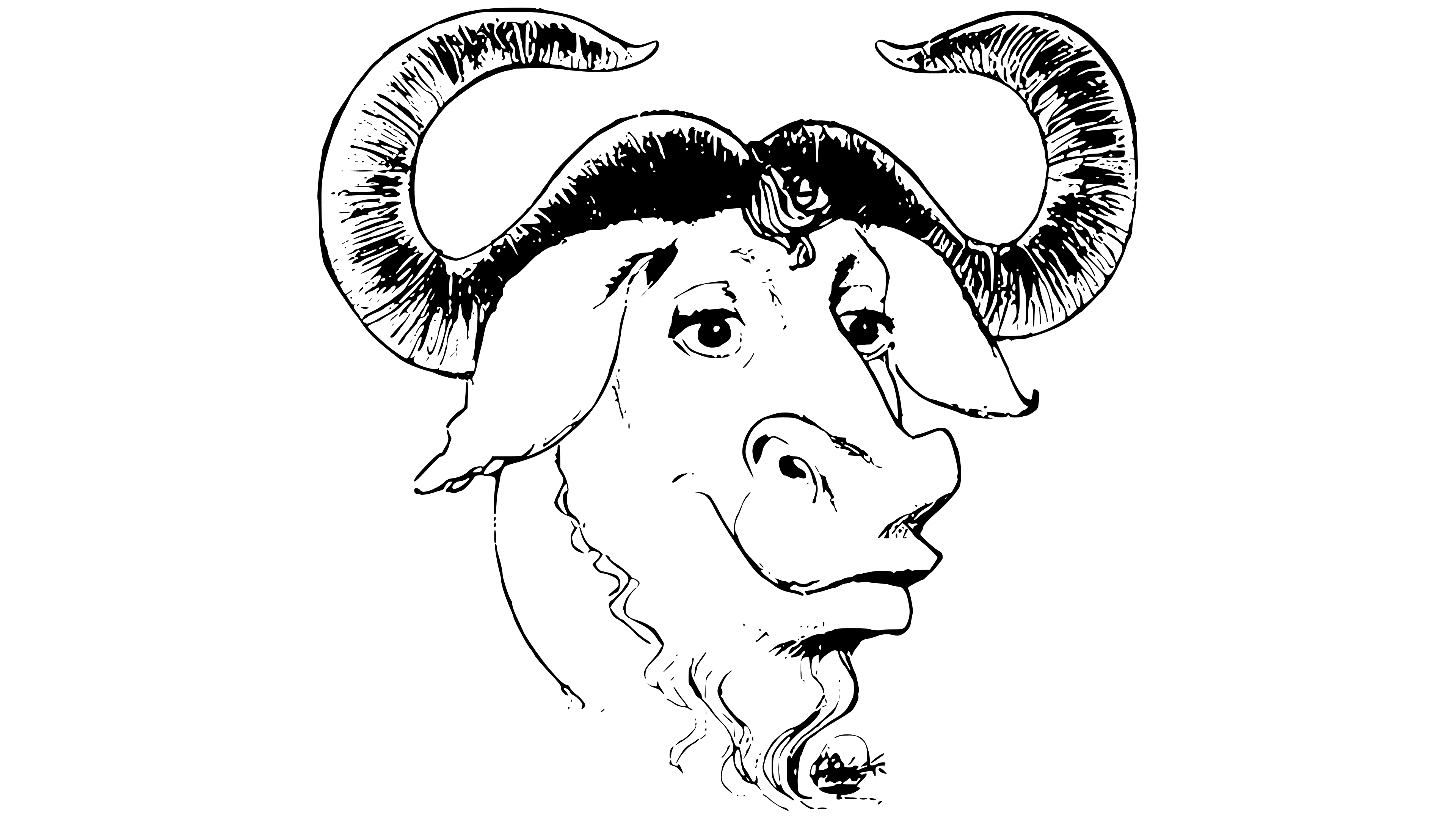
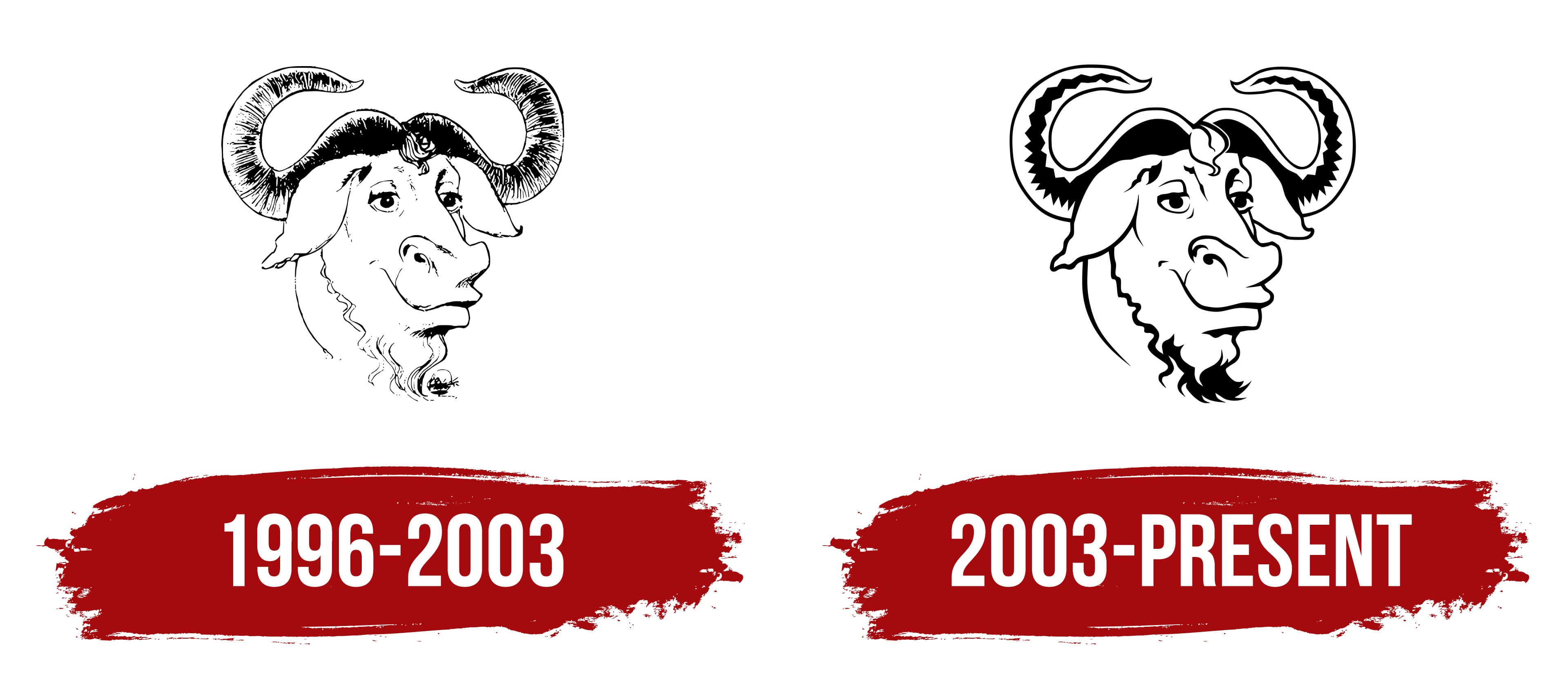
The GNU logo featuring a gnu antelope was rendered in an artistic pencil-drawing style with a soft texture and detailed contours. The visual concept presented the animal’s profile facing right, with emphasis on the expressive, carefully drawn horns. Light, elegant lines defined the main outline of the head, while the horns were highlighted with subtle shading to accentuate their complex shapes and curves. The absence of color gave the composition a natural feel, preserving its handcrafted quality and evoking associations with illustrations from naturalist reference books.
The symbolism of the mark reflects the project’s name, “GNU” (“GNU’s Not Unix”), in which the gnu antelope serves as a visual allegory for both the word and the philosophy of the free software movement. The animal was intentionally chosen, as its name resembles the project’s acronym, underscoring the informality, openness, and originality of the developers’ approach.
Artist Etienne Suvasa created the original drawing, which Peter Gerwinski later refined to adapt the image for digital formats and typography. The updated version became cleaner and more contrasted while retaining the pencil-sketch style and emphasizing the artistic and non-commercial nature of GNU’s visual identity.
The logo was used in GNU documentation, official materials, and informational resources, reinforcing the project’s positioning as a community built on transparency, creative freedom, and collaboration. The pencil-drawn image proved to be an expressive tool for conveying the project’s core values and distinguishing it from other technological initiatives.
2003 – today

The updated GNU mark is a monochrome design of a GNU antelope’s head executed in bold, flowing lines. Compared to the earlier pencil version, the new visual concept is more streamlined, with cleaner graphics, a smoother silhouette, and more expressive contours.
Special attention is given to the horns, which become the primary visual focal point: large and wave-like, with sharply defined internal geometric patterns. The horns are drawn with thick lines, conveying strength. The gnu’s facial contours convey a humorous mood, highlighting the symbol’s open and friendly character.
The logo’s color palette is monochromatic, featuring a solid black outline against a white background. The lack of additional colors gives the symbol a tattoo-like quality, creating a strong emotional association with independence and individuality.
The philosophical undertone of the mark is tied to the core principles of the free software movement: freedom, transparency, and collectivism. The gnu, as an animal, symbolizes liveliness, activity, and sociability, resonating with the primary values of the GNU community. The choice of the antelope underscores the project’s ideology, its forward-looking openness to communication, and the exchange of ideas.
This version of the logo is widely used across the Free Software Foundation’s official resources and has become a required element in the branding of documentation, websites, and community materials. Despite numerous unofficial variations (ranging from ASCII art to pixel graphics), the official black silhouette remains the most authentic expression of GNU’s identity, thereby ensuring strong brand recognition and emotional engagement among its audience.