 GE HealthCare Logo PNG
GE HealthCare traces its roots to 1893, when Victor Electric Company was founded in Chicago. After Wilhelm Röntgen discovered X-rays, the company entered the X-ray equipment business in 1896 and expanded quickly. Around the same period, General Electric co-founder Elihu Thomson adapted Edison’s lamp technology to create one of the first commercial X-ray machines.
By 1903, Victor Electric moved production to Milwaukee, where skilled glassblowers helped make glass X-ray tubes. In 1920, Victor Electric merged with General Electric’s X-ray division to form GE X-Ray Corporation. GE already had a key advantage through William Coolidge’s hot-cathode vacuum X-ray tube, which became a standard for decades and was used in portable military X-ray units during World War I.
In 1947, the business moved to West Milwaukee. In 1951, it was reorganized as the General Electric X-Ray Department, later becoming GE Medical Systems. In the 1970s, it became one of the early companies in computed tomography, developing the 7800 series CT scanner. In the same diagnostic imaging market, Siemens was becoming a serious competitor.
In the 1980s, GE entered MRI and became a major U.S. supplier of commercial MRI systems. In 1983, the Signa 1.5T scanner set a benchmark for image quality, and in 1998, GE Medical Systems bought Marquette Electronics. In 2004, GE acquired Amersham plc for $9.5 billion and formed GE Healthcare. On January 4, 2023, GE Healthcare became an independent Nasdaq-listed company under the ticker GEHC, with operations in more than 160 countries, about 51,000 employees, and over 4 million installed units of equipment.
Meaning and History
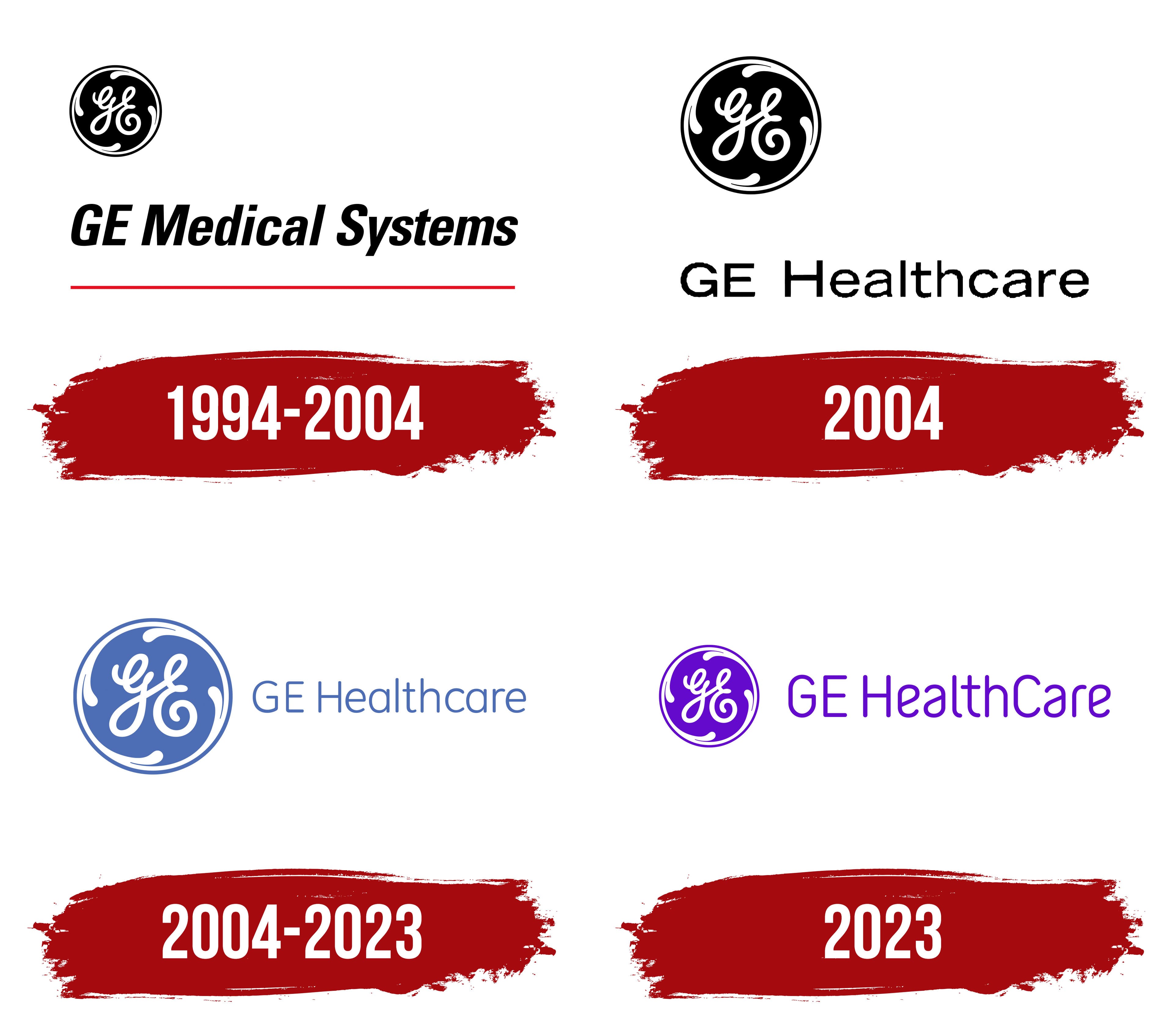
1994 – 2004

2004

2004 – 2023

2023