


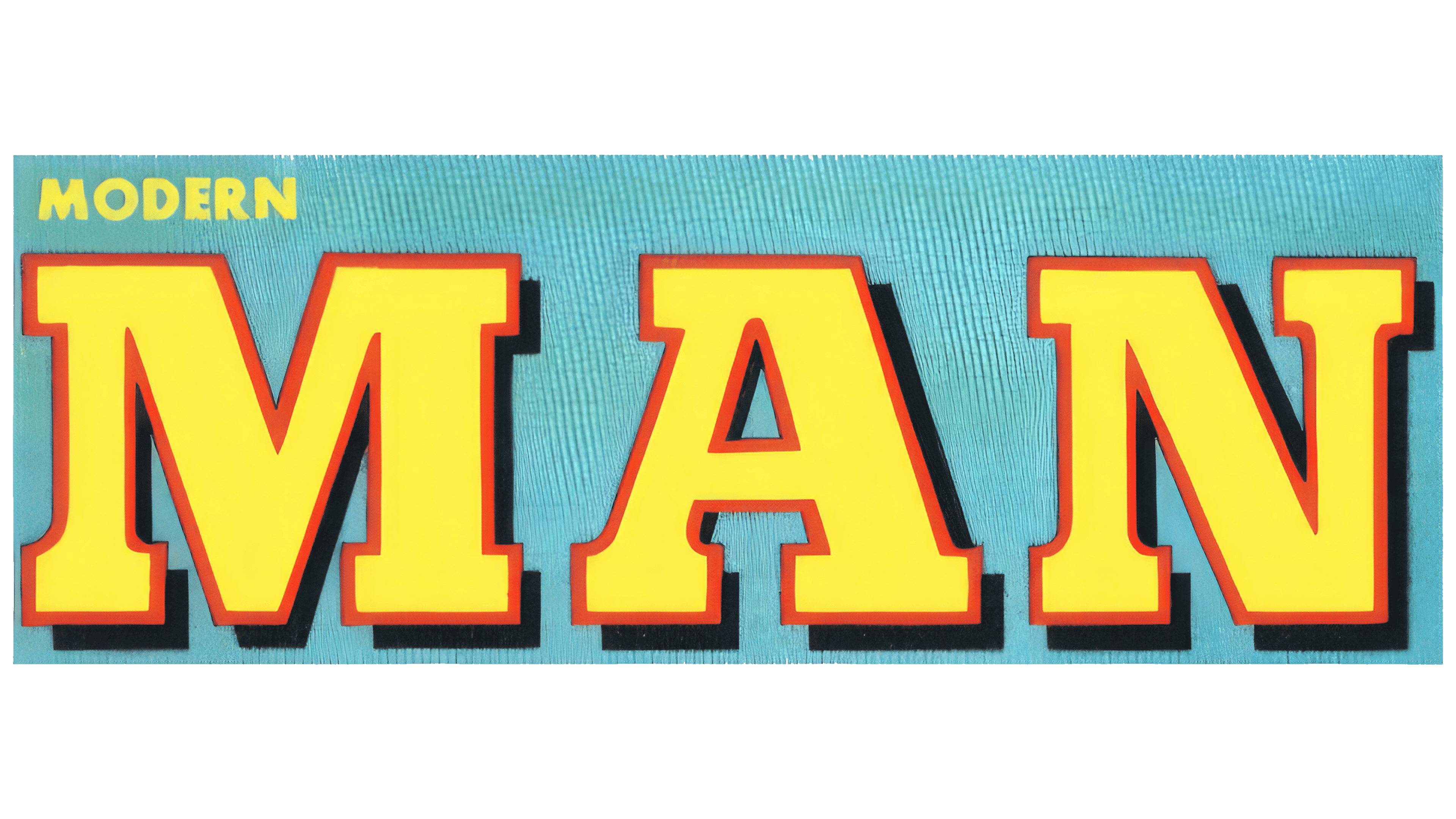
 Modern Man Logo PNG
The Modern Man logo emphasizes men’s style and contemporary identity. The concise design reflects the brand’s focus on current trends and everyday needs, offering practical solutions and relevant recommendations for men.
Modern Man debuted in July 1951, published by Publisher’s Development Corporation. The first issue had 54 pages, measured eight by ten and a half inches, and sold for 50 cents. Its editorial mix reflected the postwar male magazine market, combining technology, weapons, travel, celebrities, and photographs of women in a format aimed at readers interested in both information and entertainment.
In 1952, the magazine introduced the Uncovered Cover Girl feature, expanding photo sessions with models who appeared on its covers. The same year brought the first Modern Man Annual, collecting material on cars, firearms, and photography. During the 1950s, the magazine became closely associated with pin-up culture. It featured well-known figures including Bettie Page and Italian actress Gina Lollobrigida.
During the 1960s, Modern Man broadened its subjects to match changing interests. Articles covered endurance racing such as the 24 Hours of Le Mans, the Apollo space program, astronauts, entertainers, and other public figures. Competition intensified after Playboy entered the market in 1953 with stronger photography, prominent writers, and interviews, while Penthouse later added further pressure in the same publishing sector.
Modern Man continued publication through January 1976 and completed 26 volumes. Over roughly 25 years, its pages tracked shifts in American male interests from postwar consumer culture and pin-up photography to automobiles, space exploration, sport, and popular entertainment.
Meaning and History
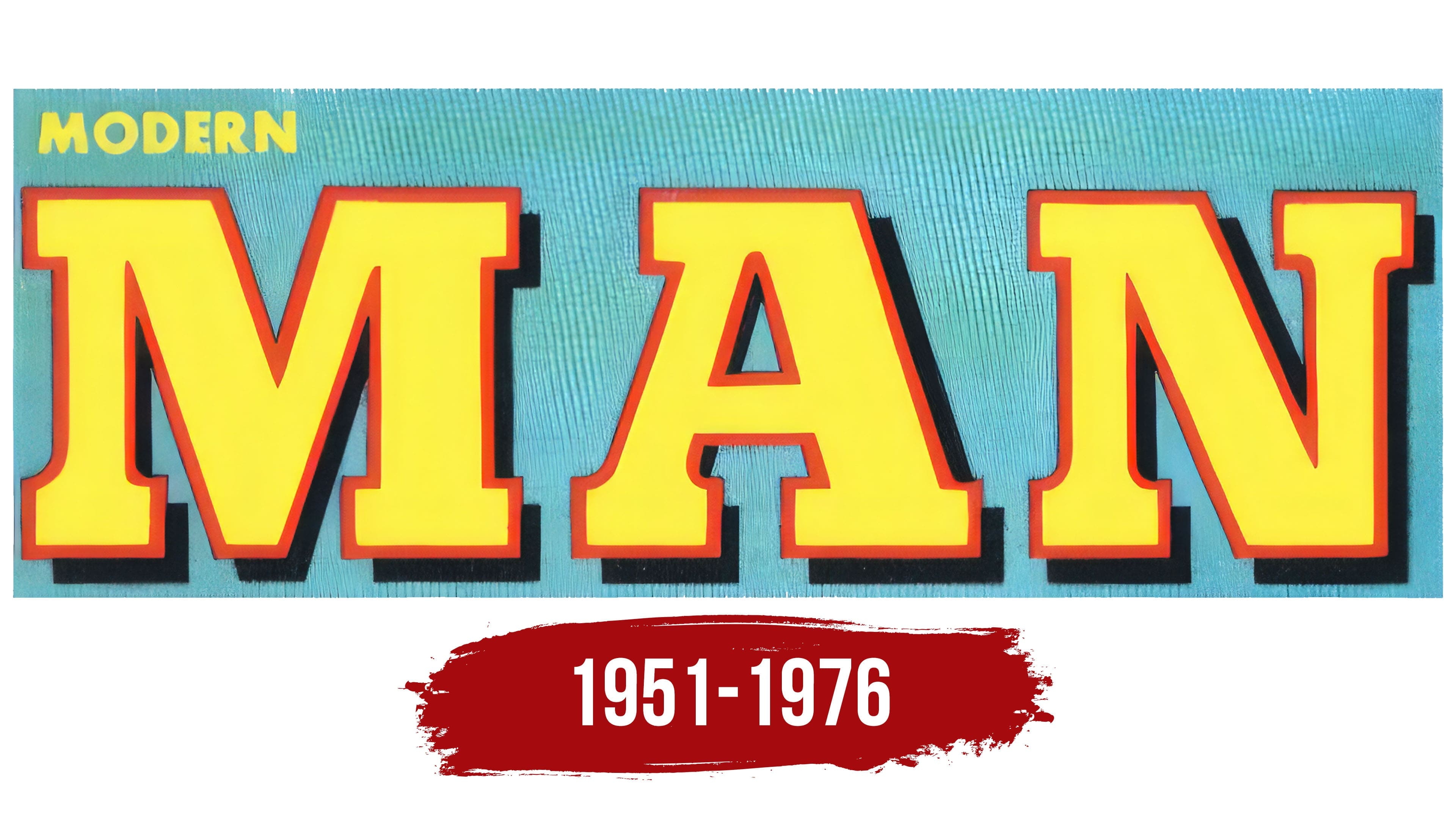
What is Modern Man?
It was an American men’s magazine from the mid-20th century, a predecessor to today’s well-known publication. Content included pin-up photos, car reviews, sports, adventure, and men’s advice. The magazine avoided excessive explicitness, striking a balance between glamour and practical subjects. Despite its broad popularity, it ultimately failed to withstand competition and ceased publication.
1951 – 1976
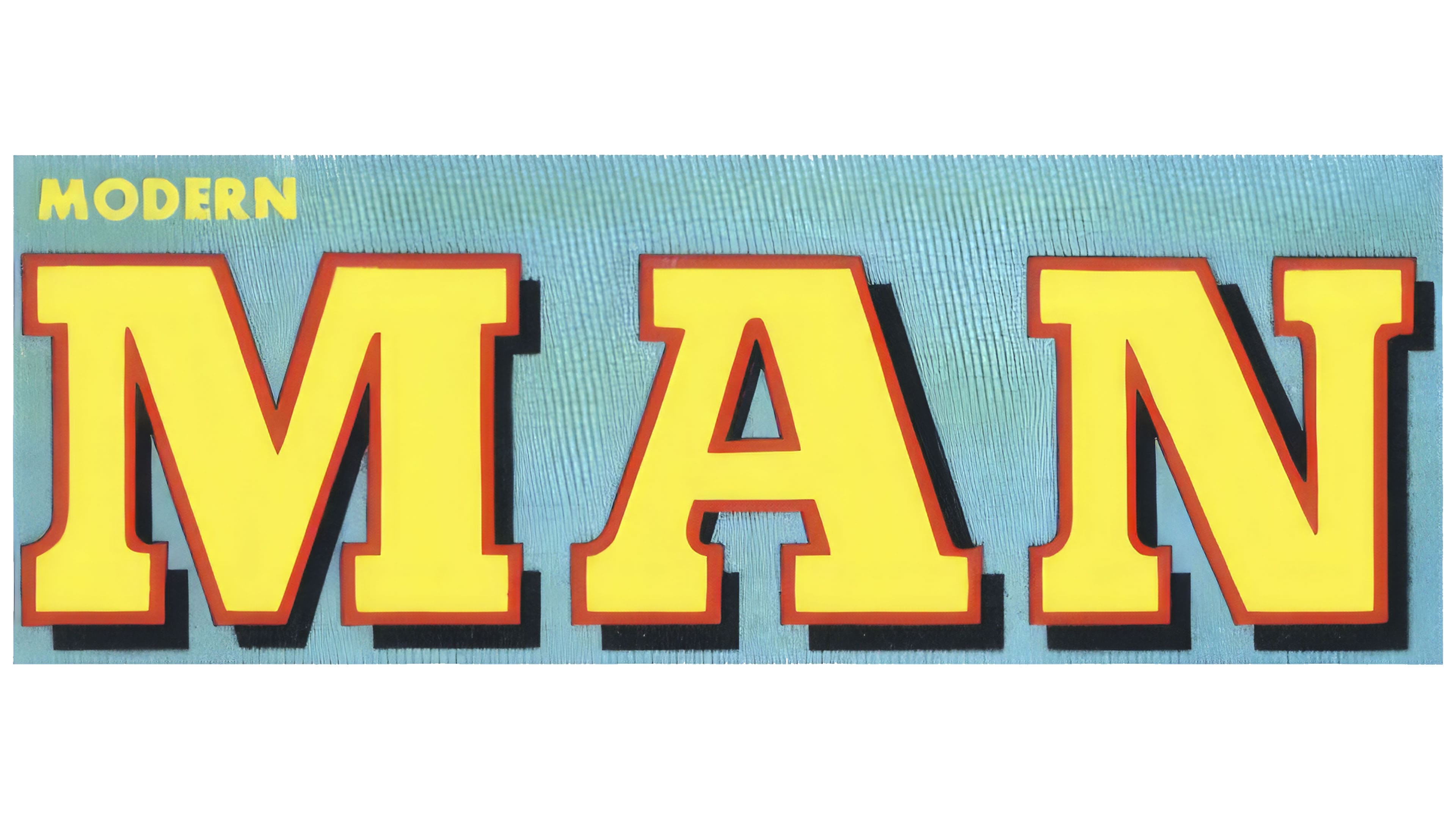
The Modern Man magazine logo debuted with the first issue in July 1951, when it began publication under the Publisher’s Development Corporation. The mark remained virtually unchanged until the magazine ceased publication in December 1976, becoming an iconic visual element and a reflection of male culture in the postwar decades.
The typographic portion of the logo featured massive uppercase letters with prominent extended serifs, reminiscent of decorative serif typefaces from the mid-20th century. The letterforms were large and dense, outlined with a thin red border and an additional black shadow, creating a sense of volume and depth. This style of typography was characteristic of American advertising posters and magazine design of the 1950s and 1960s, capturing the look and spirit of the era.
The logo’s color palette was rich and high-contrast: large yellow letters with a red outline stood out vividly against a muted blue background. This color combination was typical of postwar American advertising and pop culture, symbolically conveying confidence, boldness, and directness, qualities that aligned with the magazine’s themes of car culture, pin-up photography, soft erotica, and the celebrities of the time, including Marilyn Monroe, Jayne Mansfield, and Mamie Van Doren.
In the upper-left corner of the emblem, the word “MODERN” appears in a simple, smaller sans-serif typeface, serving as an additional identifier and emphasizing the magazine’s contemporary content. This typographic choice enhanced the contrast between the publication’s name and the emblem’s overall aesthetic, merging classic masculinity with the new lifestyle that emerged in the 1950s and 1970s.
The Modern Man logo served a dual purpose: it was a striking element on the covers and a visual representation of the era’s cultural identity, combining retro aesthetics with new trends in perceptions of masculinity and the lifestyles of mid-20th-century men.