


 Teletoon Logo PNG
The Teletoon logo became a key element of the channel, seamlessly reflecting its bilingual nature and character. Initially created as a space for animation fans in both French and English, the channel brought together the efforts of several media companies to form a unique platform for creativity, experimentation, and vibrant ideas.
Teletoon launched in Canada in 1997 as a joint venture involving YTV, Shaw Communications, Astral Media, and Family Channel. Built for the country’s bilingual television market, it broadcast animation in both English and French. Its early schedule combined new series with classic cartoons from Canada and abroad, giving the channel a broad family audience.
In 2000, Teletoon introduced Card Warriors as its first original animated series. From 2001 to 2003, the network increased original production and worked with independent Canadian studios on new programs. Teletoon Retro followed in 2004 as a separate service for older animated shows, extending the brand toward viewers interested in classic titles.
The network launched an online platform in 2007, adding streaming access beyond traditional television. Ownership changed after Bell Media and Astral Media announced a merger in 2012, completed in 2013 following regulatory approval. From 2013 to 2015, the channel revised its schedule and visual identity under new management while continuing to carry Canadian animation.
Between 2016 and 2018, Teletoon expanded through social media and streaming platforms. From 2019 to 2022, it adjusted programming to changing viewing habits and continued supporting new animated productions. By 2023, the channel had spent more than 25 years as a major outlet for animation in Canada, with original series, imported programs, digital distribution, and long-running ties to local studios and creators nationwide.
Meaning and History
What is Teletoon?
This Canadian television network broadcasts animated content for viewers of all ages. During the day, it airs entertaining and educational cartoons for children, while in the evening, it features programs for adults, including more complex and artistic animation projects. The network actively supports local animators and producers by providing them with a platform to showcase their work. The broadcast includes both well-known international cartoons and original Canadian animation. It is a place where viewers can enjoy a variety of genres, from classic cartoons to modern stories created by Canadian talent.
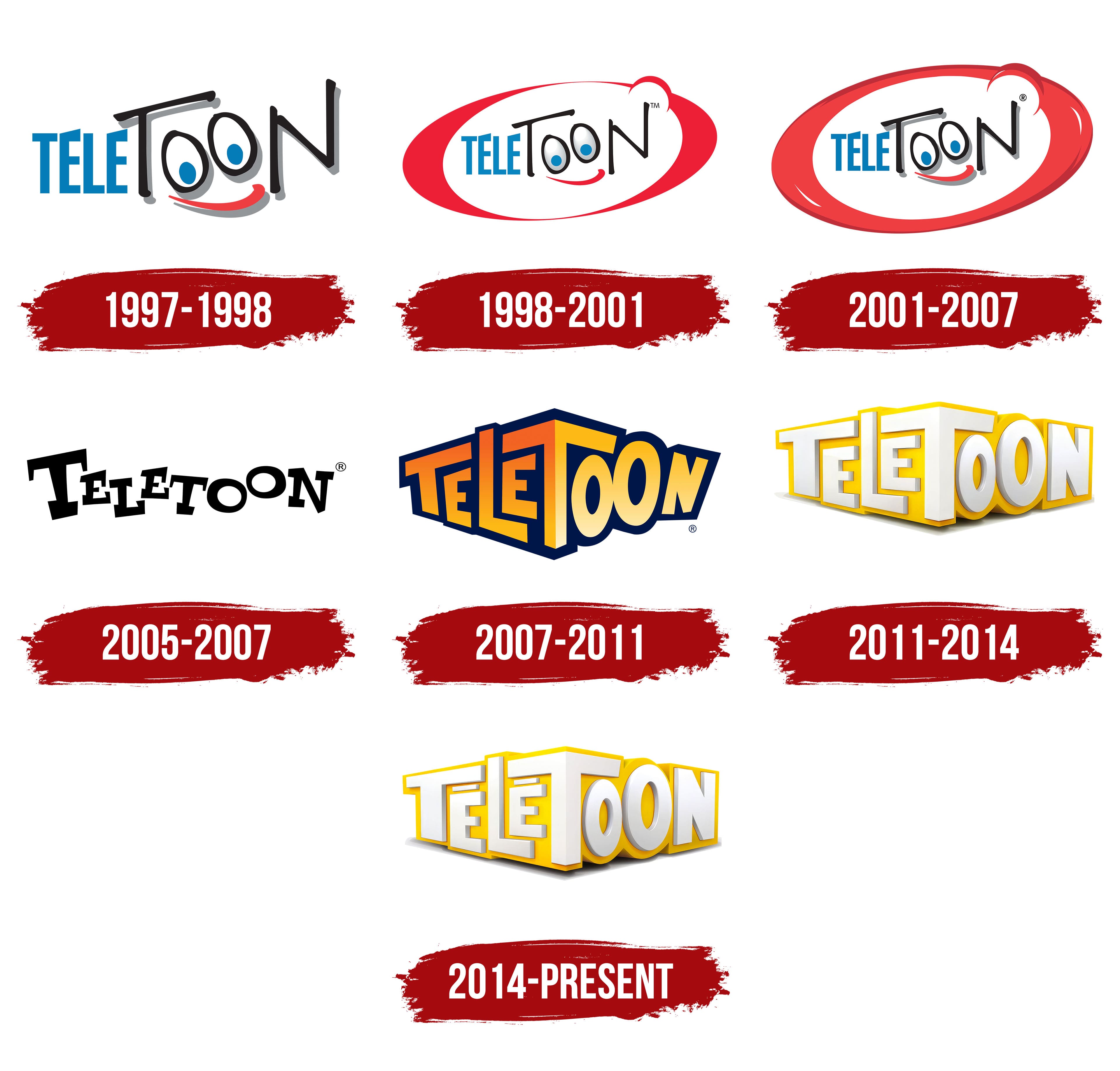
1997 – 1998
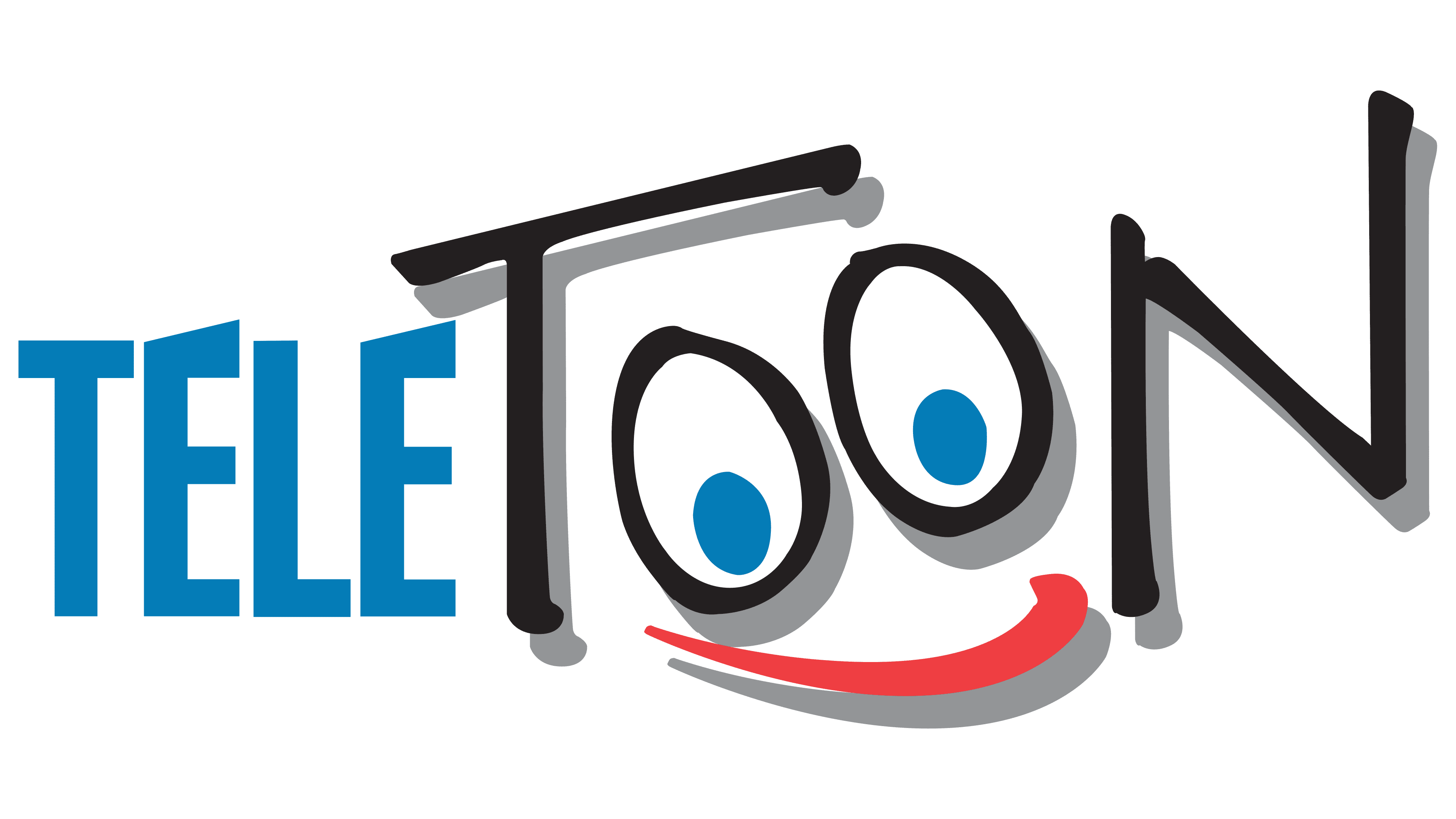
Teletoon was launched in 1997 to air a variety of animated programming, from morning children’s shows to more mature programs in the evening. The French and English versions of the channel used the same logos, expressing brand unity. The slogans “The Animation Station” and “Imagine!” opened a world of fantasy and creativity for the audience.
The channel, founded in Canada, sought to attract viewers of all ages. Its logo emphasizes the channel’s gaming and animation nature.
The word “TELE” is in a strict blue font, contrasting with the other logo. It conveys a sense of stability and emphasizes the channel’s technological orientation. The second part, “TOON,” is more expressive: the letters look hand-drawn, with soft curves and irregular lines, giving the text a sense of liveliness. The two letters “O” are designed to look like eyes, adding a cartoonish effect.
Like the curved line under the eyes, red details resemble a smile, adding friendliness and emphasizing the character’s playability. The gray shadow behind the letters creates a three-dimensional effect. The colors symbolize trust (blue), stability (black), and energy (red).
The Teletoon logo has become a visual symbol of diversity and an international approach. It expresses that animation is fun for children and an important part of a culture that can speak to people of all ages.
1998 – 2001
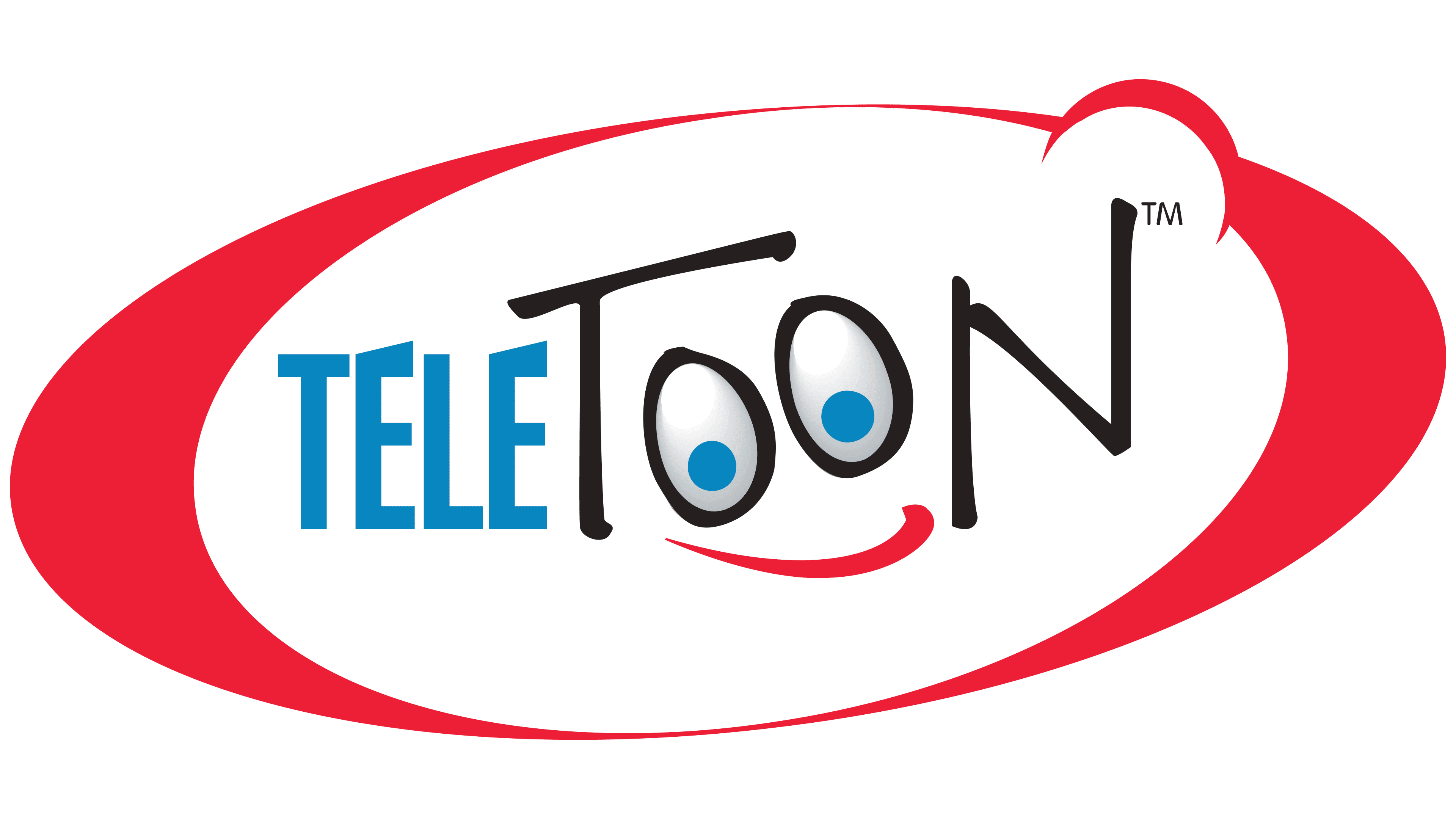
The updated Teletoon logo retained key elements of the original while becoming more dynamic thanks to the red border. The changes added playfulness and energy, emphasizing the channel’s childish orientation. The frame looks like a stylized frame that reflects the animated character.
A red line wraps around the emblem, creating a seamless composition. The frame resembles an elongated oval with an upper “ear,” which lends the design individuality and a cartoonish quality. Removing the gray shadow makes the visual image purer, allowing the main parts to stand out.
The color palette remained the same, maintaining a connection with the original. The red frame makes the logo more focused on a children’s audience.
The channel’s visual appearance has become more expressive and dynamic, reflecting its atmosphere and creating associations with fun and life.
2001 – 2007
The updated Teletoon logo features visual improvements for greater expressiveness. The main part of the design remains the same: the inscription “Teletoon,” cartoon eyes inside the letters “O,” a joyful red smile, and a bright frame. Some details have been redesigned to add volume and depth.
Firstly, in the second part of the word “Toon,” there is a shadow with a slight three-dimensional effect.
Secondly, the red frame has become more voluminous thanks to gradients and transitions in shades of red. Dark and light areas on the frame create a three-dimensional perception and add dynamics, making the logo more attractive to a children’s audience.
The color scheme has not changed: blue, black, red, and white together create a bright and positive image. Red in a frame continues to be associated with energy and joy, blue with trust, and black with balance.
The update showed the brand’s desire to keep in touch with the audience without changing the basics, but making minor changes to meet modern requirements.
2005 – 2007
The logo was updated in 2005. The design has completely changed: Bright colors and cartoon symbols have given way to a black-and-white palette that retains playfulness through letter shapes.
Now, the letters of the emblem seem to be “jumping” or unsteadily placed, creating a sense of movement and dynamism. All letters are slanted or slightly skewed, giving a sense of fun and focusing the channel on a children’s audience, while maintaining a modern style reminiscent of the early 2000s. The logo emphasizes creativity and freedom.
2007 – 2011
The emblem update marked the brand’s transition to a new visual style. It was redesigned, abandoning previous versions’ cartoon symbols and playfulness. The new style has become dynamic, bright, and energetic. Designer Alan Shulman set a new tone, targeting a wider audience, including teenagers and adults.
The logo’s main focus is the font. The letters are bold and massive, with clear edges. They are also tilted or located at different heights, adding uniqueness and liveliness.
The color palette has become brighter and more saturated. Yellow and orange create a gradient that gives the letters volume. Contrasting dark blue contours, merging into one background, accentuate the letters and add depth and visual clarity. Colors evoke associations with energy and warmth.
The rebranding also included changes to the channel’s visual concept, including broadcast design and website design. The new style emphasized the channel’s desire to keep up with the times and attract new audiences while maintaining its creative, fun spirit.
2011 – 2014
The Teletoon emblem, updated to mark Astral Media’s 50th anniversary and the transition to digital television, retains the main concept of the previous design while adopting a modern look. Designers from Trollbäck & Company made the logo three-dimensional, giving it a bright, light look.
The letters in the name have become more voluminous, as if carved from dense material. Their shape retains the playfulness associated with the channel’s cartoon style but now looks more sophisticated. The color of the letters, combined with the gray gradient, creates the effect of a second dimension. The shadows at the bottom give the impression that the text is “coming out” of the logo, adding depth.
The composition resembles the printed name on both sides of the cube. The three-dimensional effect of the ego emphasizes that this world is full of fun, creativity, and vivid stories. The cubic structure symbolizes the transition to a digital platform, where worlds come to life.
The background behind the letters is bright yellow and cheerful. The simplicity of shapes, rich colors, and three-dimensional effects emphasize the brand’s movement in the digital age while maintaining a connection to the world of animation.
2014 – today
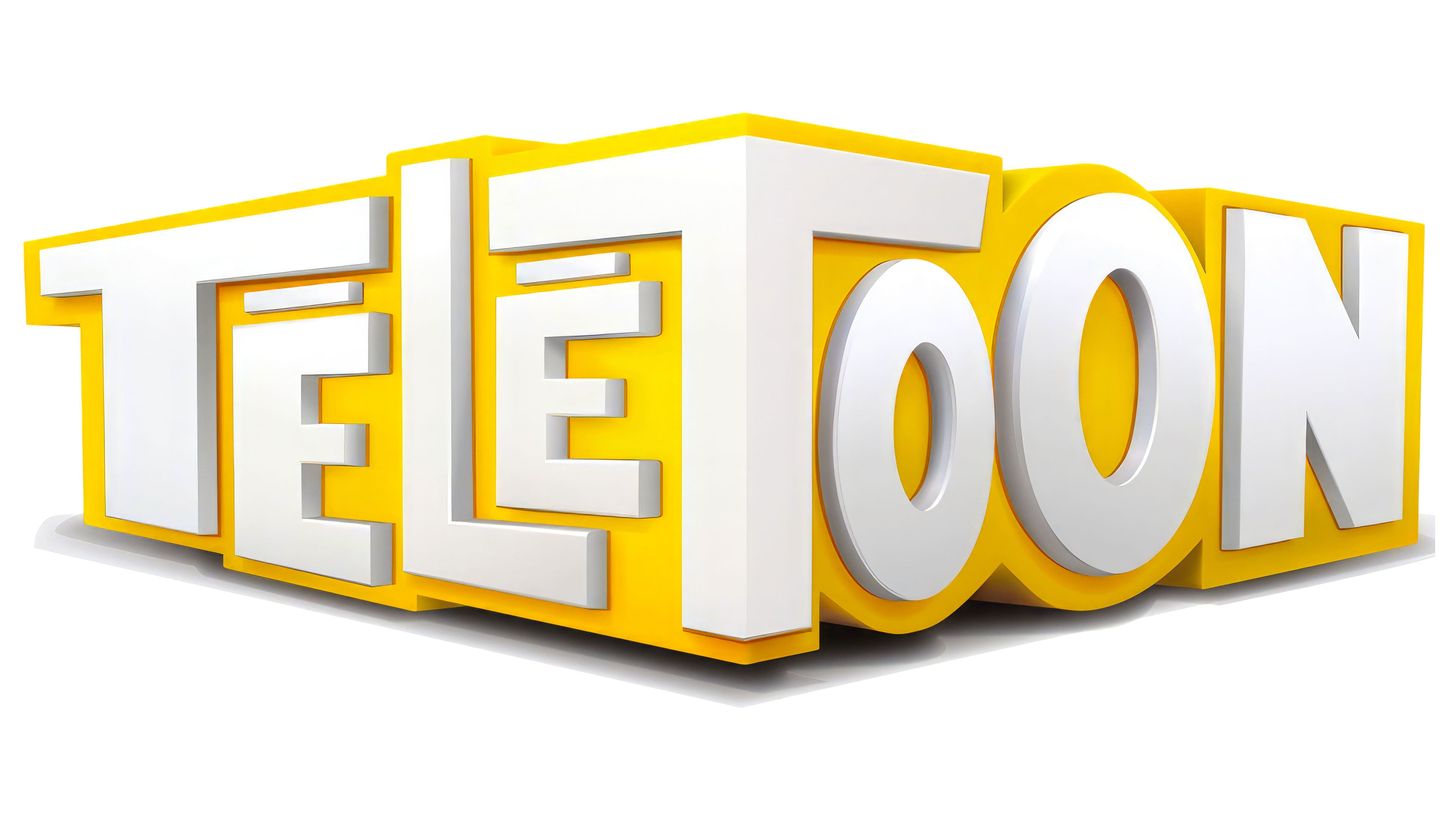
In 2014, the logo was updated to emphasize the channel’s French-specific identity. The main change was the addition of diacritics above the “e” in the name. This was done to more clearly highlight Télétoon’s French-speaking identity and strengthen its market position as a channel focused on French culture.
The design retained the three-dimensional composition but became more concise. The introduction of accents emphasizes linguistic specificity and eliminates possible confusion between the French and English versions of the channel.