


 Terja Logo PNG
The Terja logo embodies the organization’s mission, symbolizing unity, cooperation, and the desire for equal opportunities. Its design balances traditional and modern approaches. The organization works with communities to provide quality education and give children and young people access to learning. The emblem has become a visual landmark of these values, symbolizing support, development, and joint progress.
TERJA Foundation Inc. was founded in 2013 in memory of Teresa and Jackson Osundwa, a couple who dedicated their lives to expanding access to education, especially for girls. Their daughter, Lynette Ingette Ochola, an international development specialist with more than 20 years of experience, introduced the idea. Together with her siblings, she developed the organization’s mission and vision. The name TERJA was formed from the first parts of their parents’ names, Teresa and Jackson.
The official name of the organization is Terja Terry and Jack Osundwa Foundation Inc. Registered in the United States as a 501(c)(3) nonprofit, the foundation works in two main areas: supporting children and young people in the United States and developing educational programs in Africa. A major focus of TERJA has been improving opportunities for girls through access to education.
One of the foundation’s early projects supported Lubinu Girls Secondary School in Kakamega County, Kenya. Founded in 2009 with 46 students, the school later grew to nearly 500 students and faced shortages of classrooms, textbooks, computers, and laboratory resources. TERJA supported the construction of a school hall and provided educational materials. In March 2021, the foundation launched the Jackson Nyangweso Osundwa Scholarship Award for students of Lubinu Girls Secondary School.
In 2021, TERJA opened offices in Houston, Texas, and Nairobi, Kenya, and began cooperation with St. James Namamba Girls Secondary School. The foundation later developed programs such as TARAJA mentoring and the Global Storytelling Exchange, connecting students with mentors from Kenya and the United States. In 2025, Dr. Judith Ashika Skill presented TERJA’s work at the Oxford Symposium on Educational Research.
Meaning and History

What is Terja?
It is a nonprofit organization working with children and youth from vulnerable communities. It develops educational programs, mentorship, digital initiatives, and projects supporting girls. The main focus is on helping provide access to learning and personal development.
2013 – today

The nonprofit organization TERJA arose from the idea of collective assistance for communities where children and youth lack access to necessities, including water, quality education, and healthcare. Its name is short, easy to pronounce, and straightforward.
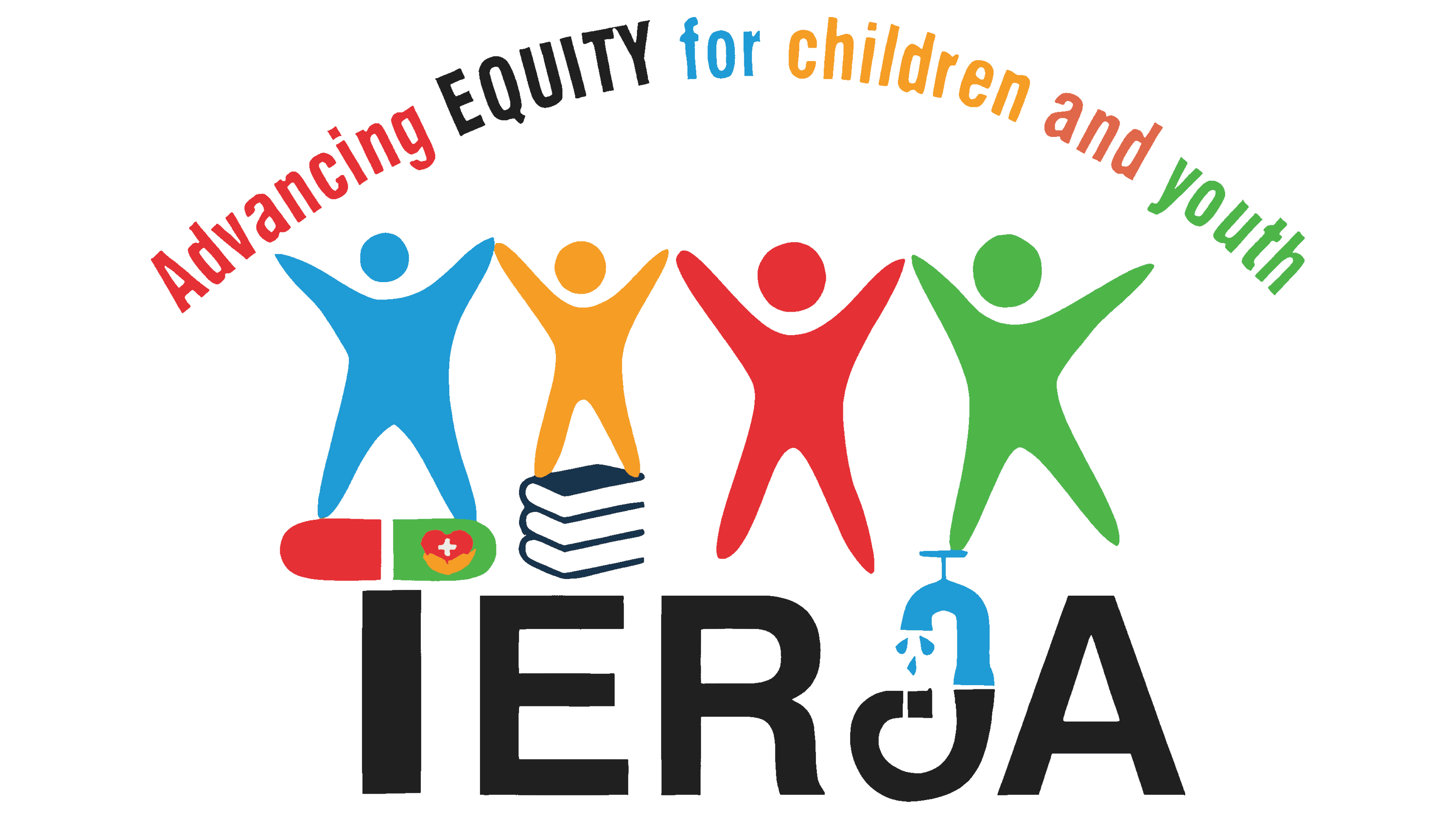
The logo features numerous symbols and details centered on human figures, which are colorful and stylized, with raised arms. Four individuals in different colors (blue, yellow, red, and green) stand together above the organization’s large-lettered name.
The letters are bold, geometric, simple, and modern without unnecessary flourishes. Important areas of TERJA’s work are hidden within these letters. The upper line of the letter “T” is designed as a red-and-green capsule with a heart and a cross, representing medical assistance. The letter “J” is stylized as a faucet from which water flows, a crucial symbol of sanitation and access to drinking water.
Below the human figures is another symbol, a stack of books on which the yellow figure stands, highlighting the priority of education within the organization’s activities.
The text above the figures forms a semicircle, following the gentle curve of the composition. The word “EQUITY” appears in bold, black uppercase letters, while the phrase “Advancing for children and youth” is in lowercase letters in red, blue, yellow, and green, matching the colors of the human figures. These vibrant, lively colors convey optimism and energy, reflecting the organization’s problem-solving approach.
TERJA combined all its symbolism into one logo, serving as a reminder of its purpose: health, access to knowledge, and basic living conditions for youth who need them most.