


 AdAge Logo PNG
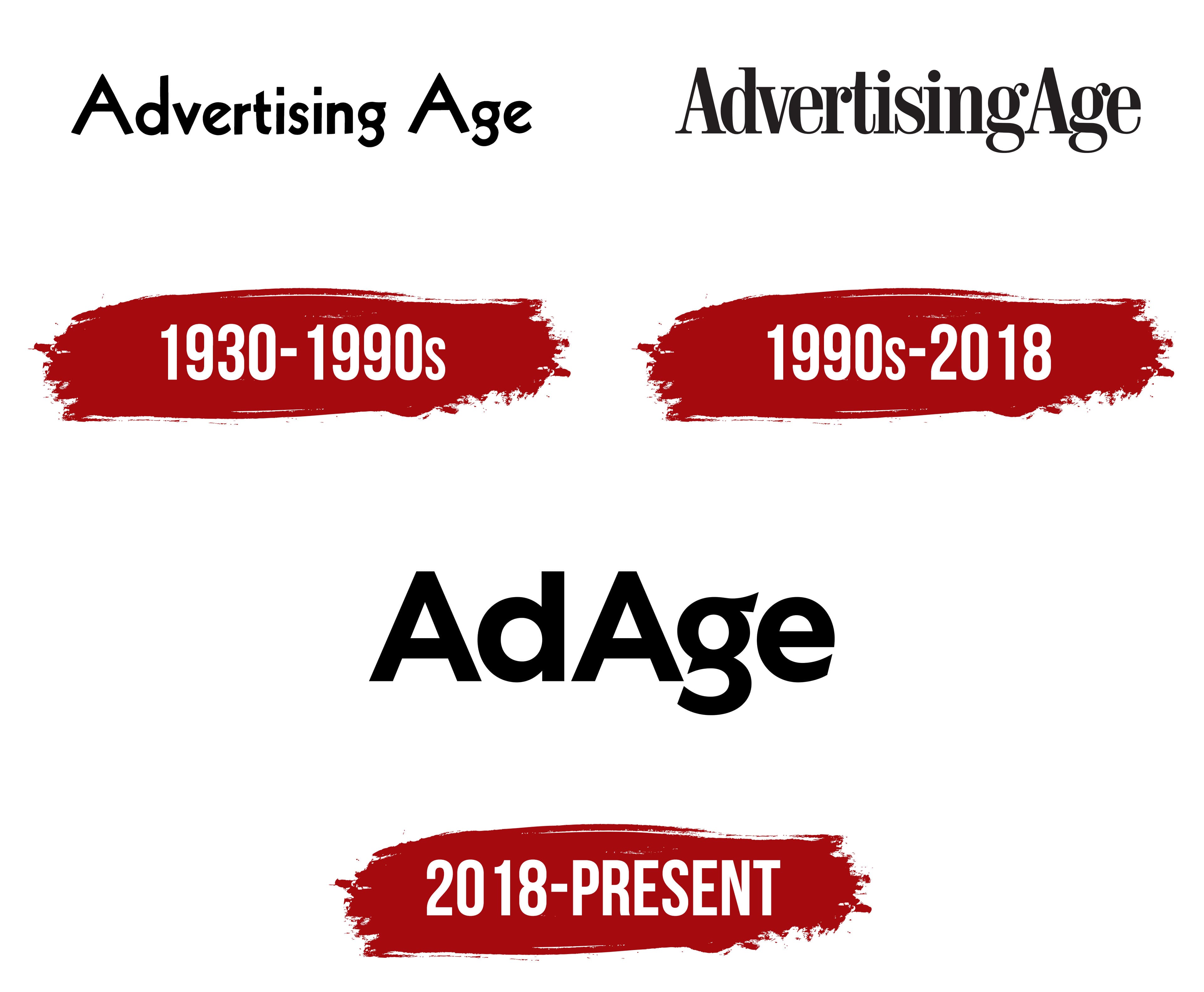
The AdAge logo accompanies the journey of a resource that began as a bold idea during challenging times and became a part of the advertising industry. From its early issues featuring professional materials to its recognition as a leading news and analysis source, the platform found its voice and audience, bringing together experts and interested readers.
Advertising Age was founded on January 11, 1930, by Glenn Seybert, publisher of Class magazine. The weekly trade publication appeared during the Great Depression but quickly gained recognition in advertising. In the 1930s, it closely followed the rise of radio advertising and examined how the medium influenced consumers and commercial strategy.
During the 1940s, the magazine documented wartime changes in advertising and the ways companies adjusted campaigns during World War II. In the 1950s, it turned to television, publishing research on audience ratings and TV commercial performance. Coverage widened in the 1960s to include international advertising markets and global industry trends.
In the 1970s, new sections on consumer behavior and marketing research broadened its analytical role. Computerized layout and production entered editorial work during the 1980s. In the 1990s, AdAge.com brought faster access to industry news and analysis. In the 2000s, it added digital editions, online archives, and a stronger web presence.
From 2010 to 2015, the publication expanded into video, podcasts, and interactive features. Between 2016 and 2019, it added conferences, workshops, and industry events. Digital tools and subscriber-only online material grew from 2020 to 2022. By 2023, AdAge had developed from a weekly trade magazine into a media platform covering advertising, marketing, research, and changes across the communications business for professionals.
Meaning and History
What is AdAge?
This resource covers news, analytics, and events in advertising, marketing, and media. It provides information on industry trends, successful campaigns, and key achievements. The platform publishes rankings and reports of top agencies and major advertisers, offering in-depth articles and reviews of marketing strategies, fresh news, data, and critical analysis to help professionals navigate the dynamic advertising landscape. In addition to articles, it offers podcasts, events, and digital materials, making it a convenient resource for anyone working in advertising and media.
1930 – 1990s
The first Advertising Age logo, used from the 1930s to the 1990s, shaped the company’s visual style. It reflected her professionalism and desire for clarity.
At first glance, the emblem looks simple, corresponding to its time of creation. However, design accents give the font expressiveness and individuality behind the external conciseness.
The font is elegant, with light decorative curls. The letter “g” loop has a rounded finish that adds softness. The slight inclination of the letter “e” creates a sense of forward movement while maintaining a connection to the classic style. The straight lines of the letters provide good legibility and visual balance.
The inscription is evenly and symmetrically executed, in keeping with the aesthetics of the mid-20th century. It conveys reliability and professionalism to the audience.
The color scheme is limited to black and white. Black emphasizes stability and authority, while a white background enhances contrast, making the text easy to read. These colors emphasize a serious approach and professionalism.
The logo reflects the key qualities:
- Simplicity: minimalism allows you to focus on the title without unnecessary details.
- Personality: Unusual fragments, such as the loop in the letter “g” and the inclination of the letter “e,” add uniqueness.
- Clarity: The strict style emphasizes professionalism and attention to detail.
The Advertising Age emblem became a symbol of its time when conciseness and minimalism were appreciated. Its style and structure remain relevant and suitable for the business environment.
1990s – 2018
The new Advertising Age logo reflects the brand’s advertising status. The redesign emphasized elegance and professionalism while maintaining simplicity and ease of perception.
The font has been redesigned and is becoming more sophisticated through the use of serifs. The contrast between the thin and thick lines makes the text expressive, adding volume and depth. “Advertising Age” is combined into a single word, reducing the visual appearance. Reducing the spacing between letters makes the design more compact but retains ease of perception.
The letters’ thin lines and smooth curves convey sophistication. Black conveys confidence, stability, and professionalism. Its combination with elegant details creates a strict but attractive image.
The main features of the logo:
- Classic and modern: Combining traditional symbols and modern accents emphasizes the balance between the past and the future.
- Coherence: Combining two words enhances the sense of unity and integrity.
- Simplicity: Minimalism and readability make the emblem easy to read.
The redesign coincided with strengthening the company’s position in the industry. The updates gave the brand a modern look while maintaining its reliable and professional character.
2018 – today
In 2018, AdAge updated the logo, making it concise and modern. The new design conveys confidence and professionalism, connecting with the brand’s history while meeting modern needs.
The name “AdAge” is bold, sans-serif, emphasizing simplicity and structure. The font is reminiscent of Optimo SARL’s NEXT Medium Book, known for its geometric precision and uniform lines.
One striking detail is the loop in the letter “g.” Such a detail maintains continuity with previous versions and indicates the brand’s individuality. Combining the name into a single word made the logo more compact and easier to use in digital environments, where brevity is important.
The black-and-white color scheme retains the classic style while remaining versatile and suitable for a professional audience. The emblem focuses on the brand name without unnecessary graphic details, showing the company’s confidence in its achievements. Straight lines and a minimalist font emphasize clarity and orderliness.
The evolution of the AdAge logo reflects the evolution of styles:
- Early versions used serif fonts to add subtlety.
- In 2018, the brand switched to a bold sans-serif font, retaining the characteristic “g” as a continuity element.