


 Arm & Hammer Logo PNG
The Arm & Hammer logo is confident and strong. The emblem demonstrates the company’s originality and personal style. The symbol provides users with reliable, effective assistance through its products.
Arm & Hammer began in 1846 in New York, when Austin Church and John Dwight started packing baking soda for commercial sale. In 1847, they formed John Dwight & Company, and the product was sold as Cow Brand, linked to the use of sour milk and buttermilk in baking.
In 1867, Austin Church retired, and his sons, James and Dwight, founded Church & Co. The new company used James Church’s emblem of a muscular arm holding a hammer, previously connected with Vulcan Spice Mills. From then on, Dwight’s Cow Brand and Church’s Arm & Hammer competed within the same family business. By 1873, Arm & Hammer held a strong position in the U.S. market.
In 1888, Church & Co. began issuing colorful collectible cards with the Arm & Hammer logo. In 1896, the two family companies merged to form Church Dwight Co., retaining both Arm & Hammer and Cow Brand. In 1925, the business was incorporated as Church & Dwight Co. Around 1915, the company promoted baking soda for household remedies, including heartburn and digestion.
In 1970, Arm & Hammer introduced a nationally distributed phosphate-free laundry detergent, while Procter & Gamble still used phosphates in Tide. In 1972, ads promoted an open soda box in the refrigerator to absorb odors, followed by a 1982 campaign promoting a freezer. In 1988, Arm & Hammer Dental Care went national and reached 11% of the U.S. toothpaste market by 1993, competing with Colgate. In 2001, Church & Dwight acquired Carter-Wallace and USA Detergents, the owner of Xtra.
Meaning and History
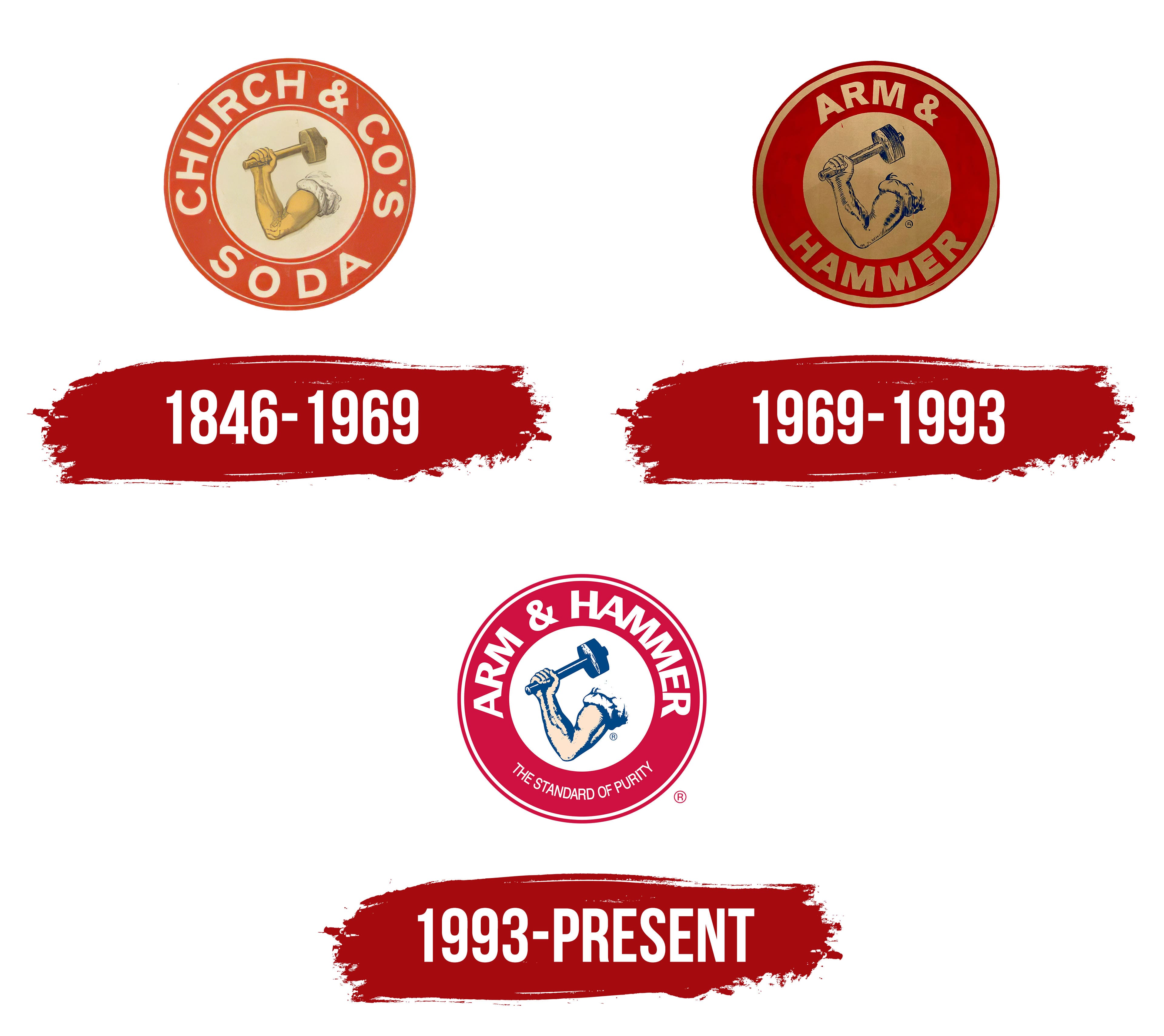
Despite three rebrandings, the owners could not come up with a better idea than the one developed in 1846. The brand’s emblem is among the oldest in the industry. Each update only affected the change of shades. The overall concept remained unchanged. The rebrandings themselves were related to changes in brand ownership. The commitment to the image of an arm and a hammer reflects a desire to retain customers, as information about the brand’s products has been passed down from generation to generation, and the symbol inspires trust.
What is Arm & Hammer?
An American brand owned by the chemical company Church & Dwight. The brand produces baking soda, toothpaste, laundry detergents, and cleaning products that contain soda.
1846 – 1969
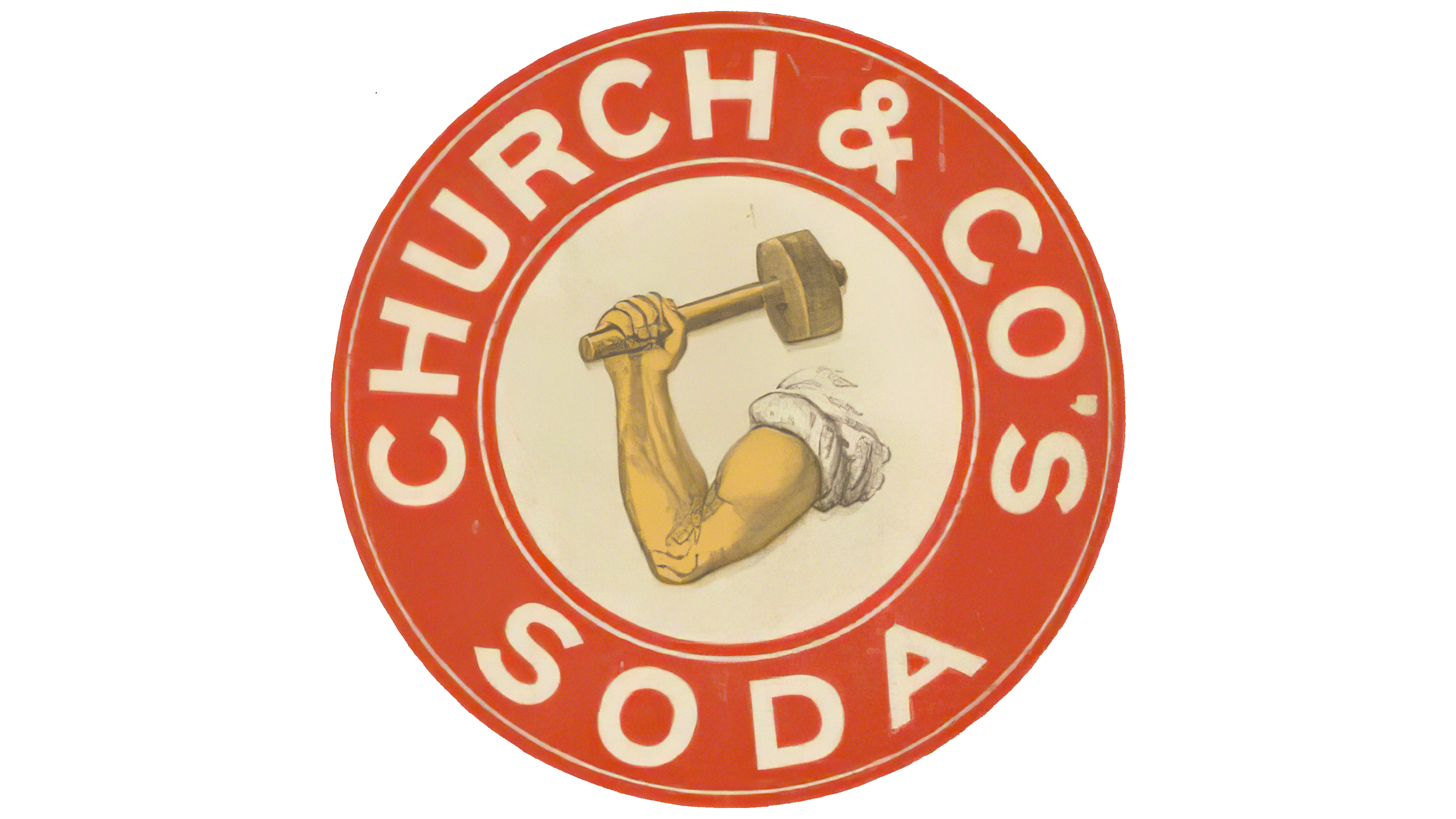
The emblem is designed as a circle. Around the edge are the inscriptions “Church and Co” and “Soda”. In the center is an image of a muscular arm in a shirt holding a hammer.
The Church brothers invented the first logo. They used their father’s idea and his partner John Dwight’s idea to produce soda and released the product under the company name Church and Co.
The history of the arm with a hammer is quite complex, as the image is not directly related to the soda. Before the soda business, one of Church’s sons was involved in the spice trade, managing Vulcan Spice Mills. The arm and hammer belong to the Roman god Vulcan, in whose honor the shop was named. The name was chosen for the spices’ sharpness and strength, although the deity also patronized fire, volcanoes, blacksmiths, and metalworking.
When the idea of producing soda emerged, the hand emblem was adopted as the new product’s logo, and, to link the image and the trademark, it was eventually named Arm & Hammer (1867).
The drawing is vaguely reminiscent of the following:
- Obtaining soda at a plant using the Leblanc method. The worker’s hand symbolizes hard work.
- The powerful action of soda helps to remove stains.
- The impeccable quality and purity of the product.
Interestingly, the brand was often associated with the name Armand Hammer, who also owned a chemical business. The magnate even wanted to buy the company to avoid constant questions. He acquired many shares in the soda brand and remained one of its owners until his death. However, the name has nothing to do with his name.
1969 – 1993
1993 – today
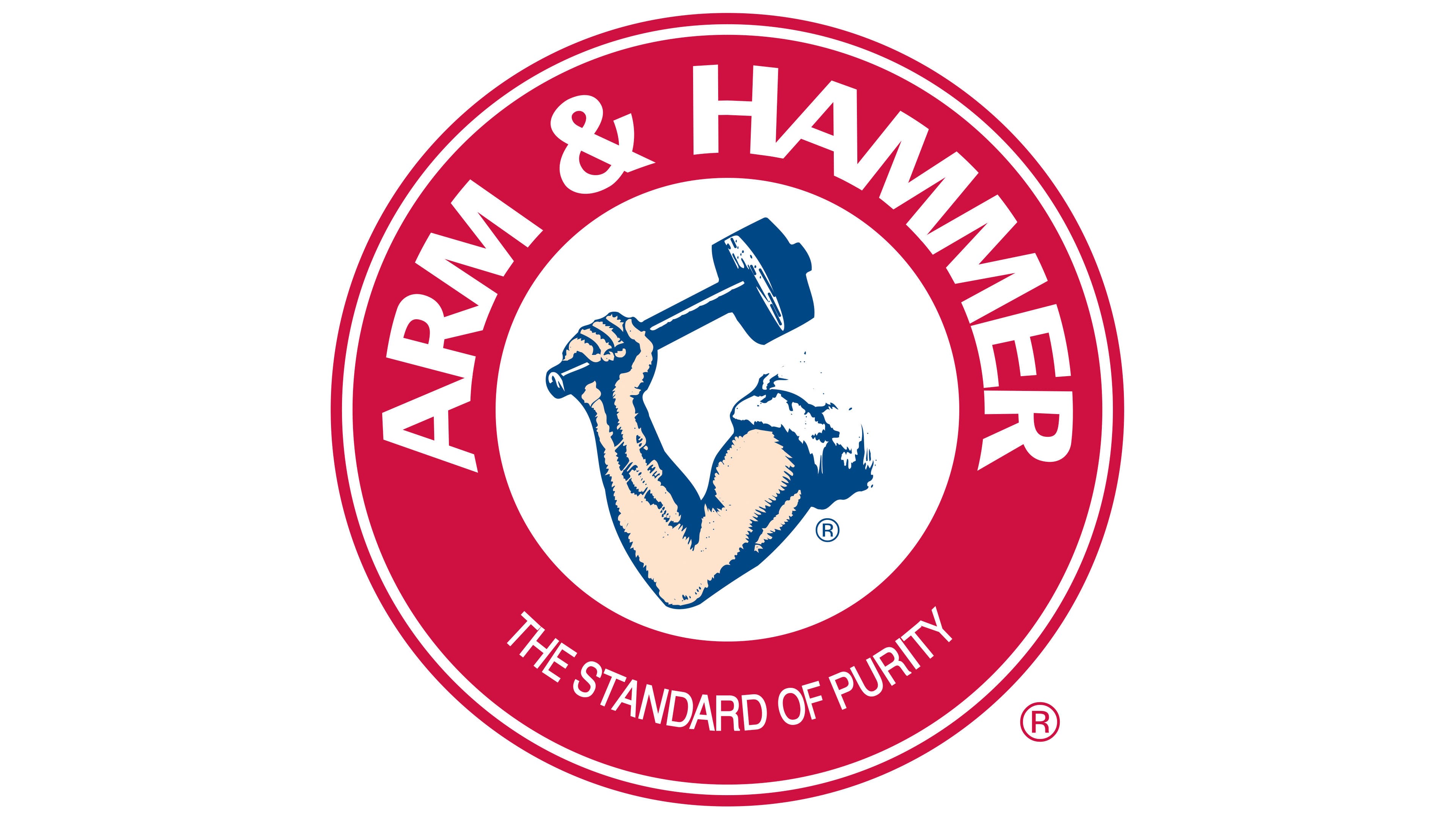
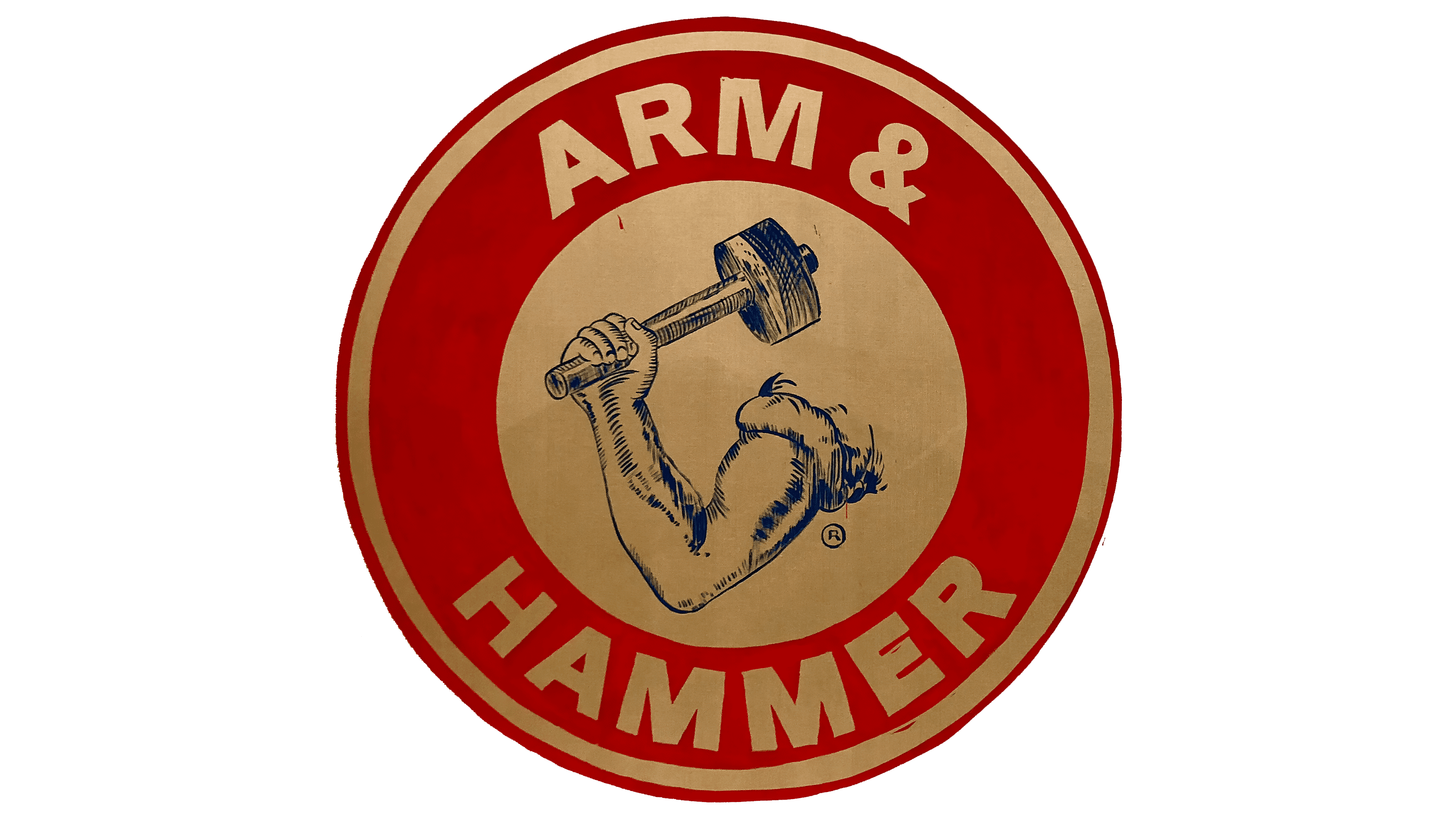
Church & Dwight began active advertising campaigns to maintain commitment and loyalty to soda-based products. Among the comprehensive promotion measures were rebranding. The logo was made bright and light.
White letters on a white background in the corporate image increased the picture’s clarity, making it easier to remember in detail. With this decision, the owners effectively demonstrated soda’s whitening action. The color also evoked associations with the product itself.
In the lower part of the circle, a slogan highlighted the main advantage of the company’s products: cleanliness.
The round shape is a symbol of harmony. The company’s product is perfect and has multiple applications. With the arrival of soda in the house comes cleanliness, safety, and the smell of baking in the kitchen. The circle is a symbol of a seal, signifying quality.
Font and Colors
The two main colors of the logo are red and white, symbolizing strength and fast action.
- White is the color of purity, whitening, and purified soda. It indicates both the product’s action and appearance.
- Red conveys strength, effectiveness, and chemical processes. Hints at consumer love for the brand. The shade symbolizes temperature, as the action of soda in baking and washing powders is related to heating.
The font is smooth and even in uppercase. The lower parts of the letters are connected. The technique conveys the idea of multiple products connected by one main action, cleaning and disinfection, due to the common ingredient.