


 Crystal Light Logo PNG
The Crystal Light logo is associated with lightness and vibrant flavors that have become part of everyday habits. The brand offers beverages that combine a refreshing taste with convenience, making it an easy choice for those who prefer light options without excess sugar.
Crystal Light was introduced in the United States by General Foods in 1982 as a low-calorie alternative to traditional soft drinks, targeting health-conscious women. Its initial lemonade flavor capitalized on a familiar American taste and highlighted its innovative feature: just 5 calories per glass.
A significant turning point occurred in 1985 when General Foods merged with Kraft Foods, leading to the rapid expansion of the Crystal Light brand and the introduction of new flavors, including strawberry and raspberry. By the early 1990s, Crystal Light solidified its position through marketing that emphasized active lifestyles and health benefits.
Responding to consumer demand for functional beverages, Crystal Light introduced vitamin-enriched drink mixes in 1995 and later added antioxidants and calcium to its offerings. In 2004, the brand launched the highly successful On The Go line, single-serving packets intended for use in water bottles, aligning the product with increasing demand for portability.
In 2007, Crystal Light refreshed its packaging and logo, reinforcing its premium positioning. From 2010 to 2015, the company broadened its offerings, introducing exotic fruit flavors and incorporating natural sweeteners. By 2020, Crystal Light had expanded its international distribution, remaining responsive to evolving consumer tastes through ongoing product innovation.
Meaning and History
What is Crystal Light?
This is a producer of low-calorie powdered drink mixes. The product lineup features a diverse range of flavors, from classic fruit options to innovative combinations. The drinks are low in calories and sugar, making them an attractive choice for those who watch their diet and prefer light, refreshing beverages. Convenient packaging options include large home-use containers and small, portable servings that are easy to take on the go, to work, or on trips.
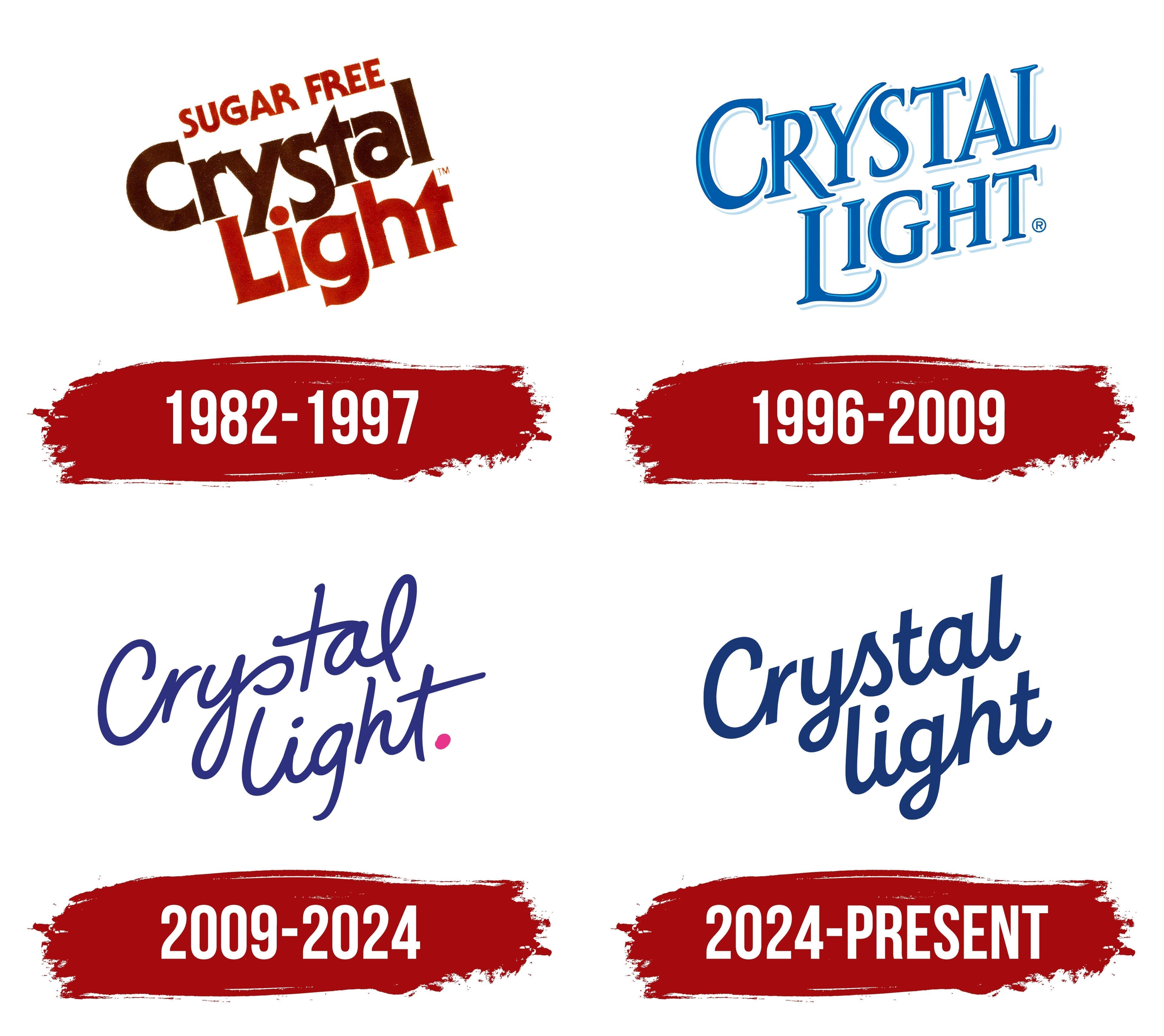
1982 – 1997
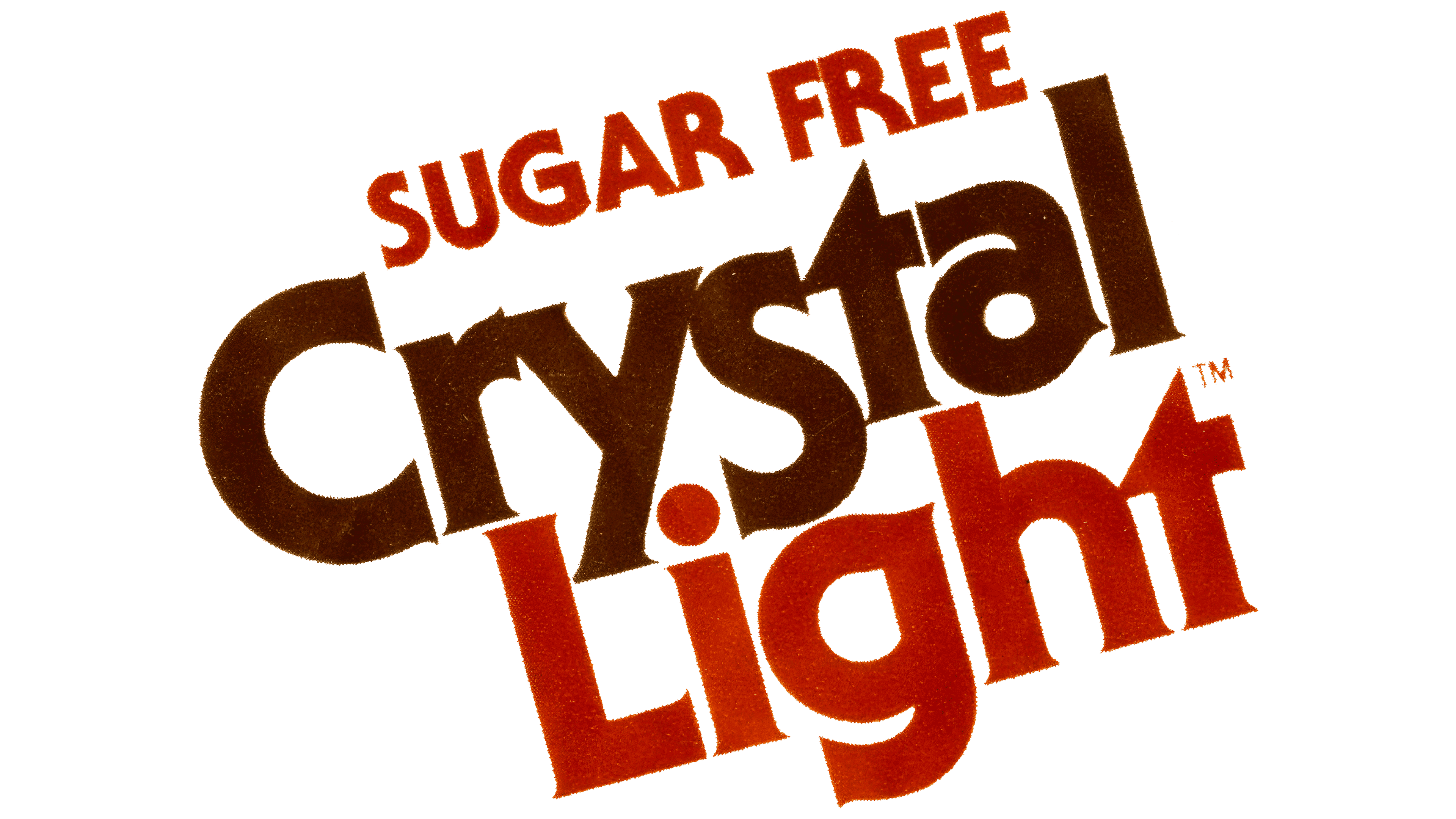
The first Crystal Light logo was designed to emphasize the brand’s idea as a light alternative to traditional sweet drinks. Its visual concept was built on typography and diagonal composition.
The composition is divided into three levels. At the top is the slogan “SUGAR FREE.” It is executed in a compact sans-serif font, all letters capitalized and painted bright red. The slogan was turned into a visual accent. It communicates the key product characteristic related to health benefits and dietary qualities.
The main part of the logo consists of the words “Crystal” and “Light” in two lines. They are arranged diagonally and typed in ITC Serif Gothic Heavy with modified glyphs. The word “Crystal” is in dark brown and looks massive due to the dense letters with clear outlines. “Light” is highlighted in bright red and rendered more lightly, creating a contrast between richness and lightness. Their opposition visually reflects the product’s essence, expressed in its lightness compared to traditional sweet drinks.
The typographic style combines smooth lines and rounded forms. The diagonal orientation of the inscription enhances the impression of movement and sets a positive emotional tone. This visual image was consistent with the 1980s marketing strategy, when the brand was advertised with the participation of popular actresses Linda Evans, Priscilla Presley, and Raquel Welch, reinforcing the energetic and attractive image of the drink’s target audience.
Some packaging elements were supplemented with the Palatino typeface, which added classical elegance and enhanced the premium perception.
The Crystal Light logo expressed the brand’s key ideas through the play of contrasts. It became a symbol of the product’s dietary orientation and a key part of its visual identity, securing its place in the mass consumer culture of the late 20th century.
1996 – 2009

The update of Crystal Light’s identity was a step from the simple typography of the first logo to a more decorative and emotional form. The new version sought to convey the product’s freshness and purity through more complex typographic and color techniques.
Instead of a sans-serif, a serif typeface with decorative endings appeared. The letters became elongated and more variable in size. The letters “C” and “L” stood out in enlarged proportions, bringing the composition closer to the aesthetics of late 20th-century American advertising, where highlighting the first letters of a name’s recognition was considered important.
The logo became monochrome, built on shades of blue. To give the letters depth, designers added a white outline along the outer edge, emphasized it with a thin, light blue line, and introduced inner light blue shading. The pseudo-volume effect created an impression of airiness and enhanced associations with the drink’s purity, lightness, and freshness. The composition retained the diagonal placement and the arrangement of the words one above the other.
The change in visual identity was related to the shift in consumer tastes that occurred in the late 1990s. In the American mass market of that time, decorative effects and emotional expressiveness became increasingly important, and the brand sought to reflect this mood in its identity.
The new version of the Crystal Light logo became an expression of the brand’s evolution. It moved from utilitarian functionality to a more figurative and emotional form. Its image reflected the product’s characteristics, namely freshness, lightness, and low calories.
2009 – 2024

The rebranding of Crystal Light shifted the new logo’s emphasis toward aesthetic and emotional elements.
The basis was handwritten typography. The letters acquired rounded shapes and smooth connections, reminiscent of light hand movements in writing. The use of italic rhythm with elongated verticals and diagonals made the composition relaxed and associated it with a sense of lightness. The size of the letters varied, giving the inscription individuality and highlighting the departure from the strict geometric structures of the previous period.
Red and brown shades were left behind, giving way to dark blue. It is associated with calmness, harmony, and trust, thereby strengthening the product’s positioning as elegant and modern. A small pink dot placed after the inscription added a playful element and softly introduced a feminine accent, visually linking the brand with lightness and positive emotions.
The logo is perceived as a graceful, balanced mark that evokes associations of lightness, freshness, and joy in the consumer.
The new Crystal Light logo signaled a departure from functional rhetoric toward an emotional visual concept. It expressed the brand’s intention to communicate with the audience through aesthetics, comfort, and the image of a light, modern drink of the late 2000s, aimed primarily at a female audience.
2024 – today

Crystal Light’s transition to a new image became a conscious rejection of decorative details and playful emotional touches of the previous period. The updated visual system emphasizes clarity, freshness, and trust in the brand, while reflecting the new product lines Mixology, Immunity, and Energy that appeal to modern consumers seeking a balance of taste and benefits.
The main construction of the inscription retained its diagonal orientation, but the font style changed. The handwritten calligraphy was left behind, replaced by a soft, slightly slanted sans serif. The letter contours became stricter and more even, and the connections acquired a smooth and simplified character. The entire composition is perceived as unified and rhythmic. The first letter “C” stands out in a larger size.
The color palette was reduced to a single dark blue shade. It strengthens associations with purity and the drink’s refreshing nature. Unlike the brighter, more contrasting solutions of previous years, the blue shade creates an impression of transparency and confidence in the product’s quality.
The rejection of the pink dot highlights the shift toward a mature, balanced visual language. The emphasis has shifted from light playfulness to modern minimalism and long-lasting style.
The new Crystal Light logo conveys the brand’s updated strategy, prioritizing universality and practical benefits over emotional appeal.
