


 Surge Logo PNG
The Surge logo is explosive, vibrant, noticeable, and easy to remember. Its design creates a wow effect through its color scheme, bright details, and decorative elements. The logo embodies maximalism, extravagance, and boldness, attracting fans of unconventional products.
The creation of this drink went through several stages. Initially, the drink existed in Norway, but a similar product from the competing company, PepsiCo, later appeared. After much deliberation, Coca-Cola decided to release its grand green drink.
Surge began in 1996 as Coca-Cola prepared a citrus soda to directly compete with PepsiCo’s Mountain Dew. The project was known inside the company as “MDK,” short for “Mountain Dew Killer.” The name Surge was tied to the idea of a fast energy lift, with a formula built around bright color, citrus flavor, caffeine, and a heavier carbohydrate profile.
The drink reached the U.S. market in 1997. Its advertising used the line “Feed the Rush”. It focused on teenagers and young adults through noisy commercials, physical stunts, speed, and extreme-sports imagery. By 1998 and 1999, Surge was sold in all 50 states, with promotion across television, radio, magazines, and retail displays. The company tested various cans and bottles to keep the product visible in a crowded soda aisle.
In the early 2000s, sales weakened. Consumer habits were shifting, energy drinks were growing in popularity, and high-sugar sodas faced closer scrutiny. In 2003, the drink was removed from the U.S. market, although related versions remained abroad, including Urge in Norway. After that, fans organized petitions, social media groups, and online campaigns asking for its return.
In 2014, Surge returned to the United States after more than a decade away, first on Amazon. In 2015, it moved into selected stores, then widened distribution through 16-ounce cans and regional releases. Later activities included Frozen Surge, retro-style campaigns, limited-edition packaging, and nostalgia-driven promotions tied to the brand’s 1990s history.
Meaning and History
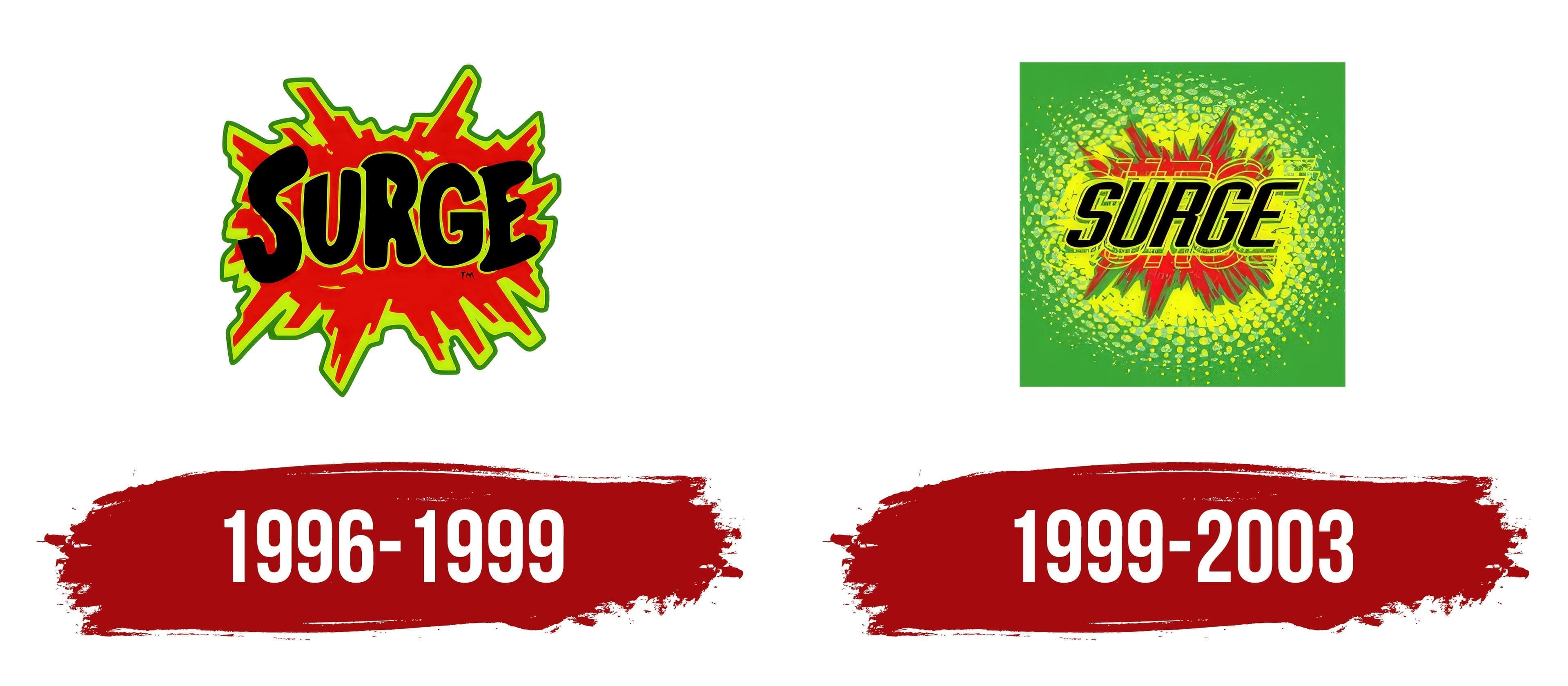
What is Surge?
It is a citrus-flavored soft drink brand owned by The Coca-Cola Company. The brand is known for its bold flavor and high caffeine content, targeting a younger demographic due to its rich flavor and bright green packaging. It was originally marketed as an energy alternative to traditional sodas, appealing to those seeking a more interesting beverage option. Although the drink was discontinued for a time, it has resurfaced due to its popularity and is now available at select stores and online retailers.
1996 – 1999
The bright citrus flavor of the green drink caught Americans’ attention. People of different generations decided to try this sweet masterpiece. The demand was high, and the logo played a significant role in its popularity. It shone on bottles of the fizzy mix, resembling lightning flashes or the sparkle of fireworks.
The logo’s color scheme was not just bright but bold and striking. Against a red background, the black letters forming the word Surge stood out. All the letters were dark as night and uniform in size. The brand name was dynamically arranged, with each letter at a different horizontal height. The text had a bright, wide outline, creating an explosive effect and enhancing the visual impact. The same outline was used for the splotch, which the designers called a “large splash.” The color palette was powerful and rich, with clearly defined strokes and outlines in the logo.
1999 – 2003
In 1999, the identity underwent significant changes while retaining part of its previous color scheme. The logo remained three-colored, combining green, red, black, and yellow.
The primary light green background is now enclosed within a geometric square. In the center of the figure, “Surge” is written in capital letters. The black letters stand out against the background, while yellow creates an incredible 3D outline and shadow, adding dynamism to the inscription. It appears as if the letters are moving from the depth of the square beyond its boundaries.
Beneath the word “Surge,” a red tone is visible, representing splashes, a symbol of the product. Small splashes in dark and light yellow shades from another background enhance the logo’s visual effect and add dynamism.