


 Hot Pockets Logo PNG
The Hot Pockets logo is associated with a hot dish cooked in the microwave. The emblem emphasizes the packaging’s shape and the products’ freshness, designed for quick preparation. The logo’s color scheme uses warm tones, highlighting the theme of ready-to-eat meals.
Hot Pockets began in 1983, when brothers Paul and David Merage founded Chef America Inc. in Chatsworth, California. Inspired by filled Belgian street waffles, they spent about a year testing dough and fillings. A microwave sleeve helped the frozen snack heat evenly and keep a crisp crust. The first version, sold as Tastywich, came in ham and cheese, chicken pizza, and beef with beans.
In 1984, the product was renamed Hot Pockets. Chef America expanded flavors and advertising through the 1980s. During the 1990s, the brand gained ground among students and young workers, while Lean Pockets offered a lower-fat option. Croissant Pockets followed in 1996 with flaky dough and a broader range of fillings.
In 2002, Nestlé bought Chef America for $2.6 billion and used its distribution network to expand the line. Recipes and formats continued to change. The 30th-anniversary update in 2013 added Angus beef and hickory ham, Snackers appeared in 2014, and breakfast products arrived in 2015. A 2016 line removed artificial flavors and colors.
Later campaigns targeted younger buyers through social media. “Irresistibly Hot” launched in 2018, packaging changed in 2019, and a premium pepperoni pizza version appeared in 2020. Croissant-dough products and a Snoop Dogg campaign followed in 2021. In 2022, Lean Pockets added higher-protein, lower-carb options. Plant-Based Pockets entered the range in 2023, supported by online contests and virtual cooking events.
Meaning and History
What is Hot Pockets?
It is a popular brand of microwaveable sandwiches made in the USA. These portable snacks feature a crispy crust filled with savory ingredients like meats, cheeses, and vegetables. They come in various flavors, catering to different tastes and dietary preferences. They are designed to be quick and easy to prepare and are usually ready to eat in just a few minutes in the microwave. Sandwiches have become a staple in many American households, especially popular with students, busy professionals, and anyone looking for a quick snack or meal. Over time, the brand has expanded its product line to include breakfast options, low-calorie varieties, and premium-ingredient options while maintaining its position as a well-known name in the frozen food department of grocery stores nationwide.
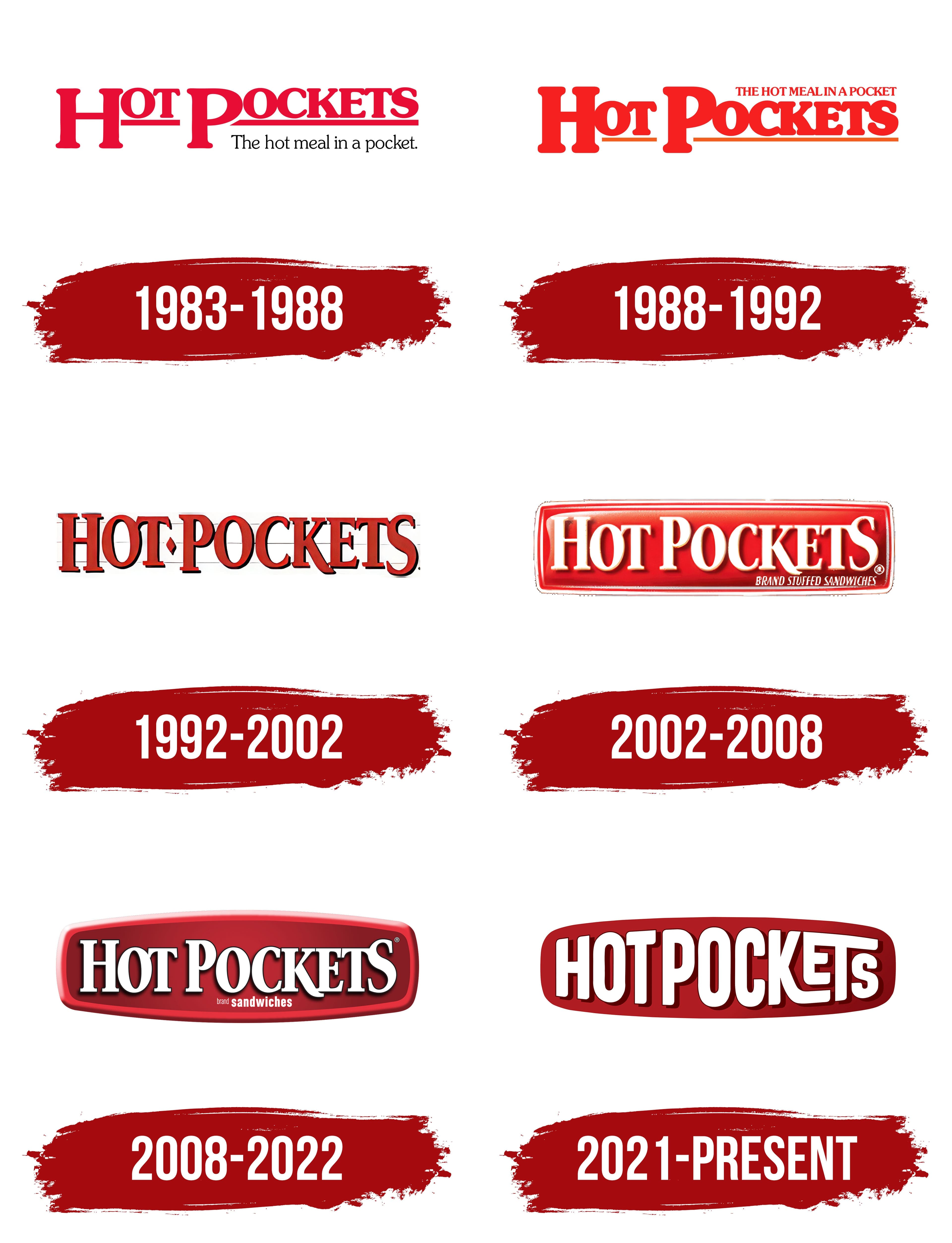
1983 – 1988
The first version of the company’s logo included the brand name and slogan. The red letters hinted at the need for heating before consumption, while the brand name directly conveyed the essence of the product: convenient meals in the form of dough pockets filled with fillings.
The brand’s popularity was based on its simplicity, compactness, and ease of preparation, also reflected in the red lettering. The initial letters of the words were highlighted and slightly lowered, symbolizing the legs of a microwave. The line underlining the name resembled a dough base heated in an oven.
The thin black font of the slogan “The hot meal in a pocket” clearly conveyed the product’s essence, leaving no doubt about its purpose.
1988 – 1992
As Hot Pockets grew in popularity, the logo changed. The font became bolder and fiery, emphasizing the brand’s expansion. The slogan was moved to the top of the logo, enhancing its visual impact. The spaces beneath the initial letters added a sense of lightness, symbolizing the product’s ease of use. The line in the emblem hinted at the crispy crust, a distinctive feature of the snack.
1992 – 2002

Due to the expansion of the product line, the company updated its branding. The new logo features a bold font with a black shadow, giving the text depth and dynamism. The letters have become more uniform, creating a sense of stability. A red diamond separates the name, and the background is adorned with three light stripes resembling a microwave grill. This design enhances the association with the cooking process, in which each letter represents a separate “pocket” that is toasted to a crispy texture.
2002 – 2008
With Nestlé’s acquisition of the brand, the logo changed once again. It was now designed to resemble a pocket, emphasizing the product’s uniqueness. The red color enhanced the association with a hot dish, while the emblem’s 3D appearance resembled a microwave button, hinting at the cooking process. The text retained its original font but was changed to white, symbolizing dough and frozen products made from fresh ingredients. A small explanatory note was added in place of the previous slogan to indicate its association with the stuffed sandwiches category.
2008 – 2022
The recipe change led to an update of the Hot Pockets logo. The emblem widened, resembling a pocket, with highlighted edges that symbolize the dough’s outer layer. A dark red gradient added depth and indicated the variety of fillings, unified by the key characteristic of being microwaveable. The white letters became sharper and more legible, with a focus on the word “sandwiches” to reflect the product’s essence.
2021 – today
When the brand was just beginning to gain popularity, it was especially important to emphasize the convenience and speed of preparing the product, as well as its rich flavor. The designers who worked on the logo captured these values in the visual image, contributing to the brand’s successful market entry.
The “Hot Pockets” emblem vividly expresses the essence of the product and the company’s commitment to convenience and simplicity of use. The logo is a rich red, associated with warmth, energy, and appetite. This color choice was intentional; it evokes a sense of hunger, perfectly aligning with a brand that offers hot snacks.
The central element of the visual mark is the “HOT POCKETS” text, which nearly fills the oval. This arrangement is reminiscent of the product itself: the filling, tightly wrapped in dough, fills the pocket, creating a sense of richness and completeness. The font features smooth, soft lines, symbolizing the balanced flavor and ease of preparation, key characteristics of the brand’s products.
An interesting feature of the logo is the reduction in the size of the letter “E” in the word “POCKETS.” This design choice was made to maintain balance and symmetry in the text, creating the impression that the word is “packed,” just like the product in its wrapper. This element adds a sense of dynamism and playfulness, making the logo more appealing and memorable.