


 Kiewit Logo PNG
The Kiewit logo embodies the rich construction experience reflected in roads, bridges, energy facilities, and water systems. The company has grown from a small construction company, gradually expanding its activities and taking on complex tasks from infrastructure to engineering structures while remaining focused on quality and reliability.
Kiewit began in Omaha in 1884, when brothers Peter and Andrew Kiewit founded Kiewit Brothers as a masonry contractor. Their father, John Kiewit, had emigrated from The Hague in 1857 and ran a brickworks where they learned the trade. Early milestones included the Lincoln Hotel in 1889 and the Bekins warehouse in 1900.
After the partnership ended in 1904, Peter continued the business. His sons Ralph and George joined in 1912, creating Peter Kiewit & Sons. Peter Kiewit Jr. entered in 1919 and managed the 1924 Livestock Exchange Building, the firm’s first contract above $1 million. In the late 1920s, Kiewit built the Nebraska State Capitol tower, Joslyn Art Museum, and Omaha Union Station.
In 1931, Peter Jr. reorganized the company as “Peter Kiewit Sons’ Co.” and began selling shares to key managers. Road construction supported growth during the Great Depression, beginning with a 25-mile Nebraska highway contract in 1932. Kiewit later expanded into Wyoming, Colorado, and North Dakota, while Bechtel focused more on industrial projects.
During World War II, Kiewit built bases, airfields, shipyards, and 760 facilities at Fort Lewis in 90 days. Postwar work included the Friant-Kern Canal, Garrison Dam, the Portsmouth atomic plant, Eisenhower Tunnel, and Fort McHenry Tunnel. The company later entered petrochemicals, power, mining, and heavy industry, competing with Fluor Corporation. After Peter Jr. died in 1979, Walter Scott Jr. took control, while employee ownership remained in place.
Meaning and History
What is Kiewit?
This is one of the largest construction companies in North America. It has grown from a small family business into a powerful corporation with thousands of specialists. The organization is constructing bridges, tunnels, power plants, and industrial facilities, implementing local projects or large-scale infrastructure developments worth billions of dollars.
1884 – today
The Kiewit logo consists of two main elements that combine the brand’s history with its modern image.
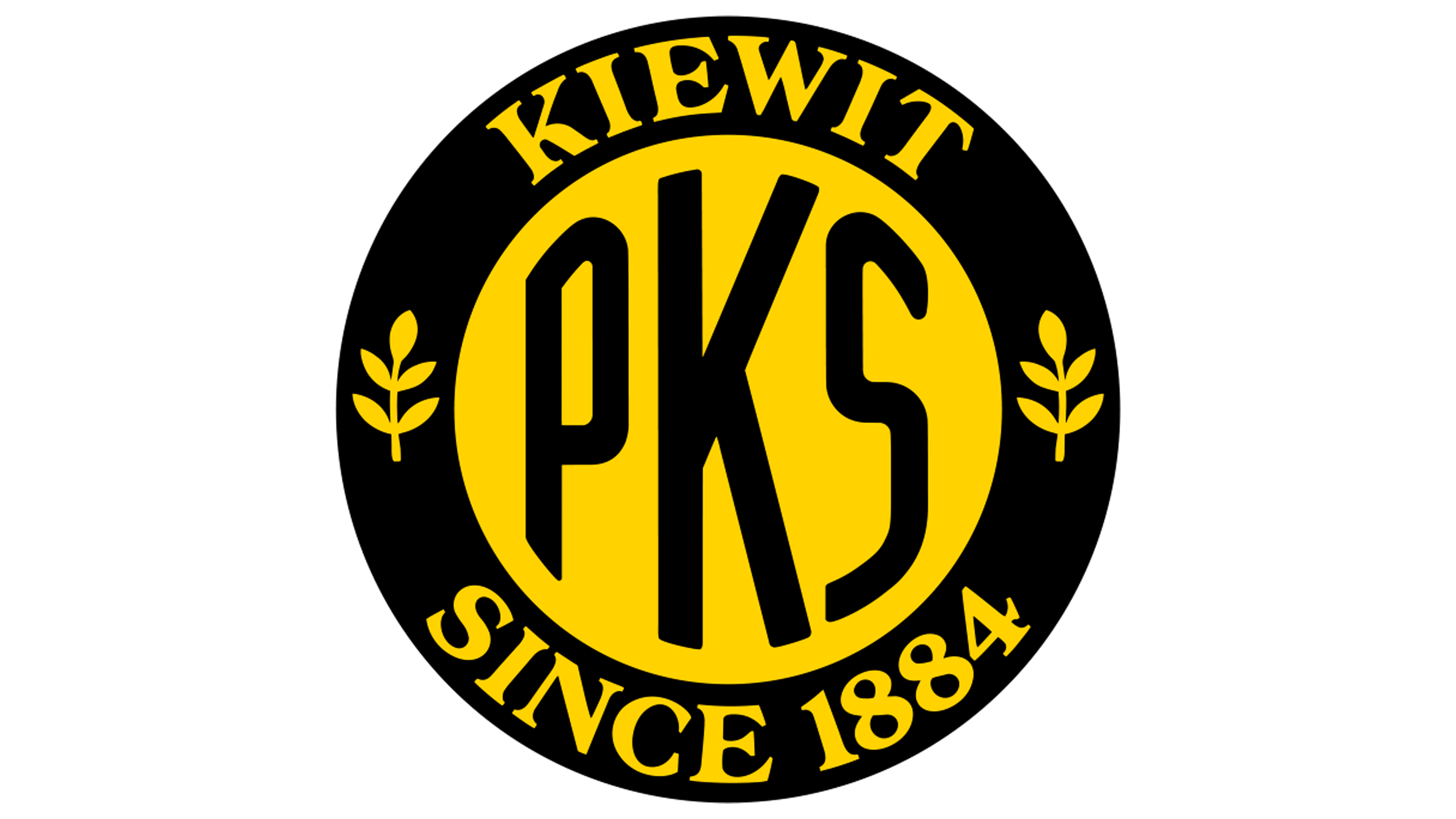
On the left is a circular emblem with a bright yellow background and a bold black border. At the center of this symbol are three letters, PKS, which reference the company’s original name, Peter Kiewit Sons, highlighting the legacy of a brand that has operated since 1884. This date is displayed at the bottom of the emblem, emphasizing the company’s long history, which began as a small construction business and grew into a major multi-industry corporation spanning construction, energy, and mining. Small, stylized leaves on either side of the “PKS” letters symbolize the company’s traditions and commitment to growth.
To the right of the emblem is the Kiewit name, written in a bold, sans-serif typeface, reflecting the reliability and practicality essential to the company’s construction and engineering operations. The black lettering conveys strength and dependability, directly aligning with the company’s industry, which has undertaken major projects since the late 19th century, ranging from railroads to complex infrastructure developments. Placing the company name to the right of the symbol creates a balanced composition, making the visual identity easy to recognize and interpret.
The modern version of the logo pays tribute to tradition while emphasizing the company’s relevance and professionalism with a clean, contemporary sans-serif font. This design choice underscores technological advancement and pragmatism, aligning with the company’s standing in the North American construction and engineering market.
Kiewit Construciton Logo