


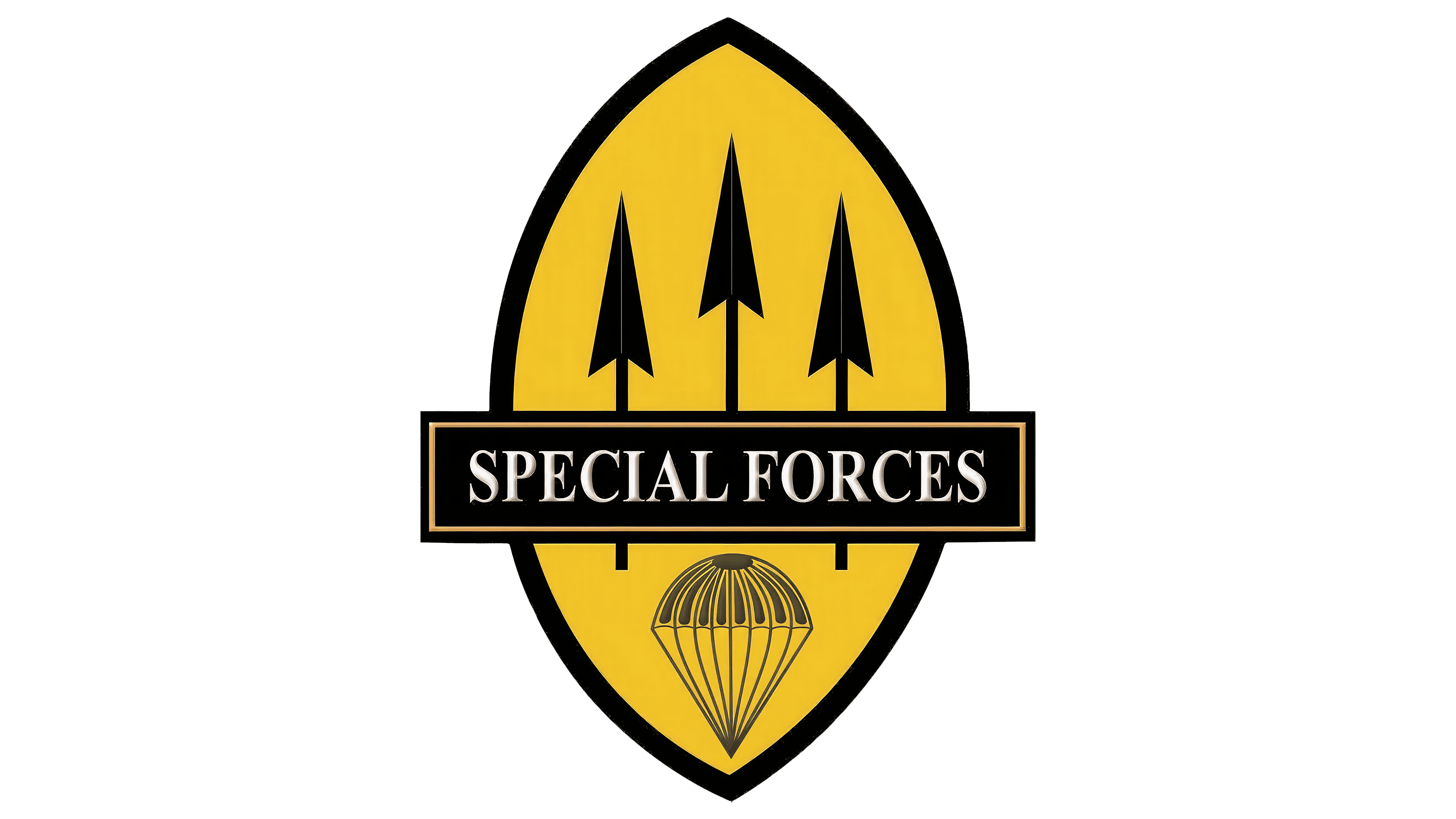
 Special Forces Regiment (Philippines) Logo PNG
The Special Forces Regiment (Philippines) logo represents an elite unit whose soldiers have undergone rigorous selection and training to earn the right to wear it. The unit is designed for complex missions requiring unconventional thinking, endurance, and top-tier professionalism.
The Special Forces Regiment (Philippines) traces its origins to 1962, with the establishment of the 1st Special Forces Company under Captain Fidel V. Ramos, who would later become the President of the Philippines. By 1963, it had evolved into a battalion specializing in counterinsurgency and had received specialized training from US Army instructors.
In 1965, the Special Forces Training Center opened at Fort Magsaysay, providing standardized training and significantly enhancing operational readiness. Throughout the 1970s, regiment personnel honed their combat skills for urban and jungle environments, actively engaging in anti-insurgency campaigns nationwide.
During the 1980s, the unit expanded both its size and capabilities, playing a prominent role against insurgent threats. In 1995, it transitioned into an airborne regiment, broadening its scope to airborne operations and adjusting training accordingly.
In the 2000s, the regiment underwent extensive modernization, upgrading its weapons and equipment. Between 2010 and 2015, training shifted emphasis to counterterrorism and urban warfare, actively supporting internal security operations. From 2016 to 2020, international cooperation intensified, involving joint exercises with foreign special forces units to enhance tactics and interoperability.
By 2024, the regiment maintained its elite standing through continuous adaptation, consistently improving its capabilities to meet emerging threats.
Meaning and History
What is Special Forces Regiment (Philippines)?
This elite unit of the Philippine Army conducts complex military operations, including counterterrorism, reconnaissance, and hostage rescue. Soldiers undergo rigorous training, mastering urban combat, jungle survival, aerial assaults, and underwater missions. The unit cooperates with international partners, participating in joint exercises and special operations.
1962 – today

The creation of the Special Forces Regiment (Airborne) was accompanied by a search for a symbol that could reflect both the elite status of the airborne troops and the character of special operations. The unit was formed in June 1962 at the initiative of Captain Fidel V. Ramos and a group of officers who had been trained at Fort Bragg, a US military base. Initially, it was a company; later, it grew into a group, and then into a regiment whose tasks included tactical mobility, psychological operations, and airborne actions.
The emblem of the Special Forces Regiment is an elongated vertical shield with sharp points at the top and bottom. The shield’s background is yellow, with black images. In the upper part, there are three parallel arrows with sharp tips and straight shafts pointing upward. They speak of the regiment’s offensive character and symbolize combat readiness, associated with airborne operations where speed of response was crucial.
In the lower zone of the shield is the outline of a parachute with a detailed canopy and suspension lines. Its presence emphasizes the servicemen’s affiliation with the airborne troops and indicates the specific requirements of combat training, which necessitate high qualifications and the ability to operate in airborne conditions.
The text “SPECIAL FORCES” is set on a separate horizontal black strip that runs through the middle of the composition and extends beyond the shield. White letters with a thin black outline are set in a serif typeface reminiscent of classical inscriptions on military plaques and monuments. The rectangle with the text is complemented by a thin yellow line along its perimeter, which enhances its visual importance and lends it a sense of strictness.
The color scheme is built on the combination of yellow and black. The yellow background conveys energy and discipline, while the black details fix attention and emphasize strength.
The Special Forces Regiment (Airborne) logo reflects the unit’s military affiliation and serves as a symbol of its training, combat missions, and history.