


 Tapatio Logo PNG
The Tapatio logo reflects the traditional taste of a Mexican sauce recognized outside its homeland for its bold character. It is a brand that maintains authenticity and personality, becoming a recognizable symbol of fiery cuisine.
Tapatio traces its roots to the Camarena family, who distilled agave in Los Altos, Jalisco, from the late 19th century. The region’s red clay soils and elevation above 2,000 meters produced larger blue agave with a fruitier, more floral profile than plants grown in the valley near Tequila. The Mexican Revolution destroyed the family distillery in 1910, stopping production for almost three decades.
In 1937, Don Felipe Camarena Hernández founded La Alteña in Arandas. He established methods the family still uses, including brick ovens, tahona crushing, open wooden fermentation vats, and copper pot stills. The name Tapatio referred to residents of Guadalajara and Jalisco. At the same time, the label featured a mariachi silhouette in a wide-brimmed hat.
For decades, Tapatio remained mainly a Mexican brand as Jose Cuervo and Patron expanded through international marketing and distribution. The Camarenas kept output limited and maintained traditional production rather than scaling up for foreign demand. Carlos Camarena, the third generation to lead the distillery, brought the brand to a wider audience through a U.S. importer in 2013, as premium tequila grew.
La Alteña produced other labels, including El Tesoro de Don Felipe, made at the same family distillery. That brand later passed to larger corporate owners. At the same time, Tapatio remained linked to Camarena family control and the production methods established in 1937 for its tequila in Los Altos, Jalisco.
Meaning and History
What is Tapatio?
It is a handcrafted Mexican beverage made from blue agave in the state of Jalisco. Production is carried out by a family-run distillery dating back to the 19th century, using traditional recipes and methods. A stone wheel is traditionally used to crush the agave. The product is highly valued by professional bartenders in the US for its exceptional quality and natural ingredients.
1937 – today
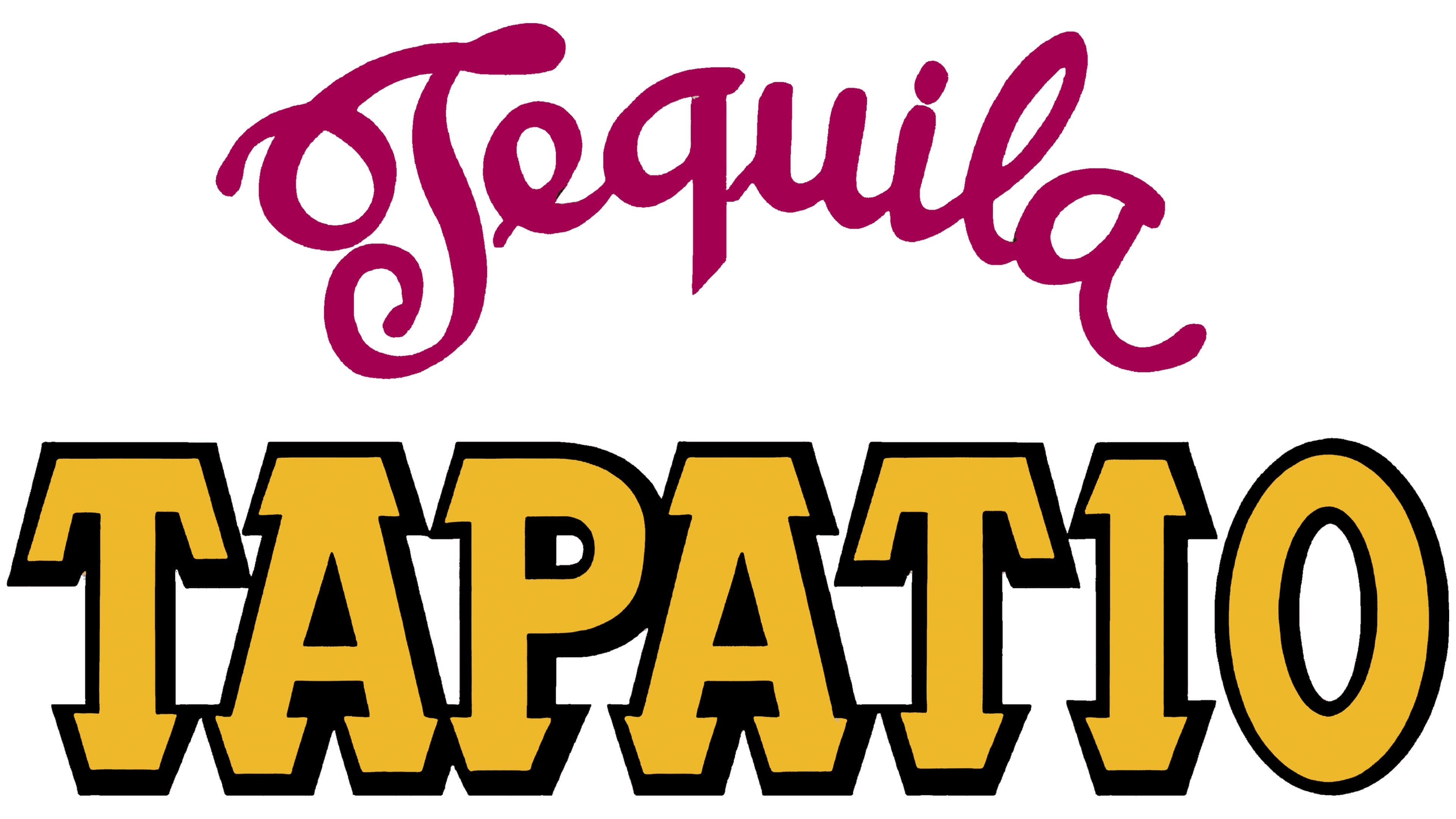
The logo of the tequila brand Tapatio reflects the deep cultural and regional traditions of the Mexican state of Jalisco, where the drink has been produced by the family-owned distillery La Alteña since 1937. Designed by the brand’s founder, Don Felipe Camarena, the logo has maintained visual continuity, undergoing only minor adjustments since its first presentation in 1940. The current version has been in active use since the mid-2000s, especially following the start of international distribution in the United States in 2012.
The logo consists of two typographic levels, each carrying its symbolic meaning and visual specificity.
The upper inscription “Tequila” is executed in a handwritten font with smooth, graceful lines reminiscent of traditional hand-painted Mexican ceramics. The unconventional fuchsia color, unusual for alcoholic beverages, highlights vibrancy, originality, and direct connection to Mexican aesthetics, particularly the charro culture, the traditional horseback riders and rodeo participants of Jalisco.

The lower part of the composition features the brand name “TAPATIO,” set in a heavy, block-like typeface with distinct angular serifs and expressive downward-pointing glyphs. The shape of the letters is further emphasized by a black outline that gives the inscription depth and visual dimension. The golden hue of the font symbolically evokes the hot sun of Jalisco, the agave fields, and the traditional charm of Mexico.
The typography of the lower inscription symbolizes stability, reliability, and historical commitment to traditional tequila production methods, including hand-crushing agave in a tahona and double distillation in copper alembics. Although the logo does not explicitly illustrate these processes, the design effectively conveys these values through its confident forms and symbolism inspired by classic Western style.