


 Virgin Media Logo PNG
Tele and radio waves emanate from the emblem; together with them, emotions, joy, and energy spread through the air. The Virgin Media logo indicates that the company has been in the communications business for a long time and plans to remain so indefinitely.
Virgin Media emerged from a long chain of cable mergers, debt crises, and brand changes. Its roots go back to 1984, when Croydon Cable began operating in south London. In 1988, United Cable of Denver bought it. After later corporate changes involving Tele-Communications Inc. and US West, the business became Telewest in 1992.
During the 1990s, Telewest expanded through deals with SBC Cable Communications, General Cable, Comcast UK, and Cable London. By November 2000, its network had passed almost 4.9 million homes. The 2001 dot-com crash hit the company hard, and in 2003, Telewest restructured by converting unsecured debt into 98.5% of its shares.
Another line came through NTL, founded in 1993 as International CableTel by Barclay Knapp and George Blumenthal. It used the liberalized UK cable market to buy regional operators and became the country’s largest cable provider. In 2002, heavy debt pushed NTL into Chapter 11 bankruptcy in the United States. It emerged in 2003 with much of that debt removed.
On October 3, 2005, NTL agreed to buy Telewest for $6 billion. The merger closed on March 3, 2006, creating NTL: Telewest. In July 2006, the company bought Virgin Mobile UK, which Richard Branson launched in 1999. On February 8, 2007, the company rebranded its consumer services as Virgin Media, replacing NTL, Telewest, and Virgin.net. Later, Liberty Global bought Virgin Media in 2013. In 2021, it merged with O2 UK to form Virgin Media O2, a major UK rival to BT Group.
Meaning and History
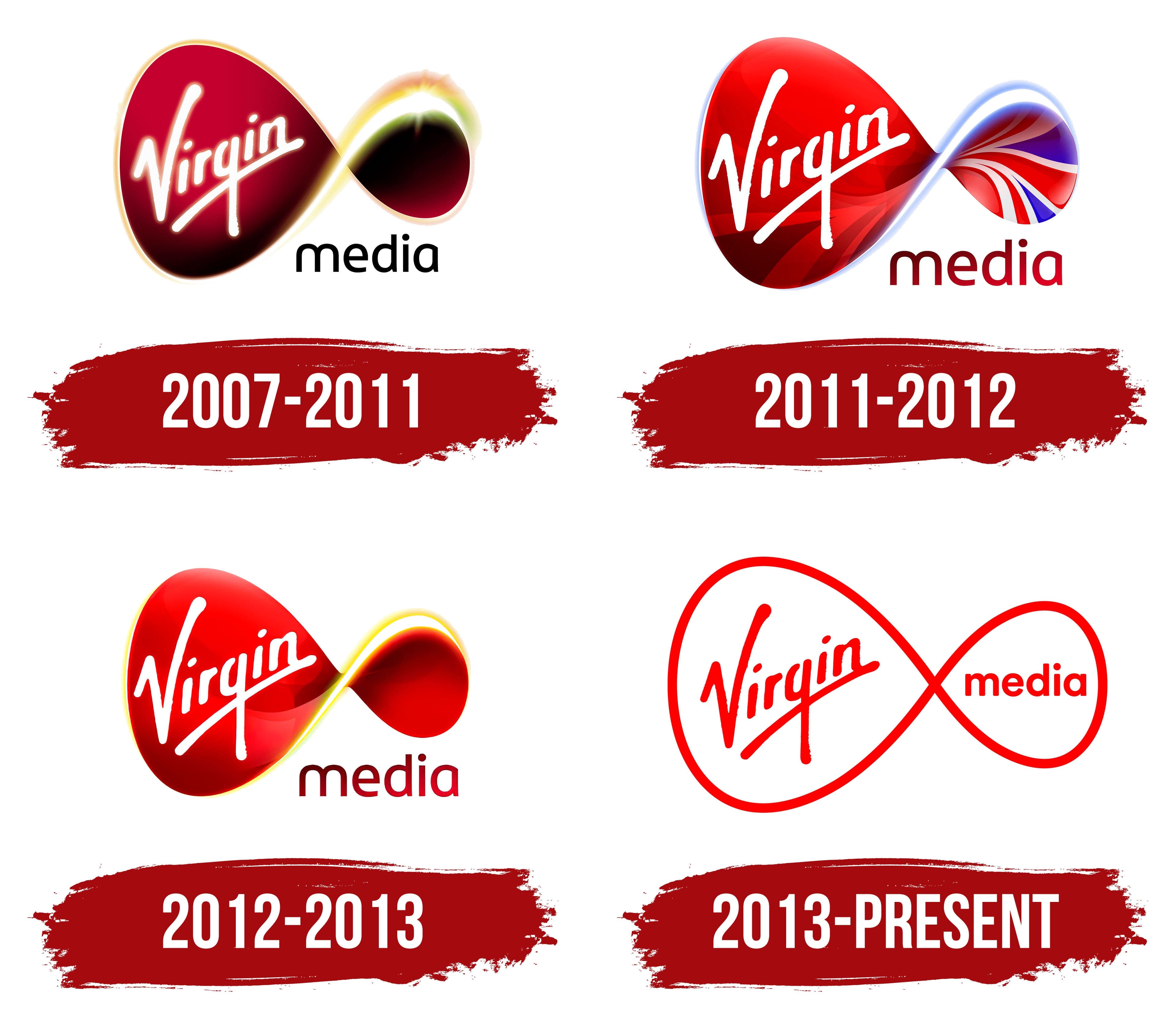
The telecommunications firm serves more than 50% of UK households and offers speeds up to 300 Mbps. But that is not the only thing that sets it apart. To showcase its competitive edge, Virgin Media adheres to specific values that define its visual identity. The brand communicates its presence through unusual marketing techniques, celebrity endorsements, and a strong set of values.
Another factor affecting Virgin Media’s visibility is its logo. It has largely remained the same, with only minor design changes, and has kept the infinity-sign shape. This is even though the company is no longer part of the Virgin Group and is part of the Anglo-Dutch-American enterprise Liberty Global. After the ownership change in 2013, she kept her old name and other identity elements, which she now uses under license.
2007 – 2011
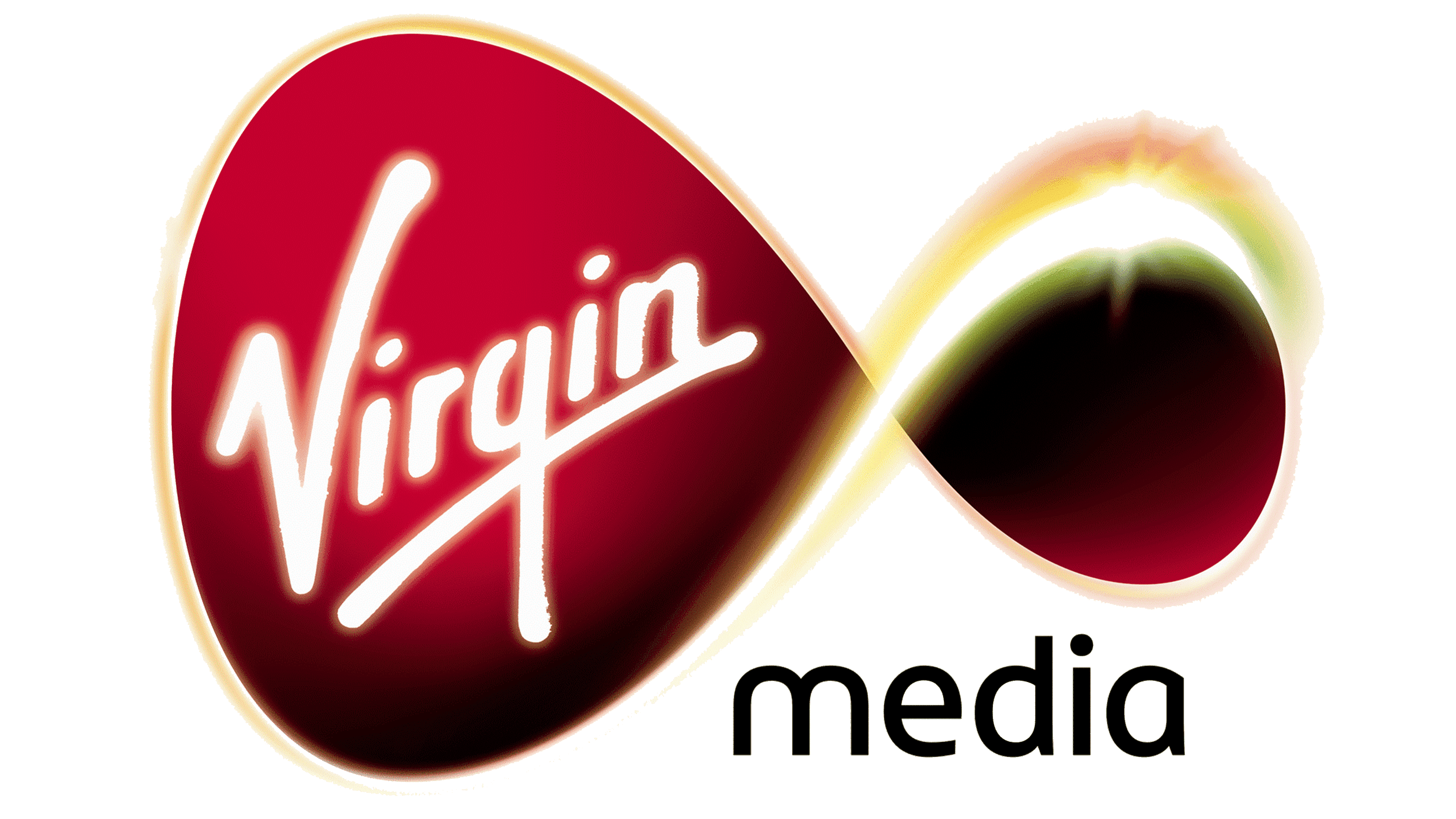
2006 marked a major milestone in Virgin Media’s history: Telewest and NTL merged to form NTL: Telewest. Then they acquired Virgin Mobile, which allowed them to offer a full range of services. At the end of the year, the new telecommunications organization announced a name change. As a result of the rebranding, it became Virgin Media Inc. and received a bright red inverted figure-eight logo.
On the left side of the infinity sign was the white word “Virgin,” handwritten diagonally and underlined with a long white line. The right side was darkened and, at the top, decorated with a bright, shining arc. The free space at the bottom held the black “media” lettering, consisting of sans-serif lowercase letters. The red-black gradient with uneven darkening gave the logo a special charm.
2011 – 2012
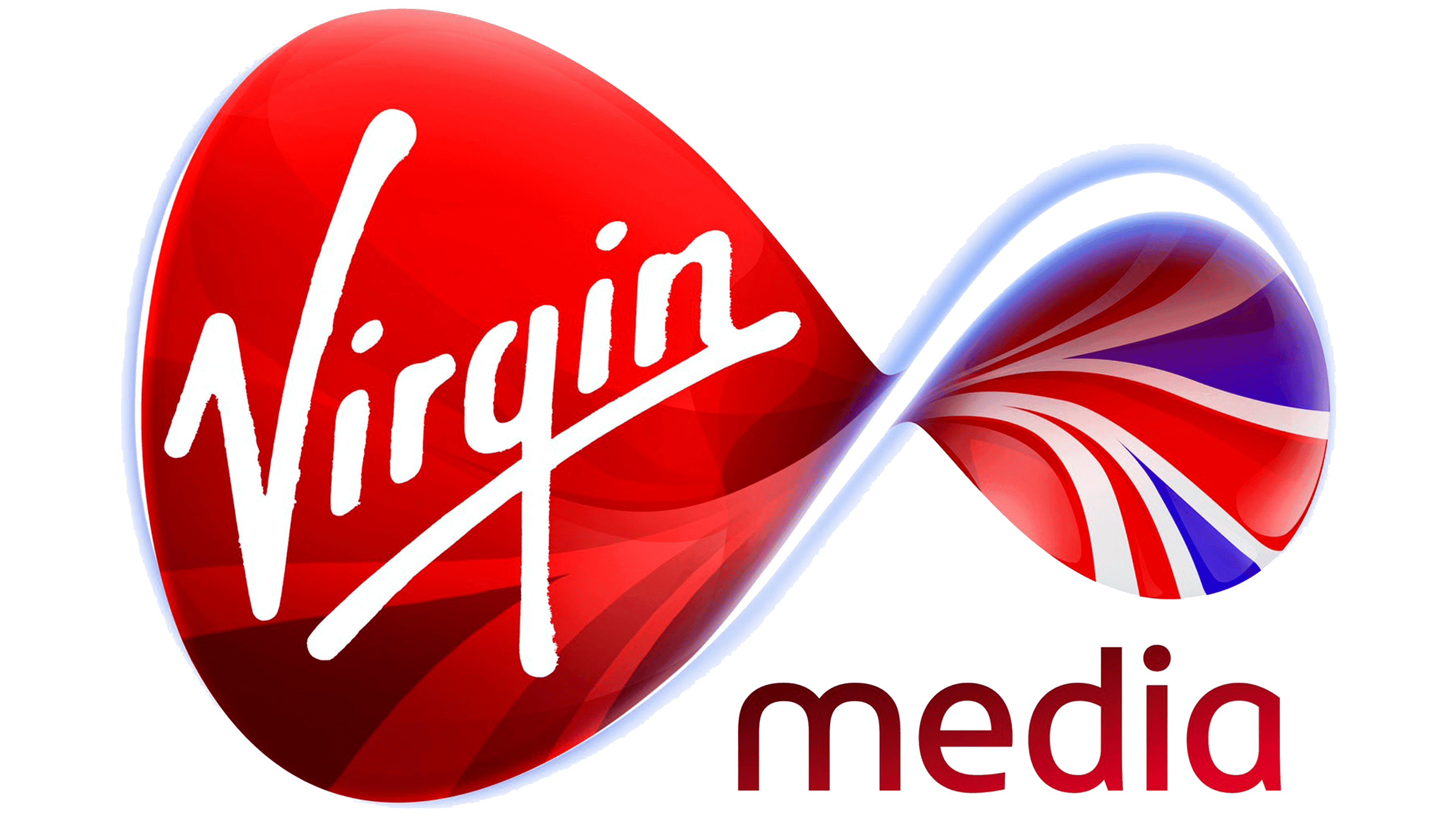
In 2011, the telecommunications company decided to show its patriotism and added the Union Jack element to the emblem, adorning the right side of the inverted eight. This redesign marked the 2012 Olympic Games in the UK and became a festive symbol for the upcoming Queen’s Diamond Jubilee.
The revamped visual identity was intended to highlight Virgin Media’s commitment to the home country. The public first saw the nationalist logo on October 15th, when a related advertisement aired. The infinity sign’s shape has not changed. But the designers played with colors: they turned the big blob into a red ruby, removed the bright highlights, and added a little neon glow. The fonts remain the same, but the word “media” became dark pink and larger.
2012 – 2013
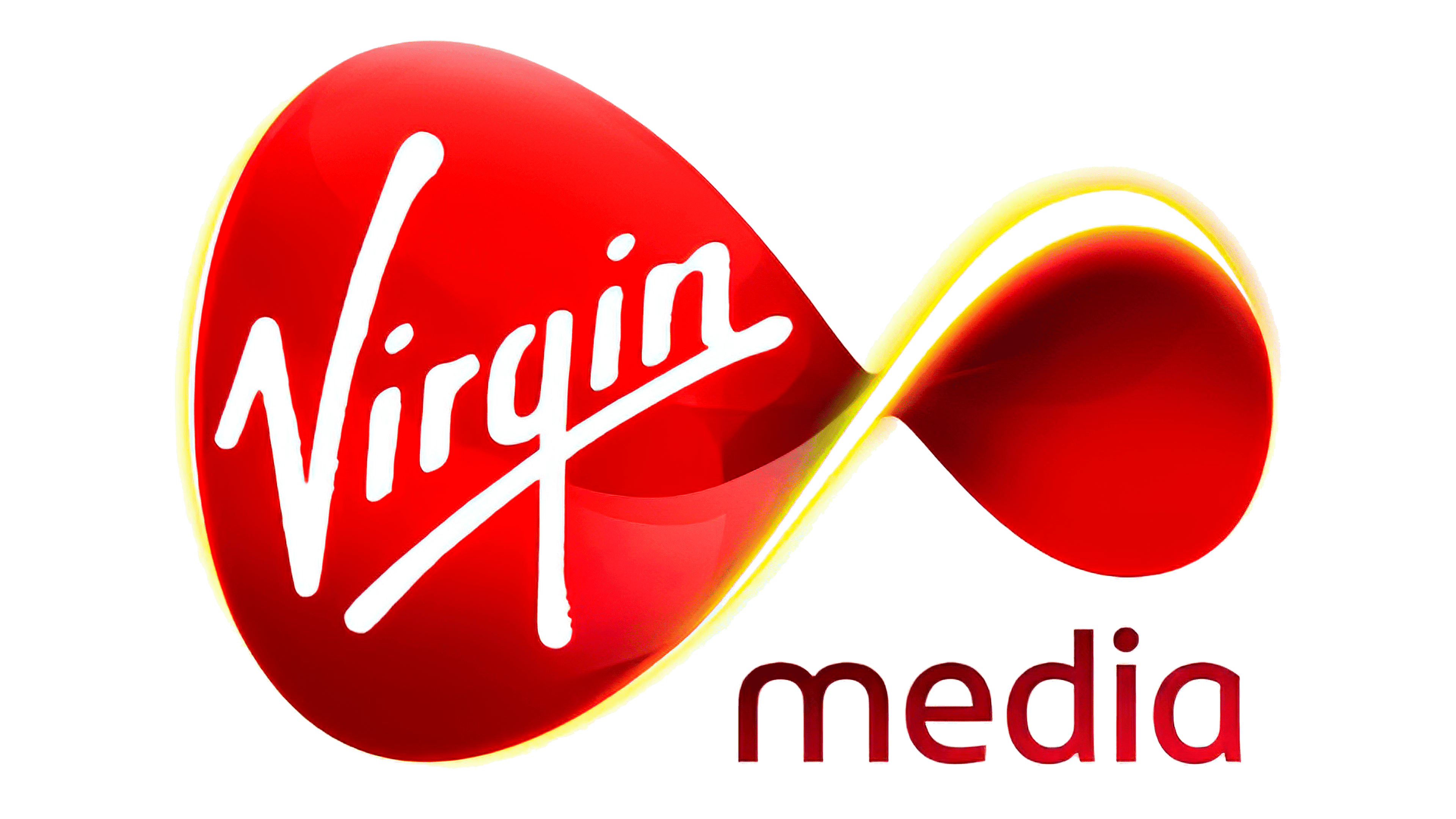
When the Olympic Games ended and the hype died down, telecommunications company Virgin Media returned to its classic logo design. Union Jack is gone. At the same time, it kept a faint neon sheen on the right side and reduced the black in favor of red.
2013 – today
In 2013, Virgin Media went minimalist: the company simplified its main symbol, eliminating the gradient and multicolor. Specialists from the Wolff Olins agency created the visual style. They left the usual typography and removed complex elements. The Virgin lettering was repainted red and appeared on a white background. To keep the right side of the “recumbent figure” from looking empty, the designers moved the word “media” there, from its previous position at the bottom. It was the first redesign since Liberty Global bought the company.
Font and Colors

Despite frequent, radical updates, the emblem has always retained a stable shape and remained a sign of infinity. The stylized symbol serves as the basis for the remaining details. It denotes Virgin Media’s reliability and consistency, reflecting the connection’s stability. Its purpose is to build confidence in a telecommunications organization’s services.
A non-existent font is used for the word “Virgin.” The logo’s lettering looks like it was drawn by hand with a graphic tool (a brush). The lettering in the word “media” resembles the Stolzl Medium typeface, but only with rounded corners.

Red is the classic color for all Virgin Media graphics. Previously, it was complemented with black and presented as a gradient, but now it is combined only with a blank white background. This simplification was another step towards minimalism.