


 ZZ Top Logo PNG
The ZZ Top logo is associated with music infused with the spirit of Texas blues and the boldness of rock and roll. The band’s story began with a desire to create a sound that evokes a storm of emotions and a connection to musical roots. The trio combined the best of tradition with a modern twist. Even the group’s name, unexpected and sharp, became an expression of their love for music inspired by the great masters of the past.
After his previous band, Moving Sidewalks, had disbanded, guitarist Billy Gibbons sought to start a new band in Houston, Texas. This led to the formation of ZZ Top in 1969. While searching for musicians, he met drummer Frank Beard and bassist Dusty Hill. The group’s name came about spontaneously when the members noticed pictures of blues artists B.B. King and Z.Z. Hill on the wall, inspiring them to call the band ZZ Top.
In 1971, they released their debut album, ZZ Top’s First Album. While it wasn’t a commercial success, it helped establish the band’s unique sound. The following year, they released Rio Grande Mud, and in 1973, Tres Hombres marked their first breakthrough. It featured the iconic song “La Grange,” inspired by a famous Texas brothel.
From 1976 to 1977, the band embarked on the massive “Worldwide Texas Tour,” which defined the mid-1970s for them. They created a Texas-themed stage atmosphere featuring live buffalo, snakes, and other animals, offering audiences a spectacular experience. The tour attracted over a million attendees, greatly expanding their fan base.
The release of Eliminator in 1983 was a defining moment. The band incorporated drum machines and synthesizers, introducing a new sound while retaining its blues roots. The red 1933 Ford Coupe, known as the “Eliminator,” became a signature symbol, and music videos for songs like “Gimme All Your Lovin’,” “Sharp Dressed Man,” and “Legs” became hits on MTV.
In the early 1990s, the band continued experimenting with music, releasing Recycler (1990) and Antenna (1994). These albums showed adaptability to new musical trends without losing their signature style. During this period, they undertook extensive tours and frequently performed at major music festivals.
A major milestone was their induction into the Rock & Roll Hall of Fame in 2003, recognizing their lasting impact on rock music. Their 2012 album La Futura, produced by Rick Rubin, returned to a rawer, louder sound.
In 2016, the group launched a large tour to celebrate its 47th anniversary. Sadly, in 2021, bassist Dusty Hill passed away. Per Hill’s wishes, longtime guitar tech Elwood Francis replaced him. The trio set a longevity record, with the same lineup lasting over 50 years from the band’s founding to Hill’s passing.
Alongside their music, the band’s distinctive look- Gibbons and Hill with their iconic long beards (while Frank Beard, ironically, wore only a mustache)- became legendary. With over 50 million records sold worldwide as of 2023, this rock group remains one of the most successful in history.
Meaning and History
What is ZZ Top?
This legendary United States rock band fused hard rock, boogie-woogie, and blues into a vibrant musical style with a Texas flair. Their music is recognizable for powerful guitar riffs, energetic live performances, and the distinctive appearance of its members. Two musicians are known for their long beards, while the drummer, ironically, does not have one. The band blends blues roots with elements of modern rock and humorous lyrics, creating songs that become hits. Their unique style and consistent sound have inspired countless artists and made the group iconic in rock music.
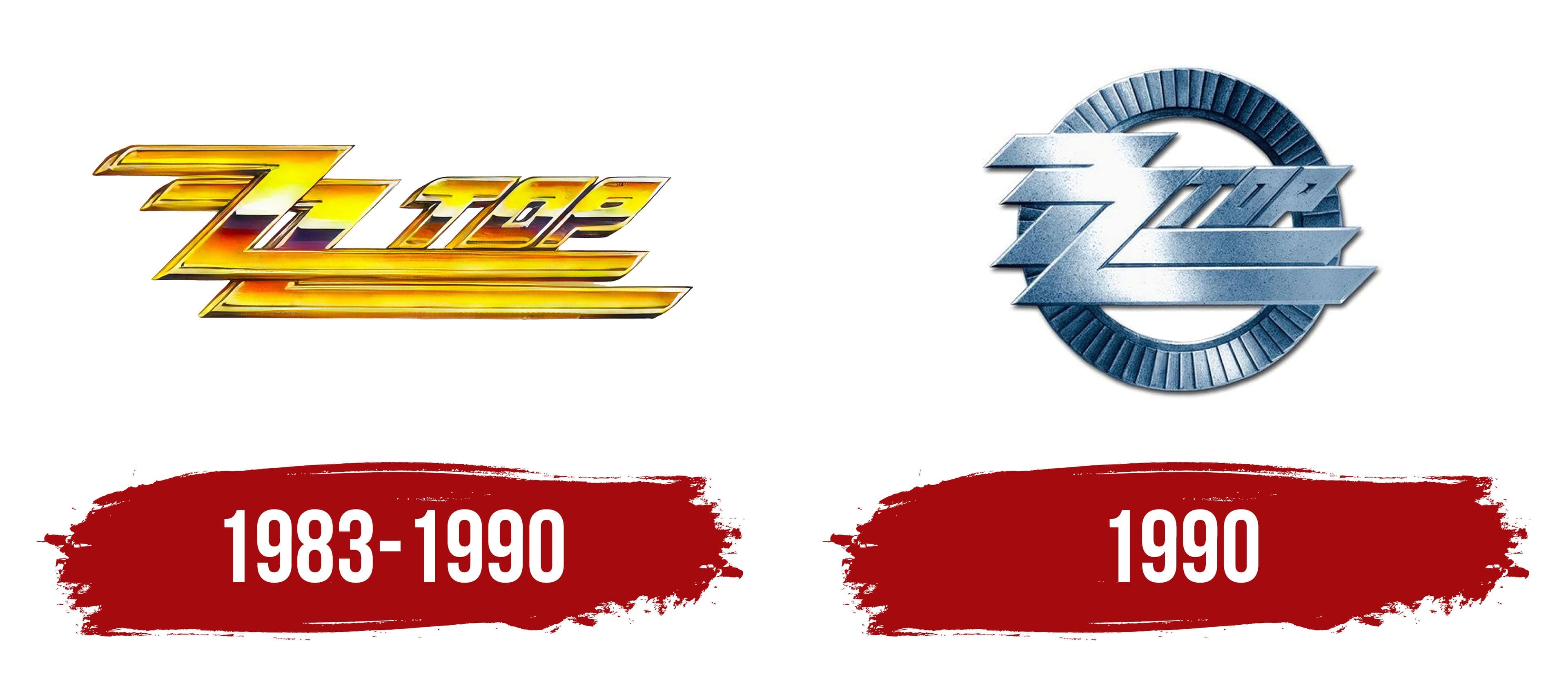
1983 – 1990

The logo on the cover of ZZ Top’s album Eliminator 1983 reflected a new stage in the band’s work and emphasized their bright style. The design embodied a visual identity associated with the energy of rock ‘n’ roll and the band’s iconic sound.
The emblem features the band’s name, rendered in metallic gold with deep shades of brown, orange, and yellow, adding brightness and dynamism to the text. The three-dimensional effect is achieved through shadows and highlights, creating a visually saturated look. Two “Z” letters are superimposed: the front letter is slightly shifted upward and forward, creating a sense of depth. The letter “T” from the word “Top” is organically placed on top of the long horizontal line of the second letter “Z,” linking the fragments into a single composition. The font features sharp lines that emphasize its aggressive, powerful visual impact.
The album Eliminator’s logo brought the band commercial success. Its style aligned with the album’s sound and theme, capturing the spirit of the 1980s. The gold color and three-dimensional design reflected the band’s musical ambitions and desire for visual uniqueness.
1990
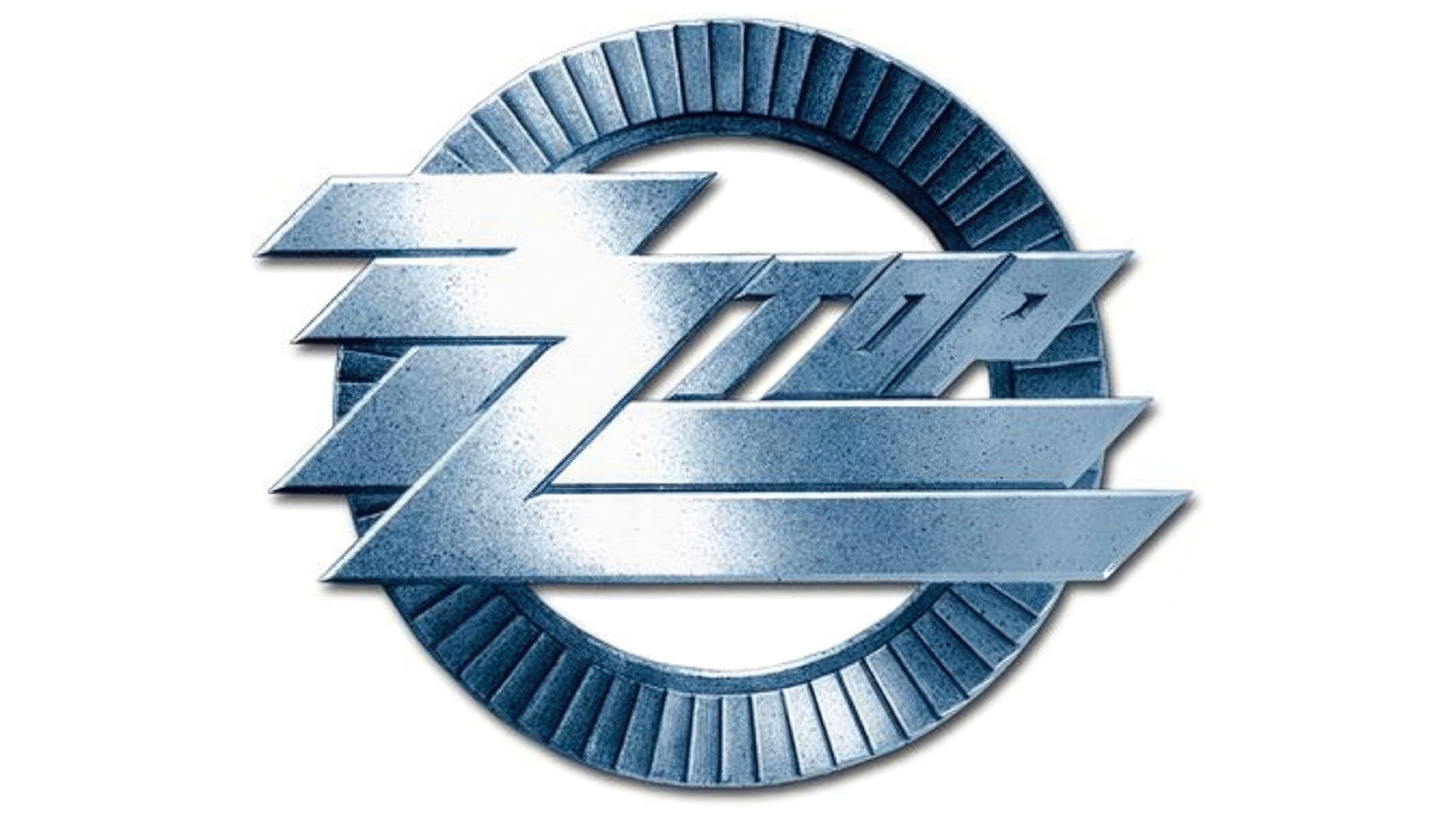
The 1990 logo, featured on the cover of the band ZZ Top’s tenth album, Recycler, was a logical continuation of the band’s previous visual style. The basis remained the usual composition, with the addition of two elements: the letter “Z” and the word “Top,” but the appearance took on a more modern, aggressive tone. The band’s name is now silvery-metallic, replacing the previous version’s gold hue. The new color accentuates the album’s industrial style and reflects the early 1990s atmosphere.
A key addition was a three-dimensional metal ring located behind the text. The ring is decorated with embossed wedges along the perimeter, enhancing visual volume and adding dynamism to the composition. The designer moved the second letter “Z” forward and slightly tilted the text. The arrangement of the letters adds energy and highlights the group’s bold style.
The silvery metallic hue and industrial design style matched the band’s musical direction during this period. The logo strengthened the connection between the visual image and the music, demonstrating the band’s uniqueness.