 After Effects Logo PNG
The After Effects logo represents video editing and animation. It is associated with creating professional visual effects, where each frame is carefully designed, and creative work is concealed behind a streamlined interface.
After Effects began in January 1993, when the small CoSA team, short for Company of Science and Art, released a visual effects and compositing program for Macintosh computers; at the time, video work on personal computers was still limited, while high-end effects were usually created on expensive specialist systems. CoSA lacked the resources to scale the product and was acquired by Aldus Corporation only months after the first release.
A larger corporate shift followed in 1994, when Adobe bought Aldus and inherited After Effects. Version 3.0 arrived in 1995 with broader animation and graphics tools and closer links to Photoshop workflows. In 1997, support for third-party plug-ins opened the program to outside developers, helping create a large ecosystem of effects, particle tools, text systems and 3D extensions.
Through the 2000s, After Effects expanded its 3D composition, masking and typography tools and became widely used in television, advertising and film post-production. Competing products such as Autodesk Combustion remained in the market. Still, the program gained a strong position among motion designers and visual-effects artists working across broadcast and commercial production.
In 2013, the software moved to the Creative Cloud subscription model. Later versions added Content-Aware Fill, Face Tracker and support for 360-degree video, extending its role in object removal, facial tracking and immersive media work. The updates also broadened modern compositing workflows.
Meaning and History

What is After Effects?
Professional software for creating complex video effects and animations. Widely used in film production, commercials, and music videos. Users create titles, smooth transitions, and perform detailed color correction. The workflow is based on layers and keyframes, enabling precise control over every parameter. The software focuses on frame-by-frame effects rather than video editing. Hundreds of third-party plugins further expand its capabilities.
1993 – 1995

The history of the CoSA Aldus After Effects program began with a visual image that resembled television graphic intros from the early 1990s. The logo was square, with a gray-and-red palette that evoked editing and the technological aspects of video production.
In the center were the letters “AE.” They were executed in a black sans-serif font, reflecting the minimalist visual style of the digital era.
The background of the square consisted of a double circle combined with a cross pattern. It created a grid image for frame alignment, familiar to users from video composition. The background emphasized the program’s purpose, connecting it with tools for creating and arranging imagery.
1995 – 1999

After the initial versions that used letter markings, the program’s creators focused on the release number. The central figure became a large number “3” placed inside a blue circle. The white number, outlined in a thin black line, stood out against the background, emphasizing the product’s transition to its third generation.
The background consisted of gray and two shades of blue with black contours forming an editing grid. Their combination added depth and created visual associations with technology and digital tools. A red triangle in the upper-left corner remained from the previous version, linking the new image to the logo’s history.
The logo for Adobe After Effects version 3 conveyed the company’s intention to position the product as a professional tool for video production, highlighting innovation and product development.
1999

The visual image of the fourth version marked the program’s transition to a more restrained style. The central symbol was the number “4” placed on a gray background. It was rendered in thin white lines with a black outline. The number appeared visually elegant and well-defined in structure.
The previous bright elements were abandoned. The red color that had accompanied earlier versions disappeared, giving way to a gray palette. The overall composition took on a calm character, and a light blue tint in the frame added depth and a sense of completion to the image.
In the lower-right corner, the marking “4.0.” appeared. The version number emphasized the program’s professional nature and its focus on industry specialists.
The logo conveyed the shift toward professional video and film production. It confirmed the intention to establish the program’s status as a tool for complex visual tasks.
1999 – 2001

The new changes in the After Effects logo were limited to updating the version number. In the lower-right corner, the “4.0” marking was replaced with “4.1.” It indicated a release with minor functionality improvements and marked the transition to a new product edition. The visual foundation remained unchanged. The central symbol remained a gray square with a blue frame and a thin black contour.
2001 – 2003

The visual image of After Effects underwent a dramatic change when an electric tower surrounded by lightning appeared in the logo. The symbol reflected the program’s primary purpose, closely tied to video processing and special effects creation.
The previous gray tones were replaced with a bright blue-green gradient, adding depth and emphasizing the product’s technological nature. The lightning around the tower conveyed the idea of video processing speed and the tool’s power.
The shape remained square, with a frame surrounding it, but the frame’s structure evolved into a gradient of blue shades.
2003 – 2006

The redesign of the After Effects logo marked a shift from a cold visual approach to a lighter, more dynamic image. The new design was based on a sunlit background dominated by yellow and orange tones. The palette created a sense of warmth and energy, reflecting the product’s creative direction and its connection to visual effects.
In the center of the design stood a tower built with strict geometric proportions. Its shape evoked associations with precision, structure, and the program’s technical nature. Around the top of the tower were white lightning bolts drawn with greater refinement. They emphasized the theme of effects and editing, reinforcing the association with the dynamics of light and motion.
The color field was based on the contrast between the warm background and a blue frame. The frame served as a connecting element between the new and previous logo versions, maintaining continuity and visual unity with Adobe’s corporate system.
The updated mark reflected the product’s transition to a stage where the main goals were tool precision and visual processing quality.
2006 – 2007

The After Effects logo received a new design. The company’s designers abandoned previous visual symbols, such as lightning and towers, and introduced a three-dimensional square with rounded corners. On top of it was placed a purple form resembling the letter “C.” It had a multilayered structure and reflected the program’s key function. The concept was based on working with multiple layers of composition and editing elements.
The square’s background is made up of white and gray tones. They emphasized depth and highlighted the purple mark in the center. The three-dimensional, glossy effect gave the visual appearance a technological, modern feel.
The three-dimensional style of the logo influenced the further development of After Effects’ visual identity and became a starting point for the future design of Adobe products.
2007 – 2008

The After Effects emblem was redesigned to be simpler. The three-dimensional forms were replaced by minimalism. The main element became a square with a smooth lavender gradient.
In the center were two capital letters “AE.” They were set in a simple sans-serif font and colored white. A light shadow effect added depth to the symbols, creating a soft embossed impression.
The design became part of Adobe’s overall concept to unify and simplify the visual style of all the company’s software products.
2008 – 2010
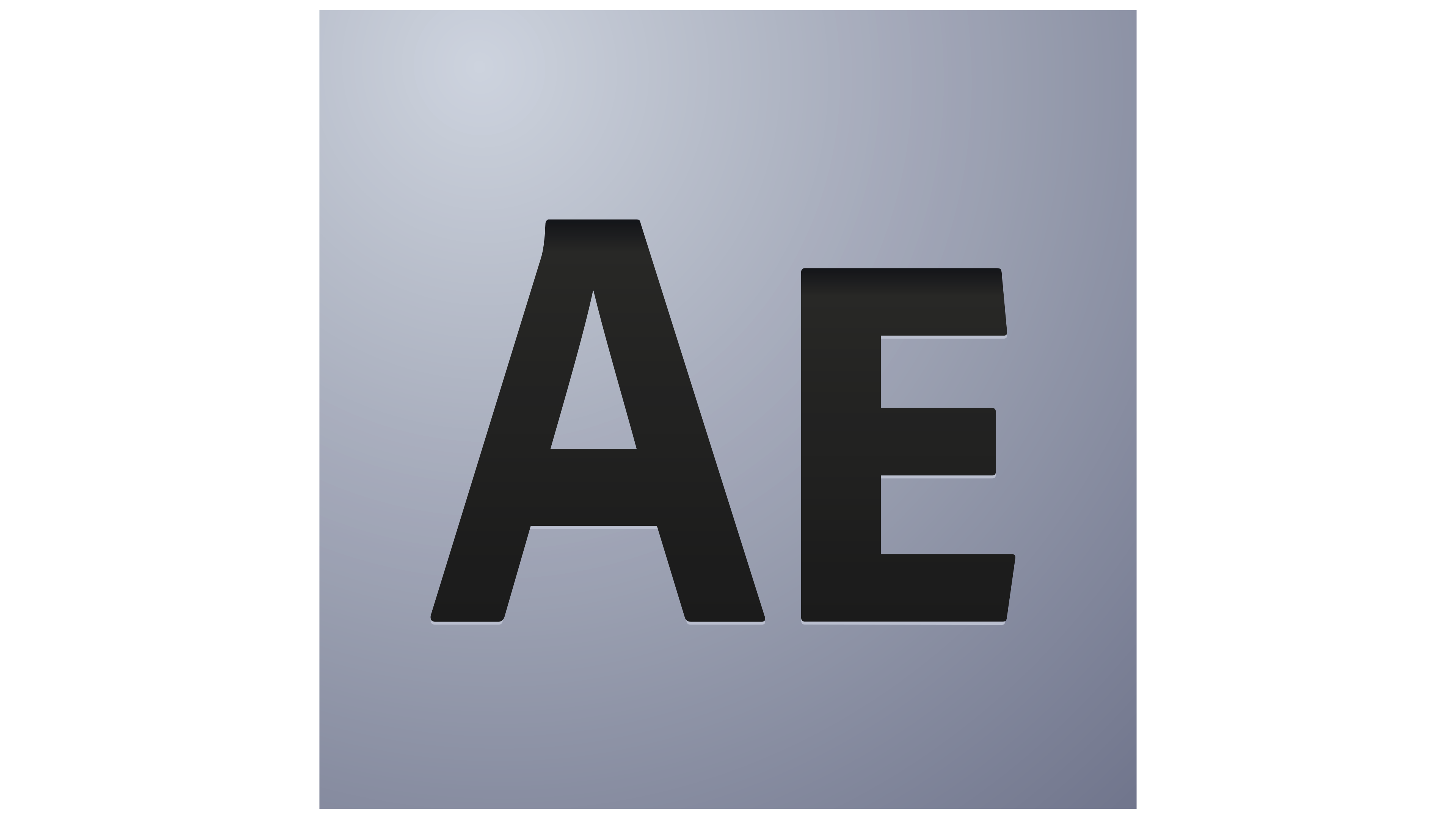
The new version, unlike the previous one with a purple background, features a cool gray gradient with a metallic tint. It was associated with precision, engineering, and the program’s professional focus.
The letters AE became black and visually heavier. They appeared slightly pressed into the surface, creating a sense of depth and visual weight. A sans-serif typeface closely resembling Adobe Clean was used to emphasize a strict corporate tone.
The restrained color scheme, concise typography, and balanced proportions reflected the functionality of a product designed for professional use in the visual effects field.
2010 – 2012
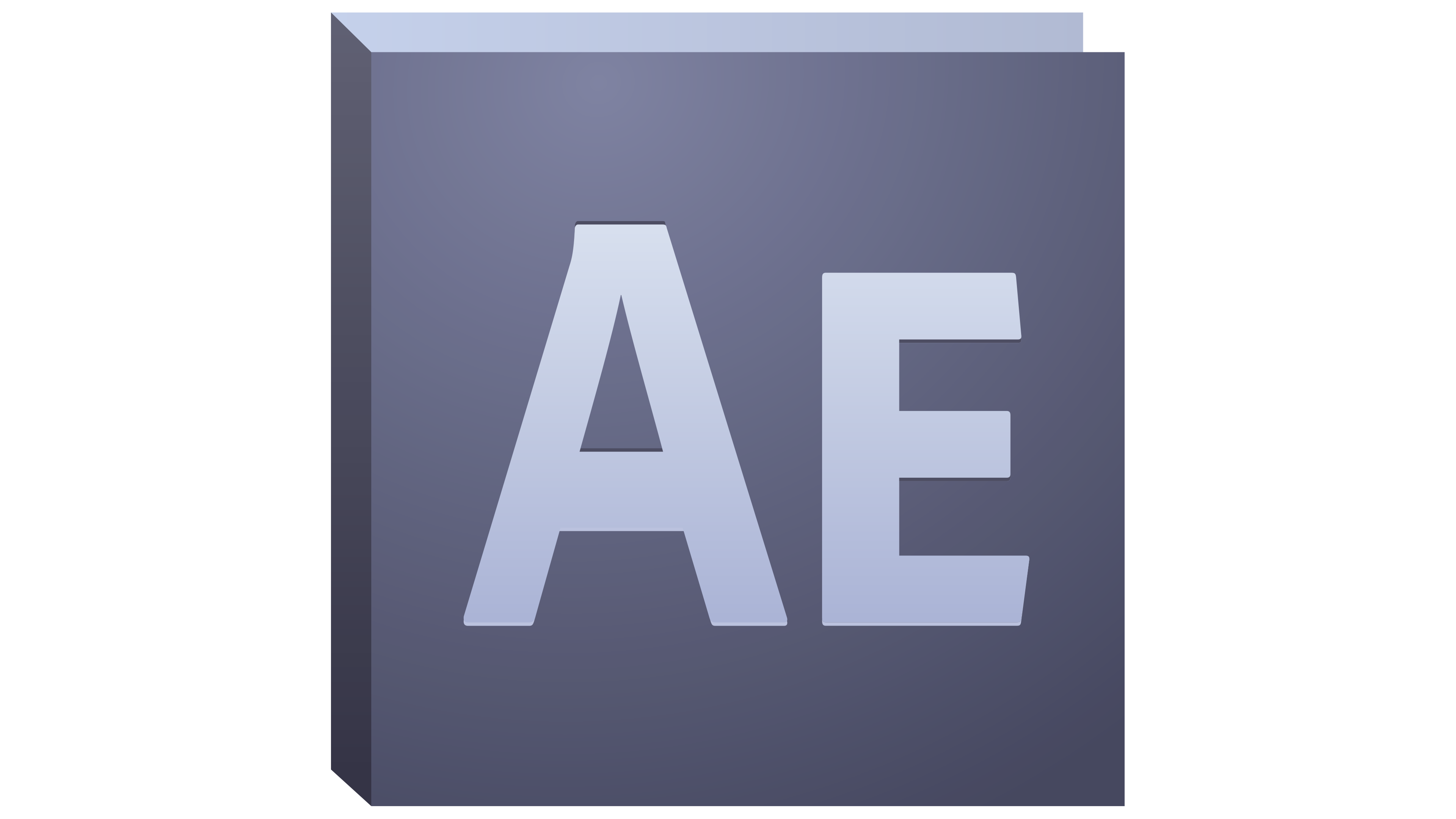
The new logo adopted a colder, more reserved tone. The previous flat, square base gained volume and began to resemble a more solid mark, stylized as a closed book or a special-effects manual. It emphasized the program’s status as a specialized tool for video work.
The background changed to a light gray-violet shade, close to the color of the sky at dawn. It was calm and subtle in tone. The letters “AE” were painted in a light gray-blue. The palette evoked a rainy sky and hinted at inspiration that arises after a pause.
The typography remained unchanged. A simple sans-serif version was used, consistent with Adobe’s minimalist approach at the time. The design combined technological precision with a clear visual style, advancing the development of the entire product line.
2012 – 2013
The flat style returned, and the logo received a richer palette. The base became a dark blue square, close to the color of ink against a night sky. In the center was the inscription “Ae.” The letter “e” was presented in lowercase for the first time, emphasizing a modern interface approach and focus on product accessibility.
The letters were done in a fluorescent violet tone. It created a strong contrast with the dark background but remained comfortable to view. The font remained sans serif, concise, and functional to preserve clarity and versatility.
The square shape was, for the first time, complemented by a thick frame painted in the same purple tone as the text. It strengthened the compositional balance and visually reinforced the image of a stable editing tool. The flat style, saturated colors, and simple structure formed the foundation that later became the standard design system for all Adobe programs.
2013 – 2015
The new version of the After Effects logo gained a stricter character. The background became darker, the blue shade even deeper. Against it, the letters “Ae” appeared more refined and elongated upward. The font remained simple and sans-serif, but the symbols’ geometry became slimmer, altering the perception of the entire composition.
The letters maintained a violet-purple tone, but the shade shifted toward a lighter range, closer to lavender, adding softness.
The frame around the square became thinner. The reduction in thickness enhanced the sense of precision and elegance. The logo continued the minimalist line, moving toward a more professional, composed appearance for the program.
2015 – 2020

In the After Effects emblem, the changes mainly affected the color scheme. The text and frame turned magenta-pink and took on a neon tone.
The letters “Ae” kept their previous structure. The combination of a bright frame and a deep background emphasized creativity and the program’s professional use.
2020 – today
The current version of the logo received rounded square corners for the first time. This made the shape softer compared to previous versions. The background turned dark blue, and the internal text took on a violet-blue tint. This increased contrast and made the mark clearer.
The Adobe Clean typeface is still used for the “Ae” letters. The font reflects the company’s concept, which emphasizes simplicity and consistency across all interfaces.
Adobe redesigned all application icons, bringing them into a unified system. The transition to rounded corners was driven by usability on modern platforms and a more harmonious visual perception.
The blue-violet color in the logo symbolizes creativity and aligns with After Effects’ core functions. It expresses the program’s nature as a tool used for animation, visual effects, digital graphics, and the film industry.