


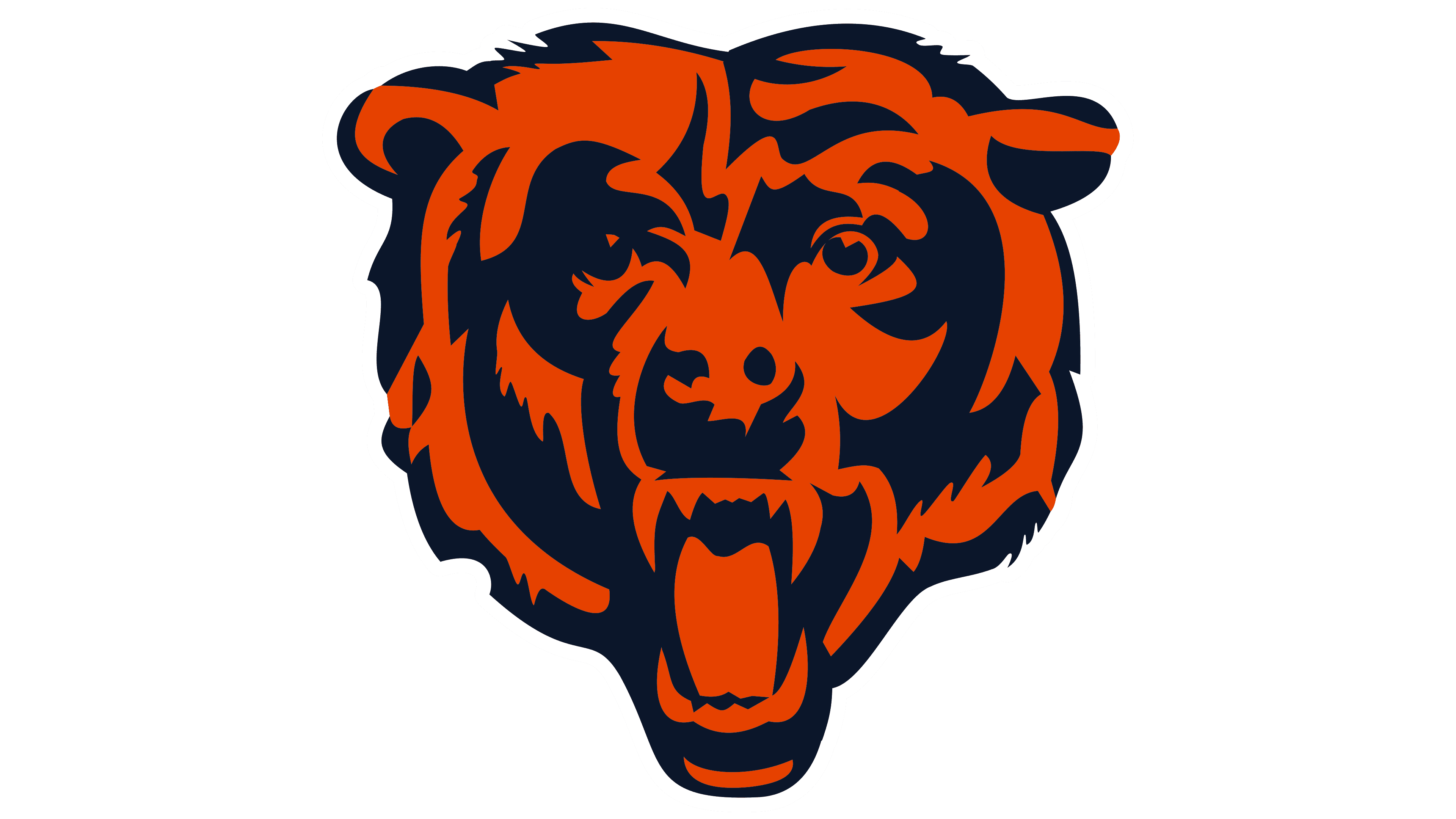
 Chicago Bears Logo PNG
The Chicago Bears logo reflects modern minimalism and represents Chicago in American football. The bear head design is not just a striking visual; it carries deep meaning for the franchise. The blue and orange colors reflect the team’s long-standing traditions, and the bear’s head symbolizes strength, ferocity, and resilience. The new Chicago Bears logo reflects the team’s hometown and the animal it is named after, capturing the team’s essence and serving as a bold statement of its identity and aspirations. The shift to using the bear head as the primary logo marks a significant milestone in the team’s history and should resonate with both new fans and longtime supporters.
The Chicago Bears are a professional American football team in the National Football League’s North Division. Their history began in 1919 when the A. E. Staley Food Starch Manufacturing Company founded its football club in Decatur, Illinois. The company’s chief manager, George Chamberlain, wanted their club to keep up with the best semi-professional teams. He invited George Halas and Edward Sternaman to lead the franchise.
In 1920, the two celebrated coaches began training the Decatur Staleys. In 1921, they gained full control. They bought the franchise rights from A. E. Staley for $5,000 and moved it from Decatur to Chicago. According to the agreement, the original name would not change for one season.
In 1922, the Chicago Steelers received a new name. At that time, the football players shared Wrigley Field stadium with the Chicago Cubs, a baseball team known for its mascot, a cub (a bear cub). The franchise owners decided to stick to the “bear” theme regarding the team’s name. Hence, the team changed its name to the Chicago Bears. As for the color scheme, George Halas borrowed the University of Illinois’s darker shades of blue and orange.
Financial difficulties began after the 1932 championship season, forcing Edward Sternaman to sell his shares. As the sole franchise owner, George Halas controlled the franchise until he died in 1983. After his death, his eldest daughter, Virginia McCaskey, inherited the Bears. Now, the McCaskey family owns 80% of the franchise; Patrick Ryan and Andrew McKenna, the executive chairman and director of Aon Corp., respectively, own 19.7% of the club’s shares.
Meaning and History
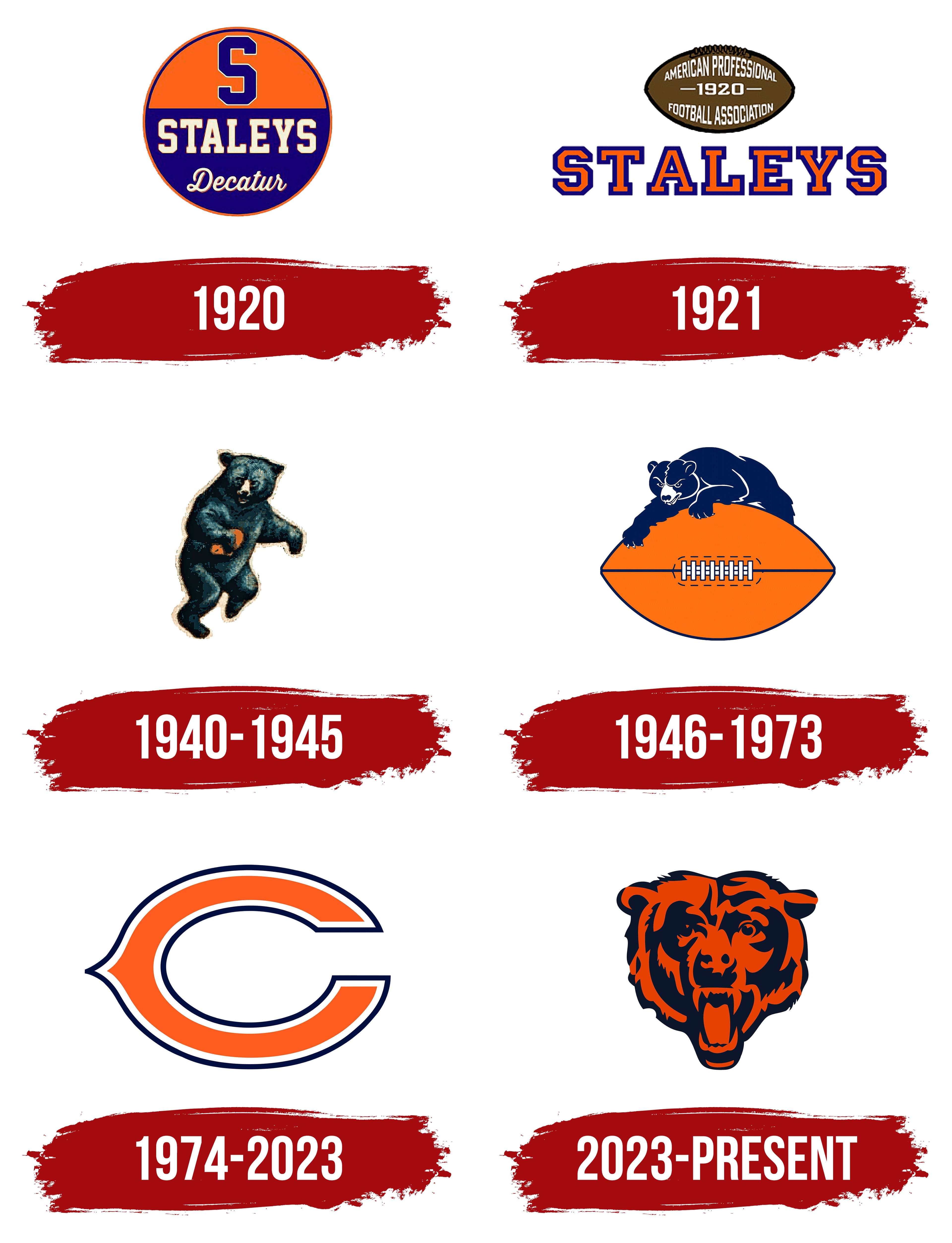
The Chicago Bears have had six official logos throughout their 100-year history. Two of them featured the image of a bear. The seventh version, unveiled in 1993, has never been used. Despite their love of redesigns, the Chicago Bears remain conservative and still use the 1974 logo. Management felt the orange, thymus-shaped C fit the club’s vision. The 1993 version did not catch on, although the artists added a bear, which the football players considered the team’s mascot.
The bear was depicted on the Chicago Bears’ emblems from 1940 to 1973, despite the team’s establishment in 1920. In the early years, it used its sponsor, Decatur Staleys, and a logo featuring a ball and the words “Staleys” (the club’s then-nickname).
What is the Chicago Bears?
The Chicago Bears are the most successful franchise in the National Football League, holding the record for the most matches won and multiple division, conference, and league championships. In 1985, they won the “Vince Lombardi Trophy” at the Super Bowl. From its founding in 1920 until 1922, it changed its name several times: first as the Decatur Staleys, then as the Chicago Staleys.
1920
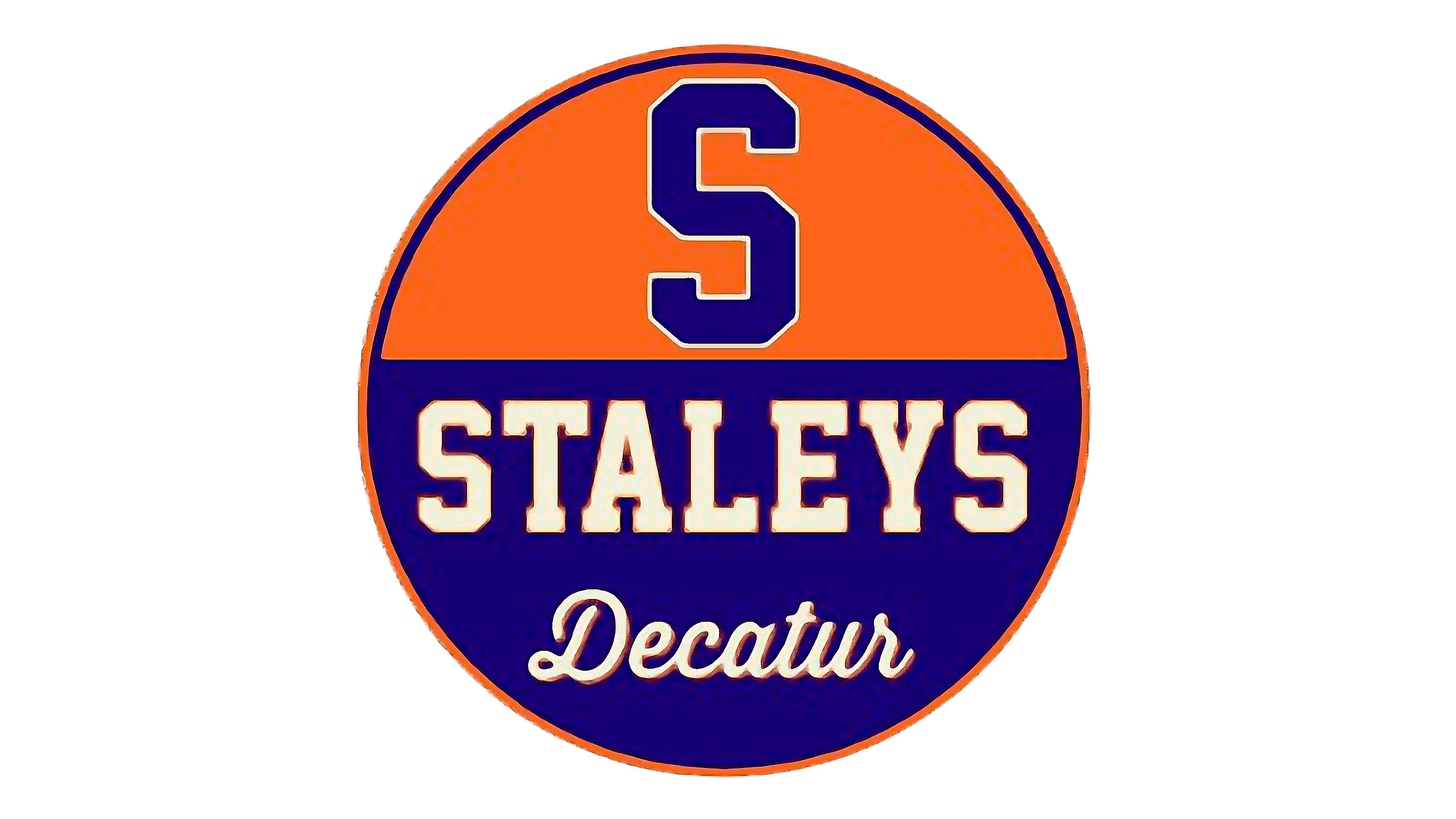
The first logo was introduced in 1920. Since the Decatur Staleys belonged to the A. E. Staley Company, it used the sponsor’s logo. It was a well-thought-out marketing decision meant to attract public attention to food starch production.
The logo resembled a circle divided into two equal horizontal sections. The circle had a double contour. The letter “S” was written in blue on a dark orange background in the upper half. The white inscription “Staleys Decatur” contrasted with the blue background of the lower semicircle. The lexical sign “Staleys” was written in uppercase print letters. The lexical sign “Decatur” imitated a handwritten font: the letter “D” was uppercase, while the rest were lowercase.
1921
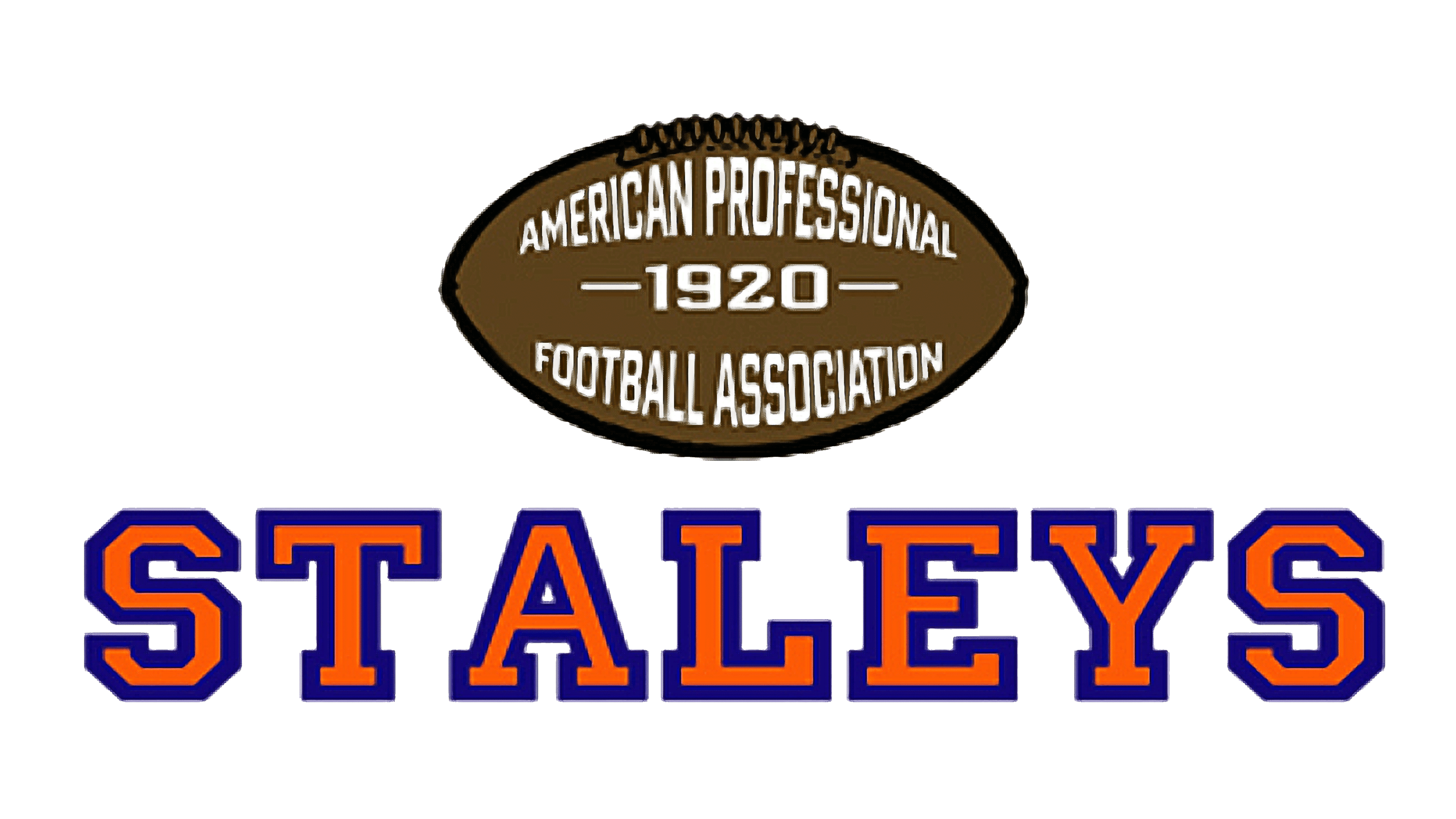
The team developed a new logo after relocating to Chicago and renaming the team the Chicago Bears. Elements indicating the A. E. Staley Company was removed, as the focus shifted to the sports concept. The logo included a light brown, black-outlined American football with the inscription “1920” in the center (the franchise’s founding date). Below it was the word “Staleys,” in orange with a blue outline. The font was uppercase with small serifs.
1922 – 1946

The team adopted its current name, “Chicago Bears,” in 1940, when it introduced its first logo. It depicted a black bear with a football in its paw. The bear, standing on its hind legs, symbolizes a strong, invincible player.
1946 – 1961
In 1946, the logo was replaced with a new one: a football with a dark blue bear lying on top and clinging to it. The bear was less detailed than in the previous logo. The animal was depicted more schematically: white lines on a dark blue background outlined the body’s curves. Sharp claws, lowered eyebrows, and an open mouth made the image quite aggressive. A neat white line bordered the dark orange football, outlined in blue.
1962 – 1973

In 1962, the prototype of the current bear logo appeared on helmets. It was a white “C” bone of wishes with a black outline. The bone of wishes symbolizes luck. The University of Chicago first used the “C” in 1898. The Cincinnati Reds have worn this emblem on their caps, home and away, since the 1960s. A long-running dispute even exists over who first stole this logo: the “Reds” or the “Bears.”
1974 – 2023
The main element of the “Chicago Bears” image is the stylized letter “C” from the city’s name. Until 1973, it was white with a broad blue outline. In the current version, designers added a second color: orange. The dark mandarin-orange letter “C” is now surrounded by a white line on all sides and retains its blue outline. Orange represents energy, optimism, and happiness; white represents purity and elegance; black represents superiority and perseverance.
From 1973 to 2023, the letter “C” in a particular logo underwent four variations of the orange shade, a subtle evolution that can be considered a redesign. Here’s a detailed analysis of this seemingly minor yet important branding change.
Over five decades, the logo’s main structure remained unchanged: a simple letter “C.” This design choice speaks of stability, tradition, and recognizability. Keeping this element for so long has let the brand retain its identity while subtly adapting over time.
Four shades of orange marked the logo’s evolution. These changes were not radical; they were subtle adjustments reflecting nuances in branding changes or even cultural tastes.
- First shade (1973-1981): The original shade, introduced in 1973, might symbolize the beginning of a new era or the adoption of the prevailing aesthetic of the time.
- Second shade (1981-1996): A slight color change, possibly reflecting changes in design trends or new marketing strategies.
- Third shade (1996-2001): This third variation may have resulted from technological advances in printing or screen printing, enabling a more refined, vibrant color.
- Fourth shade (2001-2023): The most recent shade may reflect contemporary design principles, modern tastes, and current branding standards.
What makes this evolution intriguing is how imperceptible it is to the casual observer. If you don’t view all the variants together, it may seem like the logo has remained unchanged over the years. Such design subtlety reflects a masterful understanding of brand identity, ensuring continuity and familiarity while allowing for development and adaptation.
This case highlights the significance of color in branding. Despite its insignificance, the precise shade of color can carry a special subtext and emotional resonance. By subtly changing the shade, a brand can signal changes or align more closely with certain values without alienating its existing audience.
2023 – today
The blue-orange logo with the bear’s head, previously one of the main and iconic “C” logos, has now become the team’s standalone primary logo. This transition marks a new chapter in the “Bears'” visual identity, aligning with contemporary design aesthetics while maintaining the traditional colors associated with the team. The bear head embodies the team’s fierce, competitive nature and symbolizes a fresh look to the future.
Font and Colors
The club’s logo features only one element: a large letter “C” with a sharp protrusion on its left side. The triangle at the center of the rounded part gives it the shape of a thymus bone, a symbol of good luck commonly associated with Thanksgiving Day. Whether the “Chicago Bears” are superstitious or not, such an interpretation makes the emblem a symbol of the team’s success.
The club’s trademark is essentially a nod to the city’s name. It contains only one letter, with no additional text. The letter “C” is drawn, not written, so there’s no question of a font. The artist gave it individuality by adding a pointed angle on the left side. At the same time, the letter is elongated horizontally, collectively making it resemble a bird’s thymus bone.
The color scheme is as simple as possible: an orange center, a white inner outline, and a dark blue outer outline. The chosen combination matches the Chicago Bears’ color palette.