


 Ciudadanos Logo PNG
The logo of the Catalan political party Ciudadanos is bright and memorable, reflecting the organization’s goals. It symbolizes the aspiration to support youth and the elderly, business, and environmental protection, positioning itself against nationalism.
Ciudadanos emerged in 2005 from Catalan civil society, when a group of intellectuals formed Ciutadans de Catalunya in response to growing nationalist pressure and lack of representation for unionist views. In March 2006, a manifesto presented at the Tivoli Theatre in Barcelona outlined the party’s principles. In July 2006, the movement became known as “Ciudadanos – Partido de la Ciudadanía”.
26-year-old lawyer Albert Rivera led the party. His first campaign used provocative posters that drew attention across Catalonia. In September 2006, Ciudadanos entered the Catalan parliament with about 90,000 votes and three seats.
For years, it remained regional. In 2014, Ciudadanos entered national politics through the European Parliament elections and expanded by absorbing smaller groups. In 2015, it gained 9.68% in Andalusia and 1.26 million votes across regions. In December 2015, it won 3.5 million votes (13.93%) and 40 seats in Congress.
Amid corruption scandals involving the Partido Popular and competition with the PSOE, the party’s support grew. In 2017, Ciudadanos became the largest force in Catalonia with 36 seats. In April 2019, it reached 57 seats nationwide.
After refusing to support a PSOE-led government in 2019, the party lost over 80% of its seats in the November elections, dropping to 10. Voters shifted to Vox. Rivera resigned and left politics.
Under Inés Arrimadas, internal crises followed. In 2021, a failed motion in Murcia and losses in Madrid elections left Ciudadanos without representation there, while national support fell below 3%.
Meaning and History
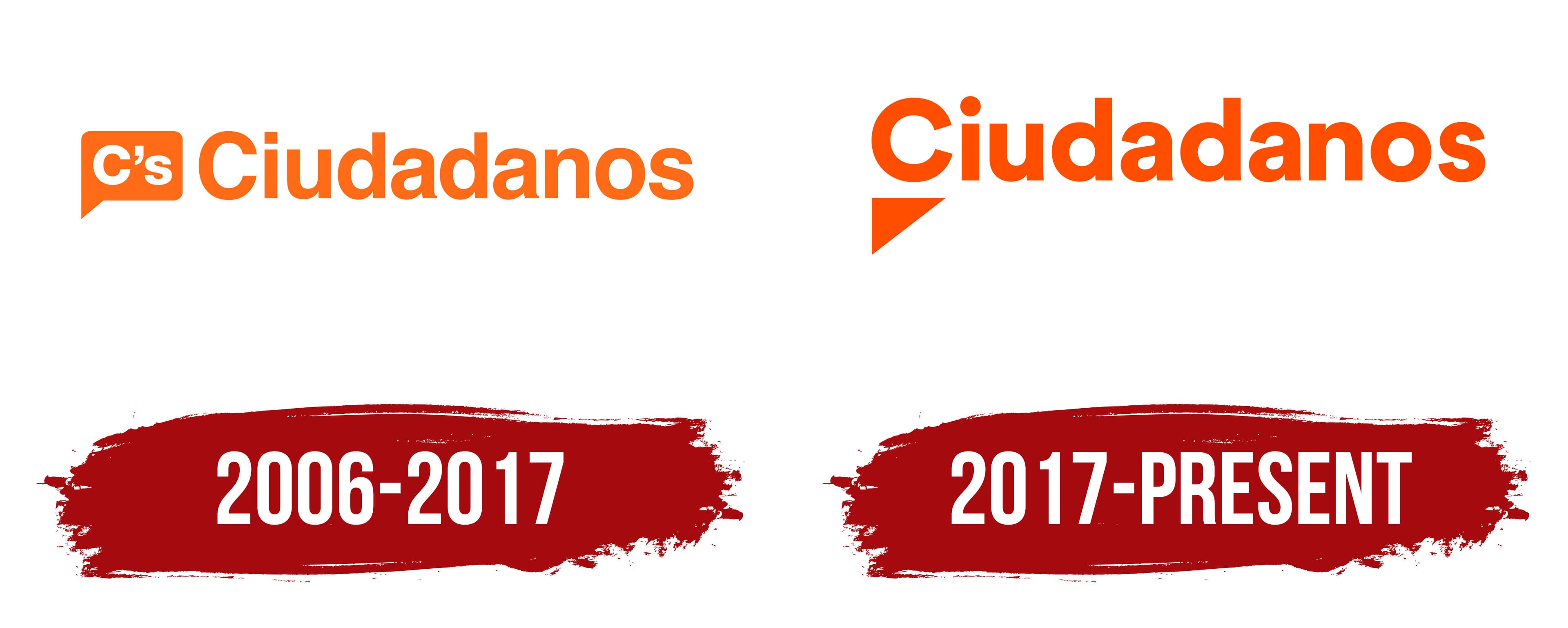
The Ciudadanos party was founded in Barcelona in 2006 based on the civic platform Ciutadans de Catalunya. At the time, Catalan nationalists launched a massive campaign to reshape public consciousness and achieve independence for the Catalan Republic. Then, 15 citizens organized a party to maintain the status quo. In its first ten years, the party grew hundreds of times and became national. Its interests also included supporting youth and the elderly, business, and environmental protection.
Currently, “Citizens” is one of the four largest parties in Spain’s Congress of Deputies. It participates in Congress and has representatives in executive bodies.
The party positions itself as socially liberal and anti-nationalist; its audience includes youth and older generations, many businessmen, representatives of the intellectual elite, and creative professionals.
Today, the Ciudadanos logo is recognized not only in Spain but also in Europe. It is bright and memorable, and it carries the necessary semantic load.
What is Ciudadanos?
Ciudadanos is a political party that advocates protecting citizens’ rights and freedoms. It was founded in Spain in 2006 as an alternative to the PSOE and Partido Popular. Its main goal is to fight corruption and strengthen democratic institutions, European integration, and economic and social reforms. Initially centrist, the party later shifted right. Albert Rivera led it until 2019.
2006 – 2017

The first logo, created in 2006, featured an orange rectangle with the party’s name, Ciudadanos, in white letters, and a white triangle under the letter C. According to the creators, this symbolizes a conversation between the country’s citizens, the Ciudadanos party, and the Spanish authorities. Orange is one of the colors of the Catalan flag, but they omitted the other color, yellow, to separate the party from the nationalist movement.
They also created an emblem as a short chat window featuring the party’s abbreviated name, C’s. The background was light orange, and the letters were white.
This bright logo is visually memorable and became an important part of the party’s image, helping focus its activities on solving ordinary people’s problems.
2017 – today
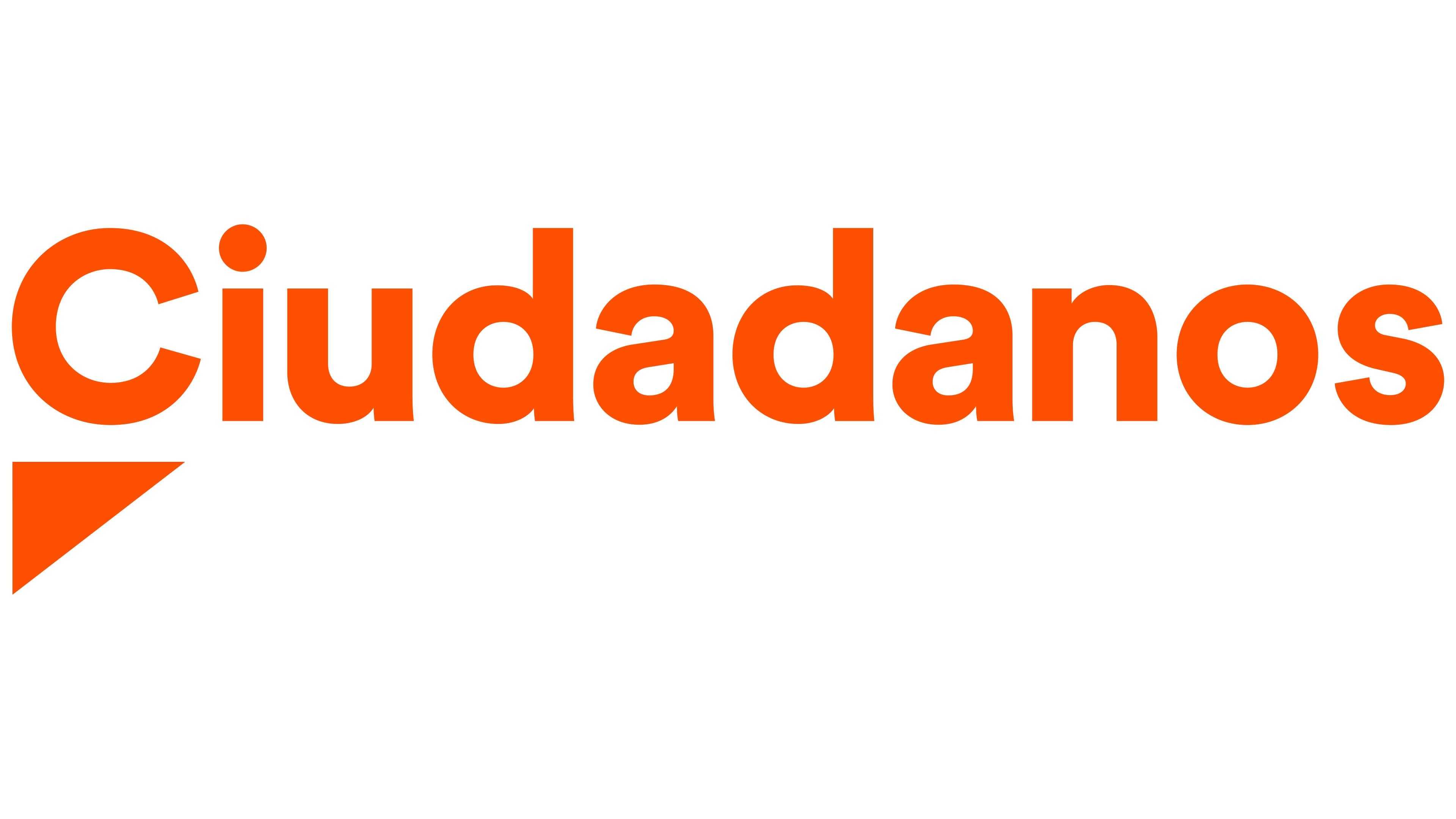
In 2017, when the party became one of the three largest political associations in Spain and opened offices in several European countries, it decided to rebrand its logo to symbolize a new period of activity.
The minor changes made the logo clearer and brighter. The tag’s background color was changed to black, and the letters became orange, a more intense shade with added red. Now, the color palette is closer to Spain’s flag colors, not just Catalonia’s.
The emblem also changed: the apostrophe was removed from the letter “C” because it made people doubt how to read the short name correctly. Now, only the letter “C” remains. The sign was enlarged, and the design was updated to straighten the corners and center the lower element. Next to it appeared two more black duplicating stripes, symbolizing the party’s multichannel communication with the country’s citizens, the opportunity for everyone to speak out and be heard.
The overall impression speaks for itself. Ciudadanos is no longer only a Catalan party. Now, it represents citizens across Spain and intends to keep developing into a pan-European union. The solid and impeccable logo played an important role in this and will continue to fulfill its mission.
Font and Colors

The logo of this political force was designed simultaneously to vividly represent the platform and attract attention. To do so, its members chose both the full and abbreviated names of the party: Ciudadanos and Cs. Both are written in the same font and styled the same way. The abbreviated version is used as a symbol on brochures, posters, badges, and other party materials. An isosceles triangle sits under the letter “C,” tilted outward, and the top part emphasizes the letter. It seems to be its support. By volume, the textual part predominates over the graphic.
The logo uses the Circular Std Black font, designed by Laurenz Brunner. All symbols are bold, legible, clear, and in print. They are well-balanced, so they look harmonious and stable, even unshakable. Officially, the logo has only one color: orange. Unofficially, white is also used as the background. Orange is very characteristic of Spain: a bright and emotional southern country with equally emotional voters.