


 Coast Guard Logo PNG
The Coast Guard logo symbolizes dedication, readiness, and protection, qualities for which this branch of the US Armed Forces is known. It is associated with reliability and resilience, conveying the spirit of a service that guards the shores and maintains safety on the water. The service has earned a reputation as a national protector and a rescue resource, prepared to assist under any conditions. The logo inspires confidence, reminding us of its mission to protect and support across seas and oceans.
President George Washington signed a measure on August 4, 1790, establishing the Revenue Marine (later known as the Revenue Cutter Service), a maritime customs agency tasked with combating smuggling and collecting customs duties. This marked the beginning of the US Coast Guard.
The service began with 10 small ships and revenue cutters that patrolled the US coastline to enforce customs regulations and assist ships in need.
In 1915, a major milestone occurred when the Revenue Cutter Service merged with the Life-Saving Service to form the US Coast Guard, as we know it today. This merger expanded the service’s duties and resources.
During Prohibition in the 1920s and 1930s, the maritime agency played a crucial role in preventing the smuggling of alcohol by sea.
During World War II, the organization temporarily came under the control of the US Navy, participating in coastal patrols, convoy escorts, and other military operations.
The 1950s witnessed a modernization of the fleet and equipment, with new ships entering service and the introduction of modern navigation and radio systems.
In the 1960s, responsibilities expanded, with a focus on ensuring the safety of maritime navigation and protecting the marine environment.
In the 1970s, the service gained new authority to combat drug trafficking, creating specialized teams to intercept smuggling operations at sea.
The 1980s witnessed significant technological advancements, including the development of satellite navigation and enhanced communication systems.
During the 1990s, the agency expanded its presence in international waters and intensified its efforts to prevent illegal maritime migration.
Following September 11, 2001, the organization became part of the US Department of Homeland Security, expanding its homeland security responsibilities.
From 2010 to 2015, the focus was on modernizing the fleet and infrastructure, including the addition of new ship classes and the upgrading of equipment.
From 2016 to 2020, efforts continued to enhance maritime patrol and rescue capabilities, adopting new operational techniques and technologies.
By 2023, the US Coast Guard will be a versatile agency responsible for protecting maritime borders, preventing illegal activities, and conducting sea rescues.
Meaning and History
What is the Coast Guard?
This unique military organization performs the roles of maritime police, rescue service, and protector of the US maritime borders. Coastline security, port protection, combating smuggling, and rescuing people at sea are some of the vital tasks assigned to this service, which is part of the US Armed Forces. Its flexible structure allows it to combine military and civilian functions, and in peacetime, it operates under the Department of Homeland Security. This service can collaborate with the Navy to undertake national security missions as needed.
1790 – today
The United States Coast Guard is one of the nation’s oldest and most vital security services, established to protect maritime borders, assist vessels, and maintain maritime order and security. The Coast Guard emblem, featuring powerful symbols such as anchors, the national shield, and the year of establishment, reflects deep traditions and dedication to service, emphasizing the reliability and resilience of its personnel. This emblem embodies a commitment to defending the country and readiness to assist in the toughest conditions at sea.
The US Coast Guard logo symbolizes dedication, protection, and maritime tradition, highlighting this service’s importance in ensuring the safety of the nation’s shores and maritime borders.
The center of the emblem features a shield, with the top section in blue and the lower portion consisting of red and white stripes. This directly references the US flag, underscoring that the Coast Guard is integral to national defense and symbolizes patriotism and commitment to national values. The red and white stripes represent courage, purity, and loyalty, essential qualities of every service member.
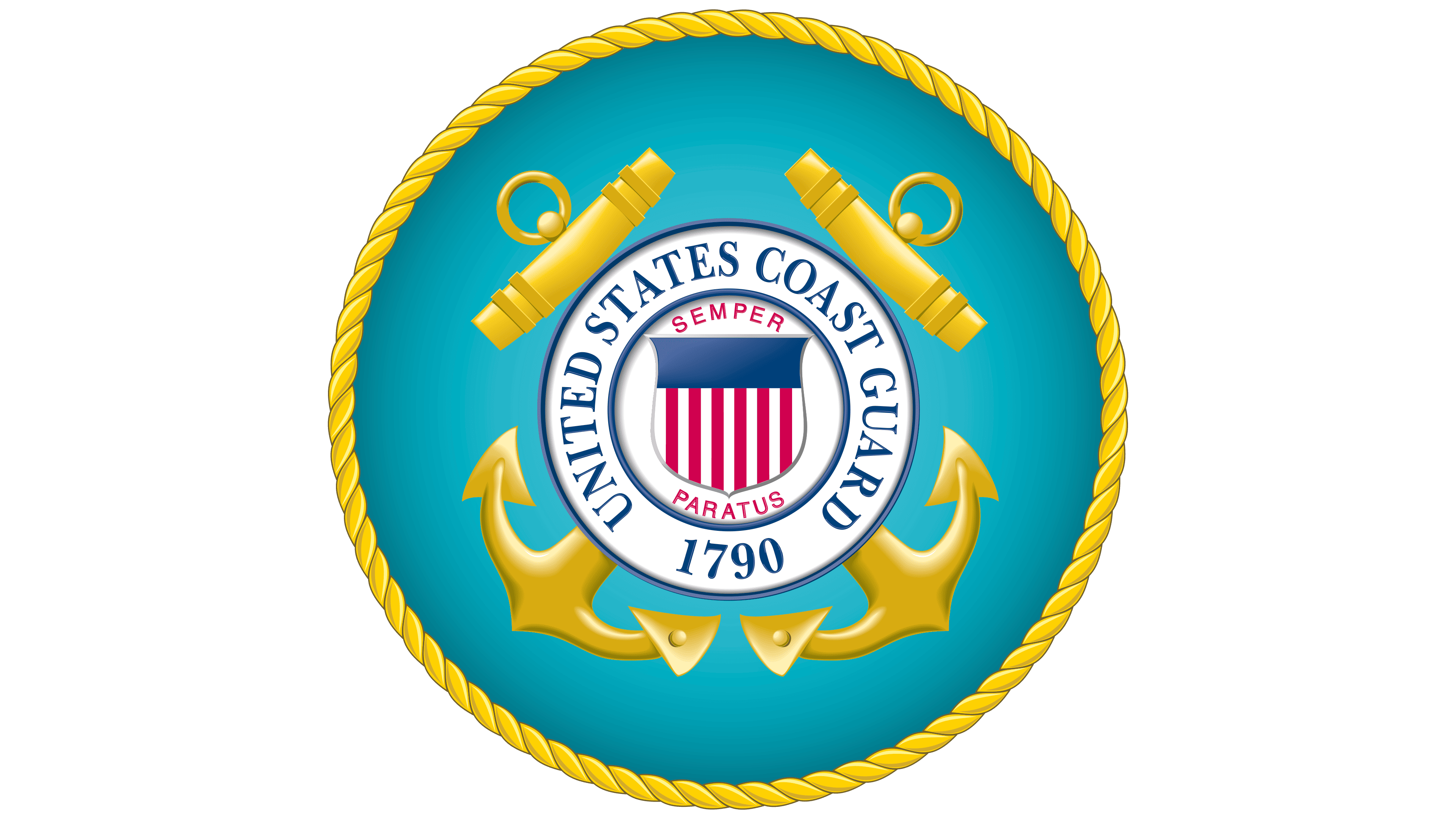
The shield is encircled by a ring with the inscription “UNITED STATES COAST GUARD” and the year “1790.” This circle symbolizes the organization’s unity and cohesion, and commemorates the service’s founding date. Established in 1790, the Coast Guard is one of the country’s oldest security services. The circular shape symbolizes continuous movement and the Coast Guard’s readiness for constant patrol and coastal protection.
The emblem is adorned with two massive anchors crossed behind the central circle. These anchors signify the service’s maritime essence and imply its primary duty to protect maritime borders and ensure the safety of navigation. The crossed anchors reinforce the service’s connection to the water and its readiness to “hold the line” across the seas. The anchor symbolizes the qualities of stability and reliability that can be depended on in any situation.
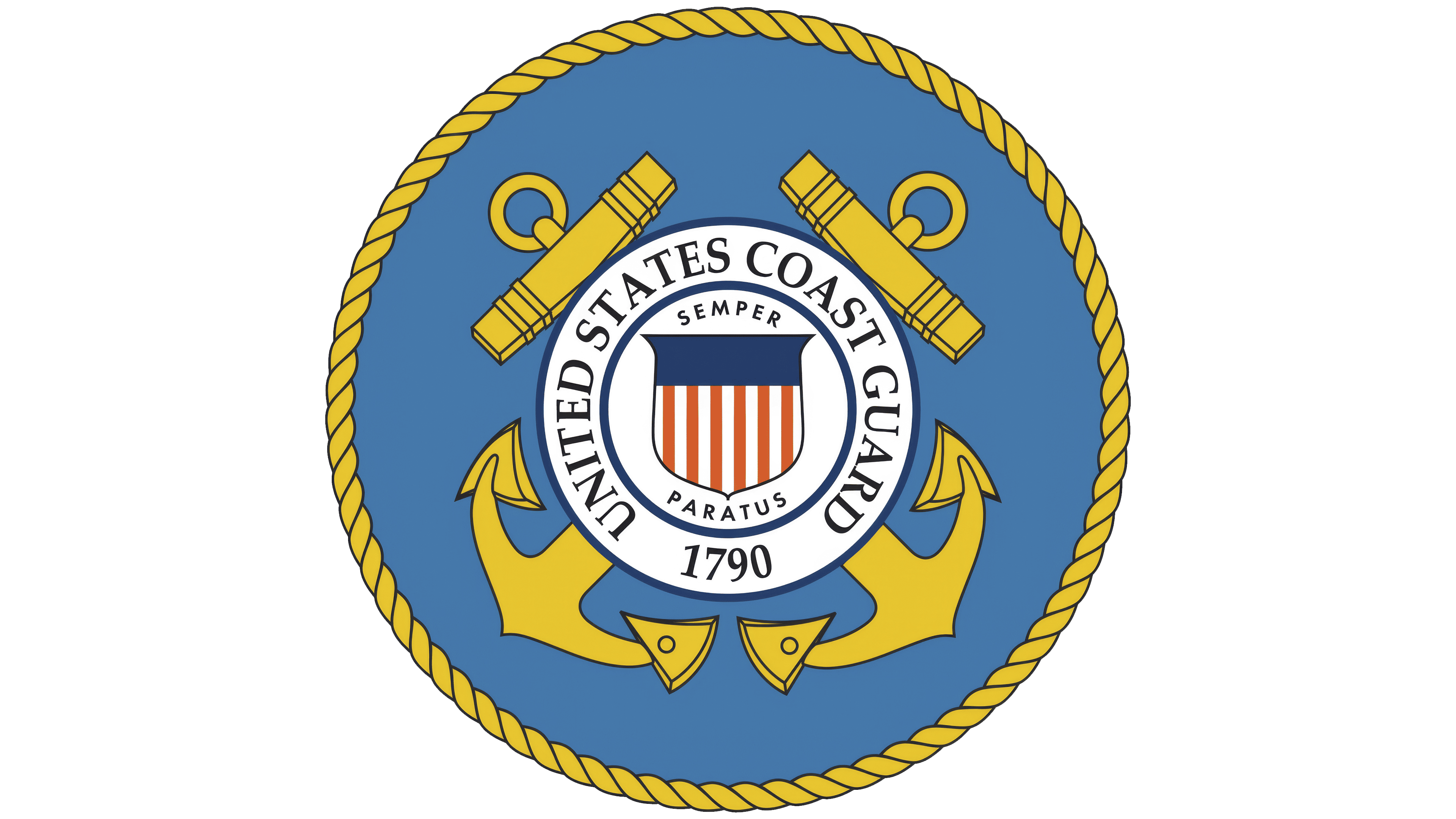
USCG logo
The color palette of blue, white, and red directly echoes the colors of the US flag.
- Blue symbolizes justice, perseverance, and honor.
- White represents purity of intention and the commitment to serve with integrity.
- Red symbolizes bravery and a willingness to take action, even in the most dangerous conditions.
The US Coast Guard logo reflects deep-rooted traditions, loyalty to service, and the fighting spirit of its personnel. The combination of anchors, shields, and national colors reminds everyone that the Coast Guard stands guard over the nation’s maritime borders with honor and dedication.
United States Coast Guard Logo Wordmark