


 Crush Logo PNG
The Crush logo conveys the energy and richness of the drink’s flavor, which has become a favorite across generations. It all began with the idea of creating something unique among soft drinks. An enthusiastic scientist developed a recipe that combined natural ingredients with appeal, and soon, the drink won hearts, becoming a part of celebratory moments and everyday pleasures.
Crush began in California in 1911, when beverage chemist Neil C. Ward developed a new orange soda formula using orange oils and other ingredients. The Orange Crush Company was formally established in Chicago in 1916. Its orange drink gained attention through a bottle shaped to resemble orange peel, licensed bottling agreements, and a growing distribution network across the United States.
During the 1920s, the company expanded production and supported the brand with national advertising. New flavors appeared in the 1930s, including Lemon Crush, helping the range reach consumers beyond the original orange drink. The company modernized its manufacturing and carbonation systems in the 1940s. It introduced new packaging and an embossed glass bottle in the 1950s. It added strawberry and grape varieties during the same period.
International growth accelerated in the 1960s and 1970s as Crush entered Canada, Mexico, and other markets. At the same time, aluminum cans joined the packaging lineup. Procter & Gamble acquired the brand in 1980 and increased investment in marketing and product development.
Cadbury Schweppes bought Crush in 1989, connecting it with a wider bottling and distribution system. The 1990s brought revised logos, packaging, and additional flavors. During the 2000s, the range expanded through tropical varieties and new package formats. From 2010 to 2022, the brand introduced limited editions, redesigned bottles and cans, and campaigns aimed at younger consumers in several markets.
Meaning and History
What is Crush?
This brand offers a wide range of carbonated beverages with bold, fruity flavors. The selection includes classic options like orange and grape, and less common choices like peach or pineapple. The drinks stand out for their vibrant flavors and unique combinations, appealing to fans of rich, sweet aromas. Bright packaging and creative presentation highlight the products’ energetic and cheerful nature. An established distribution system makes the beverages easy to find in stores and retail outlets, providing an exciting alternative to traditional sodas.
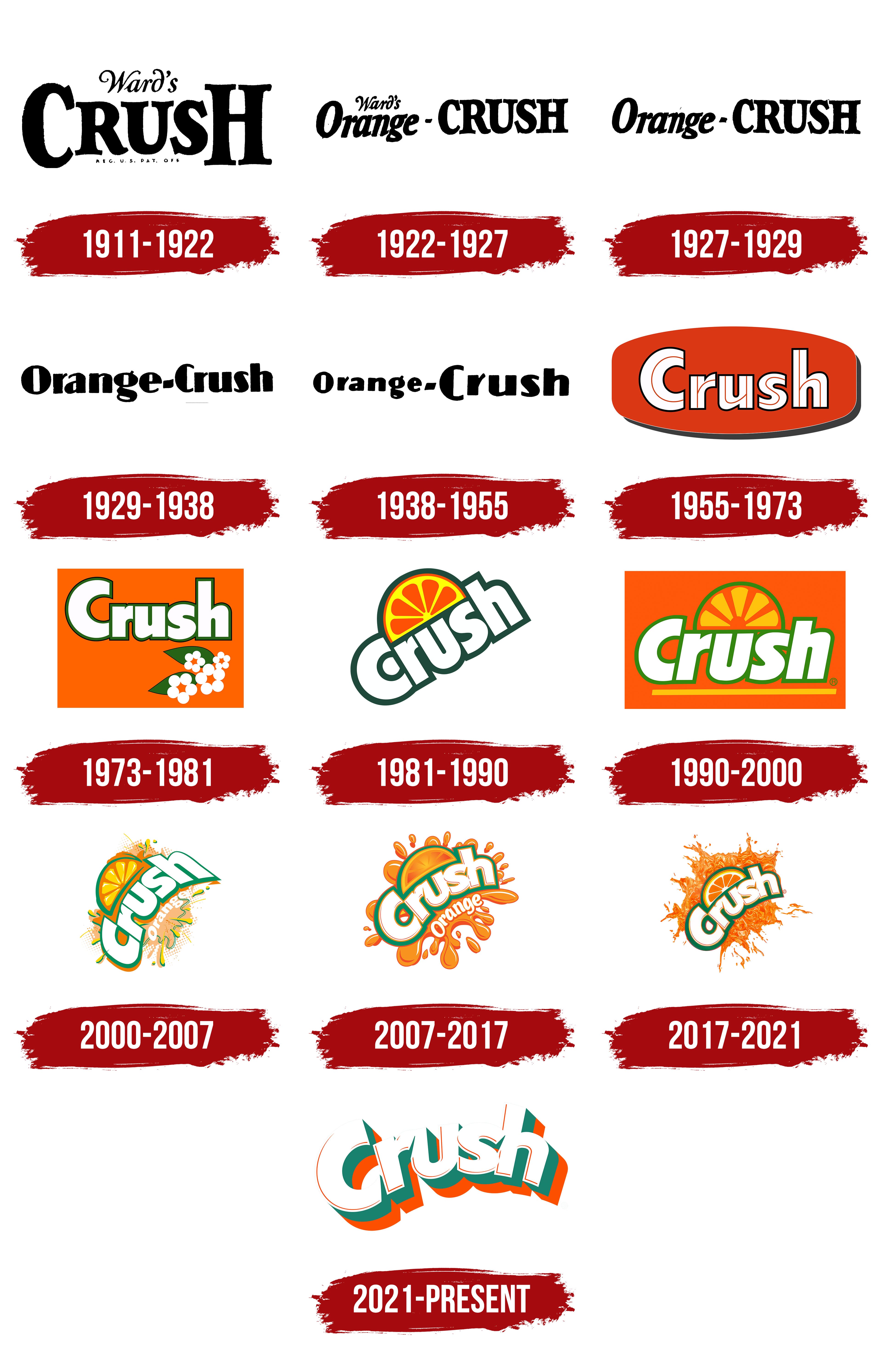
1911 – 1922
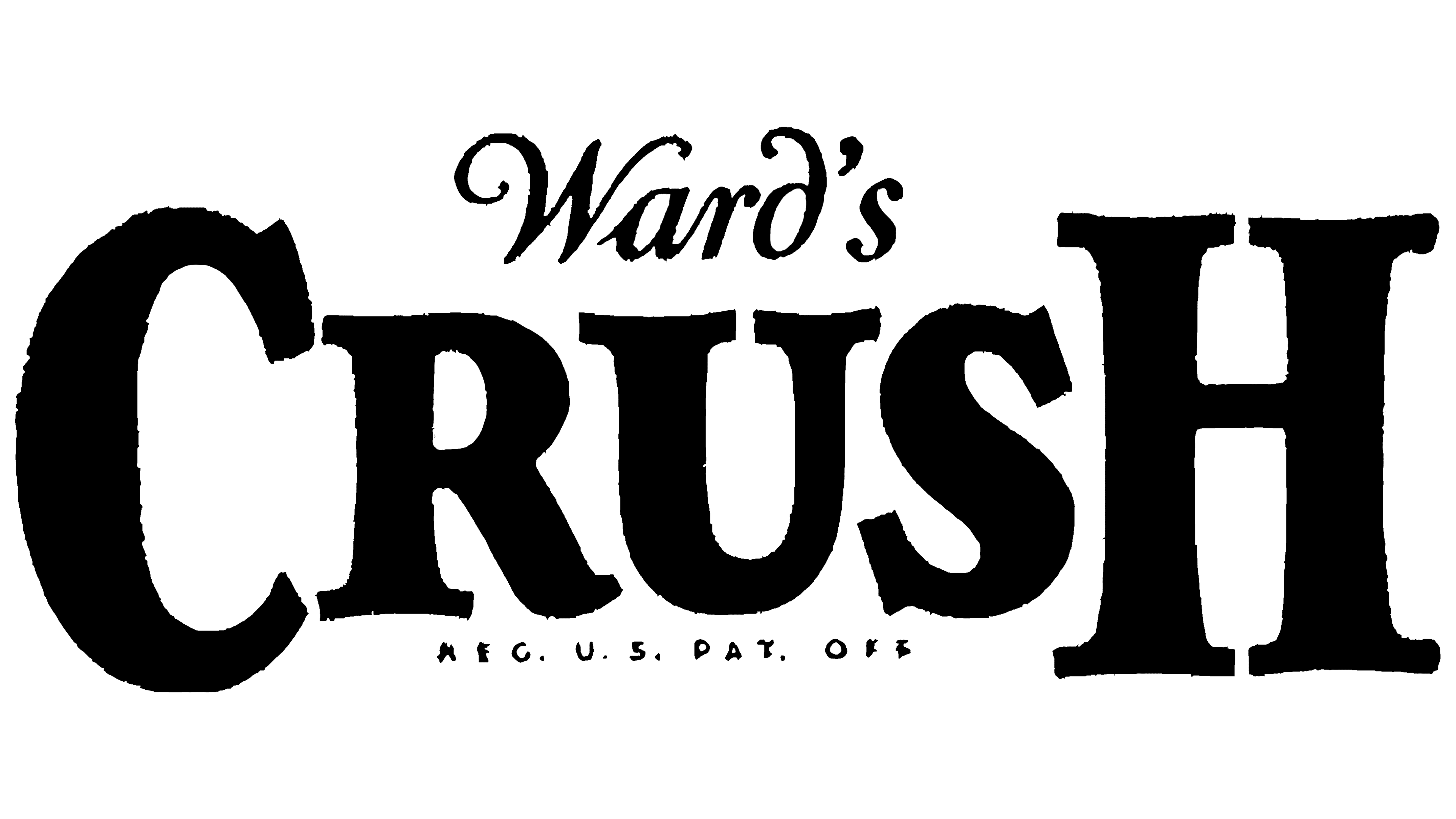
The text of the company’s first logo is in bold serif font, with the first and last letters enlarged to create a visual balance. The font is oriented vertically and has strict proportions, which improves readability and reflects brand confidence.
Above the main name is the italic inscription “Ward’s,” which adds lightness and dynamism. The flowing lines of the text contrast with the massive letters in the word “Crush.” Using different styles for parts of the title adds layering. At the bottom, under the main text, are small decorative letters that clarify the company’s registration information.
The visual appearance reflected the brand’s first steps in the market.
1922 – 1927
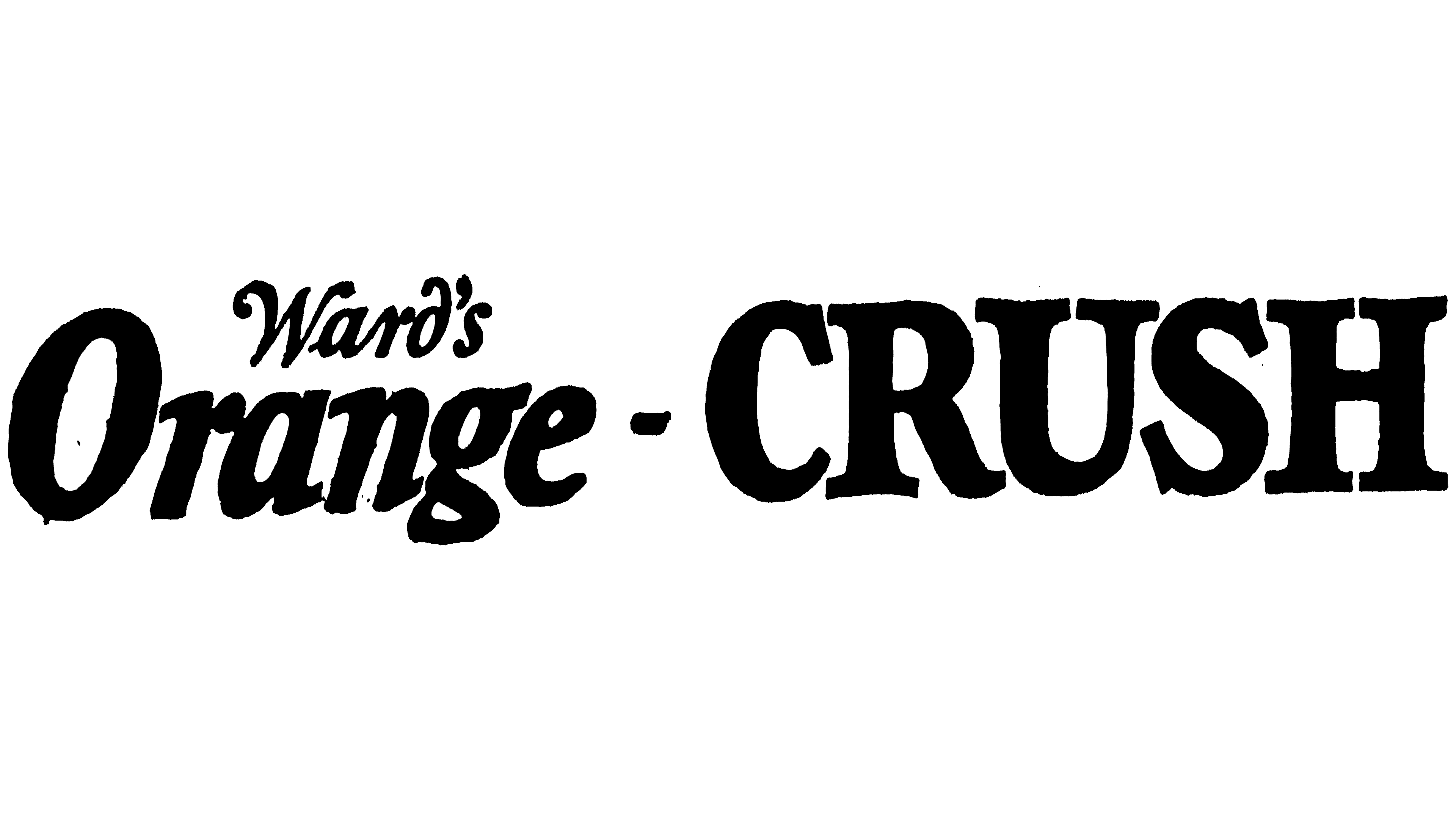
The logo has been updated to include a new detail, the word “Orange.” It was included to clarify the product’s flavor direction and placed before the word “Crush.” The italic line “Ward’s” above “Orange” has been retained, adding personality and connection to the brand’s creator.
The main difference between the new design is that the three words “Ward’s,” “Orange,” and “Crush” are made in different font styles. The word “Ward’s” is left in fluid, dynamic italics, lending softness to the composition. “Orange” is in bold, while “Crush” is in an even larger, heavier serif font that retains a connection to the brand’s original identity. Using three different font styles added complexity to the perception but also emphasized the key details of the words.
1927 – 1929

The updated logo has been visually improved, eliminating the shortcomings of the previous version. The main change was a clearer design structure and improved perception. The word “Orange” became more harmonious with “Crush,” creating an attractive, seductive visual combination that emphasizes the connection to the main product. It remained inclined while maintaining its lightness and dynamics. At the same time, “Crush” remained large and was made in a massive serif font, reinforcing the brand’s sense of reliability and strength. A small gap appeared between the two words, adding more air and balance to the logo.
1929 – 1938

The updated version of the emblem has a more cohesive and modern look. The main update was to unify the font: now both words, “Orange” and “Crush,” are rendered in the same style, eliminating the visual disunity of the previous versions. The sans serif font, with smooth, clear lines, retains confident expressiveness through the contrast in stroke thickness. The lines of the font have acquired a slight roundness.
1938 – 1955

This version has minimal changes but emphasizes the brand’s style and mood. The font retains its basic forms, but some details have been reworked to create a more playful and cheerful look. Slight changes in the letters’ curves, increased lines’ plasticity, and smooth transitions add visual lightness and a sense of friendliness. Thanks to these changes, the logo began to be perceived as livelier and more emotionally warm.
1955 – 1973
Created by Jim Nash Associates, the new design represents one of the highlights in the brand’s visual history, reflecting its playfulness and freshness. The large name “Crush” is in bold italics on the oval orange backing. The inner lines of the letters add volume, and the slope emphasizes dynamism and energy. The base’s orange color connects with the original taste of orange soda, which began the brand’s history.
The exclusion of the word “Orange” from the design symbolized the expansion of the flavor line and the transition to a new level suitable for a wide audience. In Mexico, this option is still used on glass bottles, maintaining a classic, timeless atmosphere.
1973 – 1981
The design has been updated to add green outlines to the letters and symbols of the composition. The brand name was placed in the upper half of the orange rectangle. The font remained the same, but the inscription gained integrity and expressiveness thanks to the green outline and the lack of spacing between letters. Decorative symbols were added at the bottom: four white flowers, symbolizing orange blossoms, and two green leaves in the right corner, emphasizing the drink’s natural origin. The new colors and shapes added energy and lightness to the design, linking it to the orange flavor’s brightness and freshness.
1981 – 1990
Between 1981 and 1990, the visual design took on a new dynamic and became even more aligned with bright fruit flavors. The main brand name was rendered in a bold, bright font with a green outline, enhancing a sense of freshness. The title is placed at an angle, adding dynamism to the composition. An important addition was an orange slice between the capital “C” and “h.” The slice emphasized the product’s fruity nature.
1990 – 2000
In the 1990 version, the design acquired a more orderly look due to the direct placement of all details. The title is placed on a bright orange rectangular background, enhancing visual perception. The font remains the same, with a green outline, but now the text is smooth and unslanted, giving the whole composition a balanced look.
An orange slice, preserved from previous versions, is located at the top of the design. The combination of rich orange and yellow colors adds brightness, emphasizing the product’s naturalness. The new symbol is a yellow line beneath the name, visually separating the text and emphasizing the design’s integrity. The overall composition became brighter and more dynamic, reflecting the brand’s desire to strengthen the association with joy and refreshing tastes.
2000 – 2007
In the next design, the idea was implemented to enhance visual associations with the drink’s fruit flavors and energy. The name is rendered in the usual font but positioned on a diagonal arch, adding dynamism to the entire composition.
The orange slice has become a key visual symbol. It is placed at the top of the name, forming a bright accent, and rich shades of yellow and orange enhance the effect of freshness and naturalness. Additionally, splashes are added and stylized in a playful, free manner, emphasizing the lightness and pleasure of drinking. They enhance the association with juice and soda.
The word “orange” has been incorporated into the design for the Chile, Guatemala, and Panama markets, highlighting the brand’s local connection to its original taste. The composition has become more appealing to young audiences, conveying a sense of joy, freshness, and energy.
2007 – 2017
The new design includes changes to strengthen the association with citrus flavors and the drink’s dynamic image. The main text is in a slightly modified font that looks more modern and fresh. Gold accents complement the letter lines. The text arrangement has become more direct, making the title visually balanced and emphasizing its central role.
The orange slice remained the key detail. It is integrated into the overall design with a greater saturation of shades. The splashes of citrus juice surrounding the text are made in rich orange and yellow tones, adding energy and creating a sense of movement. They enhance the impression of an exploding taste, matching the drink’s image.
2017 – 2021
The updated design for 2017-2021 has increased visual energy and realism. The main change was the rework of the splashes surrounding the text. They have acquired a more detailed and natural look, adding a sense of a real explosion of freshness.
The color palette has become even brighter and more saturated. The orange hue has become deeper, emphasizing the drink’s citrus base. An orange slice retains its place at the top of the design, remaining a key symbol. The font remains the same, but its white has become brighter, allowing the inscription to stand out against the rich orange background. The general style emphasizes the product’s dynamism and youth orientation, reflecting modern market trends.
2021 – today
The current design approach has changed the brand’s visual presentation. The letters of the word “Crush” remain large but have acquired a new palette. Orange outlines emphasize the white font, and deep blue-green and orange shadows create a good, three-dimensional effect. These elements add expressiveness and modernity to the logo, while maintaining a connection to the traditional look and reinterpreting it for a new generation.
The removal of orange slices and splatters changed the overall character of the graphics, focusing exclusively on the text. Thus, the brand is no longer limited to citrus flavors, indicating its versatility. The new blue-green and orange color scheme retains energy while adding fresh notes that emphasize the company’s modern view of its place in the market.