


 Eurosport Logo PNG
The Eurosport logo stands out from the background of other TV channels. It features clear block letters, painted in deep blue. The design fully reflects the brand’s concept and essence.
Eurosport emerged from the European sports rights market of the 1980s. Public broadcasters within the European Broadcasting Union held rights to major events, but lacked a shared channel for international distribution. On February 5, 1989, Eurosport launched at 18:00 as a joint venture between the EBU and Sky Television plc, taking over the Sky Channel slot on many European cable networks.
The channel offered cycling, skiing, tennis, and smaller international competitions across multiple countries. In May 1991, broadcasting stopped after rival Screensport complained to the European Commission about Eurosport’s ownership and rights structure. The shutdown was brief: TF1 entered as a new partner the same month, replacing BSkyB, and the channel returned to air.
On March 1, 1993, Screensport merged into Eurosport, removing its main direct competitor. During the 1990s, TF1, Canal+, and Havas Images managed the channel before TF1 Group became the sole owner in January 2001. Eurosport.com launched in 1999; Eurosport 2 followed in 2005; and Eurosport Events was created in 2007 to organize and produce major competitions, including the WTCC.
In 2008, Eurosport Player launched online. Discovery Communications bought a 20% stake in Eurosport from TF1 in 2012, gained control in 2014, and took full ownership by 2015. Under Discovery, Eurosport secured Olympic Games rights in Europe for 2018-2024. After Discovery merged with WarnerMedia in 2022, Eurosport UK and BT Sport were folded into TNT Sports. On February 28, 2025, Eurosport ended its separate UK presence.
Meaning and history
For more than 30 years, Eurosport has delighted fans with high-quality TV broadcasts of sports competitions. During this period, the company changed hands, secured the rights to broadcast the Olympic Games, expanded its network, and even launched a convenient service (Eurosport Player). As a result, Eurosport has taken a leading position and earned the trust of more than 200 million viewers.
The brand’s corporate identity is based on elements that evoke direct associations with the world of sports. The logo features blue on a white background, with the thematic name centered. The laconic design and associative elements make the icon particularly recognizable. At the same time, the star symbol represents the championship and the company’s leading position.
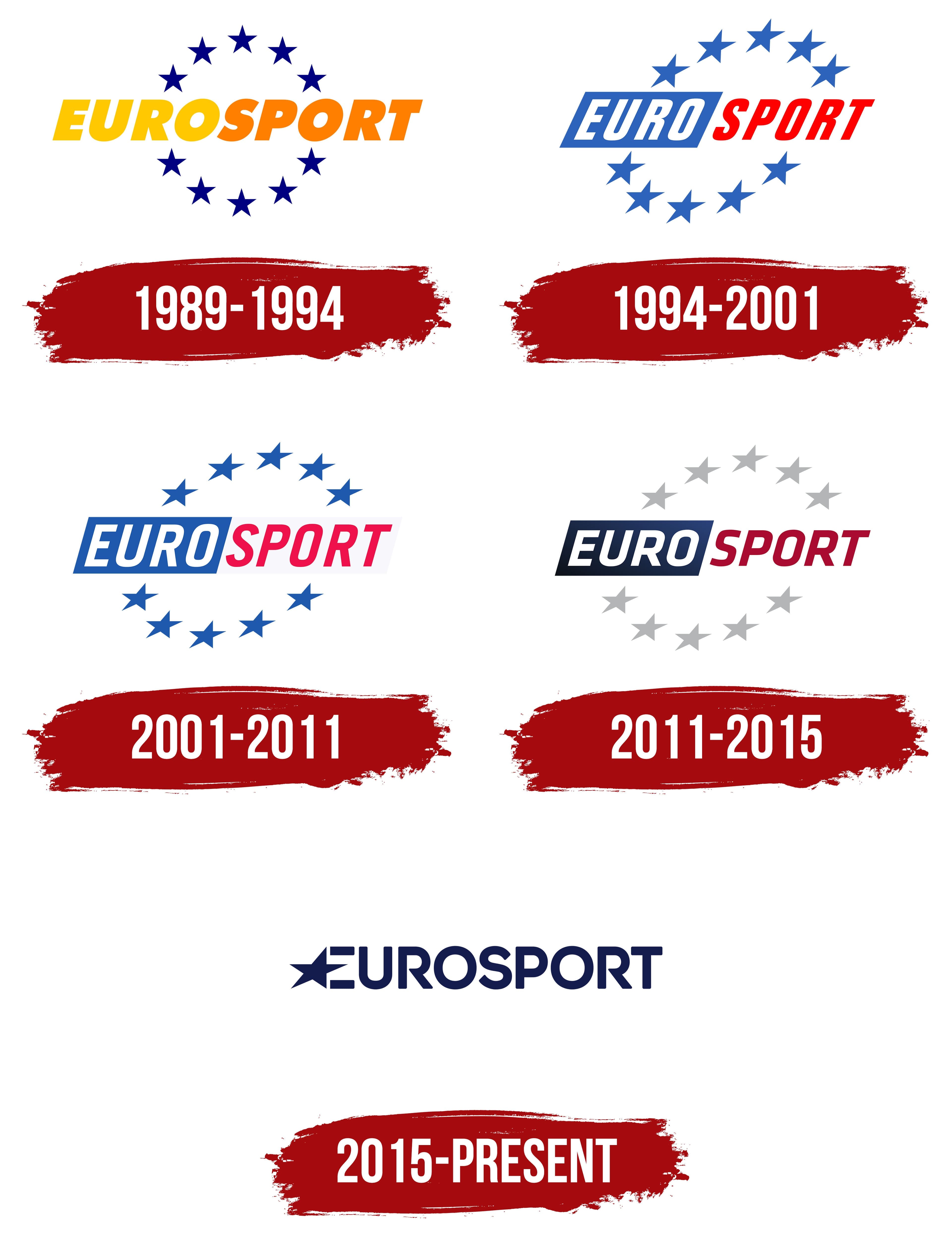
1989 – 1994

Eurosport launched its first broadcasts in February 1989. The channel logo at the time was an expressive image featuring an inscription and graphic elements such as stars. The sports TV network’s name, Eurosport, appeared as the inscription. Ten small stars decorated it, arranged in a round frame.
It was a symbolic image, with a general concept complemented by thematic coloring. The stars were painted rich blue, evoking associations with sports and television. In the brand’s design, blue also signifies stability, reliability, and confidence.
The inscription itself was made in yellow and orange. The contrast was needed for expressiveness, especially against the basic white background. The inscription’s letters were massive and rounded. Italics gave them dynamism, highlighting the company’s rapid development.
1994 – 2001

After Eurosport merged with its main competitor, Screensport, in 1993, the company changed its logo. The new version appeared in 1994 and became a stylish continuation of the identity concept. It retained features of its predecessor in deference to the past format, while also receiving updates that symbolized the company’s rise.
The new emblem has several changes:
- The circle of 10 stars has changed from a circle to a diagonal shape.
- The color palette has changed to a combination of lighter blue, red, and white.
- The font has become more direct and thinner.
- The inscription was divided into two design parts.
The first part of the Euro was placed in a blue rectangle, and the letters were set in a neutral white to create contrast. The second part did not fit in the frame, but the color was changed from orange to red. The new three-color palette displayed energy, professionalism, and leadership.
2001 – 2011

January 2001 marked the network’s complete transfer to Groupe TF1. The changes led to another rebranding. But the logo changes were insignificant, almost imperceptible. The designers changed the font and lightened the colors. The letters have become rounder and softer, making the overall concept more stylish and easier to read. This decision refreshed the corporate identity.
2011 – 2015

The Eurosport channel network’s new achievements led to changes to the logo. This time, management turned to experts at the well-known French company Les Télécréateurs. Experienced designers have made several changes to the existing emblem, and it now sparkles with completely new colors.
The stars changed color from blue to gray, the font grew more voluminous and expressive, and the coloring deepened. The overall composition remains the same. The changes made the corporate identity more modern and harmonious. The addition of gray colors made a bright accent directly on the name, that is, its activities.
2015 – today
2015 was a landmark year for the Eurosport network. This year, it won the rights to broadcast the Olympic Games. This significantly affected the company’s overall activities and its logo. The new design is radically different from previous versions. The changes affected the following elements:
- font;
- general concept;
- graphic sign;
- colors.
The designers essentially changed everything about the logo. Of the ten stars, only one remained, placed at the beginning of the company’s name and complementing its first letter. Of the previous logos, only the brand name remained.
Font and Colors
The version that was created in 2015 is still in use today. It is a simple inscription that names the TV channel network, supplemented by a star. The inscription consists of all capital letters set in medium-thickness lines. This font is close to Posterama Pro 1984 SemiBold and Integral CF Regular style. But the letter R stands out from the general style. It has a slightly modified outline.

Such a performance is elegant and quite bizarre at the same time. This makes the inscription unique, which emphasizes the channel’s identity. The color palette uses rich, deep blue tones with a clean white background. It reflects the channel’s (sports) specifics and symbolizes professionalism and a strong reputation.