 Firebird Logo PNG
The Firebird logo is the materialized name of a line of General Motors cars. It is expressive, dynamic, and energetic, just like the cars it represents. Wavy lines with pointed ends and a bright color palette enhance the logo’s energy.
The Pontiac Firebird was introduced in 1967 by Pontiac, a division of General Motors. It was created as the brand’s entry into the pony-car segment, which had grown quickly after the success of the Ford Mustang in 1964. Pontiac general manager John DeLorean pushed for a sporty model that could compete with Ford’s offerings while sharing the General Motors F-body platform with the Chevrolet Camaro.
General Motors had earlier used the Firebird name for 1950s gas-turbine concept cars designed under Harley Earl. The production Firebird used conventional gasoline engines, but the name linked the model to GM’s experimental past. The first generation, built from 1967 to 1969, was sold as a coupe and convertible and competed with the Mustang and AMC Javelin.
The second generation ran from 1970 to 1981 and produced the best-known version, the Firebird Trans Am. Its role in the 1977 film Smokey and the Bandit sharply increased public attention, while the black-and-gold bodywork and hood bird became closely tied to the model. The third generation, produced from 1982 to 1992, had a sharper aerodynamic design and gained another pop-culture role as the basis for KITT in Knight Rider.
The fourth generation was built from 1993 to 2002. By then, demand for classic pony cars had weakened as buyers moved toward SUVs and compact sedans. In 2002, General Motors ended production of both the Pontiac Firebird and Chevrolet Camaro and closed the Sainte-Thérèse plant in Quebec. Throughout its history, Firebird competed mainly with the Ford Mustang, as well as the Plymouth Barracuda and, later, the Dodge Challenger from Chrysler.
Meaning and History
The Chevrolet Camaro, from which a two-door coupe and sports-class convertible were launched, began this muscle car line. It was named Firebird for its brightness, originality, high technical capabilities, and unrestrained speed. General Motors played a decisive role in naming this series since it owned it.
The logo of these iconic cars was designed with the name in mind, so in all versions it features a proud bird with outstretched wings. This bird symbolizes flight, dynamism, and forward motion, and reflects the manufacturer’s favor for its technology, its love for it, and its desire to dominate the muscle car sector.
What is Firebird?
This is one of the most recognizable muscle cars in America. It is built on a shared platform with the Chevrolet Camaro and features unique technical and cosmetic elements that emphasize its individuality. Models, from the base level to the iconic Trans Am versions, combine aggressive styling with powerful engines, including a range of V8 powertrains that deliver outstanding performance. Produced at GM factories over four generations, it remains Pontiac’s top car, offering fans an exciting blend of handling, power, and style.
1967 – 1970
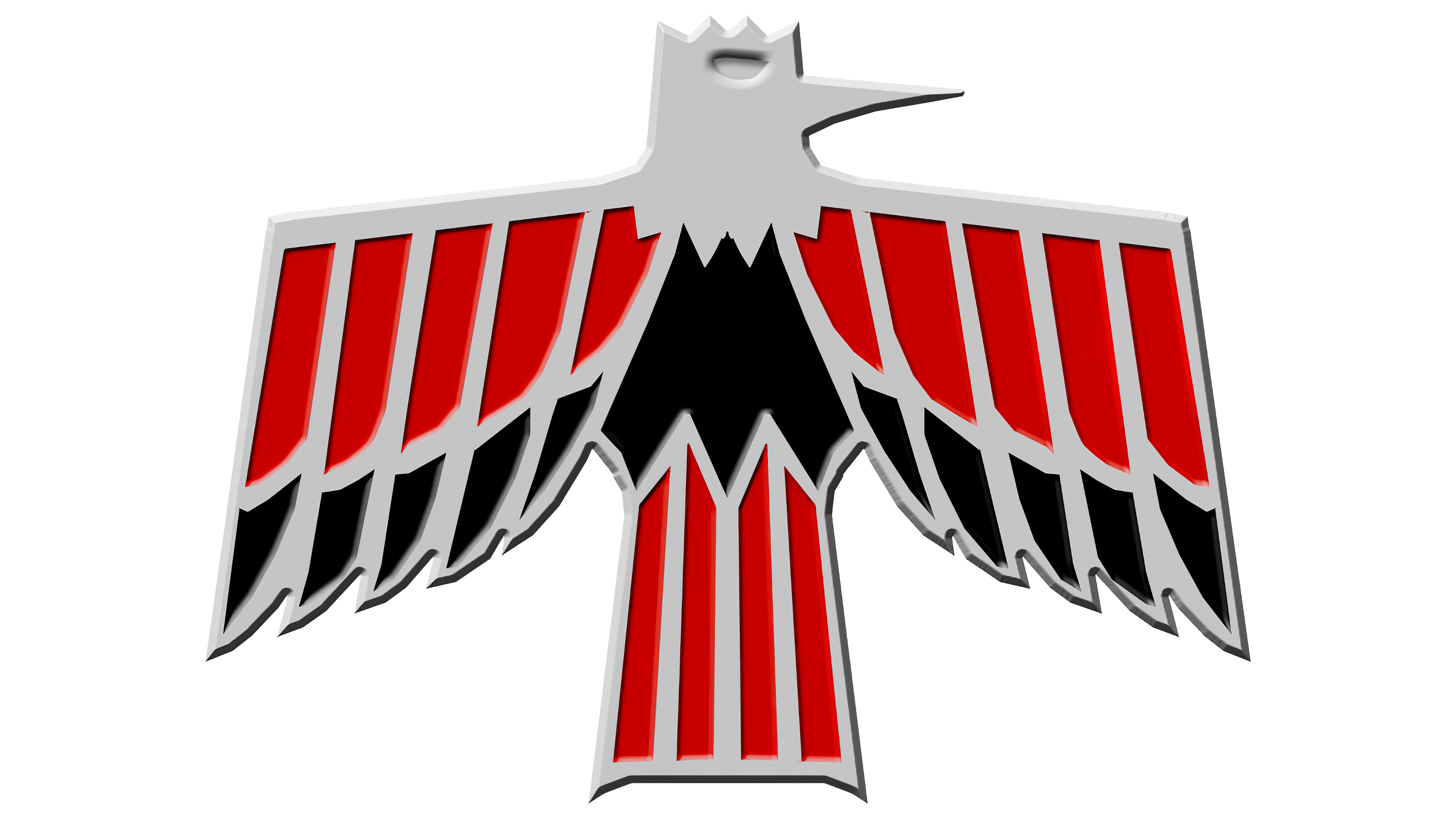
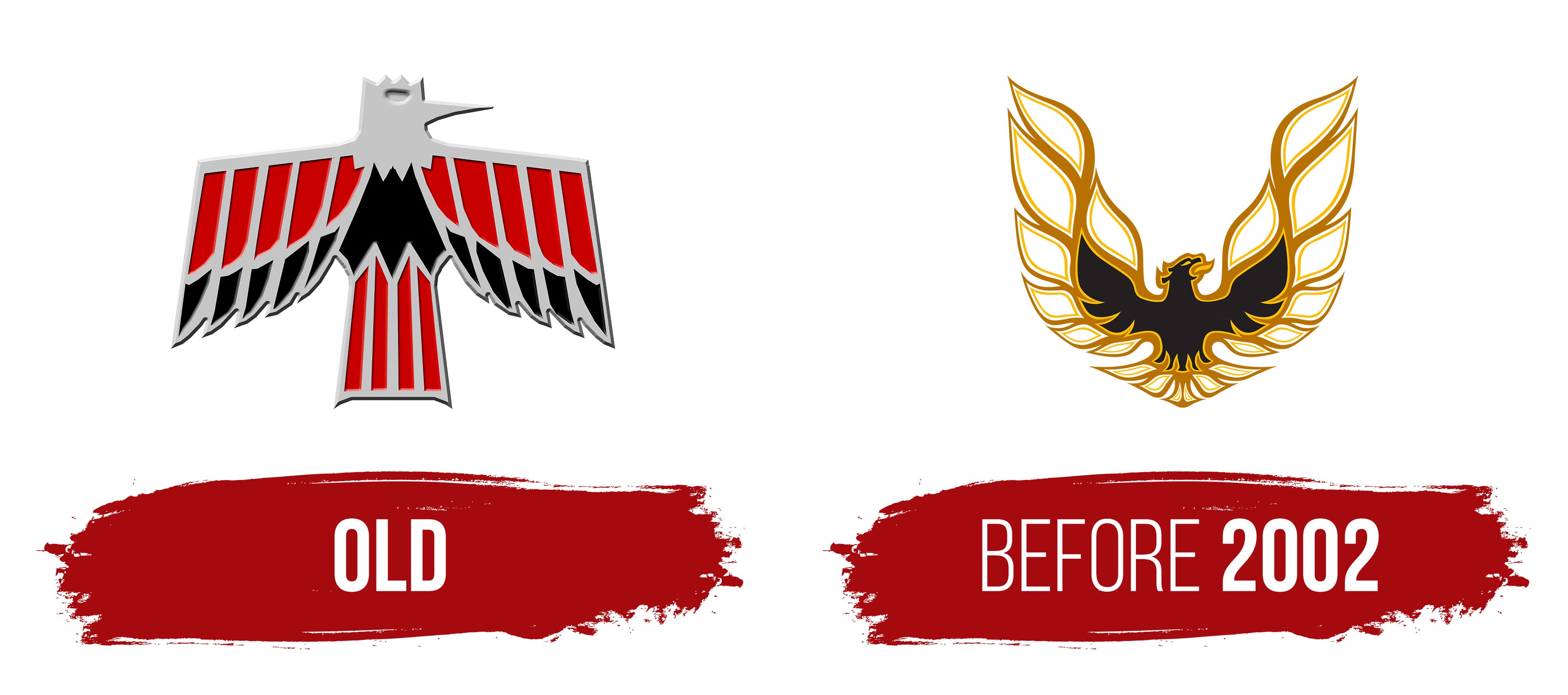
The Firebird emblem features a mythological firebird. It is positioned vertically and appears to be gaining altitude: a couple more powerful wing strokes, and it will instantly disappear. The two wings also hint at the two-door body. The drawing is geometric, so each of its details is either a rectangle or a triangle.
The figures are arranged to form the silhouette of a large bird. Two-thirds of the wings are red rectangles with rounded bottom edges, and the remaining third are black triangles with pointed tips. In other words, the top part is even, while the bottom part is peak-shaped. The head of the mythical creature is light gray with a long beak, turned to the right. The black eye makes it distinct and expressive. All details are separated from one another and framed in silver.
1970 – 2002
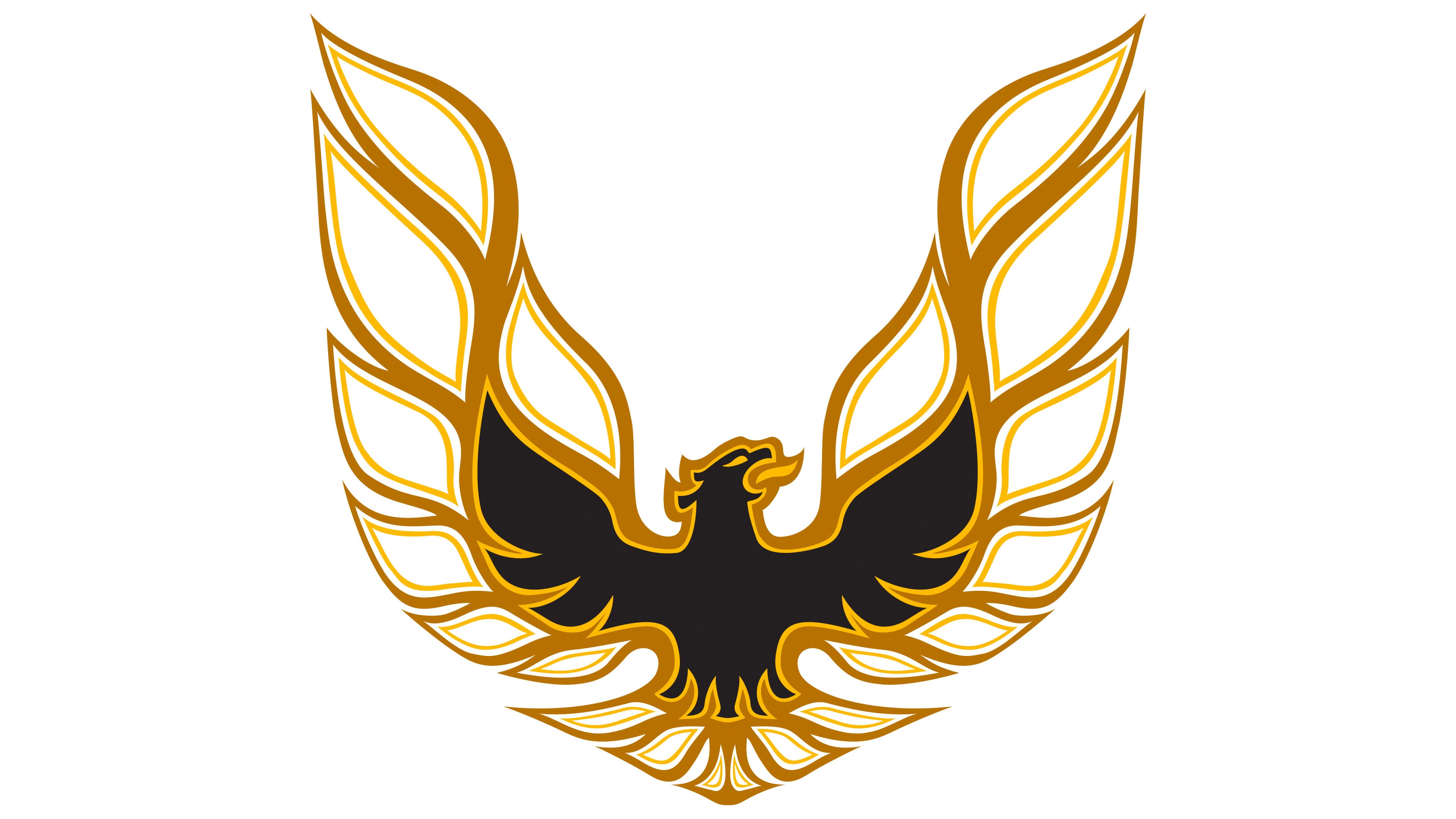
The Firebird logo represents an entire era of the automotive industry, tied to the legendary American line of sports cars produced from 1967 to 2002. Although the brand has been discontinued, this emblem remains a vivid legacy, capturing the unique spirit of the vehicles. As the final logo for the car and its promotional materials, it encapsulates the power and energy that set the brand apart from its competitors.
The central element is the flaming bird, symbolizing strength, speed, and an unrelenting will to overcome any obstacle. This mythical bird is depicted in flight, with outstretched wings, a raised head, and an open beak. The emblem’s composition conveys the dynamism and passion inherent in Firebird cars.
- Wings: They occupy most of the image, shaped like drops with sharp tips. These elements, resembling tongues of flame, create a sense of movement and speed. The drops seamlessly merge into the edges of the wings, adding elegance and refinement.
- Tail: The decorative, flowing tail emphasizes the connection to fire, with its shape resembling sparks or tongues of flame that extend beyond the bird’s silhouette and continue its motion.
- Body: The central portion is a complex black figure with precise, geometrically defined contours. It is outlined in a bright yellow line, which contrasts and enhances the visual impact. Black symbolizes strength and stability, while yellow represents energy and warmth.
- Head: The bird is shown with its head raised, facing to the right. This is a key element of the composition, interpreted as a forward-looking aspiration. The open beak with flames within enhances the “living fire” effect, embodying the spirit of unceasing motion.
Black represents power, stability, and confidence, emphasizing the car’s rigor and restraint. Yellow, on the other hand, symbolizes energy, fire, and dynamism. Together, these colors create a harmonious balance of strength and speed.
The logo is designed in the spirit of retro-futurism, which is characteristic of American cars in the latter half of the 20th century. Its curved lines and sharp edges symbolize high speed, engine power, and aerodynamics, all hallmarks of Firebird’s design philosophy.
The Firebird was renowned for its powerful engine and bold design, capable of conquering roads. Inspiration for the brand’s name came from mythology: the flaming bird that rises from the ashes perfectly reflects the spirit of American engineering and the drive to create something innovative and exceptional.
Fonts and Colors
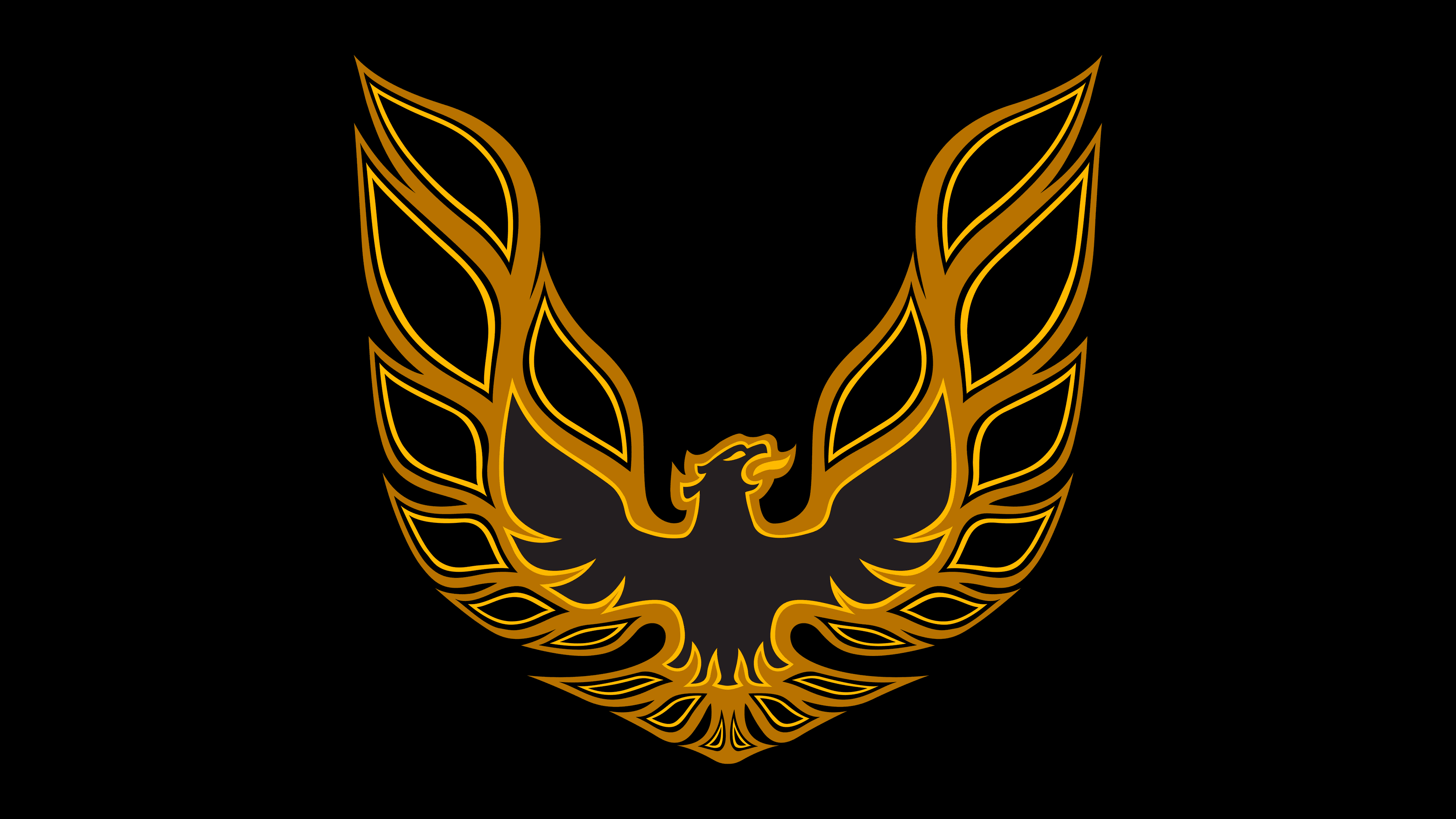
The Firebird logo lacks text, but its color palette is incredibly rich. At different times, it included silver, red, black (in the old emblem), beige, and gold (in the new sign). These colors symbolized the cars’ reliability, power, and high speed.