


 Flamingo Logo PNG
The Flamingo logo embodies the minimalist and functional style of the personal care products brand. Its simple design emphasizes the convenience of its products and their everyday role in consumers’ daily routines.
Flamingo grew from Harry’s Labs, created in 2016 by Harry’s founders Jeff Raider and Andy Katz-Mayfield. Harry’s had entered the men’s shaving market in 2013 against Gillette and Schick. The new project aimed to apply its direct-sales model and product development methods to other consumer categories.
Research for the women’s brand lasted about two years. It included interviews, surveys, and analysis of shaving and body-care habits. Allie Melnick and Brittania Boey led the project. Flamingo launched in 2018 with razors, shaving gel, post-shave lotion, and waxing strips. Unlike Harry’s subscription model, Flamingo sold products individually, and the brand used direct language rather than clinical or heavily glamorous messaging.
The brand tested products in several New York stores before launch. In 2018, Flamingo entered Target nationwide, making physical retail a core sales channel from the beginning. Distribution later expanded to Walgreens and Costco, extending the brand beyond its online audience and reaching customers with different shopping habits. The range focused on practical needs found during the research.
In 2019, Edgewell Personal Care, owner of Schick and Wilkinson Sword, agreed to acquire Harry’s for $1.37 billion. The proposed deal included Flamingo, but the Federal Trade Commission sued to block it in February 2020 over competition concerns in the razor market. Harry’s and Edgewell abandoned the transaction in May 2020, leaving Harry’s and Flamingo independent.
Meaning and History
What is Flamingo?
It is an American brand offering women’s shaving and skincare products. It was created to eliminate the price gap between men’s and women’s razors. Products include safety razors, wax strips, and post-shave skincare. Items are affordable and user-friendly, featuring moisturizing strips with shea butter and aloe.
Before 2020

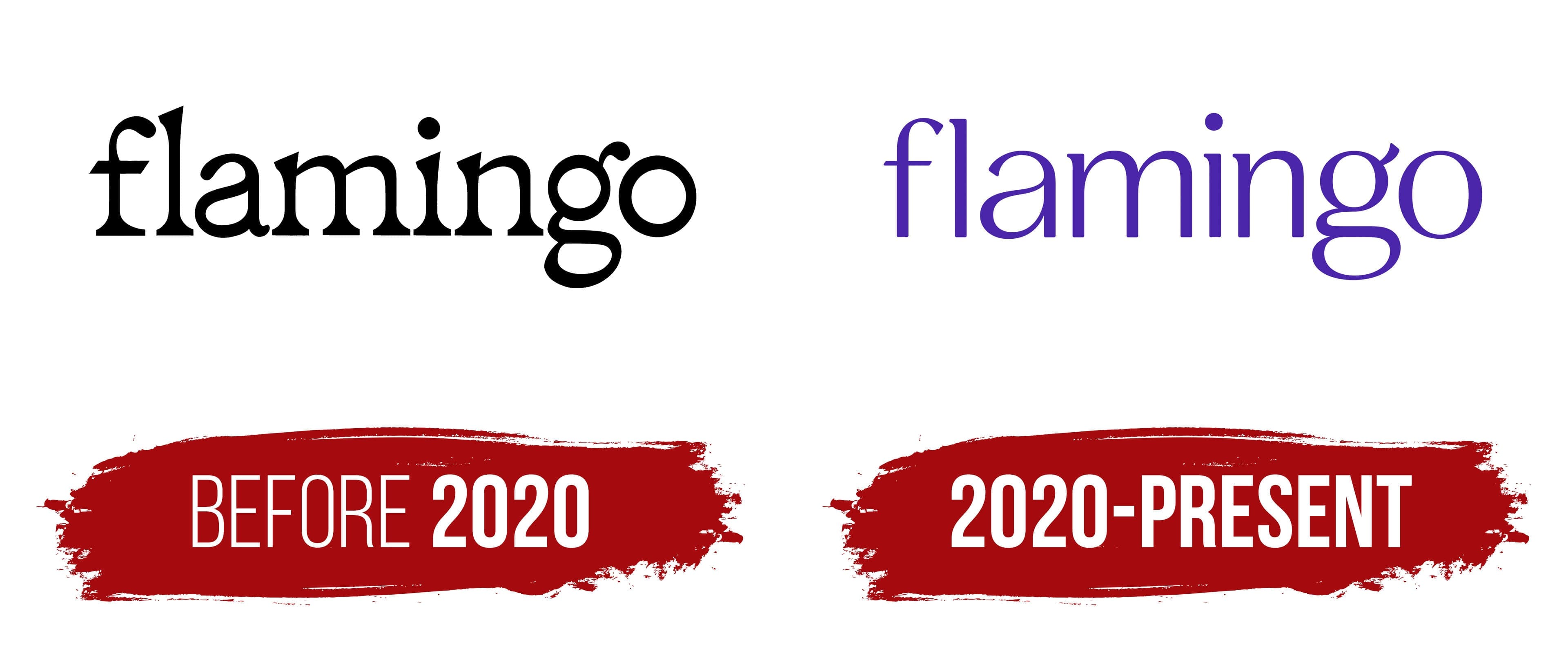
The Flamingo logo was created at the brand’s launch in 2018 under the management of Harry’s Inc. and the Los Angeles–based agency Herman-Scheer. The mark reflected the minimalist and understated aesthetic characteristic of next-generation direct-to-consumer brands, including those in the personal care segment.
The logo design consisted solely of typography. The word “flamingo” was rendered in lowercase italic letters with smooth, soft lines. The letters were carefully crafted and styled to resemble natural handwriting, yet with typographically precise proportions and consistent stroke thickness. The absence of serifs and decorative elements conveyed simplicity, friendliness, and a natural feel. The typeface’s visual concept emphasized the brand’s focus on a female audience, conveying softness, care, and delicacy.
The development of Flamingo’s visual identity was accompanied by research into the women’s body care market. The brand was positioned as an independent project with its team and communications. However, it was originally a “female counterpart” to the Harry’s brand.
This logo appeared in Flamingo’s first advertising campaigns, including TV commercials and presentations of key products such as shaving kits, body care cosmetics, and wax strips. It was part of a large-scale brand initiative aimed at presenting the natural female body without retouching or stereotypical beauty-industry techniques, which generated a positive response among the target audience and in the media.
2020 – today
The Flamingo logo, in use since 2020, represents the brand’s evolution. The new mark was introduced two years after the brand’s market debut. It became part of a broader update to its visual language. The new visual concept was developed by Harry’s Brand Studio’s in-house team with support from the Los Angeles–based agency Herman-Scheer.
The logo’s typography was changed. Instead of the previous handwritten style, a geometric sans-serif in lowercase is now used. The glyphs feature balanced, elongated proportions and rounded shapes. Refined stroke details, curves, and loops in the typeface create an impression of lightness and elegance, aligning with the brand’s core values, which are aimed at a female audience.
The updated font is based on typefaces such as Saol Text and Custom GT Ultra, but has been adapted specifically for Flamingo. The absence of capital letters underscores the brand’s informality and accessibility, emphasizing its inclusive stance and attentiveness to real people’s needs.
The neutral black was replaced with a rich purple shade. This palette was deliberately chosen to express progressive, gender-neutral views and move away from stereotypical cosmetic associations.
