Gitlab Logo PNG
The GitLab logo represents a platform for collaborative software development. Its style highlights integration, structure, and reliability for professional developers.
GitLab began on October 8, 2011, when Ukrainian developer Dmitriy Zaporozhets made the first commit to a new repository. Working at a Kharkiv consulting company, he needed an affordable self-hosted tool for a team of about 200 people, so he created a web interface for managing Git repositories and released it as open source. In its first year, outside contributors added more than 300 commits.
Dutch entrepreneur Sid Sijbrandij discovered the project in 2012 and launched GitLab.com as a cloud service. The company was incorporated in 2014. In 2015, GitLab acquired Gitorious, joined Y Combinator, and raised $1.5 million in seed funding, followed by a $4.5 million Series A. By then, the platform had about 100,000 users.
Expansion continued with the 2017 acquisition of developer chat service Gitter. GV led a $20 million Series C that year, while ICONIQ Capital invested $100 million in 2018, valuing GitLab at $1 billion. The company broadened into a DevOps platform covering planning, coding, testing, security and delivery. That year, Microsoft bought GitHub for $7.5 billion, sending a wave of users toward GitLab.
On October 14, 2021, GitLab went public on Nasdaq under GTLB, raising about $800 million at an $11 billion valuation. Zaporozhets and Sijbrandij rang the opening bell together. At the IPO, GitLab had more than 1,350 employees across 65 countries, all working remotely without a physical office. Zaporozhets left soon afterward, ten years after his first commit.
Meaning and History
What is GitLab?
It is an integrated platform for collaborative software development that combines source code management, version control, task planning, automated testing, and application deployment. The platform supports CI/CD technologies, built-in monitoring, issue tracking, and code review. The service is available as both a cloud solution and a self-hosted installation.
2011 – 2015
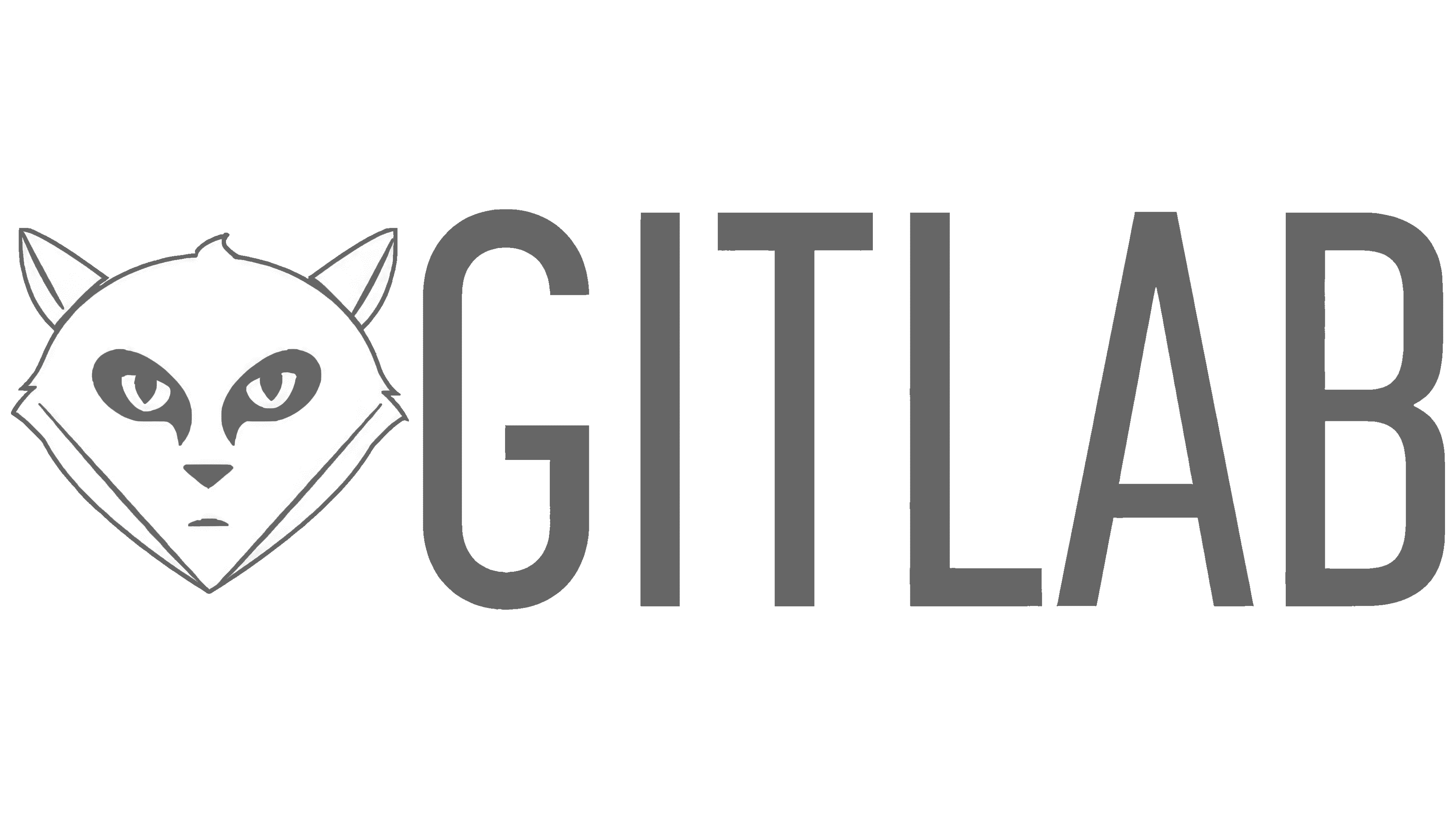
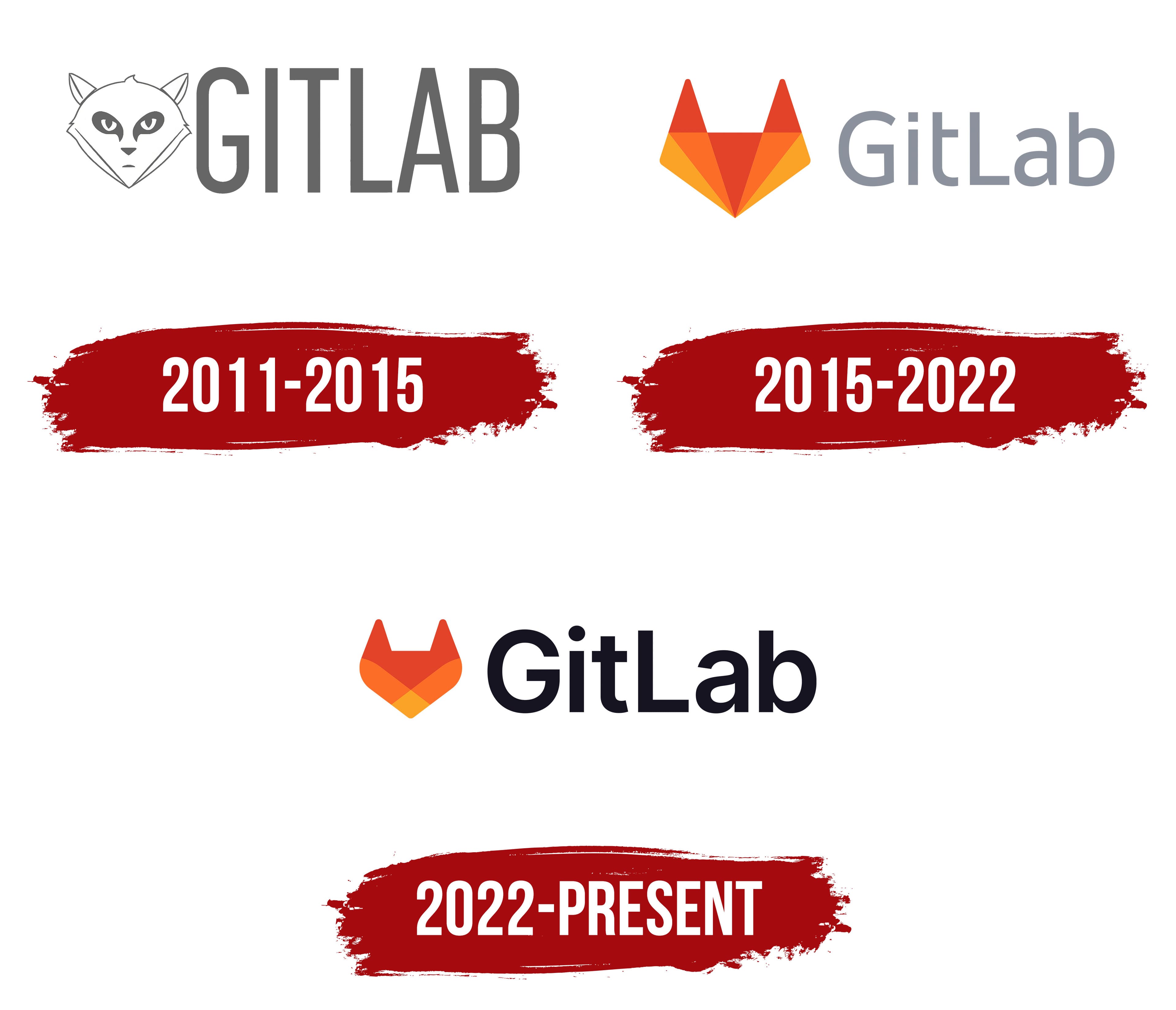
The first GitLab logo was built on a minimalist composition that included a stylized outline emblem and strict typography. The symbol features thin lines forming a geometric, angular animal face resembling a fox or a Japanese raccoon dog (tanuki), positioned to the left of the text. The graphic design features balanced contrasts, with smooth curves for the eyes and ovals paired with sharp, straight contours for the ears and chin. Thin lines and geometric shapes emphasized precision and a carefully considered visual identity.
The typeface was a sans-serif set entirely in uppercase letters. The glyphs had narrow proportions and a consistent stroke width, with no serifs, giving the type a strict, monolithic appearance. Similar to Zeppelin 32 or Deja Book, the font was custom-designed, with modified glyph shapes for greater expressiveness and uniqueness. The narrow, elongated letterforms added professionalism and formality to the overall composition, aligning with the brand’s technological focus.
The color palette was minimal and restrained, dominated by shades of gray and black, which conveyed a formal, understated image. Gray tones were associated with professionalism, reliability, and a reserved corporate aesthetic, aligning with GitLab’s positioning as a serious technological solution for professional developers.
The emblem symbolically reflected key brand traits, such as intellectual agility, teamwork, and adaptability qualities traditionally attributed to the tanuki in Japanese culture. Although many perceived the animal as a fox, within GitLab, the association with the tanuki was maintained as a metaphor for collective intelligence and resourcefulness.
2015 – 2022
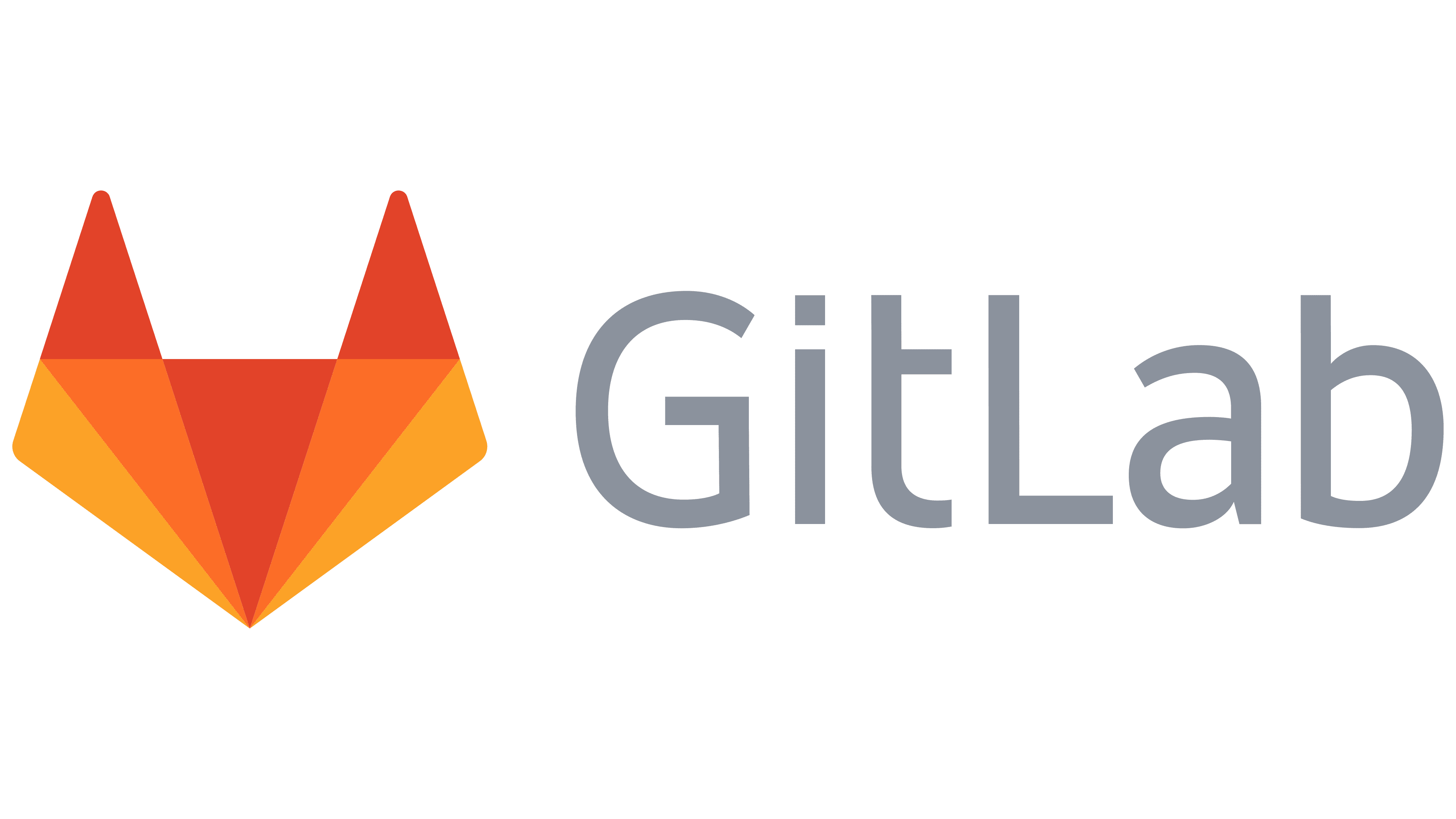
The updated logo, introduced in May 2015, embraced geometric minimalism and combined a distinctive emblem with custom lettering.
The emblem was an abstract depiction of a bat-eared fox’s head, constructed from several narrow triangles. The composition was formed by intersecting orange and dark orange facets, creating a silhouette with defined ears. The triangles were elongated and pointed downward, creating a sense of dynamism. This geometric form symbolized teamwork, collective intelligence, and adaptability to new challenges, all qualities associated with the Japanese tanuki, the brand’s chosen symbol of collaboration and flexibility.
The logo’s color palette featured vibrant orange hues, ranging from light amber to reddish-orange. The use of gradients and the faceted arrangement of triangles created an illusion of three-dimensionality and layering, highlighting the product’s complexity and technological sophistication. The orange palette conveyed energy, innovation, and optimism, shaping the brand’s image as an active and evolving leader in the technology sector.
The typography was set in a custom light gray sans-serif font, positioned to the right of the emblem. Designed specifically for GitLab, the font was stylistically similar to Zeppelin 32 and Deja Vu Sans, with slightly narrower proportions and smooth forms that ensured strong visual balance with the geometric emblem. The light gray lettering contrasted with the emblem’s vivid colors, lending a professional, serious tone to the overall look.
During this period, GitLab also used its proprietary fonts: GitLab Sans, based on Inter, for interface design, and JetBrains Mono for coding. However, the logo retained its unique custom font to emphasize brand distinctiveness.
This logo was in use during a pivotal stage of GitLab’s development as an international company and technology product, following the September 2015 release of version 8.0, which introduced integrated CI/CD support. This update helped expand its user base and drive global brand recognition.
2022 – today
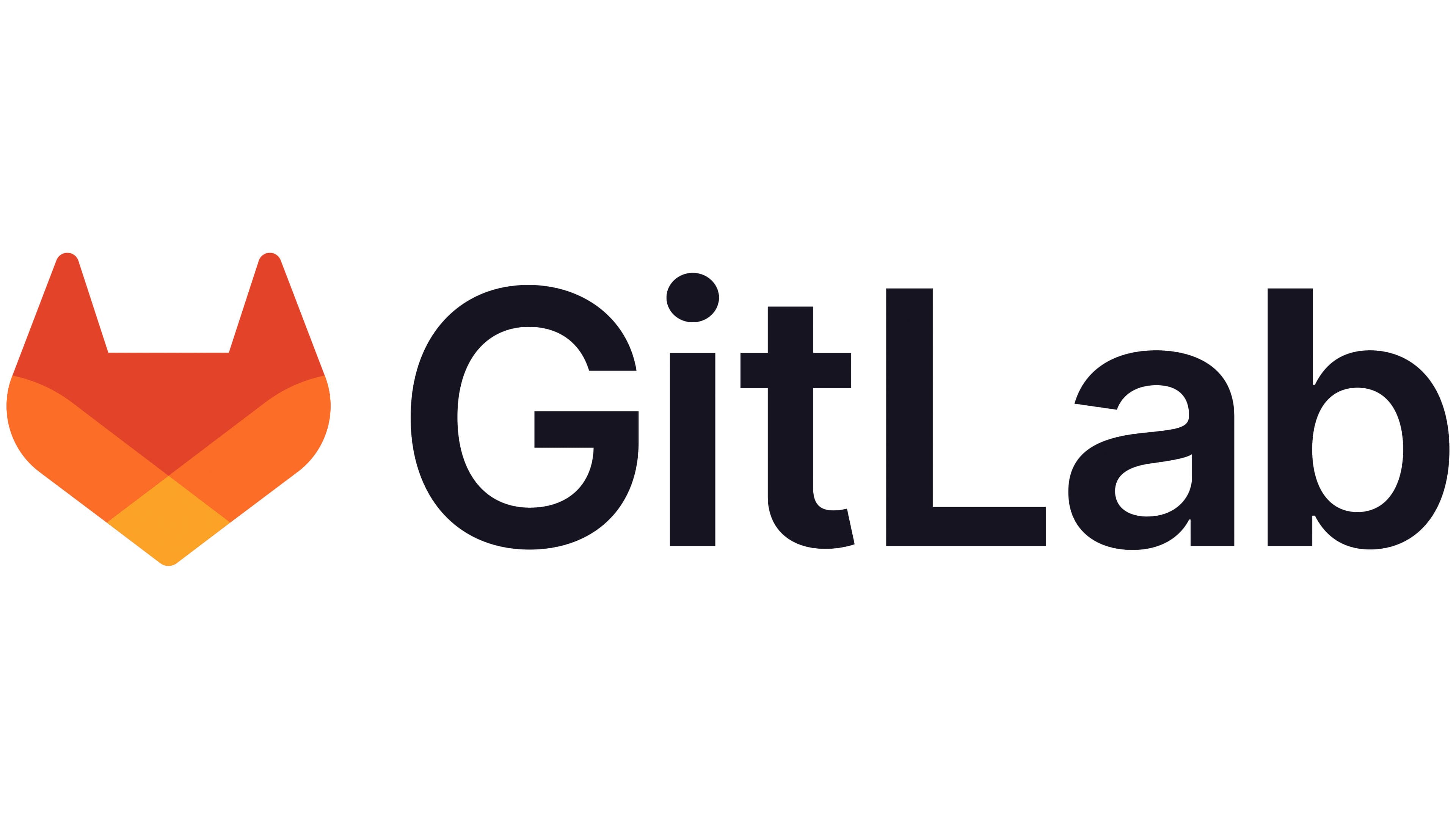
The updated GitLab logo was officially introduced on April 27, 2022, as part of a comprehensive rebranding effort and has been in use since the release of GitLab 15.0. The emblem continues to feature the brand’s key symbol: a stylized tanuki head, the Japanese animal that symbolizes collective intelligence, resourcefulness, and a team-oriented approach to problem-solving.
The emblem became even more minimalist, adopting a flat and refined silhouette. The composition is formed by the intersection of three main shades of orange (#E2432A, #FC6D27, #FCA326), arranged in geometric triangles. Together, they form the recognizable silhouette of a fox, characterized by simplified contours and soft, slightly rounded corners. This streamlined geometry underscores the brand’s adaptability and modern character while preserving the tanuki’s visual symbolism that users associate with GitLab.
The typographic element uses the custom GitLab Sans typeface, based on the popular Inter font and specially adapted to the company’s needs. The font features an increased x-height (the height of lowercase letters relative to uppercase), balanced character widths, and distinctive yet subtle glyph shapes that ensure high legibility across digital environments and brand materials. The word “GitLab” is set in bold, black text, emphasizing the brand’s authority and professional focus. The heavier, more prominent letters give the composition a solid presence, while the rounded contours add a friendly and approachable feel.
The logo’s color palette is bold and contrasting: the dominant black text conveys reliability, stability, and authority, while the bright orange shades of the emblem express energy, openness, and innovation. Monochrome versions of the emblem are also permitted, reflecting its flexibility.
The new GitLab logo reflects the company’s maturity as a global DevOps platform provider, retaining traditional elements while adapting them to the modern realities of the digital space and marketing requirements.