


 Neiman Marcus Logo PNG
The Neiman Marcus logo conveys the brand’s sophistication and exclusivity. The elegant emblem reflects the premium status of a department store, offering a carefully curated selection tailored to discerning tastes and refined style.
Neiman Marcus began in 1907, when Herbert Marcus, his sister Carrie, and her husband, Abraham Lincoln Neiman, opened a clothing store in Dallas. They chose to sell clothes rather than invest in Coca-Cola, later humorously referring to it as a missed opportunity.
The store quickly gained popularity by selling upscale, ready-to-wear clothing, rather than the traditional custom-made garments of that era. In 1914, a fire destroyed the original store, but it was quickly rebuilt and expanded.
A key figure was Stanley Marcus, the founder’s son, who developed creative marketing ideas and created the famous “Fashion Oscars.” Since 1952, the company has published its famous Christmas Book, featuring extravagant gifts such as airplanes and submarines.
In 1969, Neiman Marcus merged with Broadway-Hale Stores, expanding its presence outside Texas to cities such as Atlanta and San Francisco. In 1988, it acquired the popular Horchow Collection catalog, thereby expanding its home goods offerings.
In 1999, Neiman Marcus was among the first luxury brands to launch online sales. It faced challenges during the COVID-19 pandemic but recovered and was acquired by Saks Global in 2024.
Meaning and History
What is Neiman Marcus?
It is an American retail chain specializing in exclusive luxury goods and high-end fashion. Its boutiques feature collections from renowned fashion houses and unique limited-edition items. Its annual Christmas catalog attracts attention due to unusual and expensive gifts, such as private celebrity concerts or yachts. Store consultants help customers develop their individual styles, taking into account the preferences of regular shoppers.
1907 – 1988

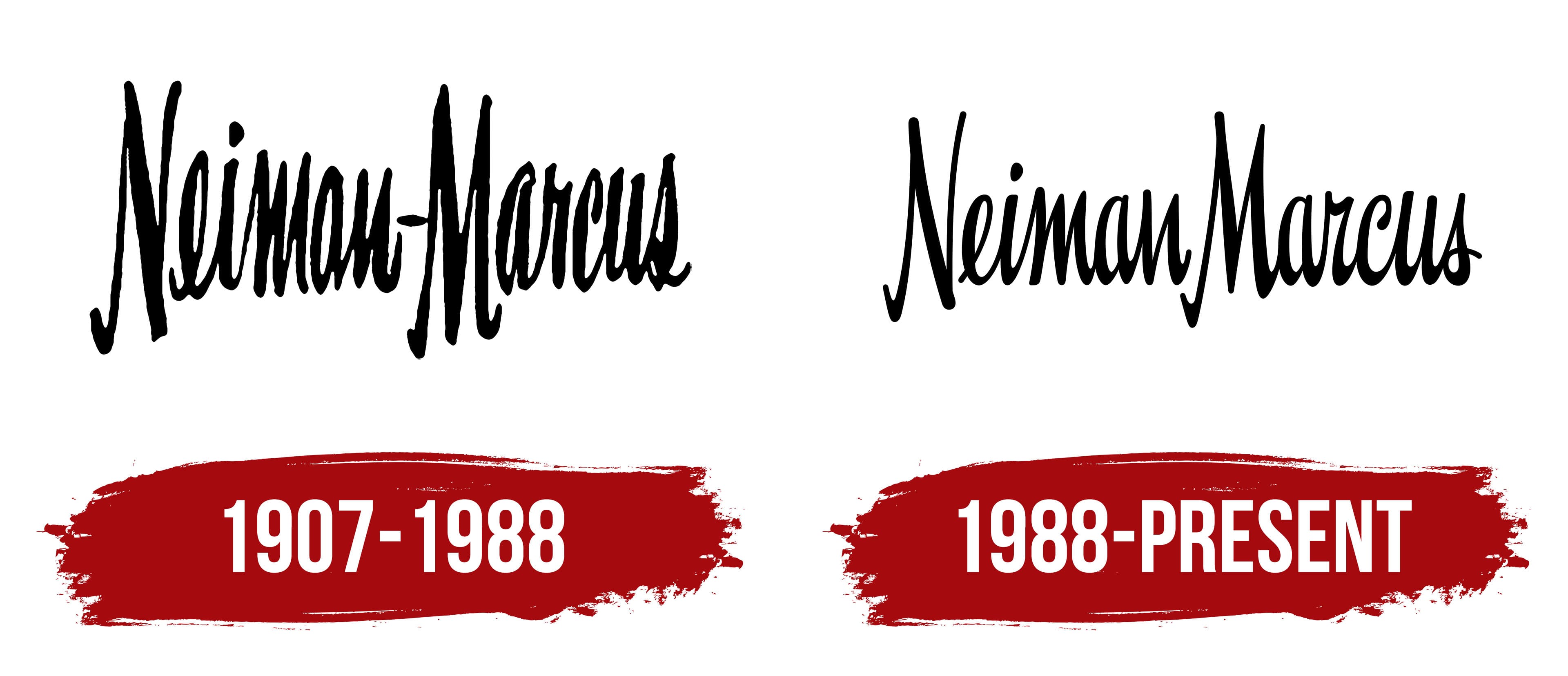
The original Neiman Marcus logo appeared with the opening of the first store in Dallas, founded by Herbert Marcus, Carrie Marcus Neiman, and her husband, A. L. Neiman. From the very beginning, it signaled belonging to the world of high fashion and individual refinement. The visual language was deliberately executed in a signature-style script, reminiscent of a personal autograph, emphasizing each client’s uniqueness and the exclusivity of the goods.
The typographic part of the logo features free-form calligraphy with little adherence to strict geometry, created with thin, elongated strokes that show a noticeable contrast in thickness. The letters have smooth, slightly extended verticals with ascenders and descenders. Each letter appears to be written in a single stroke, maintaining a visual sense of lightness and naturalness and directly reflecting the brand’s philosophy of combining exclusivity with the hospitality typical of Texas. The glyphs are slightly tilted to the right, creating a dynamic yet restrained impression, comparable to a handwritten signature on a personal invitation.
The primary color is black on a white background. Black symbolizes the company’s strict, confident, and premium status, while white ensures absolute clarity of perception. This combination highlights precise positioning and the brand’s commitment to impeccable taste and quality. The monochrome palette makes the logo versatile, allowing it to be placed without loss of recognition on any medium, from packaging to the famous Christmas catalogs.
The annual Neiman Marcus Christmas Book, which began as a postcard in 1915, has become an integral part of the brand’s visual identity, consistently featuring this logo. It served as an identifier and a marker of connection to a cultural tradition, uniting gift exclusivity, a personal approach, and a sense of perfection.
Thanks to its elegance, simplicity, and versatility, the logo has stood the test of time, remaining relevant and in demand for over eighty years. It’s simple and free-form, serving as a bridge between traditional luxury and contemporary trends.
1988 – today

The redesign of the Neiman Marcus logo in 1988 was driven by the brand’s desire to improve legibility amid advances in technology and digital media. The previous version of the wordmark, with a hyphen between the words, was visually overloaded and less legible in new formats. Therefore, the company made a firm decision to remove the hyphen and render the brand name as a single, streamlined unit: Neiman Marcus.
The typeface retained its signature handwritten aesthetic but gained a more modern interpretation. Its form became freer and more fluid, the lines acquired smoothness and flow, yet remained clear and confident. Each letter is carefully connected to the next, giving the wordmark continuity and a natural visual rhythm, similar to an author’s signature. Particularly expressive are the tall vertical elements of the “N” and “M,” which stand out from the rest and lend balance and lightness to the entire inscription.
The new typeface was presumably based on the style of Filmotype Honey, with custom adjustments including tighter letter spacing, slight horizontal compression, and thicker strokes. The lettering achieved the necessary weight and readability while retaining the brand’s original character and individuality.
The logo’s color scheme remained unchanged: a monochrome palette of black on white symbolizes the company’s classic approach to luxury, highlighting clarity and precision in its communication with clients.
For many years after its redesign, this version of the logo has remained unchanged, which demonstrates its success and adaptability. The visual concept of the updated logo continues to reflect the most important aspects of Neiman Marcus’s philosophy: exceptional style, attention to individuality, and the aspiration to blend traditional high-fashion values with a contemporary understanding of comfort and elegance.
