


 Paramount Pictures Logo PNG
The Paramount logo immediately identifies the film studio as a top studio. Only real stars appear in the studio’s films, which makes them worthy of an Oscar. The emblem also indicates the company’s impressive age.
Paramount Pictures began in 1912 in New York when Hungarian immigrant Adolph Zukor founded Famous Players Film Company. He aimed to bring full-length films with major theater actors to a middle-class audience under the slogan “Famous Players in Famous Plays.” The company’s first release was Queen Elizabeth, starring French stage star Sarah Bernhardt, the first feature-length drama shown in the United States.
In 1914, Utah theater owner W. W. Hodkinson founded Paramount Pictures Corporation as a national distributor. In 1916, Zukor merged Famous Players with Jesse L. Lasky Feature Play Company and Paramount, creating Famous Players-Lasky Corporation, then the largest film studio of its time, with stars such as Mary Pickford, Rudolph Valentino, and Gloria Swanson.
The studio built its Hollywood lot in 1926, and in 1927, Wings won the first Academy Award for Best Picture. The 1930s brought Marlene Dietrich, Gary Cooper, Billy Wilder, and Ernst Lubitsch, but also bankruptcy in 1933. Paramount reorganized in 1935, then faced another break in 1948, when the US Supreme Court forced major studios to separate production and distribution from theater ownership.
Gulf+Western Industries acquired Paramount in 1966, and under Robert Evans, the studio released Rosemary’s Baby, The Godfather films, Serpico, and Chinatown. In 1967, Paramount bought Desilu, strengthening its television business. Viacom acquired the studio in 1994, the year Forrest Gump appeared. In 2014, Paramount moved fully to digital distribution. In 2022, the parent company became Paramount Global. In July 2025, it merged with Skydance Media in an $8 billion deal led by David Ellison.
Meaning and History
Paramount Pictures is as old as the movie theater. It has come a long way from making films for immigrant workers to a film industry giant that bought DreamWorks and owns luxury hotels with private cinemas. Hollywood has introduced new film production technologies over the past hundred years, and modern styles have become fashionable. But one thing hasn’t changed: the Paramount logo has retained its classic structure.
The image of a pyramidal mountain in a ring of stars is as familiar to moviegoers as Universal Pictures’ planet, MGM’s lion, Disney’s magic castle, and Warner Brothers’ blue-and-gold shield. The snow-covered mountain peak has hosted films since the days of silent cinema, before synchronous filming existed.
Paramount’s iconic symbol is one of Hollywood’s most enigmatic. Few know where it came from and what it means. William Wadsworth Hodkinson designed the majestic mountain view, funded the films, and secured exclusive distribution rights. Hodkinson initiated the merger of the companies that formed the modern film studio and insisted that it be called Paramount, not Famous Players. He sketched the logo on blotting paper while sitting in the boardroom with producer Adolph Zukor. The businessman depicted the mountain with a star halo, and modern cinema fans began to look for hidden meaning.
Fans were most concerned about where this mountain peak might be. The most common version was that Hodkinson drew Ben Lomond Peak from memory, after visiting Utah. He had been there as a child, camping nearby. But other assumptions also circulated. Some believed the emblem immortalized the peaks of Monte Viso (in the Alps) or Mount Aconcagua (in the Andes).
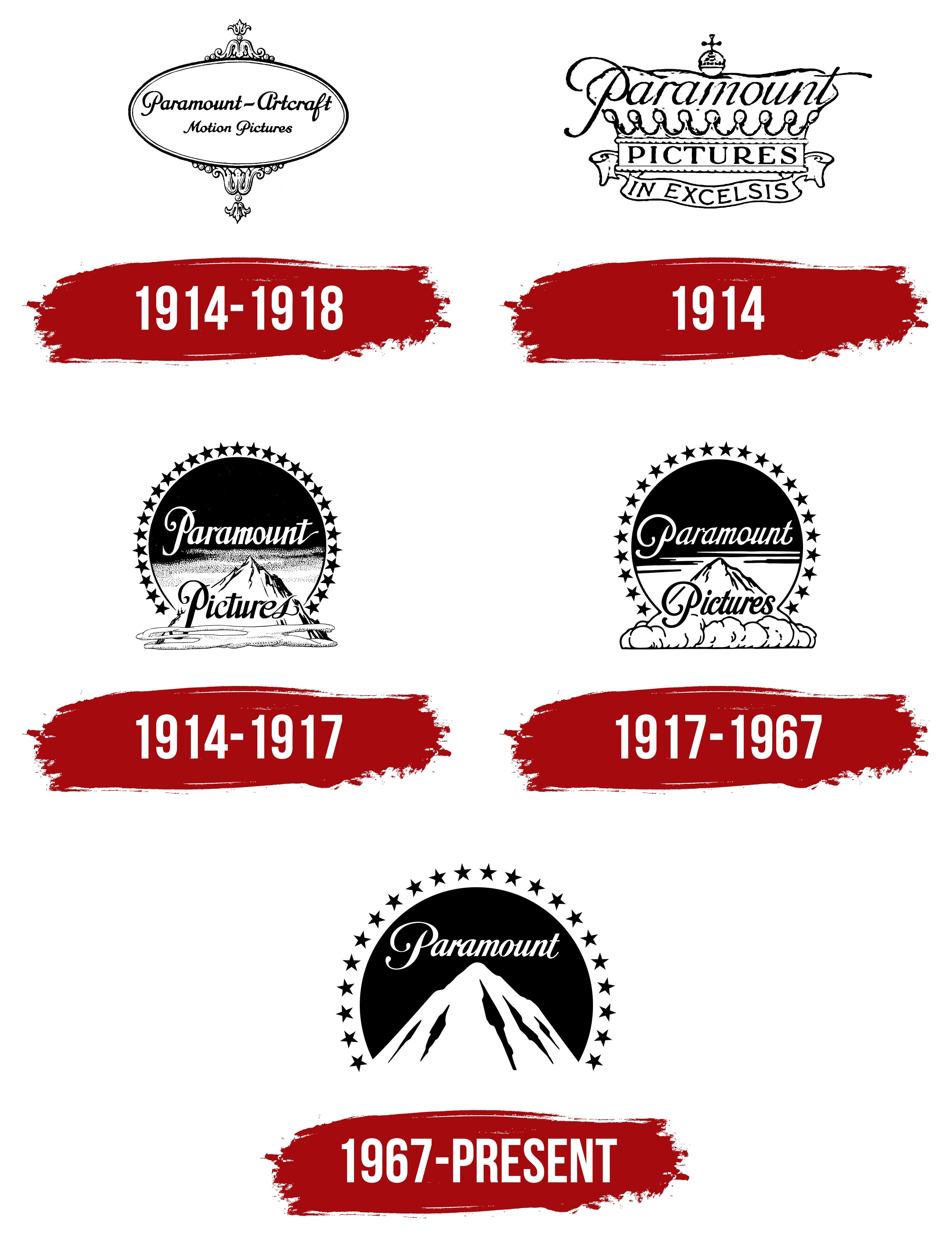
The Paramount Pictures logo has been subtly changing. The fog dissipated around the mountain, then thickened and disappeared. The background changed several times until it became a single color. The number of stars in the halo gradually decreased from 29 to 22. As a result, the symbol has an animated 3D version.
1914 – 1918
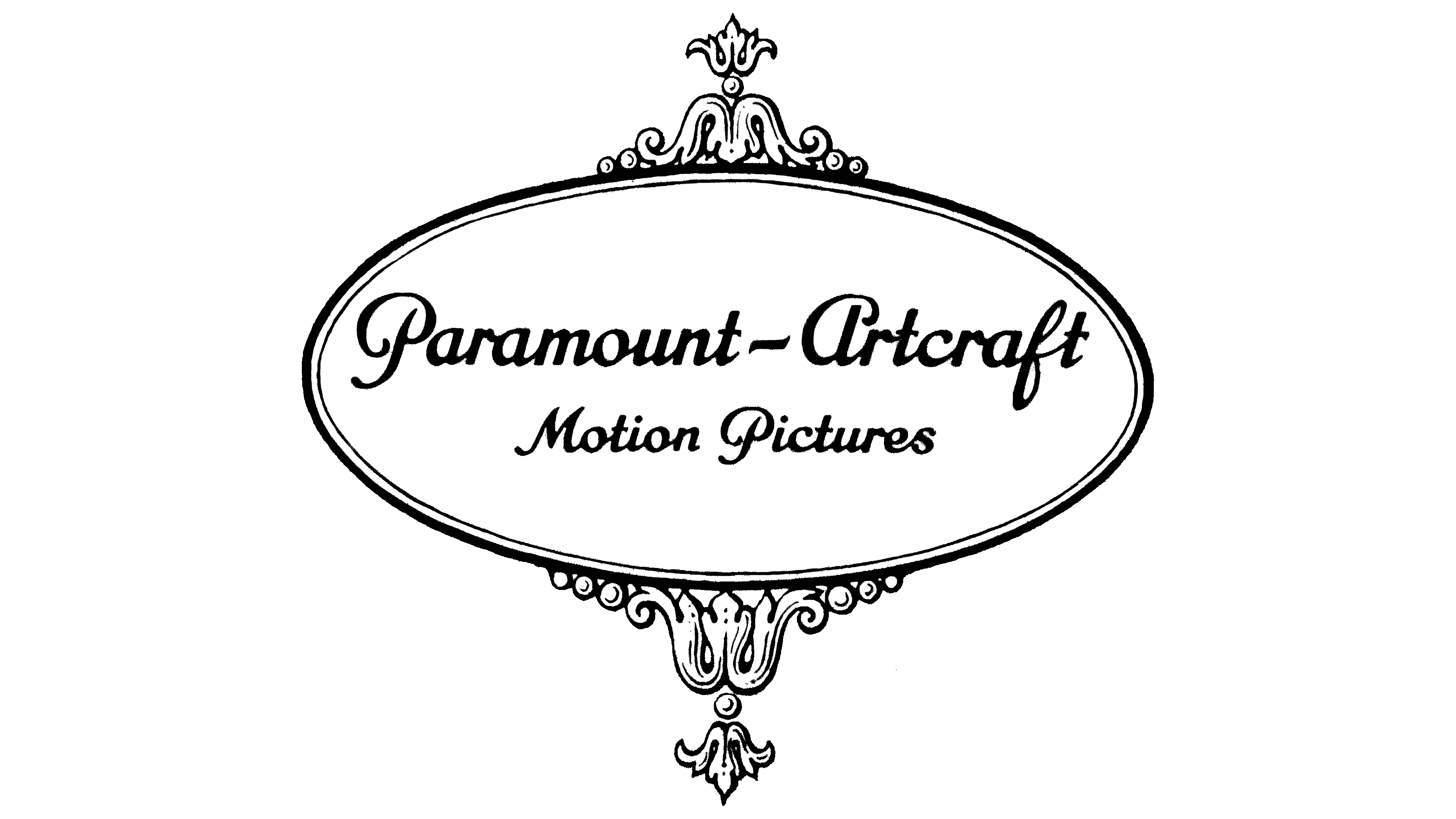
Paramount-Artcraft Motion Pictures’ logo was oval with a double black outline. It was framed, with carved patterns above and below. Inside was the company name, divided into two lines. The designers used a handwritten font. The first letters in words looked like calligraphy: they had elegant curls at the ends of the strokes. The style matched the era’s emblem concept.
1914
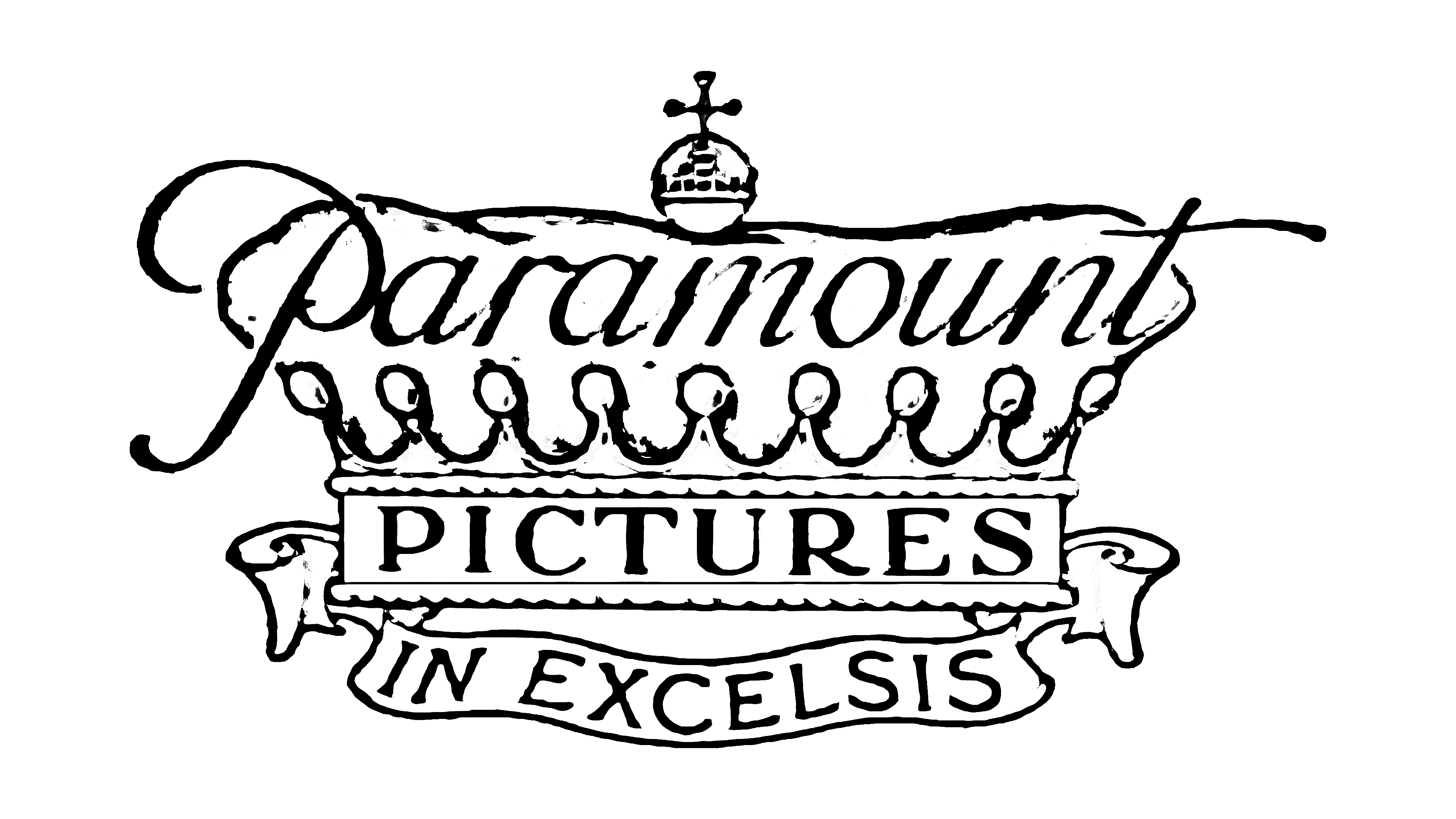
In 1914, the Lasky Feature Play Company and the Famous Players Film Company partnered with distributor Paramount Pictures. Its trademark was a crown with ten prongs on the hoop and a small cross on top. The word “Paramount” was written across the headgear. For this, a thin font imitated calligraphic handwriting.
The second part of her name, “PICTURES,” was on the lower rim. A bold serif typeface was used. Under the crown, the artists depicted a scroll with the Latin saying “IN EXCELSIS.”
1914 – 1917
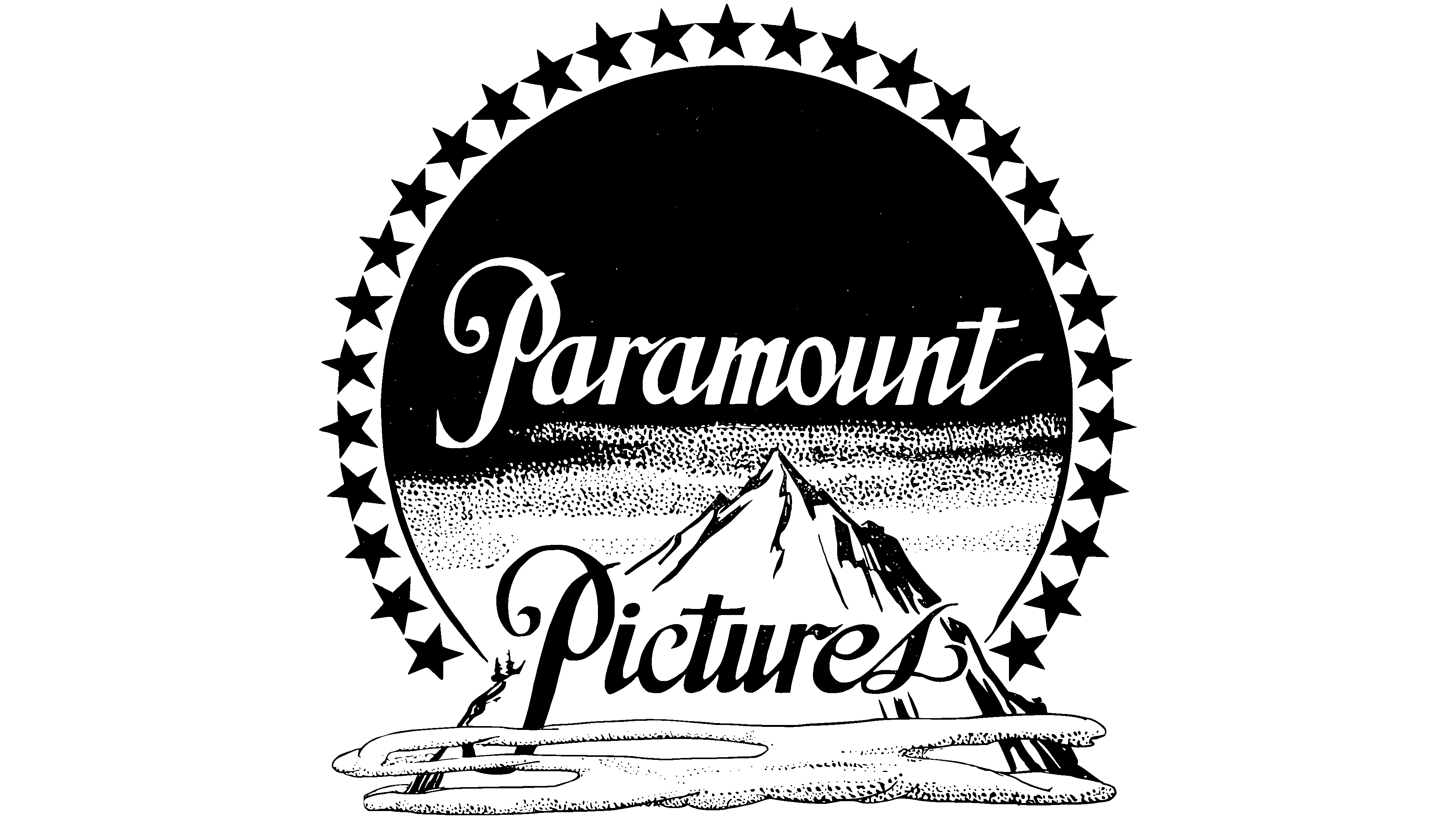
The original Paramount Film Studio logo debuted in silent films. According to the archives, William Hodkinson created it in 1916 when discussing business issues with the former owner of the Famous Players company. He drew the first thing that came to mind on blotting paper: a mountain peak surrounded by stars. Childhood memories of Ben Lomond Peak may have inspired him.
Twenty-nine black five-pointed stars formed a halo around the circle’s edge with the words “Paramount.” The font has changed slightly: the capital “P” has spiral curls, while the other letters have become thinner and more elegant. The upper half of the circle was painted black. The lower part showed a mountain against a white, spotted horizon. Across the snowy peak was the black word “Pictures,” written in the same style as “Paramount.” The bottom of the letter “P” was lost in the fog that spread around the mountain.
1917 – 1967
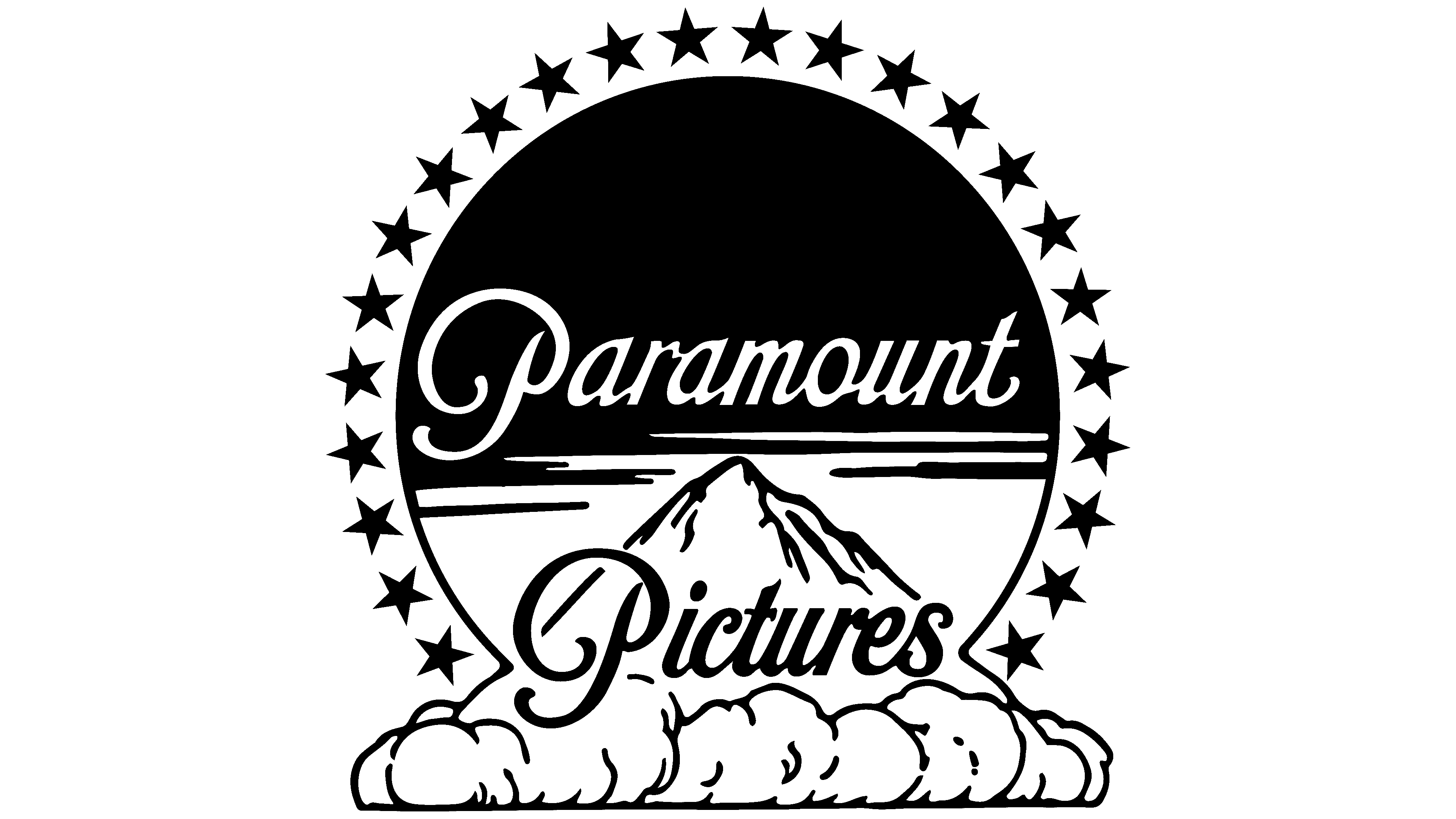
After a little refinement, the logo acquired clear contours. Five stars were removed, breaking the unbreakable chain. Probably so; William Hodkinson considered the new design more successful. The inscription font became neater rather than sweeping. The shadows on the right side of the mountain disappeared, and the spots on the horizon turned into smooth horizontal lines. Swirling clouds replaced the mist.
1967 – today
The Paramount Pictures brand name did not change until the late 1960s. Then the film company adapted it to a fashionable, minimalist aesthetic and simplified the image. Two more stars disappeared from the halo, leaving only 22. The mountain, which had previously seemed voluminous because of uneven shadows, became two-dimensional. The round base is now black, so the white silhouette of the snowy peak is created using negative space. The same effect was applied to the “Paramount” inscription, which was set in a new font. And the word “Pictures” disappeared altogether, along with the clouds.
Font and Colors

It is still unknown why the number of stars was originally 29 and then reduced to 22. Rumor has it that the semicircular constellation around the mountain once denoted actors who signed a contract with a film studio. However, evidence does not support this assumption: at the dawn of cinema, William Hodkinson did not sign agreements with anyone, and Paramount distributed other people’s films.
In any case, the mountain peak with a halo of stars is one of Hollywood’s most famous symbols. It predates MGM’s Roaring Lion by nearly a decade and retains the basic design concept. The mountain personifies solidity, steadfastness, and durability. The stars, in turn, are integral to Hollywood and serve a decorative function in the emblem.
The first lettering on the Paramount Pictures logo matched the style of the Paramount-Artcraft Motion Pictures wordmark. The cursive type was considered very fashionable at the time. Over time, it evolved and gained recognizable features.
The logo uses a film-style technique. Its frame resembles a 1930s movie, and the color scheme recalls classic black-and-white cinematography.