


 Rayados Logo PNG
The Rayados logo conveys the atmosphere of Mexican soccer: passionate fans, emotional matches, and players’ determination. It symbolizes a team formed in street games that retains its fighting spirit.
Monterrey was founded on June 28, 1945, in Nuevo León by a group that included Paul Probert and José Fidalgo. Known as Rayados, the club played its first official match in August and defeated León. On September 14, only weeks after its debut, a team bus caught fire, and two players died. Support from other Mexican clubs helped Monterrey finish the season despite the tragedy.
During the 1950s, the team moved through the lower divisions and reached the Primera División in 1960. It has remained in the top flight since then. Monterrey won its first national championship in 1986 by defeating Tampico Madero in the final, entering the group of clubs able to challenge long-established powers such as Club América and Chivas de Guadalajara.
A major corporate shift came in 1999, when FEMSA took control and financed further development of facilities, coaching and the youth system. In 2015, Monterrey opened Estadio BBVA, a 53,000-seat stadium, with an inaugural match against Benfica. The venue became the base for a period of stronger domestic and continental results.
Across the 2000s and 2010s, Monterrey collected five Liga MX titles and five CONCACAF Champions League trophies. Those continental wins led to repeated Club World Cup appearances and matches against leading clubs from other regions. In 2024, Monterrey won the Apertura title and then prepared for the expanded 2025 Club World Cup, extending a modern period shaped by domestic trophies and international competition.
Meaning and History
What is Rayados?
The popular nickname of a prominent soccer club from a major Mexican city. The team wears traditional blue-and-white striped uniforms. Supported by significant regional business, the club regularly wins national titles and international honors. The home stadium holds over fifty thousand fans. The most anticipated event is the derby against a local rival. The team often participates in the FIFA Club World Cup and actively promotes youth development through international academies.
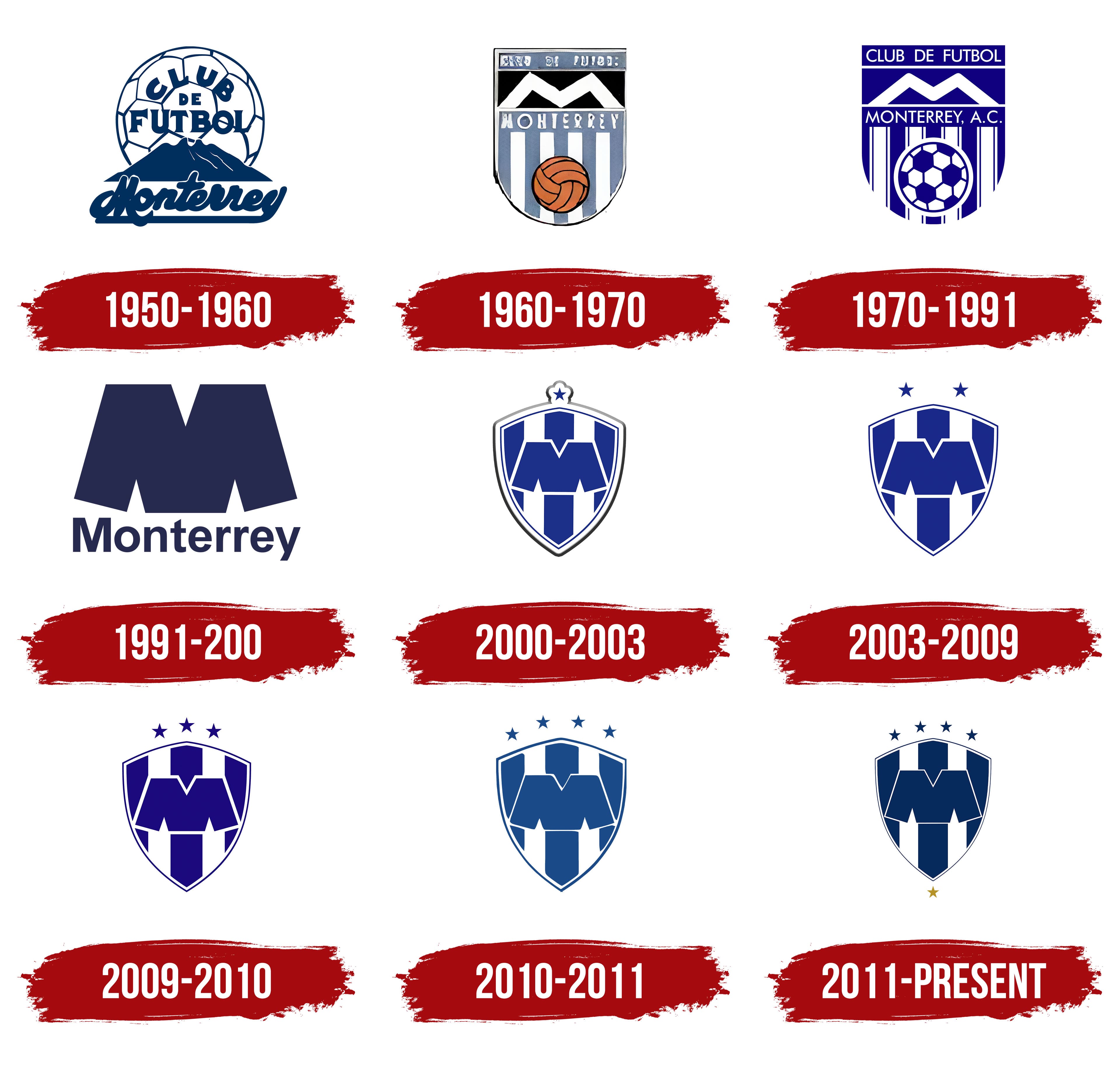
1950 – 1960
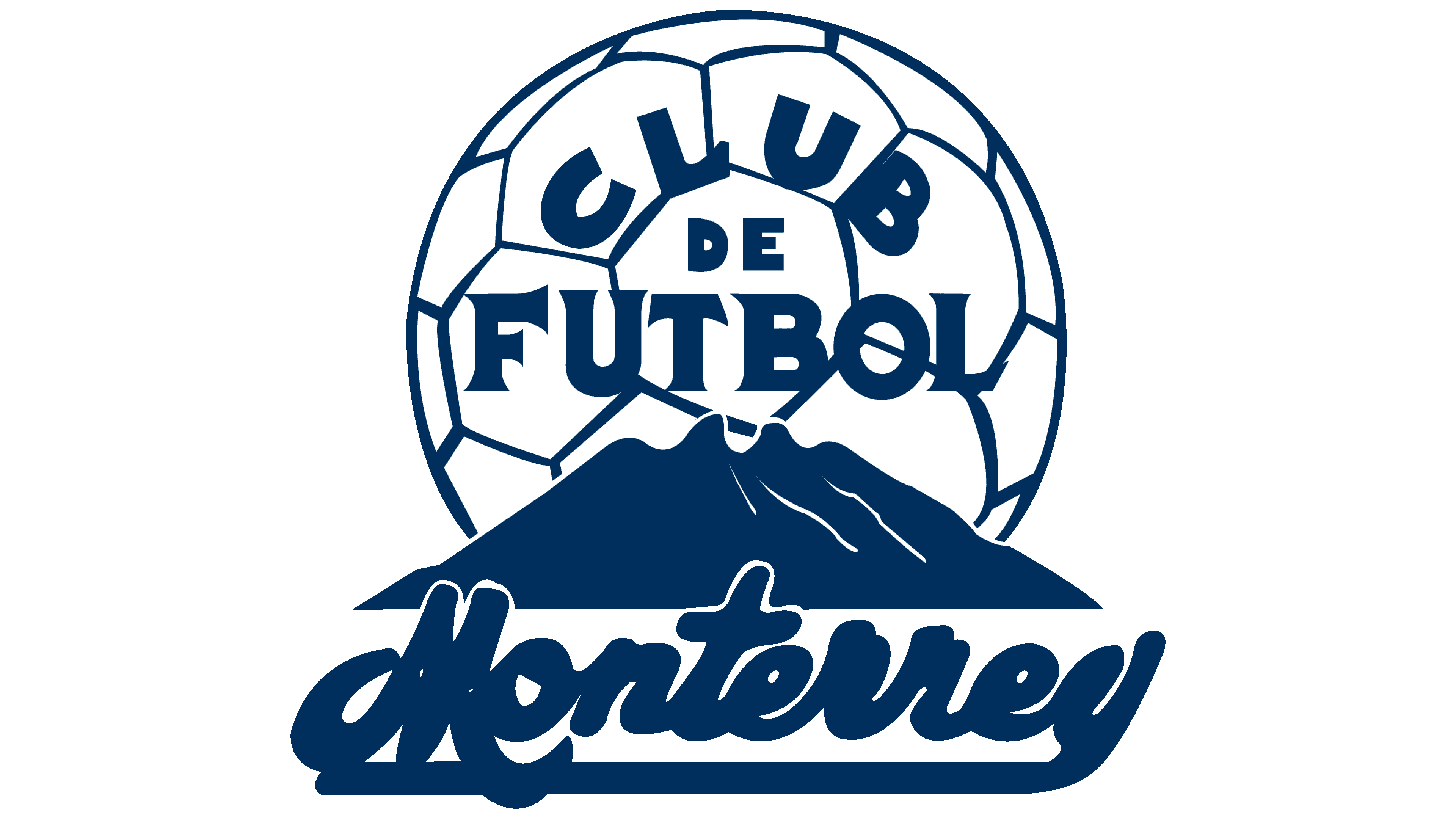
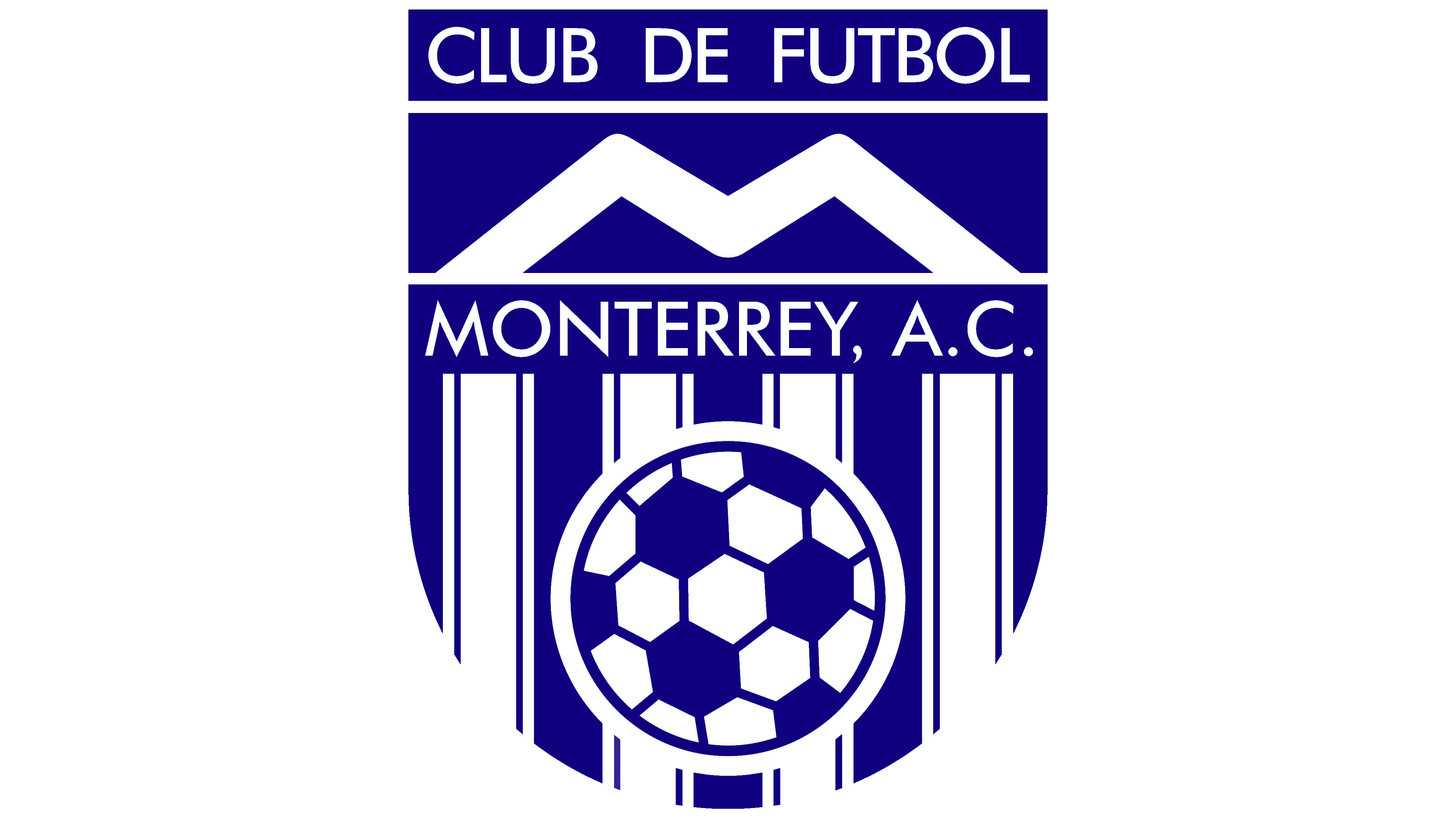
The club’s visual system was based on the image of Cerro de la Silla, a natural symbol of Monterrey known for its distinctive silhouette. In the 1950 logo, the mountain served as the background and foundation for a large soccer ball representing the club’s athletic field and emphasizing the theme of competition.
The ball was depicted in contrast, with visible seams between the pentagonal panels. On the ball was the text “Club de Futbol,” written in a heavy typeface with rounded serifs.
The lower section contained the word “Monterrey,” done in a handwritten calligraphic font. It introduced an element of individuality and connected the club’s identity to the city. The contrast between the strict upper text and the free-flowing lower part created a balanced combination of formal and emotional accents.
The dark blue emblem color symbolized reliability and the continuity of tradition, while the white background enhanced clarity. The connection to local symbolism strengthened the club’s cultural ties to the region and laid the foundation for the nickname “Rayados,” which became an integral part of its identity.
1960 – 1970
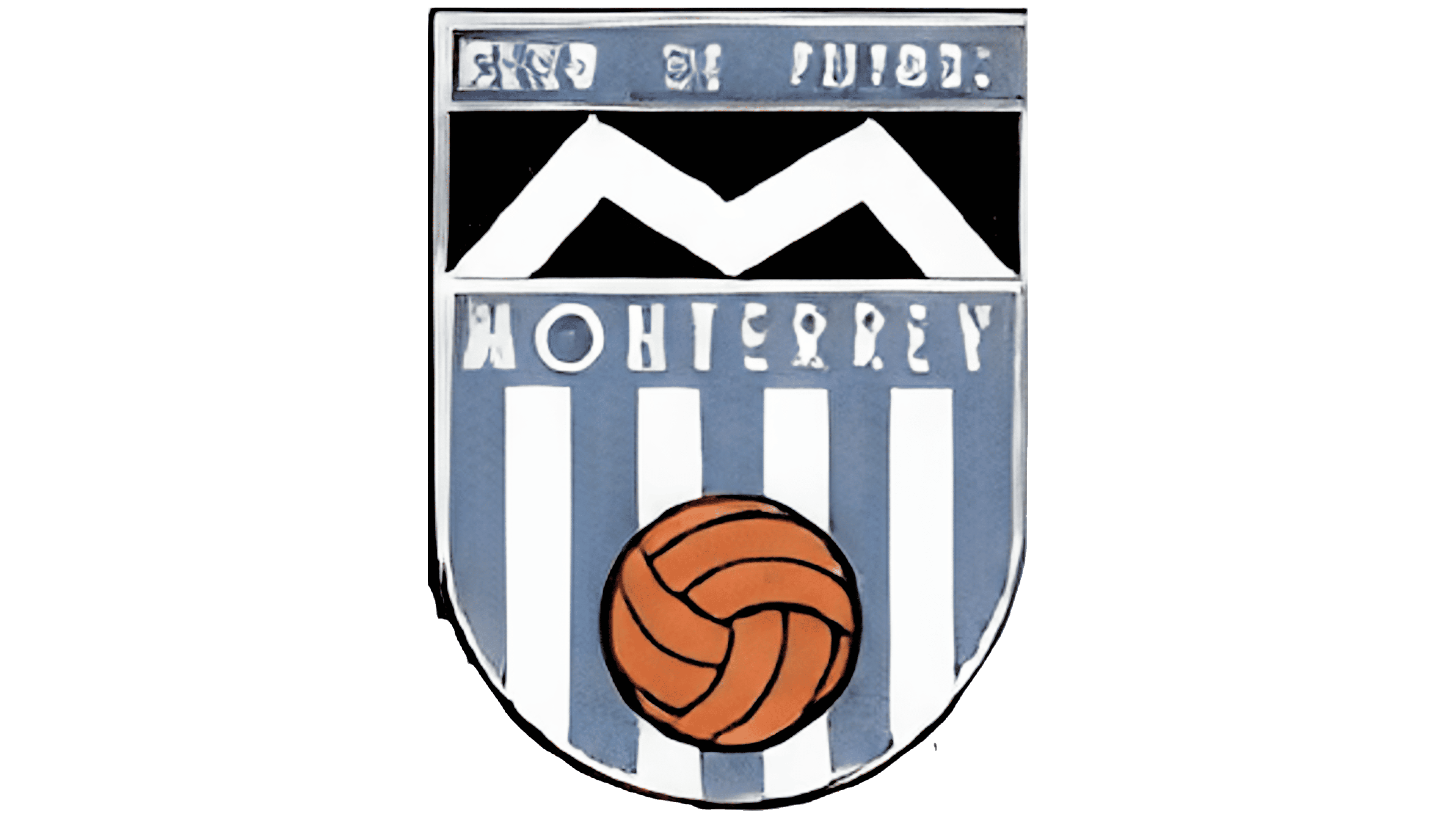
Color became the foundation for the updated Monterrey logo of the late 1950s.
The design was shaped like a shield with a smoothly rounded base. Its form indicated the organization’s athletic nature and gave the symbol a more modern appearance. In the upper part was a large letter “M,” created in a simplified geometric style. Its silhouette resembled that of Cerro de la Silla, a Monterrey landmark.
The lower part of the shield featured vertical stripes that created a rhythmic pattern. White and light blue colors echoed the players’ uniforms and the regional symbolism of Nuevo León. The light blue tone matched the color of the kits used in the 1960s. Through the combination of geometry and color, the club emphasized continuity of traditions and defined its own identity at the national level. The soccer ball at the base of the shield was rendered in a rich brown-orange tone.
1970 – 1991
The focus of the new Monterrey logo in the early 1970s was on color. A shade of blue close to Royal Blue refreshed the club’s image and matched the team’s uniform of that era. The color update gave the shield a modern look and strengthened the connection between the visual system and the team identity.
The shape of the crest remained shield-like, but the internal structure changed. Stripes of varying thickness made the composition more expressive and referenced the nickname “Rayados.” This graphic motif became a key element of Monterrey’s identity, reflecting the players’ striped jerseys. The addition of thinner lines gave the emblem a livelier and more flexible appearance.
The typography was updated. The previous serif style was replaced with geometric sans-serif fonts. In form, they were close to the Futura and Helvetica families. The clean structure of the letters emphasized the club’s modern character and aligned with the aesthetics of the modernist era.
The soccer ball at the center of the crest was enlarged. Through renewed color, proportions, and typography, the club established its own visual language, reflecting the spirit of the 1970s and a new stage in Monterrey’s development.
1991 – 2000

The minimalist trend of the late twentieth century influenced Rayados’ visual identity, leading the team to reject excessive symbolism. At the center was the letter “M,” large and heavy, made of simple geometric lines. Its outline resembled that of Cerro de la Silla Mountain, and through it, the mark retained its connection to the city’s geography.
The logo’s color palette was based on a dark blue tone close to Navy Blue. The color was perceived as a symbol of stability and reliability, aligning with the team’s athletic spirit and underscoring its serious attitude.
Below the large letter was the inscription “Monterrey.” The sans-serif typeface, similar in character to Helvetica Bold or Arial Bold, reflected 1990s aesthetic principles focused on clarity and functionality.
The combination of the monogram and restrained typography created a concise, balanced image that reflected the visual culture trends of the time.
2000 – 2003
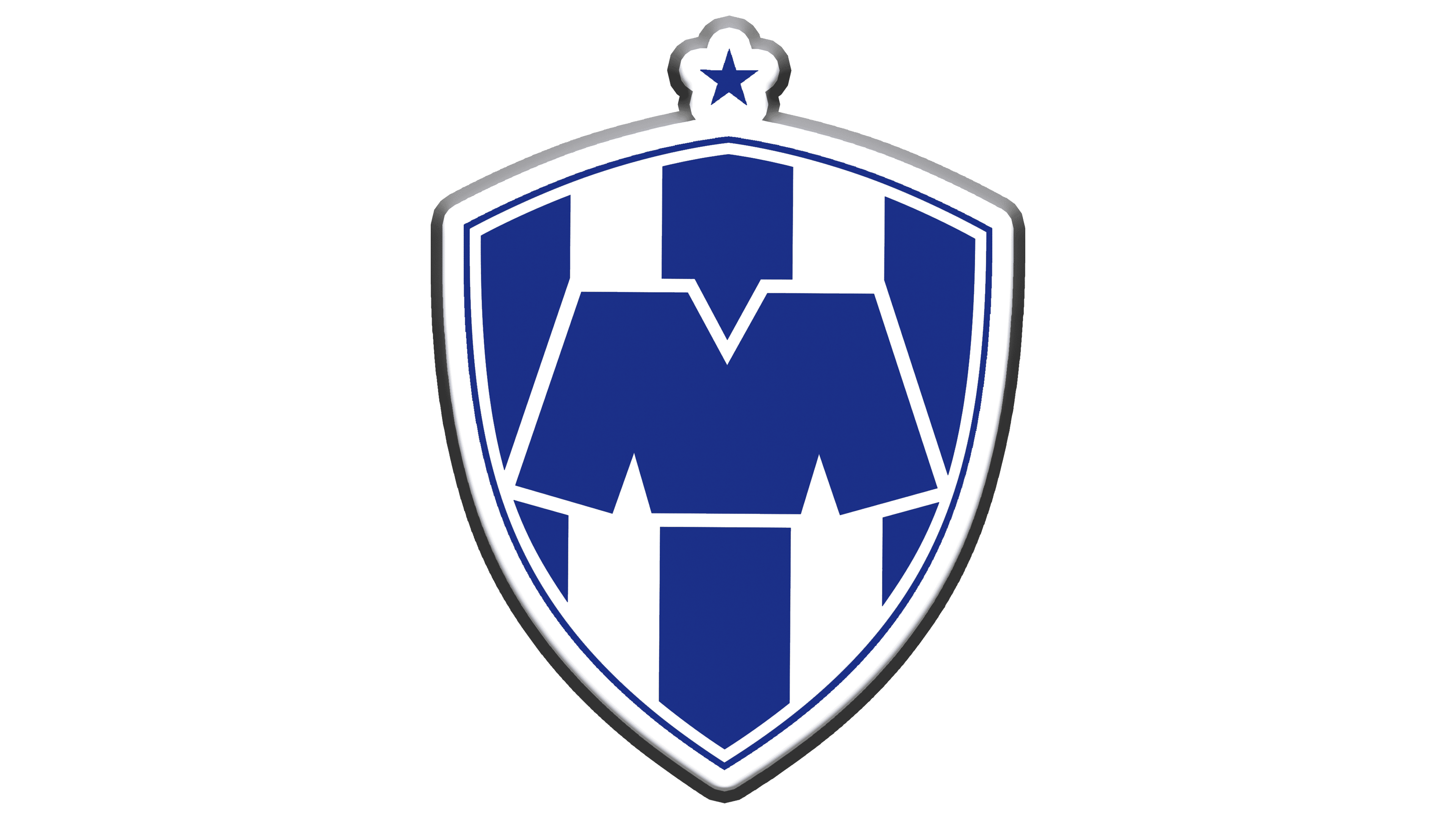
The return to the shield form became the starting point for updating the Rayados visual system at the beginning of the 21st century. The team sought to strengthen its connection with the classics of club symbolism and adapt it to new objectives. The outline of the logo gained clarity and a clear border, creating a sense of volume.
In the upper part appeared a small five-pointed star. It served as a reminder of the club’s first championship, won in 1986, and as a historical marker commemorating the sporting achievement.
The main symbol remained the letter “M.” Its shape was redesigned to make it more concise without losing its symbolic meaning. The silhouette continued to reference Cerro de la Silla Mountain.
The color system relied on the Royal Blue shade previously used by the club. The blue color emphasized continuity and reflected the team’s stable character.
The vertical stripes on the shield grew wider and fewer. They maintained a connection with the design of the players’ uniforms on the field.
The updated logo combined the club’s historical and sporting codes, linking the memory of the past with modern requirements of visual identity.
2003 – 2009

After winning the 2003 championship, an additional blue star was placed above the crest. It symbolized the club’s second national title and commemorated its new achievement.
Changes also affected the crest’s shape, but its inner structure remained unchanged from the previous emblem. The heavy gray border was removed. The new outline looked thin and neat, creating a sense of precision and balanced structure. The adjustment simplified the design without losing its previous details.
2009 – 2010

The third star appeared above the Rayados logo after the club’s championship victory in 2009. The new element symbolized the third title and reinforced the club’s sporting achievement within its visual system. The consistent addition of stars formed a history of success expressed through simple graphic accents.
Along with the third star, the designers changed the base color. The blue tone shifted toward indigo, increasing the image’s saturation and adding visual depth. The new color emphasized the emotional component and reflected the team’s spirit at that time. The shape of the shield remained unchanged.
2010 – 2011

The Rayados logo update included a fourth star, symbolizing the club’s 2010 championship.
Once again, along with the addition of the star, the color style changed. The intense, energetic blue tone was replaced by a calmer one, closer to medium Denim Blue. It conveyed a sense of maturity in a club that had strengthened its position after its fourth title.
2011 – today
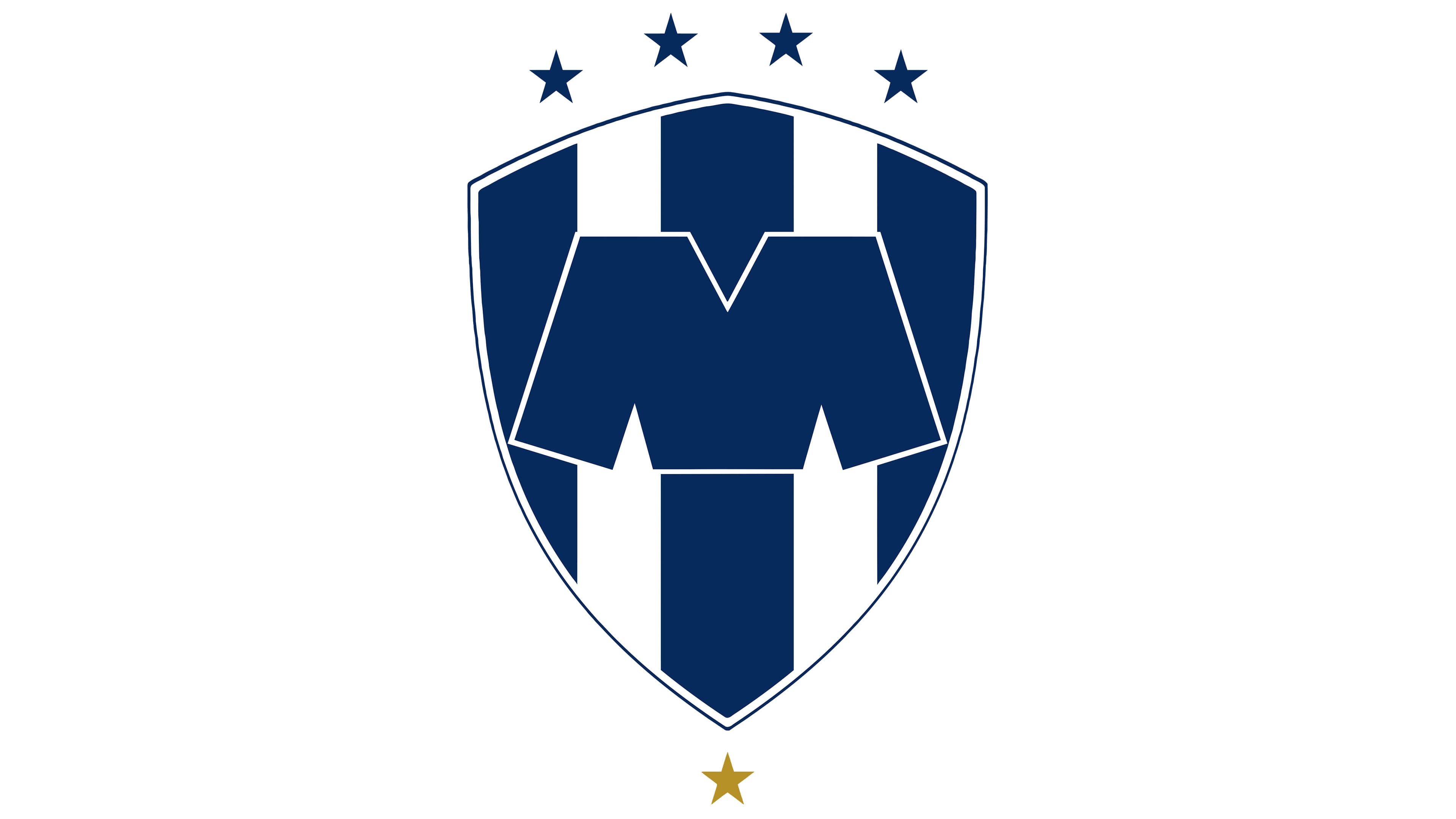
After Rayados won their fifth championship in 2011, the club updated its visual identity. The changes affected the symbol’s structure. For the first time, the star was placed not above the shield but below it. Its placement disrupted the familiar structure and created a new order of perception, in which the mark of distinction emphasized the completion of an achievement cycle.
The star received a golden design. The metallic shade became a visual accent, marking the club’s status as a five-time champion and adding the qualities of an award mark to the emblem.
At the same time, the logo’s main color was adjusted. The blue tone deepened, approaching Navy Blue.
Font and Colors
The history of the Rayados logo is conveyed through its form, color, and typeface, which reflect the club’s character.
The main color is blue, officially designated as “Rayados Blue.” In tone, it is close to Navy Blue and serves as the primary carrier of the club’s identity.
The golden color appeared in 2011 after Monterrey won its fifth championship. Its inclusion marked the connection between sporting achievements and color symbolism. Gold was associated with victory and emphasized the club’s high status in the national football scene.
The logo combines hand-drawn elements, ordered proportions, and a color system that supports a unified visual composition, expressing Rayados’ history.