


 Ruffles Logo PNG
The Ruffles logo is one of those that has retained its identity over the years. Redesigns over different periods have only slightly altered the core concept of the company’s positioning and the logo’s style. The visual aspect has gained new colors and become more attractive with each modification.
Ruffles began in 1958, when Elmer Doolin of the Frito Company developed a ridged potato chip that looked and worked differently from flat chips. The name referred to the wavy form, similar to fabric ruffles. The ridges gave the product a stronger texture, made it better for dipping, and helped separate it from other potato chips on store shelves.
The first version was salted, but the shape became the brand’s main advantage. A major business shift came after the Frito Company merged with H. W. Lay & Company to form Frito-Lay, giving Ruffles broader distribution and stronger marketing support. In 1965, PepsiCo acquired the snack business, thereby increasing advertising resources and helping the brand grow across the United States.
During the 1960s and 1970s, Ruffles expanded its lineup to include cheese, sour cream, and onion flavors. In the 1980s, the line added sour cream and green onion, barbecue, and stronger television promotion. The 1990s brought reduced-fat chips and the larger Max format, reflecting demand for both lighter snacks and more intense chip styles.
In the 2000s, Ruffles entered more international markets and adapted flavors to local tastes. Max: Double Rush appeared in 2010 with two flavors in one chip, followed by Ultimate in 2013 with larger pieces and stronger seasoning. Later launches included Crispy Fries in 2016, All Dressed in the U.S. in 2017, Anthony Davis Ridge Tops in 2018, Flamin’ Hot in 2019, T-Pain’s lime and jalapeño chips in 2020, Double Crunch in 2021, and a lower-saturated-fat line in 2022.
Meaning and History
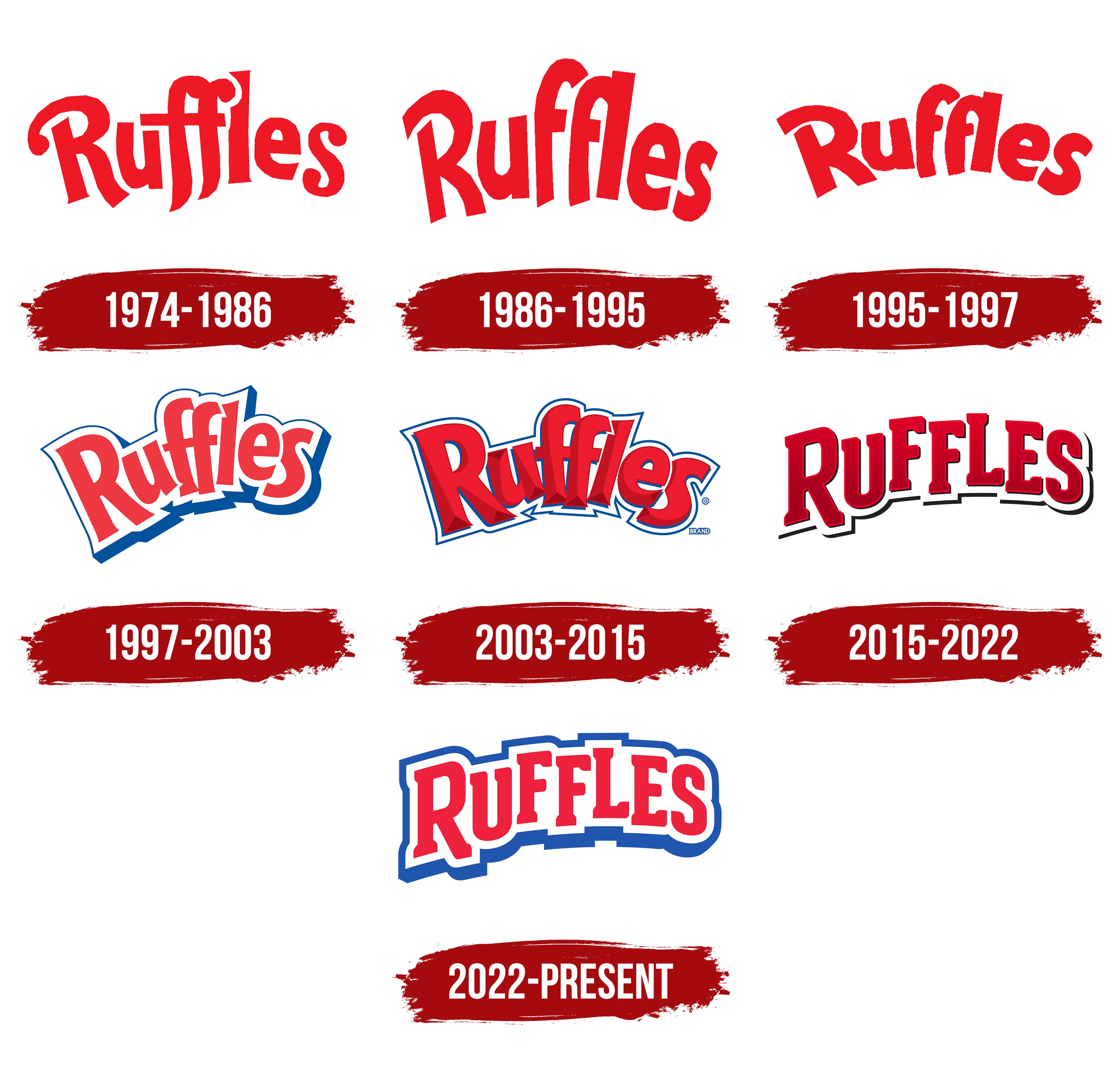
The red letters have retained their grandeur, while some decorative elements have begun to take on modern motifs. The aesthetic beauty of the current logo, as well as its integrity, recognizability, and readability, is undeniable. The Ruffles logo is known worldwide. Thanks to the successful operation and vibrant presentation of delicious chips, the company has earned the trust of millions. The variety of chip flavors and types has been a pleasant surprise for customers. No matter what country a person is in, seeing the brand’s shiny letters, the hand invariably reaches for them.
The logo prompts you to quickly indulge in spiced chips, sparking your imagination and desire for a pleasant break.
What is Ruffles?
It is a brand of ribbed potato chips owned by Frito-Lay, a division of PepsiCo. The chips are known for their distinctive ribbed texture, which makes them ideal for dipping and provides a satisfying crunch. They are available in a variety of flavors, including original, cheddar, sour cream, and sour cream and onion. The brand emphasizes high-quality ingredients and bold flavors that appeal to a wide range of snack lovers. It is widely available in supermarkets, convenience stores, and online retailers, making it a popular choice for parties, gatherings, and everyday snacking.
1974 – 1986
The brand’s first logo appeared in 1984. Its statement was concise and interesting. The bright logo, consisting of just the brand name, was beautiful and dynamic. It proclaimed that the letters’ font was as unique as the delicious chips. This is why the simple word “Ruffles” on a white background became so important to millions of customers in its original graphic presentation.
The letters were unconventional, especially the capital “R” and the two “f” s. These letters gave the words “charm” and “appeal”. The ends of the letters were rounded with a beautiful element resembling a comma, which added playfulness and lightness to the word. This visual presentation was well received. Some quickly fell in love with the chips and remained loyal to the brand, while others decided to experiment and were delighted.
In any case, the logo fulfilled its main mission; it attracted everyone’s attention.
1986 – 1995
Starting in 1986, the letters of the logo changed their shape and overall appearance. They became less playful but more precise, giving them a unique style. The color scheme remained the same: white and red created an excellent color combination. The letters no longer had outlines and were positioned closer together. The swirls became more graphic, giving the logo a geometric and concise look. The readability was high, and the overall perception was exceptionally positive.
Now, the “Ruffles” brand seems to be saying that while traditions are preserved, the chips’ taste will become even more interesting to customers.
1995 – 1997
To fully appreciate the multifaceted nature of rebranding, comparing two logos from different periods is worthwhile. Only then will it be clear that the lettering style and placement have significantly changed.
The red letters appear to be placed on a rainbow, creating a certain angle. The spacing between them conveys the chips’ lightness.
1997 – 2003
According to the company’s management, the identity needed a radical transformation. Therefore, it was decided to collaborate with Landor Associates. Designer John Burns was tasked with transforming the existing logo to make it more appealing and stylized.
The task was accomplished. The brand name became less bright, and key elements were transformed in color. The red color lost its intensity, giving the logo harmony. Subdued shades emphasized the company’s authority. White was no longer just a background; its combination with blue to create an outline was a successful decision. The three-color palette drew more attention to the logo and improved readability. The identity gained unique motifs and an original style.
2003 – 2015
The updated logo shows no critical changes to the main accents. The overall colors and company philosophy are preserved, but the logo becomes more refined. The red is rich and deep, combined with a lighter shade to create a three-dimensional effect. The lines and contours of the letters are clearly defined, enhancing the logo’s presentation.
The blue outline became less pronounced, more symmetrical, and narrower. The shape of the letters changed, and their placement became freer.
Many believe this brand name presentation is one of the most successful. The identity was used both in the USA and beyond.
2015 – 2022
It might seem like everything regarding logo updates should change. However, in practice, only a few new elements might be added while keeping the core unchanged. This is roughly what happened with the company’s new identity.
The white background and red letters were already familiar. However, the outline became less burdensome to the overall perception of the logo, appearing only at the bottom, which conveys a sense of freedom of choice.
A new outline appeared, representing a play of colors. The muted red tone evenly fills each letter, and a shiny shade of the same color graphically traces each contour, giving the logo a three-dimensional and expansive look.
As practice shows, rebranding positively impacted sales, and the new logo attracted many customers.
2022 – today
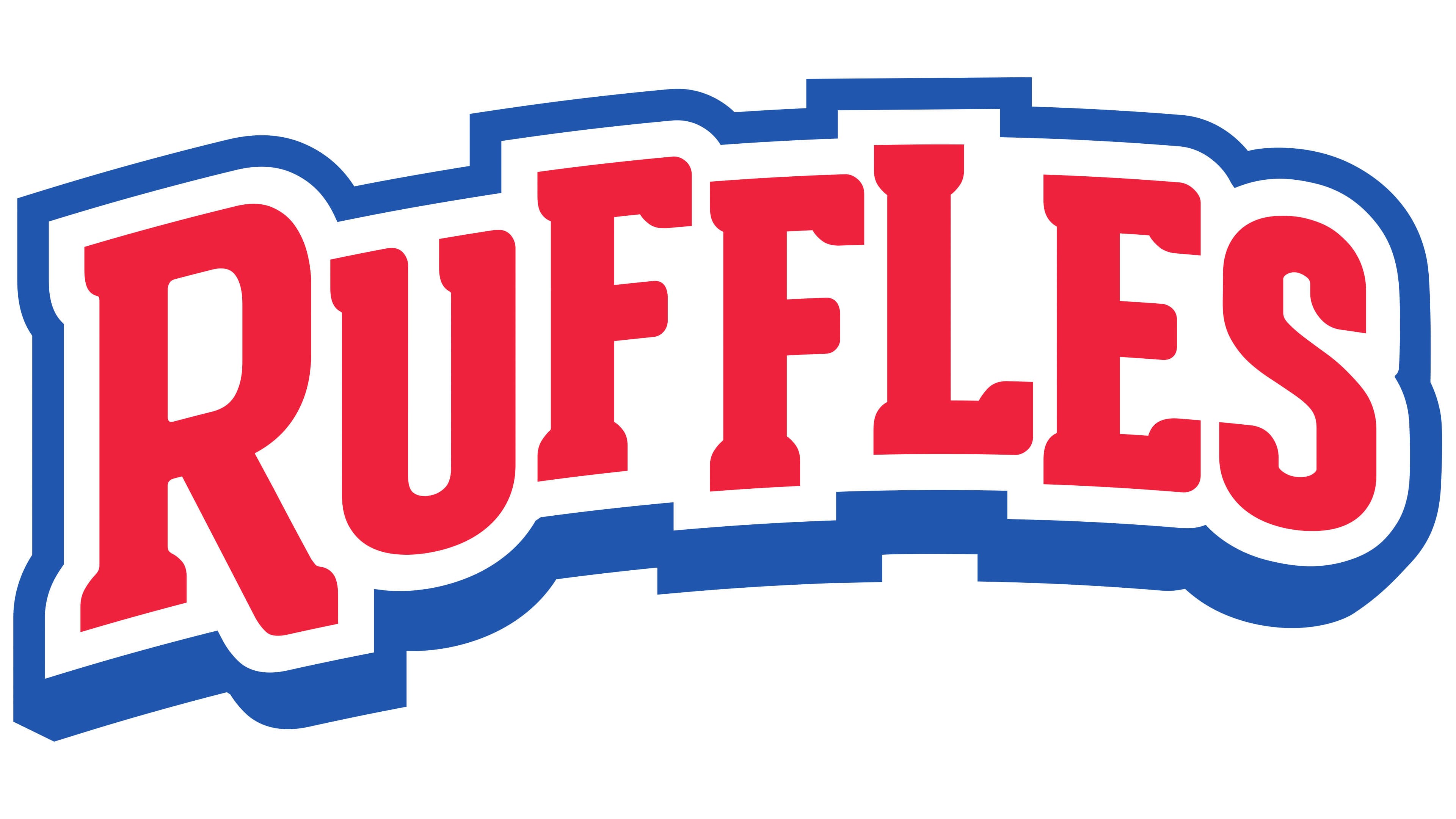
Many claim that the 2022 logo used by the brand is familiar and has been seen before. However, the situation is not so straightforward. The color palette from the 1997 identity was returned, but the logo changed significantly.
The blue outline now varies in thickness at the top and bottom. Its color deepened, harmonizing well with the red.
The font also changed, becoming simpler yet more presentable. The letters are placed at different heights and have softer shapes. There are no drawings or images of objects, as designers believe excesses are unnecessary.