


 SDDS Logo PNG
The SDDS logo represents sound quality and symbolizes cinematic immersion. The company developed a unique digital playback system that introduced a new level of audio experience for viewers, making sound as integral to cinema as the visual component.
SDDS was developed in 1991 as a new cinema sound system designed to compete with Dolby Digital and DTS. Sony invested in an eight-channel format with five front channels, two surround channels, and one low-frequency effects channel. The system officially debuted in 1993 with Last Action Hero, starring Arnold Schwarzenegger, and was presented as a new option for large theatrical releases and premium screens in selected major markets.
From 1994 to 1995, the company promoted SDDS by installing equipment in theaters worldwide. Audio data was recorded on both sides of the film strip, giving the format a backup if one track was damaged. By 1996, major studios were releasing films in SDDS, while software revisions and reliability testing continued from 1997 to 1999.
Use of the format peaked between 2000 and 2005, mainly in large cinemas equipped for high-quality multichannel playback. From 2006 to 2010, many theaters still relied on it while operating film projectors. However, the wider industry was moving toward digital projection and newer cinema sound systems.
From 2011 to 2015, installations declined as digital projectors became common, but existing equipment continued to receive technical support. Between 2016 and 2022, most theaters completed the transition, leaving SDDS in limited use. By 2023, the original format was largely obsolete, while parts of its channel design, redundancy methods, and reliability approach had influenced later digital cinema audio systems.
Meaning and History
What is SDDS?
This technology delivers pure cinema sound, reproducing every soundtrack detail with maximum accuracy. The system includes five front channels, two surround channels, and a separate low-frequency channel. This setup delivers full depth and richness, allowing viewers to feel immersed in the action on screen. An innovative error correction system ensures stable playback even if the film is damaged. The technology allows sound to move throughout the entire cinema, creating a sense of presence. This makes watching a movie more immersive and allows viewers to hear audio details exactly as the filmmakers intended.
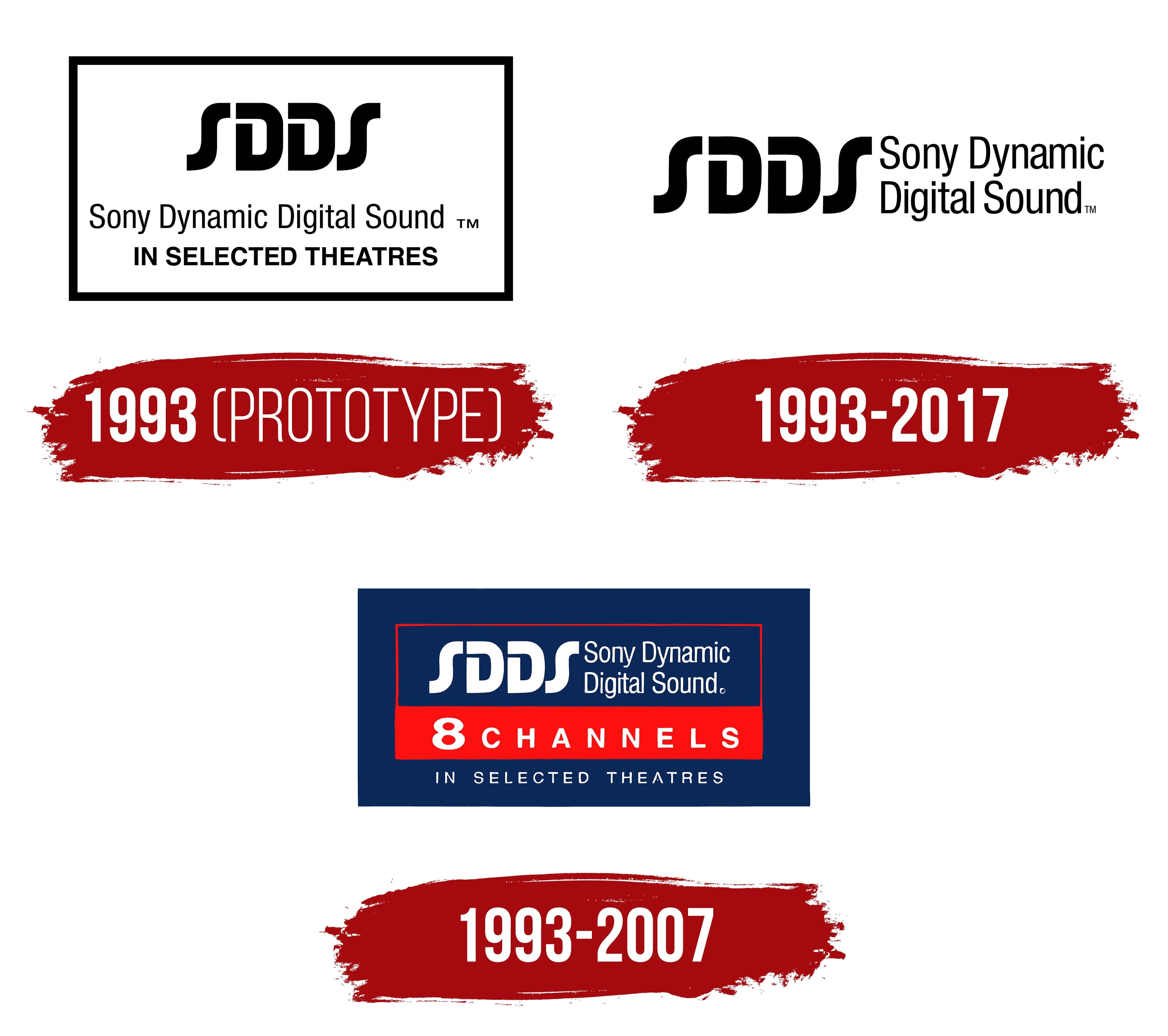
1993 (prototype)

An early logo conveys the brand’s spirit and technological orientation. The visual structure emphasizes cleanliness and functionality.
The abbreviation SDDS is in a bold, modern font with smooth curves, emphasizing the dynamic nature of sound. The wavy shape of the letter “S” evokes sound waves, symbolizing sound quality and dynamics and suggesting technological superiority.
Below the main graphic, the symbol is the company’s full name, Sony Dynamic Digital Sound. It is in a small sans-serif font, making the text easy to read. The line “In Selected Theatres” is printed in capital letters to highlight the technology’s exclusivity.
The logo is enclosed in a rectangular frame, creating a sense of completeness and drawing attention to the content. The frame emphasizes attention to detail and gives the logo a strict look.
The emblem’s creation in the early 1990s reflected Sony’s desire to gain a foothold in the professional cinema sound market. The design became universal and relevant, supporting Sony’s future growth.
1993 – 2017

The SDDS logo, used from 1993 to 2017, featured a clean, uncluttered design. The updated version redistributed the text: the company’s full name, “Sony Dynamic Digital Sound,” moved to the right of the SDDS abbreviation and split across two lines to create a balanced visual experience.
The abbreviation SDDS is in a bold, modern font with smooth curves. The letters are geometrically precise, and the rounded details in the “S” give the text rhythm. The “S “‘s wavy shape retains its association with sound waves.
The right-hand text is in a strict sans-serif font, which improves clarity and functionality. Dividing the text into two lines improves readability and visual symmetry, creating harmony between the acronym and the text.
The slogan “In Selected Theatres,” which appeared in the prototype, was removed, allowing the logo to be used universally across various fields. This version has become a symbol of Sony’s innovative audio technology.
1993 – 2007

Sony’s “8 Channels” Dynamic Digital Sound logo was designed to promote an 8-channel sound configuration, thus distinguishing the technology from competitors such as Dolby Digital and DTS, which used a 6-channel system (5.1 format) at the time. Sony added two center channels (left and right), improving the sound experience in large halls and making SDDS an attractive choice for premium theaters.
The logo has two main colors: a deep blue background reflects stability, and a bright red stripe with the text “8 Channels” highlights a technological advantage. Thanks to the color contrast, the logo stands out in promotional materials and on screens before screenings.
At the top, there is a standard SDDS logo. At the bottom is the slogan “In Selected Theatres,” which emphasizes the exclusivity of the technology
However, Sony has limited SDDS to theaters and has not extended it to the home market. The company’s strategy was to promote SDDS as the standard for premium audio systems in cinemas. The designation “8 Channels” was a technical characteristic, not part of the brand.
The logo highlighted Sony’s innovative approach and ability to offer unique solutions for professional use.