


 Serbia National Football Team Logo PNG
The Serbia National Football Team logo exemplifies national identity, closely intertwined with the country’s sporting interests. The emblem shapes Serbia’s image on the global stage during international football matches.
Serbia’s national football team was officially formed in 2006 after the breakup of Serbia and Montenegro. Still, its history is rooted in the Yugoslav football school. Serbian players were part of Yugoslavia’s strongest periods, including Olympic silver medals in 1948 and 1952, as well as second-place finishes at the European Championships in 1960 and 1968.
After Yugoslavia’s collapse, Serbia and Montenegro competed as one team. It qualified for the 1998 World Cup in France but failed to move beyond the group stage. At Euro 2000, the team reached the quarterfinals before losing to France, which later won the tournament.
Independent Serbia made its first major appearance at the 2010 World Cup in South Africa under Radomir Antic. In a group with Germany, Ghana, and Australia, Serbia beat Germany 1-0. Still, the result was not enough to reach the knockout stage. The 2010s brought missed qualifications for Euro 2012, the 2014 World Cup, and Euro 2016, despite the presence of players such as Nemanja Vidic, Branislav Ivanovic, and Aleksandar Kolarov.
At the 2018 World Cup in Russia, Mladen Krstajic’s team exited in the group stage after defeats to Brazil and Switzerland. Dragan Stojkovic later led Serbia to the 2022 World Cup by winning its qualifying group ahead of Portugal, but matches against Brazil, Switzerland, and Cameroon in Qatar ended without progress. The modern squad includes Sergej Milinkovic-Savic, Dusan Tadic, Aleksandar Mitrovic, and Luka Jovic, while past names such as Dragan Dzajic, Dejan Savicevic, Predrag Mijatovic, and Vidic remain tied to Serbian and Yugoslav football. In August 2023, Serbia ranked 30th in the FIFA ranking.
Meaning and History
What is the Serbia National Football Team?
The Serbia National Football Team represents Serbia in international football competitions. Managed by the Football Association of Serbia (FSS), the team has a rich footballing heritage, continuing the legacy of the former Yugoslavian team. Known for their physical strength, technical skills, and tactical awareness, Serbian players have significantly impacted domestic and international arenas. The team has participated in numerous major tournaments, showcasing their competitive spirit and talent. Serbia’s passionate supporters and strong football culture reflect their deep-rooted love for the sport and their aspiration to achieve excellence on the global stage.
2006 – 2011
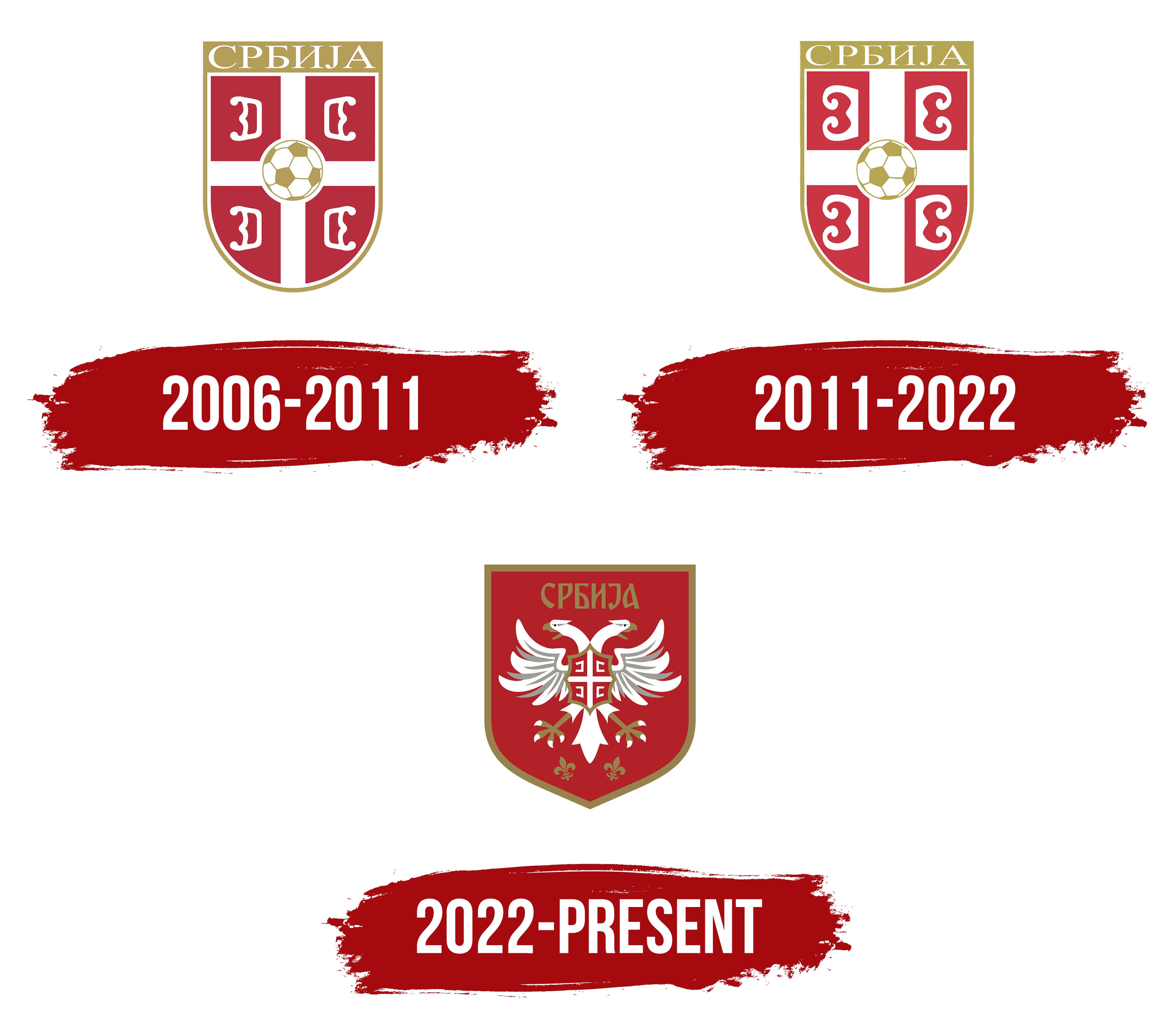
After separating the Serbia and Montenegro teams, the first emblem features a red shield with a white cross in the center and a soccer ball at its core. The design vaguely resembles a soccer field with markings. The shield is part of the country’s coat of arms, with the Greek cross connecting Serbs to Christianity. In the four sections around the ball, there are C-shaped fire steels. These four Cs are interpreted as either “Sveti Sava srpska slava” (Saint Sava Serbian glory) or “Samo sloga Srbina spasava” (Only unity saves the Serbs). In both interpretations, the fire steels are integral to the Serbs’ deep identity and serve as a reminder of faith and unity. The ball at the heart of the logo underscores that, in honor of the country, football is very important to Serbia.
2011 – 2022
In the modern design, the thickness of the cross lines was altered, and the firesteels became more expressive, closely resembling the depiction on the coat of arms. The emblem reflects a clear development path and significant achievements in football. At the top of the shield, on a golden stripe, is the inscription “Serbia” in Serbian. The gold color resonates with the shield’s outline and the pattern on the ball, creating a cohesive and unified emblem. This updated design brings together all elements, highlighting the team’s progress and the harmony in their visual identity.
2022 – today
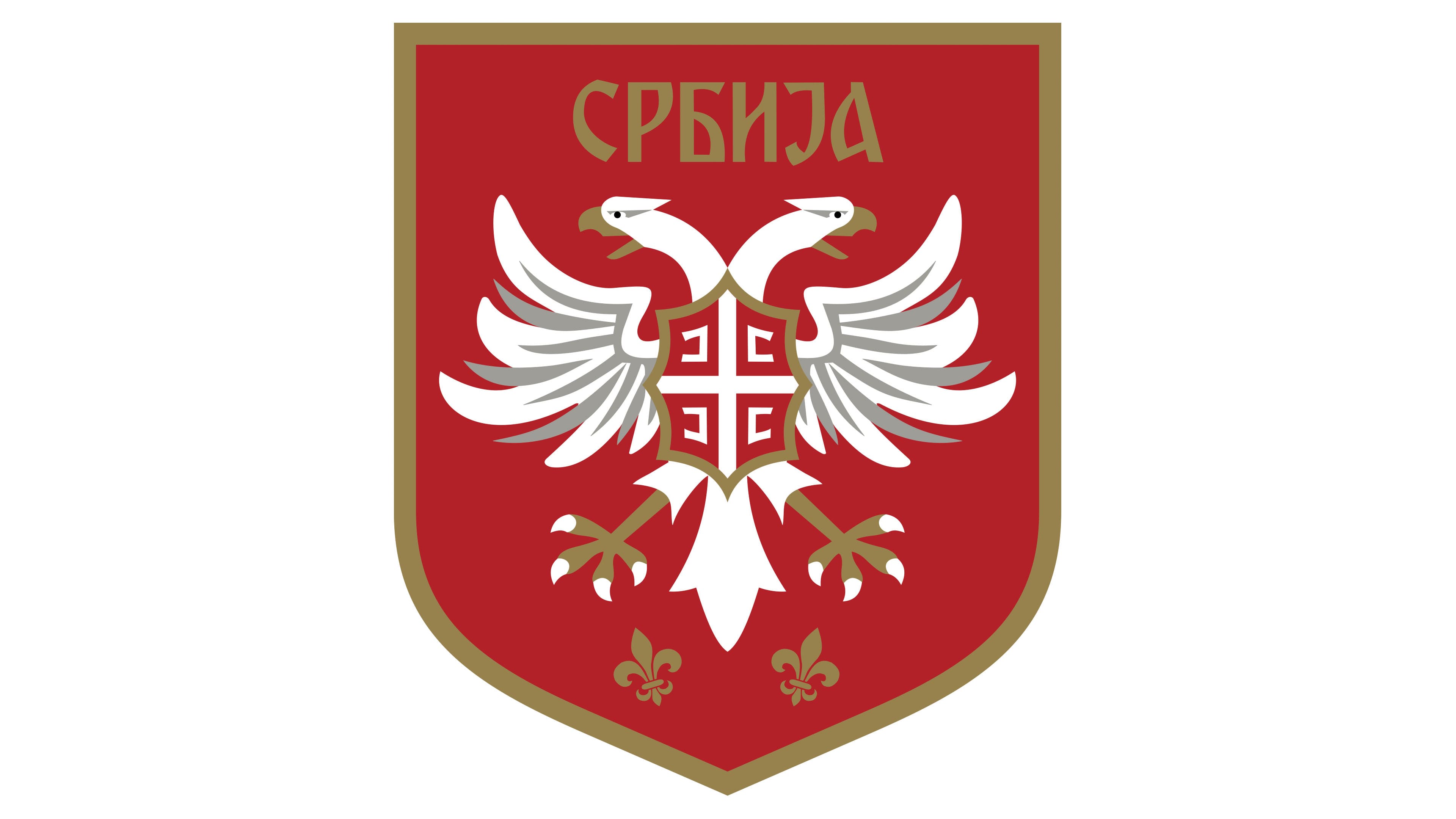
The national team logo features the country’s full coat of arms in its modern version. A white double-headed eagle holds a shield with a cross and fire steels. The eagle is drawn poetically, evoking courage and martial glory. The eagle symbolizes speed, foresight, and strength qualities that help footballers perform successfully on the field. The red shield with its gold trim looks striking and noble. The inscription “Serbia” has been integrated into the rest of the emblem, now set against a red background. The logo conveys a sense of unity and power, impressing with its Slavic artistic style.