


 Slovakia National Football Team Logo PNG
The Slovakia national football team logo represents professionalism and the high-caliber players of Slovak football. The emblem reflects a drive for leadership and a desire to impress the global audience with achievements and captivating play.
The modern Slovakia national football team emerged after the country gained independence in 1993. However, the first separate Slovak side dates back to 1939. In the 1990s, Slovakia was still forming its football identity after Czechoslovakia’s split. The team often finished outside the leading positions in qualifiers. Yet, second place in the 1998 World Cup qualifying group showed early progress.
The strongest period came under coach Vladimír Weiss. Slovakia qualified for the 2010 FIFA World Cup in South Africa, its first major global tournament as an independent nation. The decisive moment was the 3-2 win over defending champion Italy, with Róbert Vittek scoring twice and players such as Marek Hamšík and Martin Škrtel playing key roles. Slovakia then reached the knockout round, where it lost to the Netherlands.
After 2010, several Slovak players became established names in European club football. Hamšík spent many seasons with Napoli, Škrtel played for Liverpool, Juraj Kucka represented clubs including Trabzonspor, and Milan Škriniar later became associated with Inter. Stanislav Lobotka and Ondrej Duda were part of the next generation, giving the team a wider base in midfield and defense.
Slovakia later played at Euro 2016 and Euro 2020, the latter of which was held in 2021. The team beat Poland 2-1 but did not reach the knockout stage. After Hamšík retired from international football, Škriniar became captain. In August 2023, Slovakia was ranked 40th by FIFA, while the squad continued to combine experienced defenders with younger players.
Meaning and History
What is the Slovakia National Football Team?
The Slovakia National Football Team represents Slovakia in international football competitions. Managed by the Slovak Football Association (SFZ), the team has competed internationally since Slovakia gained independence. Known for their disciplined, resilient style of play, the team has participated in major tournaments, striving to make a mark in European and world football. Slovakia has produced talented players who have excelled both domestically and internationally. The team’s dedicated fan base and growing football culture highlight their commitment to developing the sport and achieving success in international competitions.
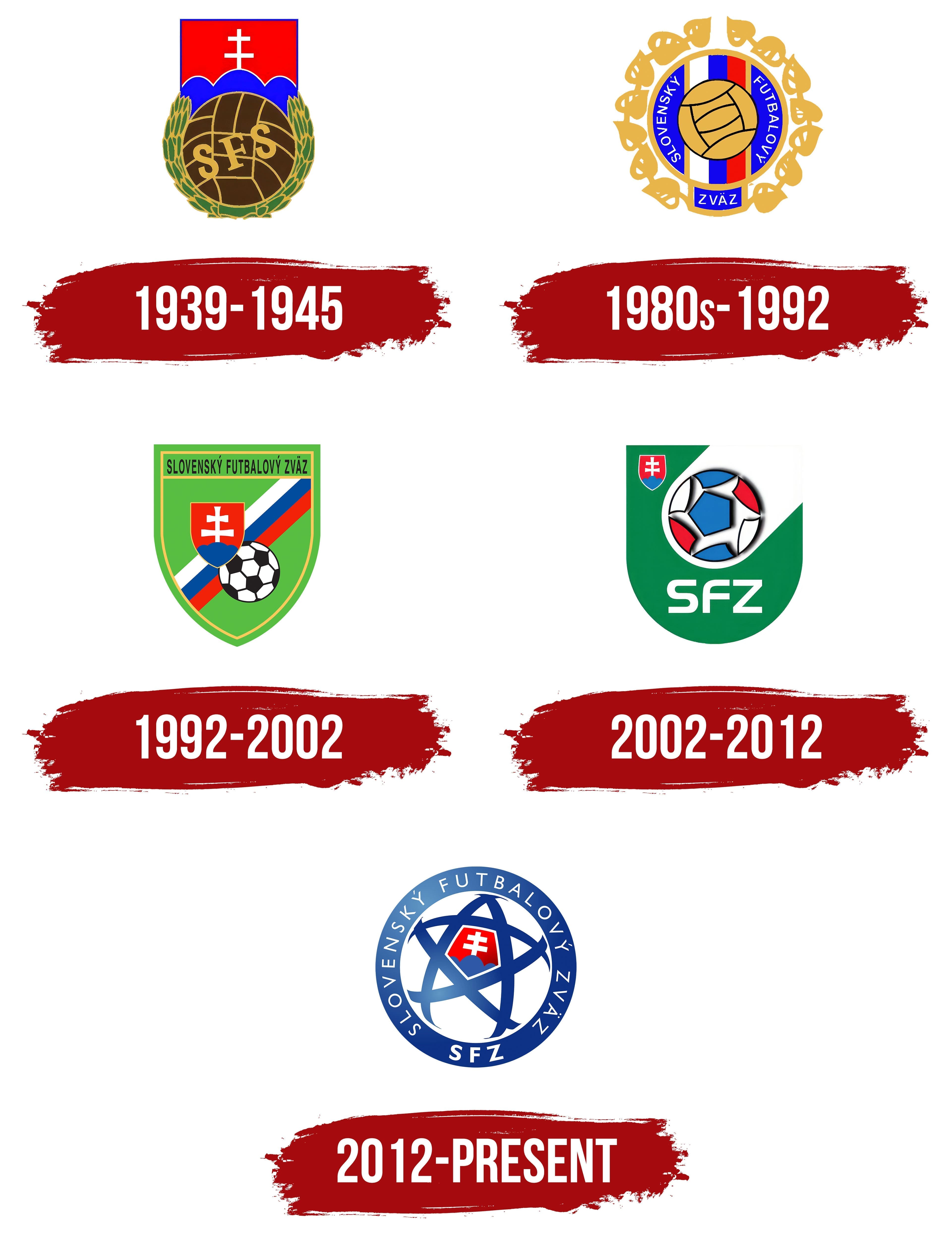
1939 – 1945
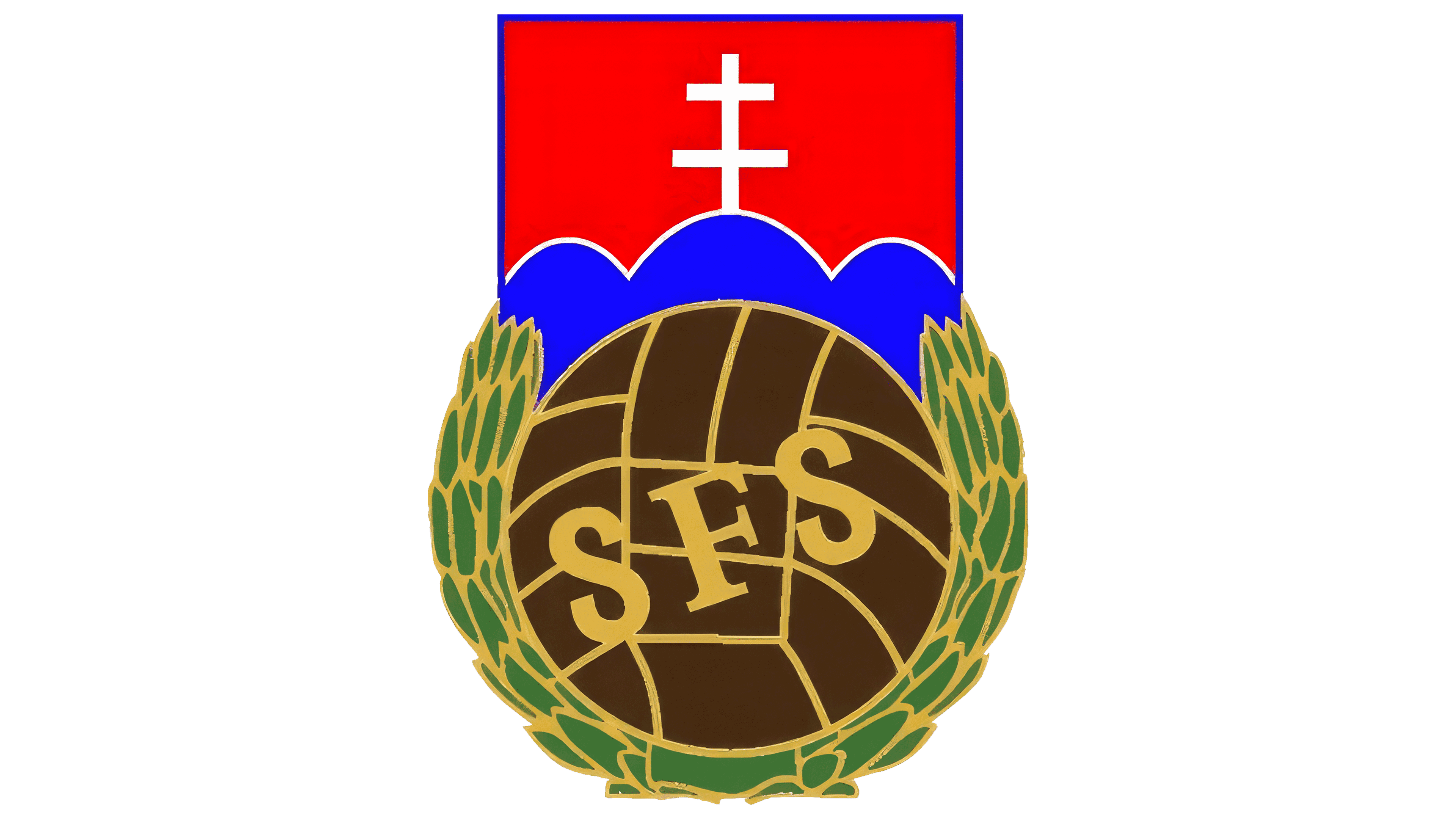
The 1939 emblem is associated with the first Slovak Republic, which was established with the support of Nazi Germany.
The emblem’s center features a soccer ball surrounded by a laurel wreath. This symbol represents victories in competitions, honorable standings, and the aspirations of the newly formed Slovak national team.
In the center of the ball is the abbreviation of the football federation, SFZ (Slovenský futbalový zväz), the main football authority overseeing the team.
At the top of the emblem is a part of the country’s coat of arms: a double cross atop a triple hill against a red background. This design reflects the Christian faith of the Slovak people, introduced by the missionaries Cyril and Methodius, and represents three significant mountain ranges: the Tatra, Matra, and Fatra. The red, white, and blue tricolor, commonly found in Slavic national flags, is also featured in the football emblem.
The national team’s logo combines football symbols with the Slovak identity. The emblem illustrates how sports can introduce the world to the country and its cultural features.
1980s – 1992
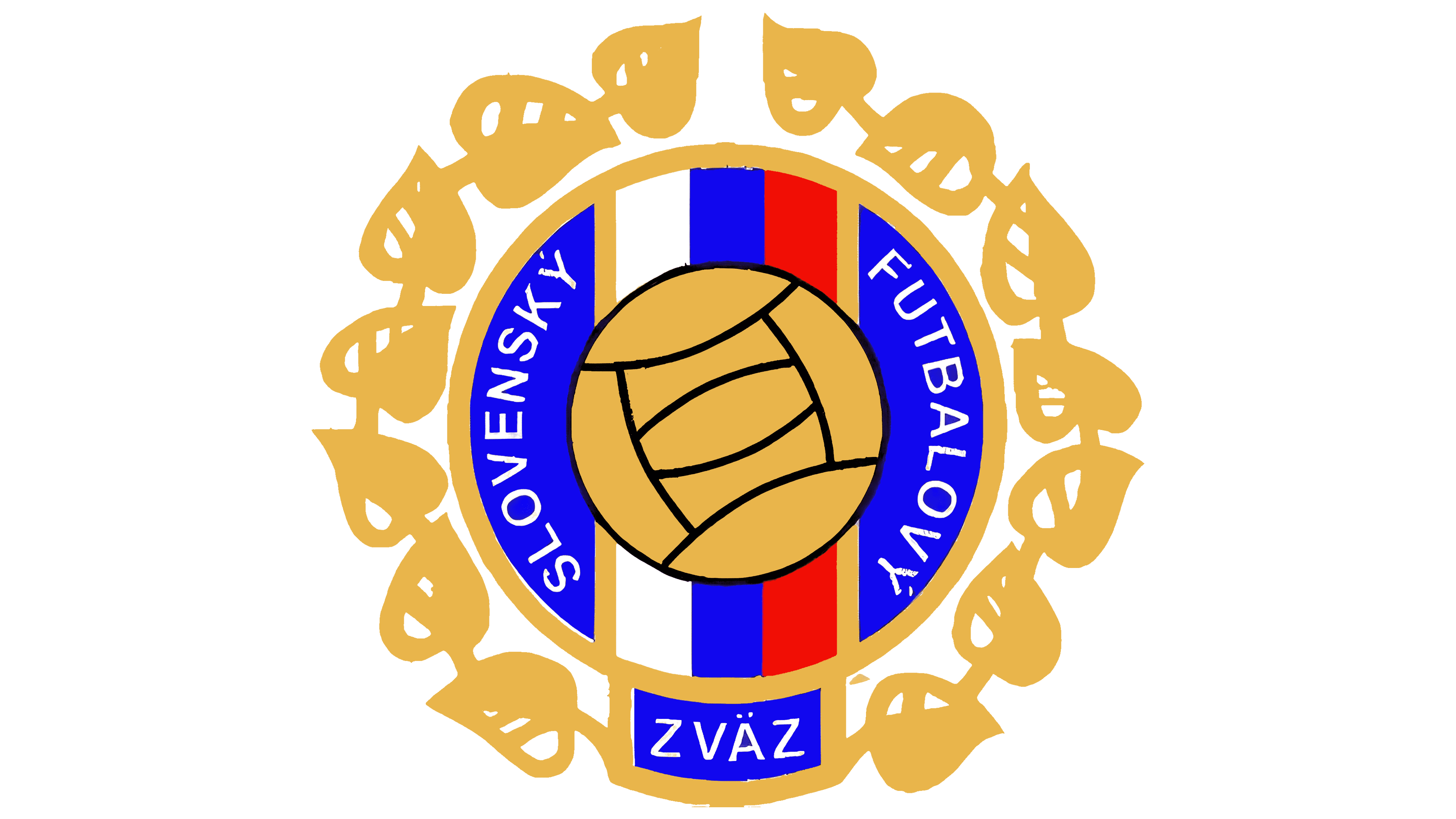
The emblem resembles a gold medal, symbolizing leadership and athletic achievements. Inside the circular shape is a gold ball set against the colors of the Czechoslovakian and later Slovakian flags. Around the circle is the full name of the Football Federation, Slovenský futbalový zväz. The emblem is framed by a wreath of gold linden leaves, the country’s national tree. Precious metal adornments highlight the team’s confidence and readiness to win.
1992 – 2002
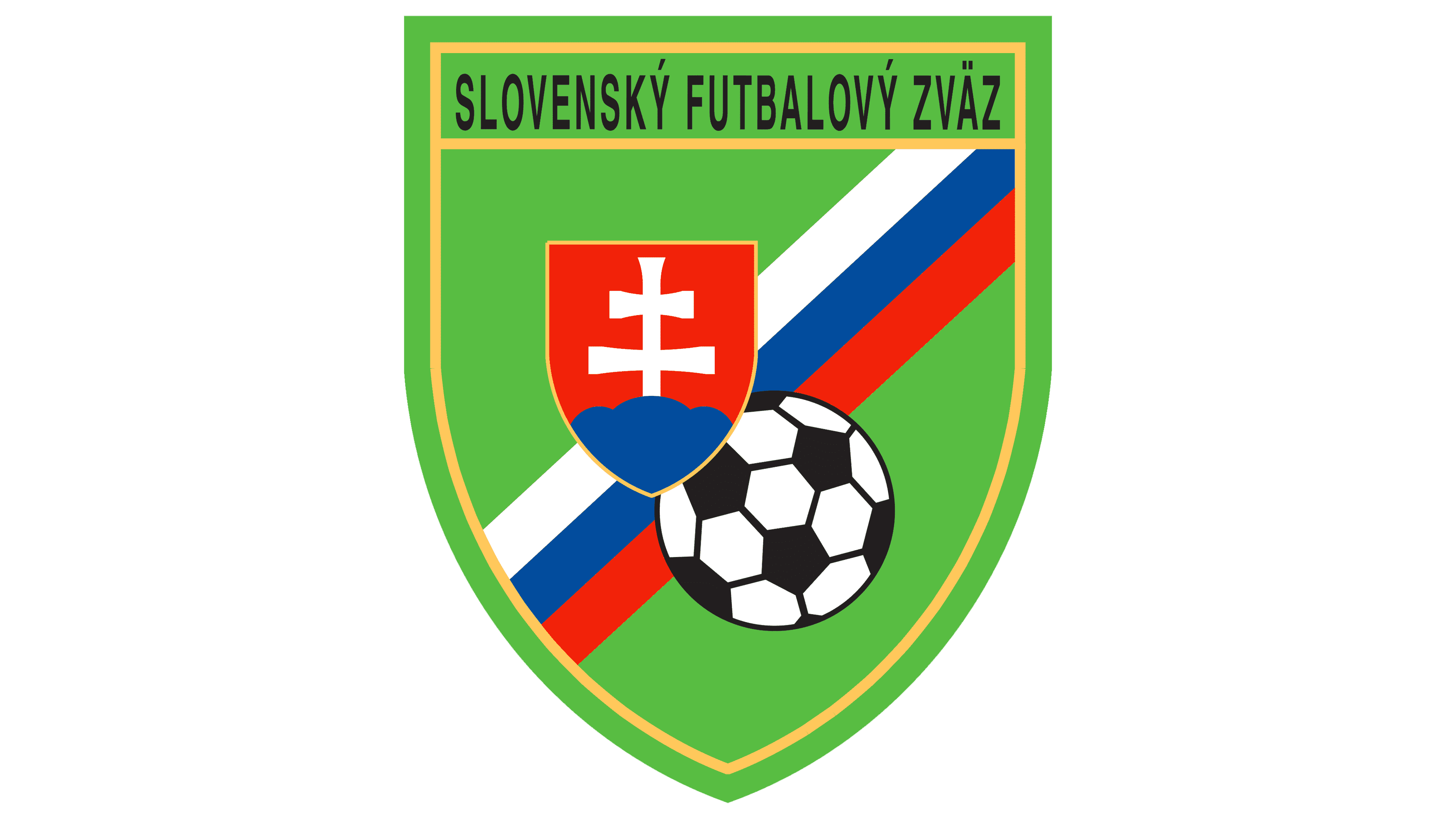
The logo from this period reflects changes in the country’s political and cultural context, as well as a drive for modernization while preserving national identity. The emblem signifies a new era following the dissolution of Czechoslovakia and the establishment of Slovakia’s independence. The shield is diagonally wrapped with a ribbon in the flag’s colors, symbolizing that the country remembers its roots even after separation. The state coat of arms at the top of the emblem and the soccer ball at the bottom emphasize the connection between the nation and the sport. The green background represents the soccer field and a new phase in the development of Slovak football.
2002 – 2012
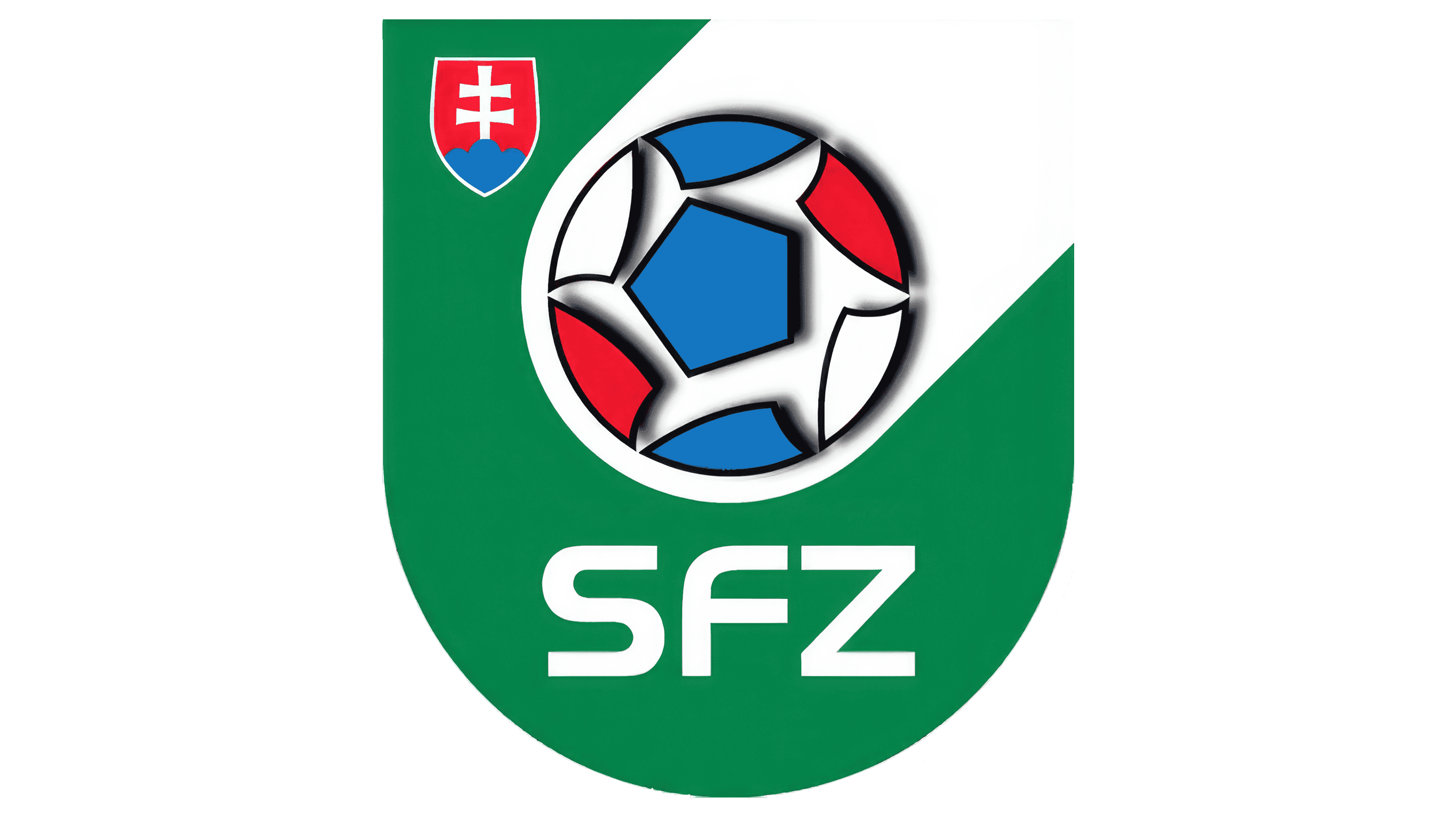
A ball in national colors dynamically and strikingly flies onto the green soccer field. Its movement slices through the air and captures attention, evoking the national team’s impressive play on the world stage. In the upper left corner, Slovakia’s small coat of arms further emphasizes the emblem’s affiliation with the country. At the bottom is the abbreviation SFZ. The compact and minimalist logo conveys the core message about Slovak football.
2012 – today
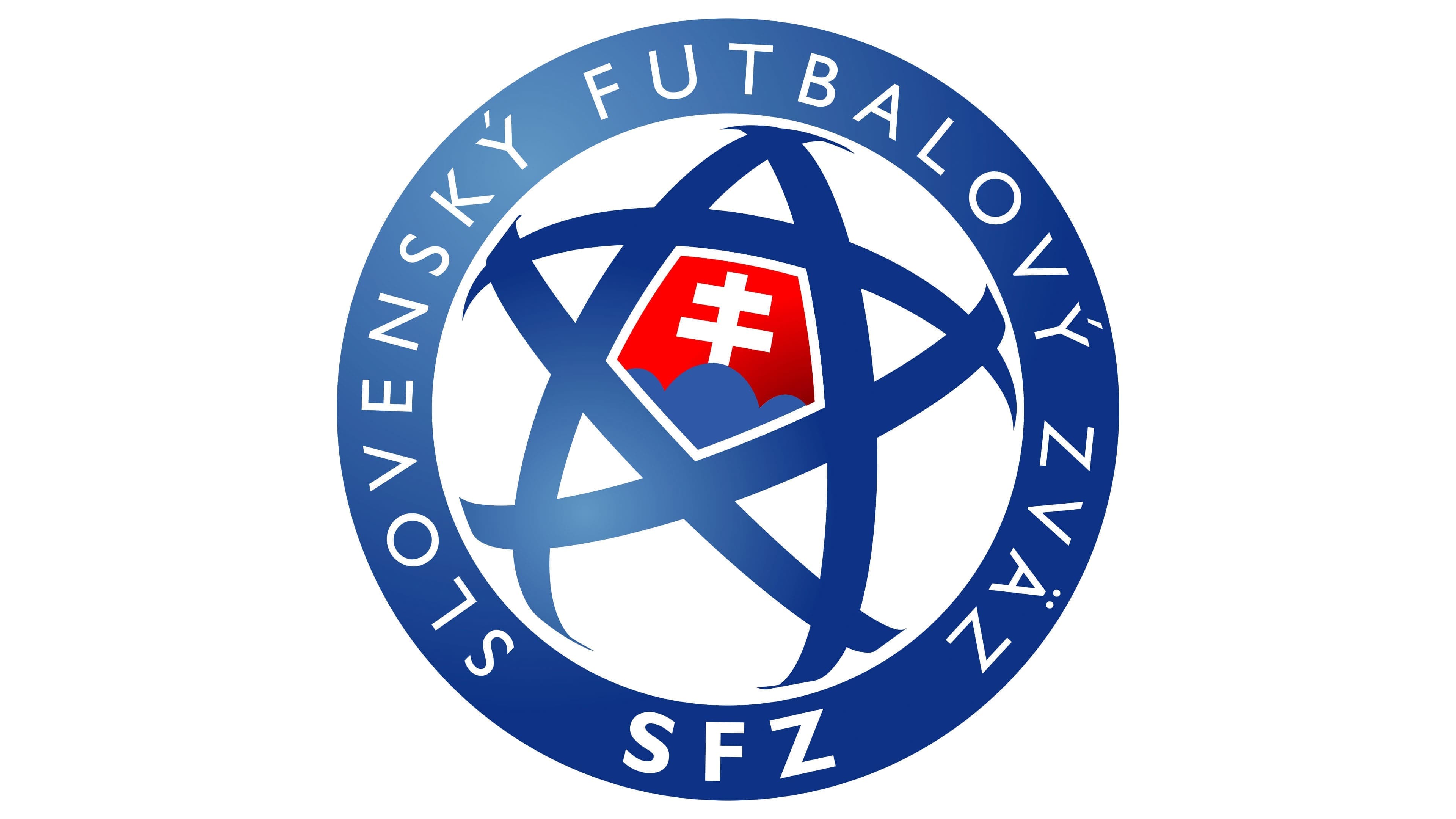
The modern emblem of the national team features light and celestial elements. A three-dimensional ball at the center resembles a planet. The ball is wrapped with lines and patterns that form a star, featuring Slovakia’s coat of arms in the central cell.
Around the circle is a wide blue border with the name of the country’s main football authority.
The ball with its blue edging is reminiscent of Saturn with its rings. This imagery highlights football’s development and the players’ global professional level.