 TurboTax Logo PNG
The TurboTax logo symbolizes ease and clarity in tax calculations. The platform was created to simplify paperwork, making taxes straightforward to understand.
TurboTax began in Tucson, Arizona, in 1984, when programmer Michael Chipman founded ChipSoft. Working from home, he developed software that automated tax calculations and guided users through federal returns step by step. Tax software was a small market, while Americans relied on complex forms or paid professionals.
The product found an audience as home computers entered American households. Its model contrasted with H&R Block, which had used offices and tax specialists since 1955. TurboTax offered a computer-based route for people willing to prepare their own returns. In 1993, Intuit acquired ChipSoft and added the program to a financial software portfolio including Quicken.
In 1999, TurboTax introduced online tax filing. Users could prepare returns online without installing software on a computer, although online financial transactions still raised public concern. In 2005, the service joined the IRS Free File program, offering free federal filing to taxpayers below an income threshold.
Investigations published in 2019 reported that Intuit made the Free File version hard to find and directed eligible users toward paid products. The reports led to criticism, congressional hearings, and lawsuits in several states. Intuit left Free File in 2021 after rejecting proposed restrictions for participating companies. In 2022, it agreed to a $141 million settlement covering millions of customers who had paid despite qualifying for free filing.
Meaning and History
What is TurboTax?
It is an online service that makes filing US tax returns easy. The platform simplifies the submission process through clear questions and automatic tax calculation. Several versions are available, including free and advanced options for entrepreneurs and investors. The service guarantees the maximum refund by identifying potential credits and deductions. Users can receive expert consultations directly on the site.
2001 – 2013

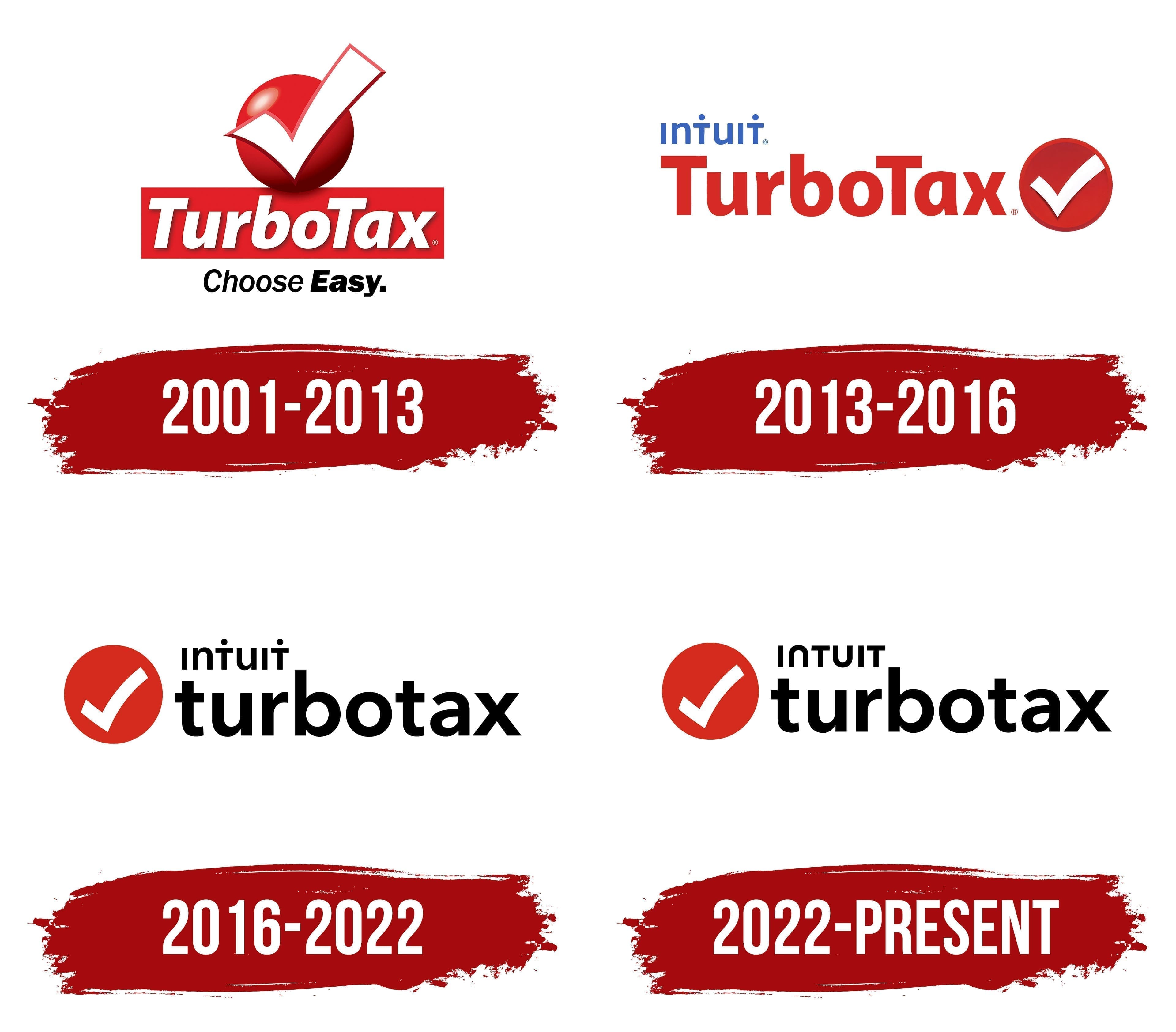
The original TurboTax logo emphasized the brand’s mission of simplifying tax filing. At its center, a red 3D sphere displayed a large checkmark, symbolizing task completion and correctness.
The white, bold, italic, sans-serif name appeared inside a red rectangular box, resembling Helvetica Bold Italic, emphasizing ease and speed.
Below, the slogan “Choose Easy” is written in black, italicized letters of varying thickness, reinforcing the product’s simplicity.
The red and white colors emphasized reliability in tax calculations.
2013 – 2016

The logo shifted to digital minimalism. The previous 3D design was flattened, featuring a red circle with a white checkmark to the right of the name.
The name appeared in bold, straight sans-serif letters in bright red, similar to Avenir or Gotham, giving it a modern look.
A small blue “intuit” above the main text highlighted integration with the parent brand, reflecting the technological identity.
Overall, the logo became cleaner and aligned with the brand’s trustworthy, accessible online image.
2016 – 2022

The redesign embraced minimalism and functionality. All letters were converted to lowercase, making the brand appear friendlier and more approachable.
The flat red circle with a white check mark was moved to the left side of the composition, while the color palette remained unchanged.
A classic sans-serif typeface resembling Helvetica Neue supported the brand’s practical digital identity.
The black “intuit” appeared above the main text, visually linking both brands.
2022 – today

The TurboTax by Intuit logo changed primarily in the styling of the upper lettering. The company name was set in a different typeface, with the letters’ sharp corners replaced by soft curves and smooth lines. The letter “n” stands out with a rounded top and resembles a lowercase form. Removing the dots above the “t” characters emphasizes the brand’s desire for lighter, more informal communication.
The main symbol remained unchanged: a red circle with a white check mark. The symbol reflects the service’s proven accuracy and reliability in preparing tax documents. The name “turbotax” is written in lowercase in a calm, modern typeface, similar in style to Proxima Nova. Its soft proportions and black color balance the red circle’s brightness.
The logo style became a reflection of the company’s course toward digitalization and improved user experience. The shift to rounded forms made the image more friendly, emphasizing the service’s flexible, accessible character.