


 Victoriaville Tigres Logo PNG
The Victoriaville Tigres logo embodies energy, perseverance, and a hunger for victory. It reflects the spirit of a team that has transformed from its early days into a team recognized in the hockey world. The club’s history is discovery, nurturing young talent, and creating a unique style. The change of city and name symbolized a new chapter and a drive to win fans’ hearts.
The Victoriaville Tigres trace their history to 1987, when the franchise began as the Laval Titan. During its early years in Laval, the team built its organization, recruited through QMJHL drafts, and developed scouting links with hockey schools. Jean Bernard served as the first head coach and helped establish the club’s approach to young-player development.
In 1998, the franchise moved to Victoriaville and adopted a new name, logo, and blue, white, and gold colors. Its first home game at Colisée Desjardins was played against the Quebec Remparts. During the 2000-01 season, general manager Charles Henri reshaped the roster, signed key players, and introduced a more structured style.
The club reached a major milestone in 2002, winning the QMJHL President’s Cup after defeating the Halifax Mooseheads in the final. From 2003 to 2008, several leading players left for professional leagues, and management rebuilt through scouting, local youth partnerships, and player development. A more attacking system arrived in 2009-10 and improved the team’s results.
The team upgraded its arena, medical, and training facilities from 2011 to 2013. The 2014-15 roster included several future NHL players. Management changed in 2016 and 2017, followed by new draft and trade additions in 2018-19. From 2020 to 2023, the Tigres continued developing younger players, improving infrastructure, maintaining regional scouting, and competing in the QMJHL playoffs. The 2022-23 season brought further league stability.
Meaning and History
What is Victoriaville Tigres?
This is a team representing the youth hockey league in the region. It supports young athletes, helping them develop both professionally and academically. The team provides an environment for success on the ice while prioritizing the players’ education. Its development program focuses on supporting hockey players aspiring to a professional career, helping them take their first steps in high-level sports. The athletes grow in an atmosphere of dedicated fans who fill the Colisée Desjardins arena, creating incredible energy and excitement that can be felt at every game.
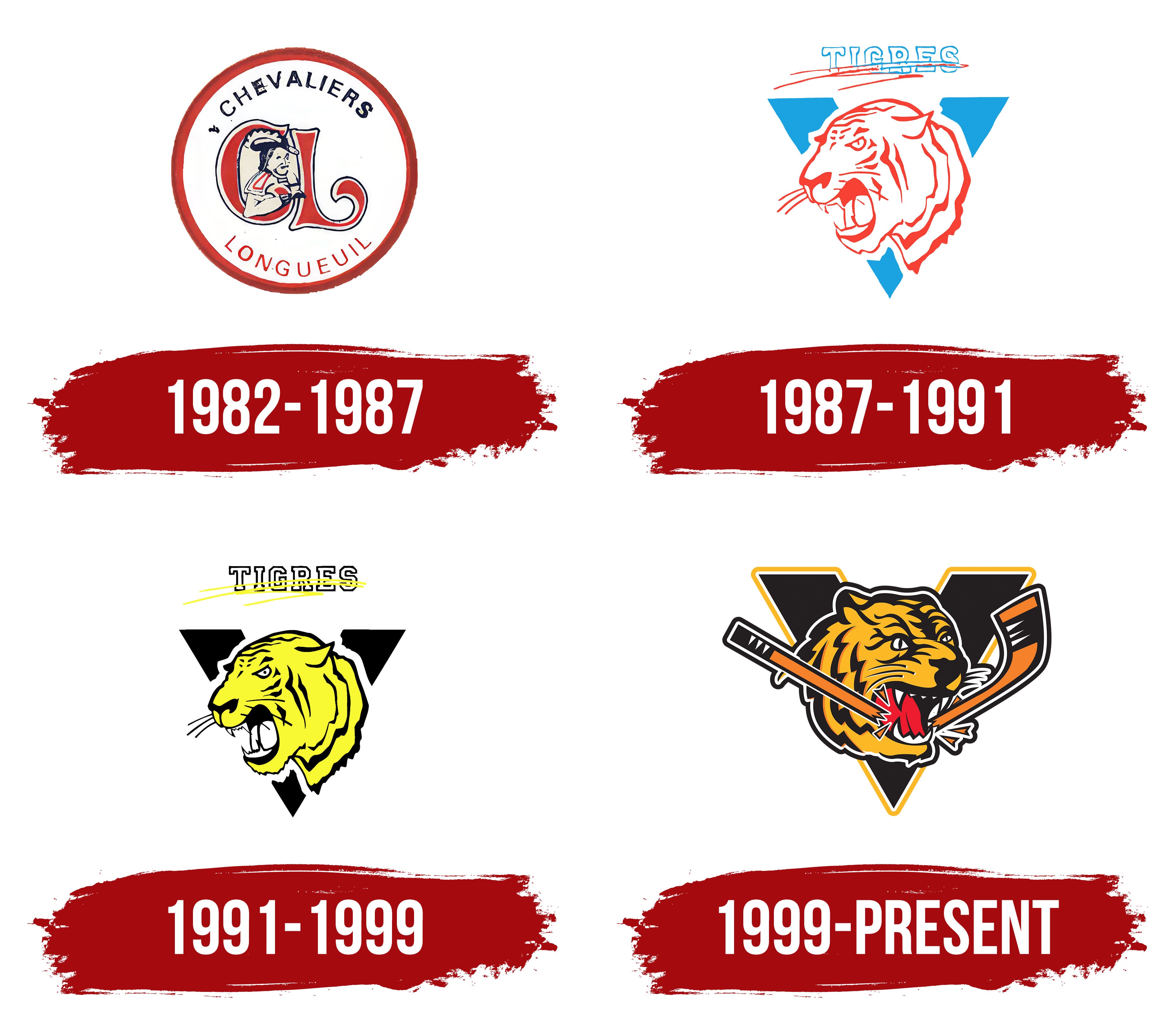
1982 – 1987

The Longueuil Chevaliers team logo is associated with the club’s history, which dates back to its founding in Longueuil in 1982. After its creation, the Victoriaville Tigres team was formed, but the knight-themed symbol remained an integral part of the club’s heritage. The team’s development at the university level emphasizes youth programs and talent support.
The emblem is a circle combining white and red, symbolizing strength, energy, and confidence. In the center are large letters “C” and “L” with decorative curves and black edging.
Inside the letter “C” is a knight in armor with a shield. His helmet is decorated with a feather, and the raised visor opens the image. As the main symbol, the knight emphasizes the team’s name, “Chevaliers,” and adds historical significance to the logo.
The team’s name, “Chevaliers,” is in an arc in black capital letters at the top. The strict font enhances the image’s seriousness and significance. At the bottom of the circle, the inscription “Longueuil” is in red and in a simpler font that harmonizes with the other elements.
The emblem’s round shape conveys completeness and integrity, and the composition conveys team spirit and unity.
1987 – 1991

The Victoriaville Tigres logo, created in 1987, has become an important team symbol. Its bright light blue, red, and white colors give it dynamism and energy. The logo combines graphic and textual fragments, reflecting the club’s character.
The main symbol is a red tiger’s head. Its aggressive expression, open mouth, and visible fangs convey the team’s strength and fighting spirit. The lines of the image are clear and rough, creating a sense of movement and tension. The tiger is depicted in profile, which enhances the perception of pressure and readiness to fight.
The background is a light blue geometric letter “V,” and on top of it is a tiger’s head. The letter symbolizes the city of Victoriaville, and its sharp corners harmoniously echo the tiger’s lines.
The inscription “TIGRES” is at the top and uses a serif and sans-serif font. The font is simple, but its structure adds rigor and volume. The red touches, reminiscent of tiger claw prints, give the logo aggression and energy.
The emblem became the club’s first visual symbol, combining the tiger’s strength with geometric simplicity and dynamism.
1991 – 1999
The 1991 emblem redesign updated the team’s visual identity, preserving the main details of the previous one while adding new accents through a revised color palette and a brighter appearance.
The main symbol is still a tiger’s head, but painted rich yellow. The black outline enhances the sharpness and clarity of the drawing. The tiger’s open mouth and aggressive facial expressions retain power and fighting spirit.
The “V” that forms the logo’s background is now black, strongly contrasting with the yellow tiger.
The inscription “TIGRES” at the top remained in the outline font, but the letters are now black and legible. Yellow lines resembling tiger claw prints run through the text, adding dynamism and reinforcing the connection to the tiger image.
The visual style remained concise but became more contrasting due to color changes. The redesign emphasized the team’s energy and dedication.
1999 – today

The Victoriaville Tigres hockey club logo has been redesigned to update the team’s visual style. Key details have been retained, such as the letter “V” and the tiger’s head, but they have become brighter and more aggressive.
In the background, there is now a large letter “V,” enlarged and with a double stroke: the yellow outline adds brightness, and the black interior enhances the contrast, making the background more saturated. The tops of the letters are slightly rounded, giving harmony.
In the center is a redesigned, enlarged tiger head, turned in the opposite direction and rendered in greater detail. Black accents on the orange fur emphasize the tiger’s expression, creating a sense of aggression. An open mouth set against a red background and large white fangs enhance the effect of rage.
The innovation is a hockey stick, broken into two parts, located inside the tiger’s mouth. It dynamically symbolizes the team’s strength, skill, and perseverance. The putter is orange-brown with black accents, creating balance with the rest of the skin.
The “TIGRES” lettering with claw lines has been removed, making the emblem more concise and focusing on graphics. The redesign gives the logo a modern, professional look while maintaining a connection to the past through its previous symbols.