


 Daydream Logo PNG
The Daydream logo conveys the idea of effortless, immersive virtual experiences, free of cumbersome wires, complicated setups, and bulky equipment. Smartphones allow users to explore new worlds, discover the unknown, and enjoy extraordinary moments.
Daydream grew out of Cardboard, a low-cost VR viewer Google released in 2014. Its cardboard shell and plastic lenses turned an Android phone into a basic headset. Yet, the format lacked a controller, deep operating-system integration, and a substantial app ecosystem.
At I/O in May 2016, the company introduced Daydream as part of Android 7.1 Nougat, not as a separate accessory. Hardware partners named at launch included Samsung, HTC, LG, Xiaomi, and Motorola. Daydream View went on sale on November 10, 2016, for $79, using a soft fabric shell and a wireless controller with motion tracking. Pixel became the first officially compatible phone.
An updated View arrived in 2017 with improved optics and a wider field of view, while YouTube VR became one of the platform’s main applications. In January 2018, Lenovo announced Mirage Solo, the first standalone headset built on Daydream. Released that summer for $399, it required no phone or computer, used WorldSense inside-out positional tracking, and launched with access to more than 350 applications.
Mobile VR failed to reach the audience developers expected as Oculus Go and Oculus Quest gained ground. Hulu and HBO ended support in 2019. On October 15, 2019, Daydream View sales ended, and Pixel 4 and Pixel 4 XL were no longer certified. No phone released in 2019 supported the platform. Android 11 ended official support in 2020, and access to its app store was discontinued after just over three years.
Meaning and History
What is Daydream?
This virtual reality platform makes digital immersion accessible and convenient for mobile device users. The system comprises a specialized headset and controller, paired with a smartphone, to interact with virtual environments. It allows users to watch movies, explore educational programs, play games, and take virtual tours.
2016 – 2019

When Google was preparing to launch its virtual reality platform on Android Nougat, the Melbourne studio SouthSouthWest was brought in to work on the identity. The brand required a visual design that could effectively convey digital immersion and technological comfort. The first presentation took place at the Google I/O conference on May 18, 2016, and the full launch occurred on November 10 of the same year. The project received positive feedback from the professional community. It was among the finalists of the Premier’s Design Awards 2016, with the jury highlighting the development of the digital environment and brand book, as well as the packaging.
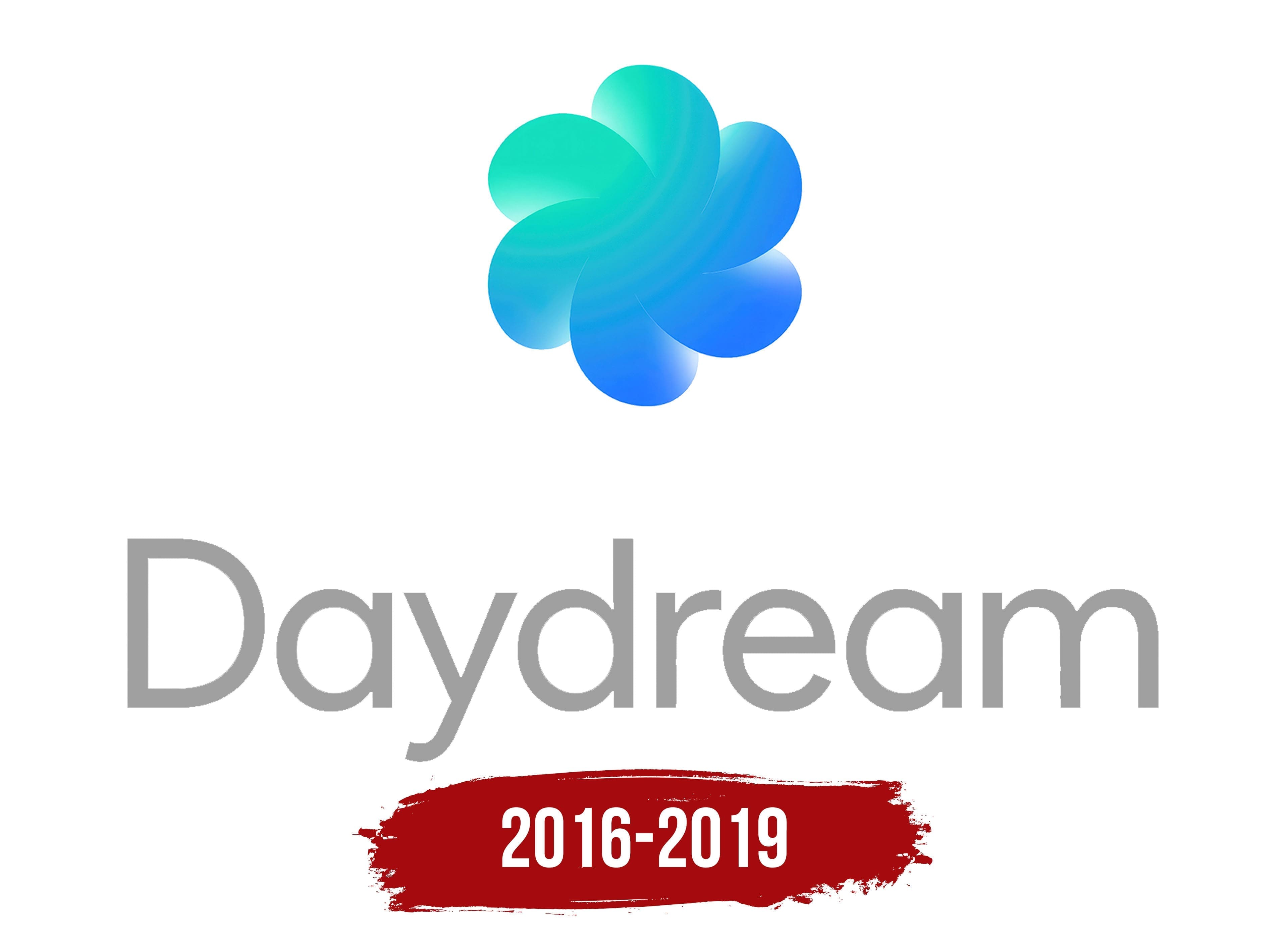
The logo has a vertical layout. In the upper zone is a symbol made of six rounded segments that interlock to form a smooth spiral. The shape, resembling both a flower and a vortex, combines natural associations of lightness and rhythm with an allusion to a virtual environment.
The shades transition from turquoise to blue, creating a sense of depth and volume. Within this range are hints of freedom and the infinity of digital space, which align with the platform’s functional purpose.
Below the symbol is the name. It is typed in an adapted version of Google Product Sans, with individual characters modified. In particular, a single-story form of the letter “a” is used, which simplifies perception and is better suited to digital interfaces. The sans serif typeface is characterized by uniform strokes, which emphasize technological aesthetics and facilitate a smooth reading experience.
The color of the inscription is neutral gray. It balances the bright gradient of the symbol and gives the composition softness. The vivid transitions, combined with the calm typeface, create a balanced and pleasant visual perception.
The Daydream identity was used until October 2019, when the project was closed due to weak demand and the technical limitations of smartphone VR systems. Despite its short life cycle, the Daydream logo remained an exemplar of Google’s style, characterized by clear forms, restrained expressiveness, and a technological language.
