


 Endemol Logo PNG
The Endemol logo is minimalist. The company sought to project seriousness, despite producing entertainment content. It succeeded: all emblem elements look restrained and create visual balance.
Endemol was founded in 1994 in the Netherlands by Joop van den Ende and John de Mol, two producers with long backgrounds in European entertainment. They took their names from their surnames, Ende and Mol. Van den Ende moved from theater to television, while De Mol worked in radio and TV since the 1970s. Their merger created a production company focused on formats that could travel across markets.
The company built its early reputation on reality shows and game programs. Its key breakthrough was Big Brother, launched in 1997. The show placed participants in one house under constant video surveillance, turning observation, voting, and everyday conflict into a repeatable TV format. It was later adapted in many countries and became Endemol’s best-known global property.
In 2000, Telefónica bought Endemol for 5.5 billion euros, providing the company with the funds to expand further. Endemol acquired production firms in different countries, opened branches across many markets, and developed formats such as Deal or No Deal and Wipeout. In 2007, a consortium led by Silvio Berlusconi and John de Mol bought the company back from Telefónica for 3.4 billion euros.
The following years brought debt pressure and restructuring. In 2012, Apollo Global Management became involved. In 2014, Endemol announced a merger with Shine Group, owned by 21st Century Fox, and Core Media Group. The deal closed in 2015, creating Endemol Shine Group. Since 2020, Banijay has owned its assets, while Endemol’s formats have remained within a larger media group.
Meaning and History
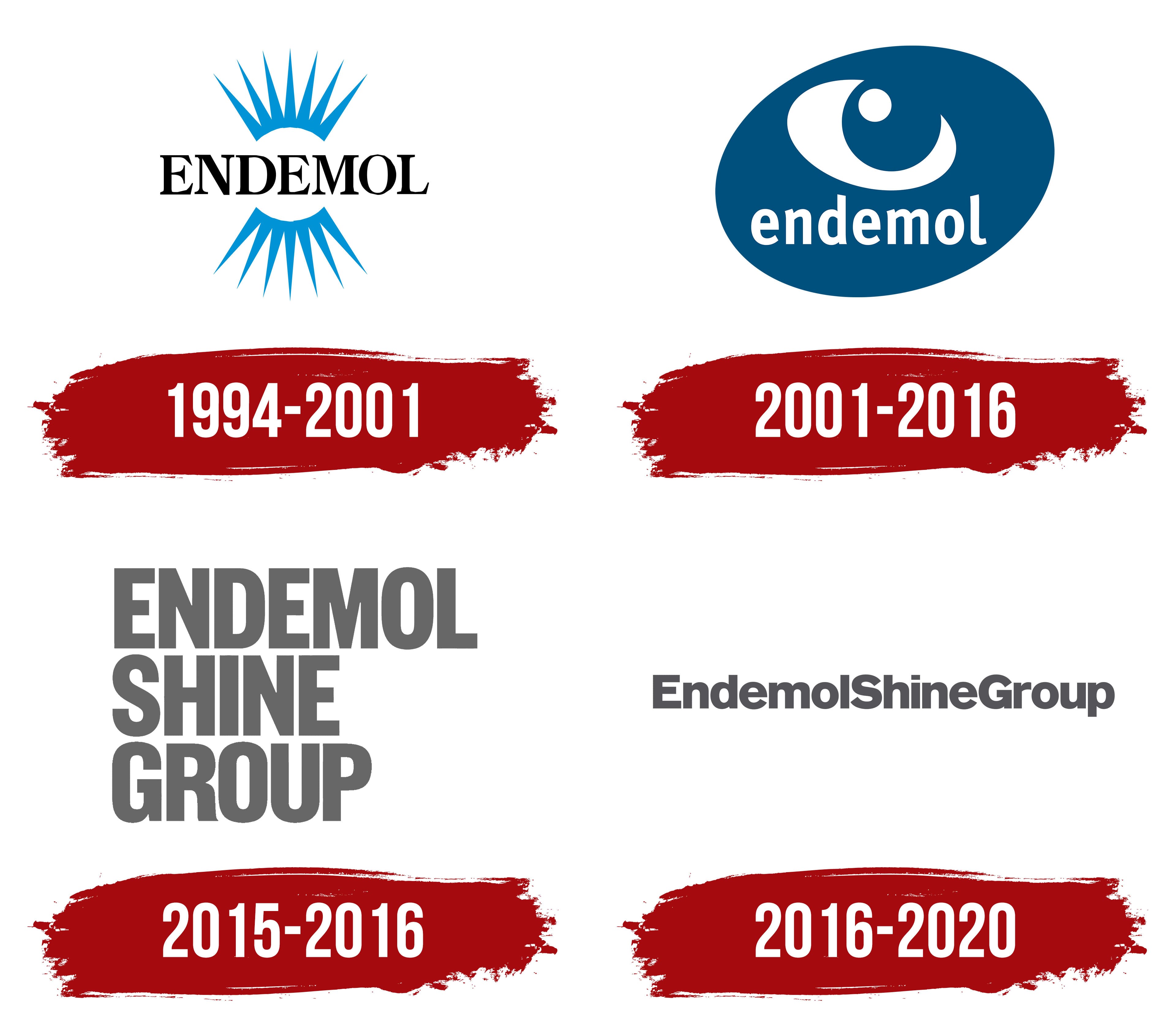
Four logo versions were presented to the target audience throughout the project. Although Endemol has been part of Banijay since 2020, the media company’s logo does not explicitly reference the Dutch project.
If we consider Endemol an independent company producing unique projects, its lifespan can be from 1994 to 2015. This predates its merger with Shine Group, a major market representative.
The brand’s development can be divided into two periods: up to 2015 and from then on. The Endemol logo was quite bright and attractive throughout. On closer inspection, the company emerged from a merger of two local television studios owned by Joop van den Ende and John de Mol. As a result, the new company’s name was formed to combine the owners’ names.
What is Endemol?
This Dutch cult project has operated in European and global markets since the late 20th century. More than a dozen projects have been released and have gained cult status, remaining popular today.
1994 – 2001
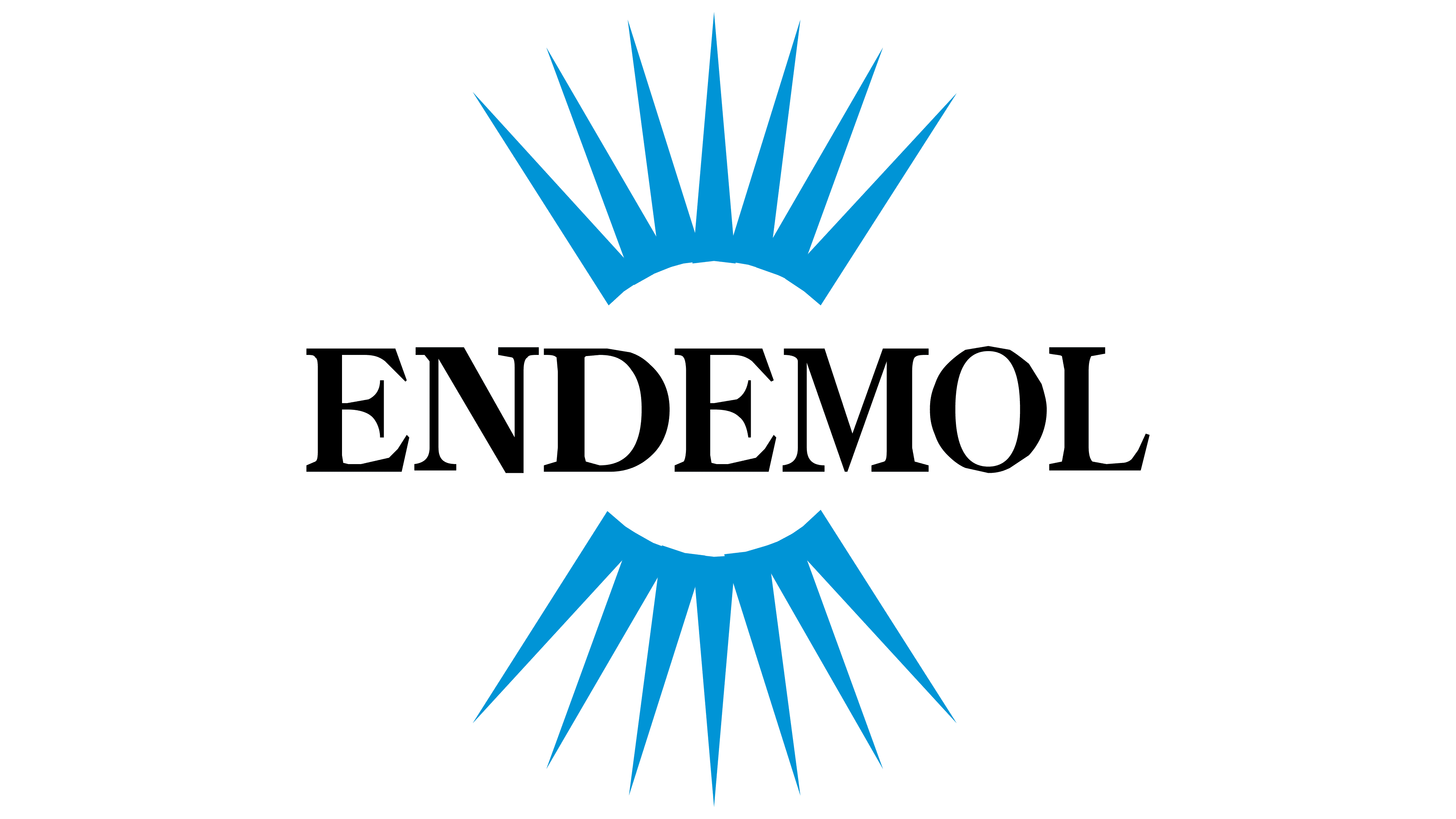
The first version of the logo was unveiled in 1994, just a few months after the project’s launch. It remained largely unchanged for almost seven years. The logo looked stylish and elegant. It featured the word “ENDEMOL” in a classic, bold serif type. The letters were black, capital, and thick-lined. In addition to the brand name, the logo featured two mirror arcs with oblong rays. These elements were made in blue but visually associated with the sun. Each arc had seven rays. Some customers also associated the emblem with an eye, which directly alluded to the company’s primary task: producing video content.
2001 – 2016
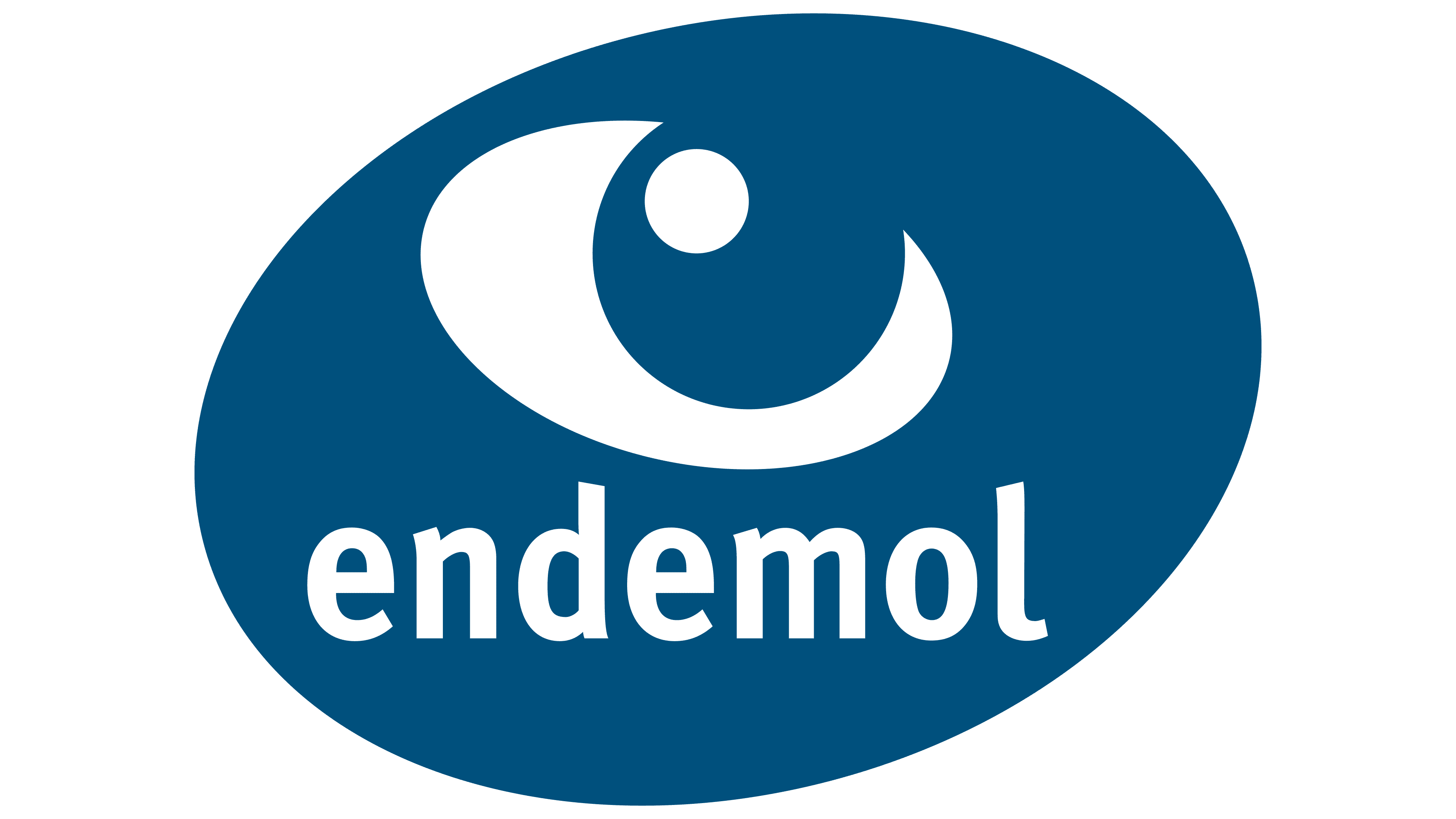
The only redesign as an independent company took place in 2001. The changes were global. The Endemol logo has become more modern and confident. While the stylized eye remained unchanged, the emblem was redrawn in an updated style. Inside the dark blue oval, the brand name was set diagonally. Unlike the previous version, the letters were lowercase. The font also changed; it became more attractive yet quirky. Just above the name was a white circle resembling an eye. Beneath it was an arcuate line that had pointed ends.
2015 – 2016
At this stage, the company merged with the Shine Group, as the logo indicates. The emblem, stylized as an eye, was removed entirely and replaced with a three-line verbal inscription, each line containing the words “Endemol Shine Group.” All symbols were set in a bold, geometric sans-serif. A shade of gray approaching brown made the inscription bold and brutal. It should also be noted that the 2001 logo was used until the end of 2016, despite the merger with the Shine Group.
2016 – 2020
The 2016 redesign retained the previous version’s color palette. Interestingly, the well-known company Pentagram updated the logo. One key change was the placement of the words. Now, the words appear on one line rather than three. At the same time, the words became a single continuous element with no spaces between them. To help the target audience understand where a new word begins, the first letters were capitalized. The font was slightly modified. It looked more classical. All symbols had smoother, more rounded shapes, making the logo more sophisticated. The logo has no emblems or other additional elements. Since 2020, the company has been part of Banijay, and the media group’s new logo bears no resemblance to Endemol’s.
Font and Colors
Each new logo redesign added new features to the wordmark. However, the latest version comes closest to the Bauhaus Akzidenz Grotesk. As a result, the logo looks more confident and clear.
Whereas Endemol’s indie days favored a bright color palette of blues, cyan, and more, the company’s latest designs have settled on pale greys. Despite the monotony, it looks confident and progressive, and the target audience can easily read the inscription.