


 Foxhound Logo PNG
The Foxhound logo reflects the gaming identity and style of the special unit from the Metal Gear Solid video game series. Its clear design emphasizes the brand’s military nature, discipline, and seriousness in gaming culture.
FOXHOUND first appeared in 1987 in Metal Gear for the MSX2. Hideo Kojima had joined Konami in 1986 after working on Penguin Adventure and drew inspiration from The Great Escape. Because the MSX2 struggled with large combat scenes, he built the game around infiltration, avoiding enemies and careful use of limited resources. Solid Snake, an operative of the fictional unit, was sent into Outer Heaven to destroy a walking nuclear weapons platform.
An American branch later released Snake’s Revenge for the NES without Kojima’s involvement. After learning about the project, he developed an official sequel, Metal Gear 2: Solid Snake, released for MSX2 in 1990. The game expanded stealth mechanics, enemy behavior, and the military background surrounding FOXHOUND.
The franchise reached a much wider audience in 1998 with Metal Gear Solid for the PlayStation. FOXHOUND appeared as a rogue special-forces group led by Liquid Snake, the genetic twin of Solid Snake. The Shadow Moses story combined espionage with nuclear deterrence, genetic engineering, and questions of personal choice, helping establish the series internationally.
“Metal Gear Solid 2: Sons of Liberty” followed in 2001 and placed Raiden at the center of much of the campaign. Later games expanded the chronology and political conflicts around soldiers and private military organizations. By 2025, total franchise sales had reached 62.9 million copies across multiple platforms.
Meaning and History
What is Foxhound?
It is a fictional elite special forces unit from the Metal Gear Solid video game universe. The squad includes operatives with unique skills who utilize unconventional combat methods and advanced technology. Each soldier has a distinct codename and specialty, such as expert marksman, precision sniper, or paranormal specialist. The team’s storyline features psychological conflicts, dramatic events, and moral dilemmas.
1970 – today

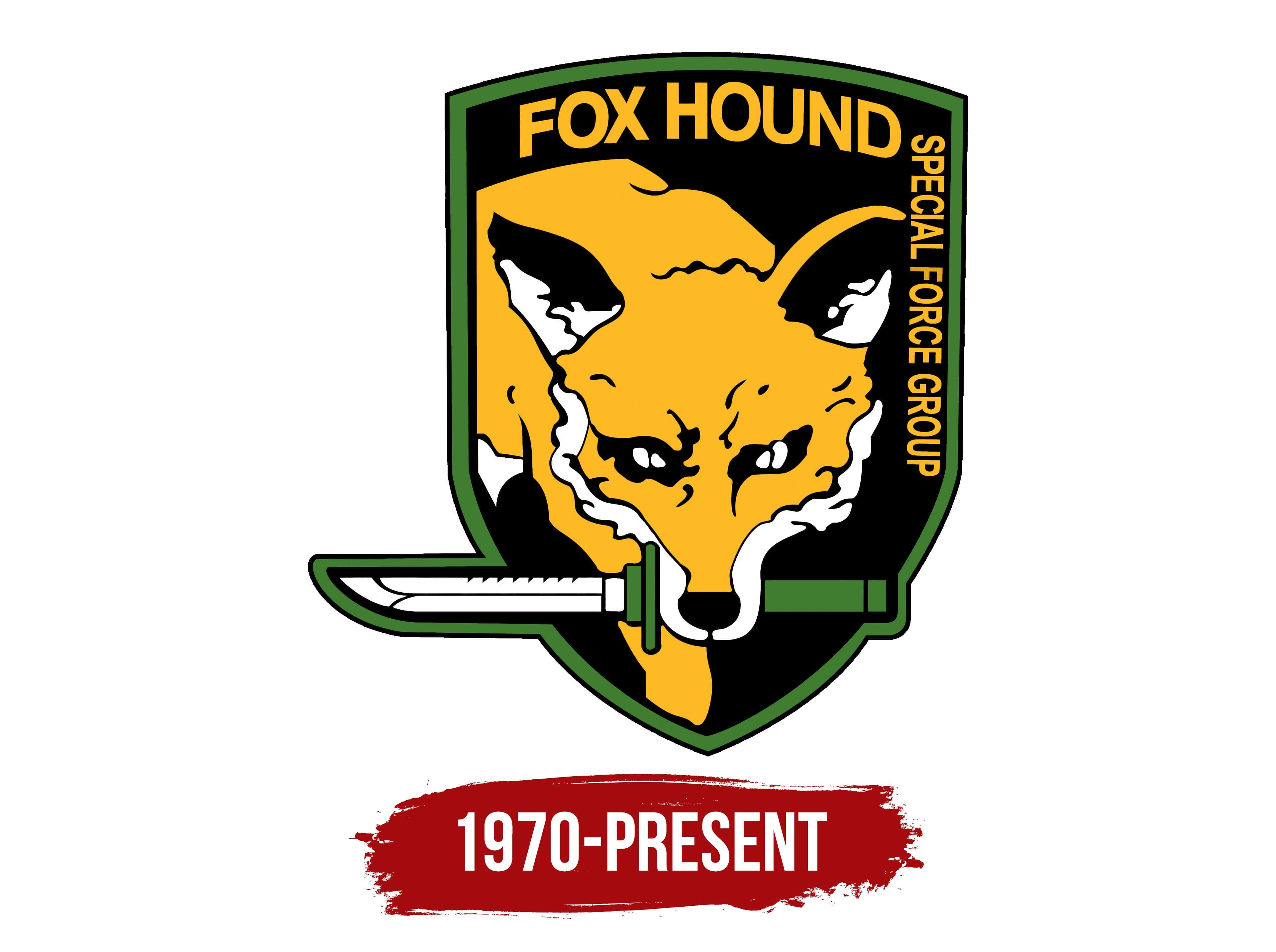
The FOX HOUND emblem was first introduced in the 1998 release of Metal Gear Solid, becoming the symbol of one of the most recognizable and pivotal units in the game’s universe. The design was created by art director Yoji Shinkawa, known for his unique visual style that blends the expressiveness of Japanese manga with the aesthetic of Western graphic novels, particularly the works of Frank Miller and Moebius. Under his direction, a memorable image was crafted for the special forces unit, embodying brutality, stealth, and ruthless precision through a visual language.
The emblem’s composition features a black shield with a green border. At its center is an orange fox staring aggressively forward. White outlines accentuate the predatory features of its face, and its intense eyes convey a sense of threat and readiness to strike. In the fox’s mouth is a knife with a green handle, its tip extending beyond the shield’s edge. This gives the impression that the animal is emerging from the shadows and beyond the image’s boundaries, symbolizing the elusiveness, stealth, and sudden-strike capability of elite special forces.
The knife, as a symbol of aggression and readiness to act, underscores the unit’s focus on direct, brutal engagement. The black shield represents secrecy and covert operations, while the green border references a military context. The fox’s orange color is associated with cunning, calculation, and tactical adaptability, aligning with FOX HOUND’s philosophy and combat profile.
The typography is set in uppercase letters in a bold, military-style sans serif. Across the top is the name “FOX HOUND,” reinforcing the unit’s identity, and along the right side, vertically, is the text “SPECIAL FORCE GROUP,” indicating its role and status. The restrained typeface matches the emblem’s overall style and aggressive tone.
Within the Metal Gear Solid universe, this logo symbolized FOX HOUND’s shift under Liquid Snake’s command toward radical and uncompromising combat methods. Compared to earlier, more cartoonish versions, this design signaled the unit’s transformation into a brutal, determined fighting force, becoming the primary antagonist group opposing the protagonist in the struggle for control of the Metal Gear REX platform.
The emblem achieved cult status among fans, appearing on merchandise, patches, pins, and souvenirs, as well as in various adaptations and fan communities. It became a signature element of character gear and has remained a constant part of the franchise for many years.
Font and Colors
The FOX HOUND emblem’s color palette centers on the dominant orange-and-black combination, with green and white accents. The orange, chosen for its emotional impact, was taken from the animal’s natural coloring. It represents combat drive, aggressiveness, and readiness for action, while also evoking adrenaline and combat tension, qualities central to the unit’s nature.
The black background emphasizes secrecy and stealth, visually expressing the uncertainty and threat posed by the special forces unit. Combined with the vivid orange, it creates a striking contrast that metaphorically illustrates the clash between order and chaos, concealment and open confrontation.
Green, used in the border and knife handle, ties into the military theme, symbolizing tactical preparedness, survival, and belonging to a military structure. White highlights on the fox and the blade emphasize key elements of the composition, adding clarity and sharpness to the details and enhancing the emblem’s visual aggressiveness.
The lettering is set in a bold sans-serif typeface. This choice provides a strict, confident, and straightforward look for the text, fitting the special forces unit’s military style. The closest analogs for reproducing this typeface are SSNicksonTwo by Spencer & Sons Co. and Asap SemiBold, both of which feature uniform, heavy letterforms with minimal decorative elements, reinforcing the sense of discipline and functionality.