


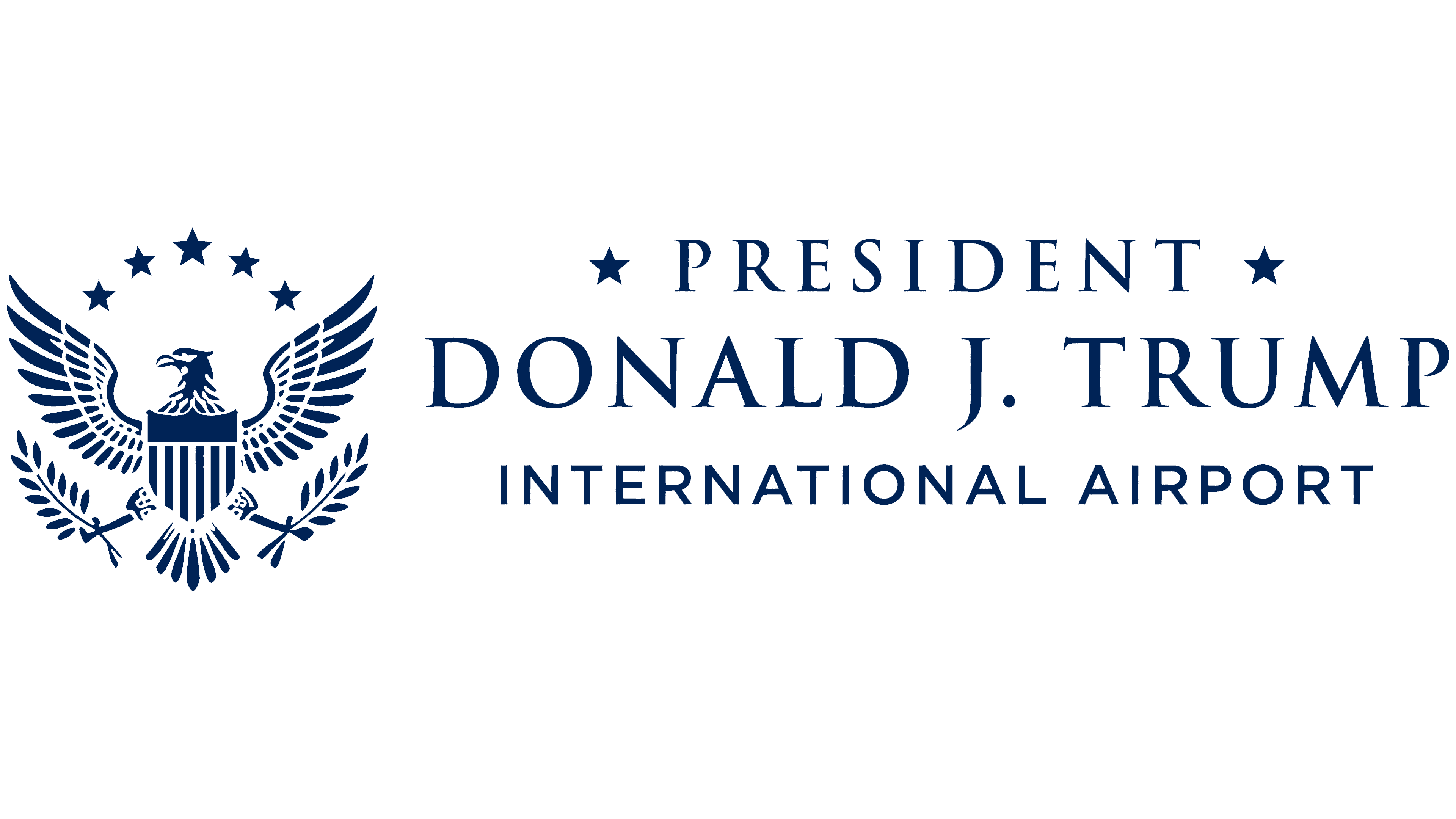
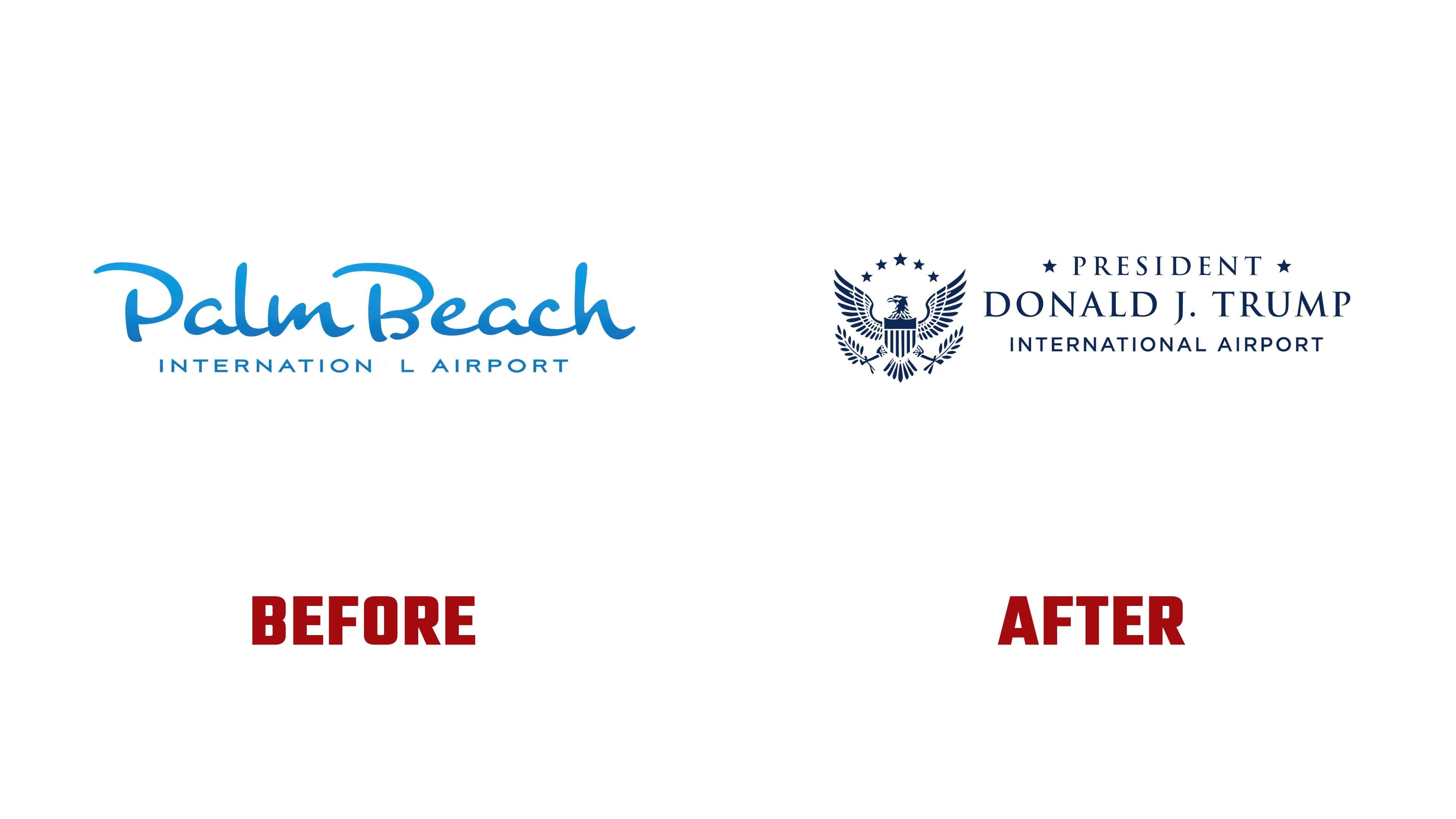
Florida’s Palm Beach International Airport has been renamed President Donald J. Trump International Airport and given a new eagle logo. Eric Trump unveiled the identity on May 5, 2026, and the name change took effect on July 9. A composition featuring the president’s name and references to U.S. national symbols replaces the handwritten-style wordmark based on the airport’s location.
The change followed a state law Governor Ron DeSantis signed on March 30, 2026. It gave Florida authority to name major commercial airports and directed the renaming of Palm Beach International. Trump’s connection to the county includes his Mar-a-Lago residence in Palm Beach. Palm Beach County remains the airport’s owner and operator.
The Trump Organization proposed the identity. The county commission presented the company’s recommended design, which Eric Trump then shared on social media. He also participated in the emblem’s public unveiling. That same day, the county agreed with the rights holders on governing use of the new name, the parties’ responsibilities, and use of the protected name.
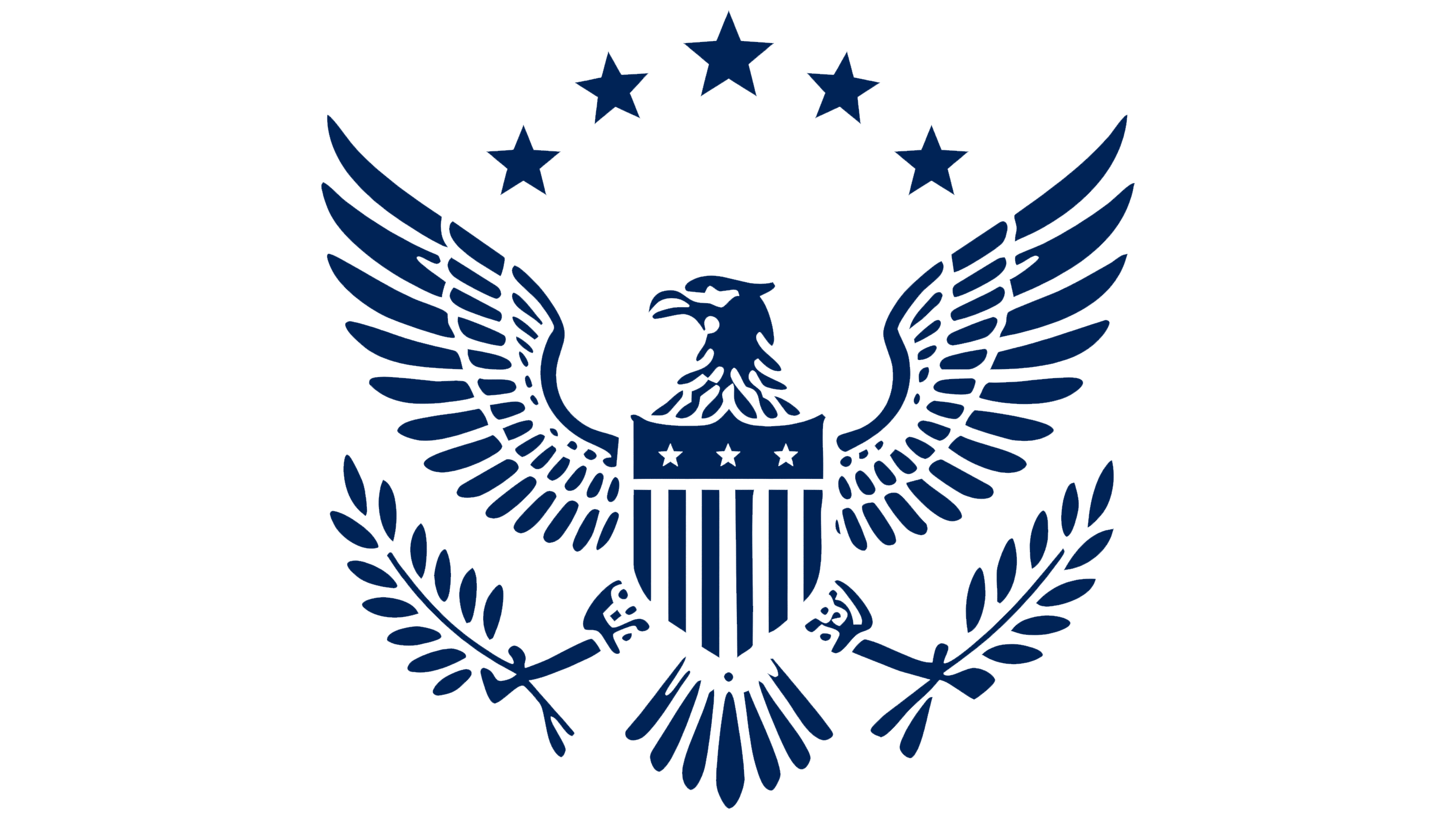
The logo centers on an eagle with its wings raised and spread. A shield on its chest contains vertical stripes and three stars across the top. Five more stars form an arc above its head. The bird holds an olive branch in each talon. The eagle, shield, stripes, and stars recall the U.S. presidential seal. The distinction lies in what the bird holds. The presidential seal features an olive branch and a bundle of arrows, while the airport version uses two branches.
The text is arranged in three tiers. PRESIDENT appears at the top with stars on either side, DONALD J. TRUMP occupies the large middle line, and INTERNATIONAL AIRPORT sits below. In the horizontal version, the eagle is to the left of the lettering. In the vertical version, it appears above. The vertical arrangement ends with a row of five stars between short lines. In both versions, the name takes priority, while the facility’s function appears in smaller type.
The guidelines specify Trajan Pro 3 Semi Bold, an uppercase serif typeface, for PRESIDENT and DONALD J. TRUMP. Tracking, or letter spacing, is set to 150 for PRESIDENT and 75 for the name. INTERNATIONAL AIRPORT uses the sans-serif Gotham Semi Bold with tracking of 100. The contrast between the typefaces separates the name’s formal treatment from the functional descriptor. At the same time, the increased spacing extends the lettering horizontally.
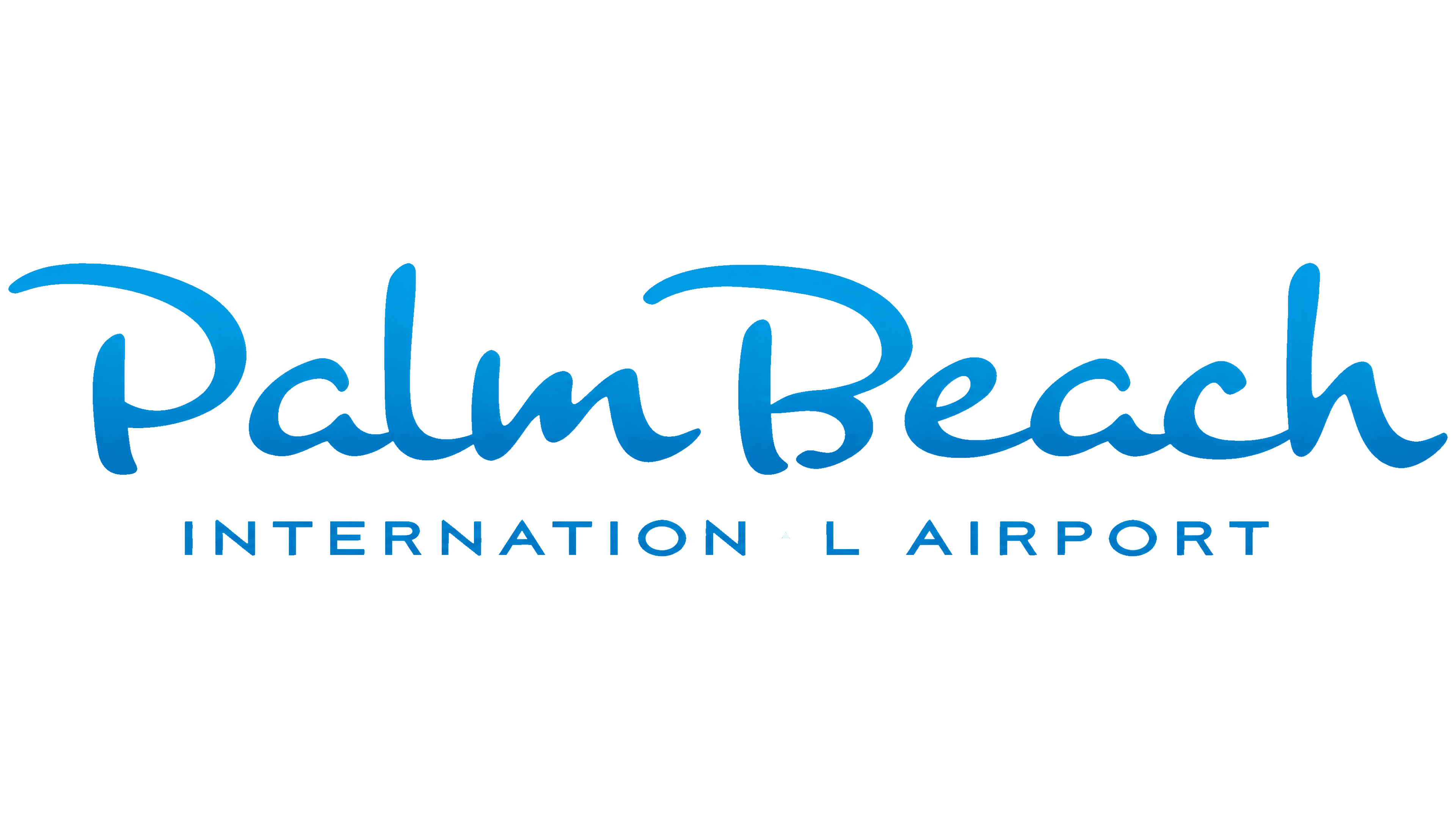
The previous logo centered on a light blue Palm Beach wordmark resembling a handwritten signature. Its lowercase letters connected, while the “P” and “B” had long upper flourishes. Beneath the name was a small INTERNATIONAL AIRPORT line in widely spaced sans-serif capitals. The identity now replaces the geographic name with the president’s name and a heraldic emblem.
In the initial announcement, the eagle and lettering appeared in gold. The guidelines specify gold #C0822C, near-black #050607, dark blue #002858, white #FFFFFF, and cream #D9CBBA. A white version of the logo appears on dark blue. The rules define the relative sizes of the bird and text, the clear space around them, and permitted background combinations.
The update covers signs, wayfinding, printed materials, technical systems, and the website flydjt.org. The FAA code changed to DJT, and the ICAO code changed to KDJT, on July 9. The IATA passenger code changed from PBI to DJT on August 18, 2026. The new designation applies to reservations, tickets, and baggage tags. Airlines, routes, and airport services continue operating as before.
The entire renaming program was initially estimated at $5.5 million, including replacement branding and airport system updates. The state allocated $2.75 million. Further work is proceeding in phases as funding becomes available, with costs covered by airport funds and other available sources.