


 Trump Logo PNG
The Trump logo reflects the ambitions and scale of an empire that expanded from luxury building construction to media and politics. The name became synonymous with publicity and influence, firmly establishing itself beyond the original business.
Donald Trump’s political path began in the 1980s, when he joined the Republican Party and publicly announced his intention to run for president. In 1999, Trump switched to the Reform Party and sought its nomination, but withdrew from the race in 2000.
Then his views changed: in 2001, he registered as a Democrat but soon returned to the Republican Party. In 2004 and 2012, Trump considered a presidential run and actively criticized Barack Obama.
In June 2015, he officially announced his candidacy, went on to defeat Hillary Clinton in the 2016 election, and became the 45th President of the United States.
Just one month after his inauguration, Trump began his re-election campaign with the slogan “Keep America Great,” but lost the 2020 election to Joe Biden, leading to dramatic events surrounding the storming of the Capitol.
In November 2022, Trump announced his candidacy for another presidential term, selecting Senator J.D. Vance as his vice-presidential running mate.
As a result of the 2024 elections, Trump once again became president, assuming office as the 47th head of state, repeating Grover Cleveland’s unique case of non-consecutive terms.
Meaning and History
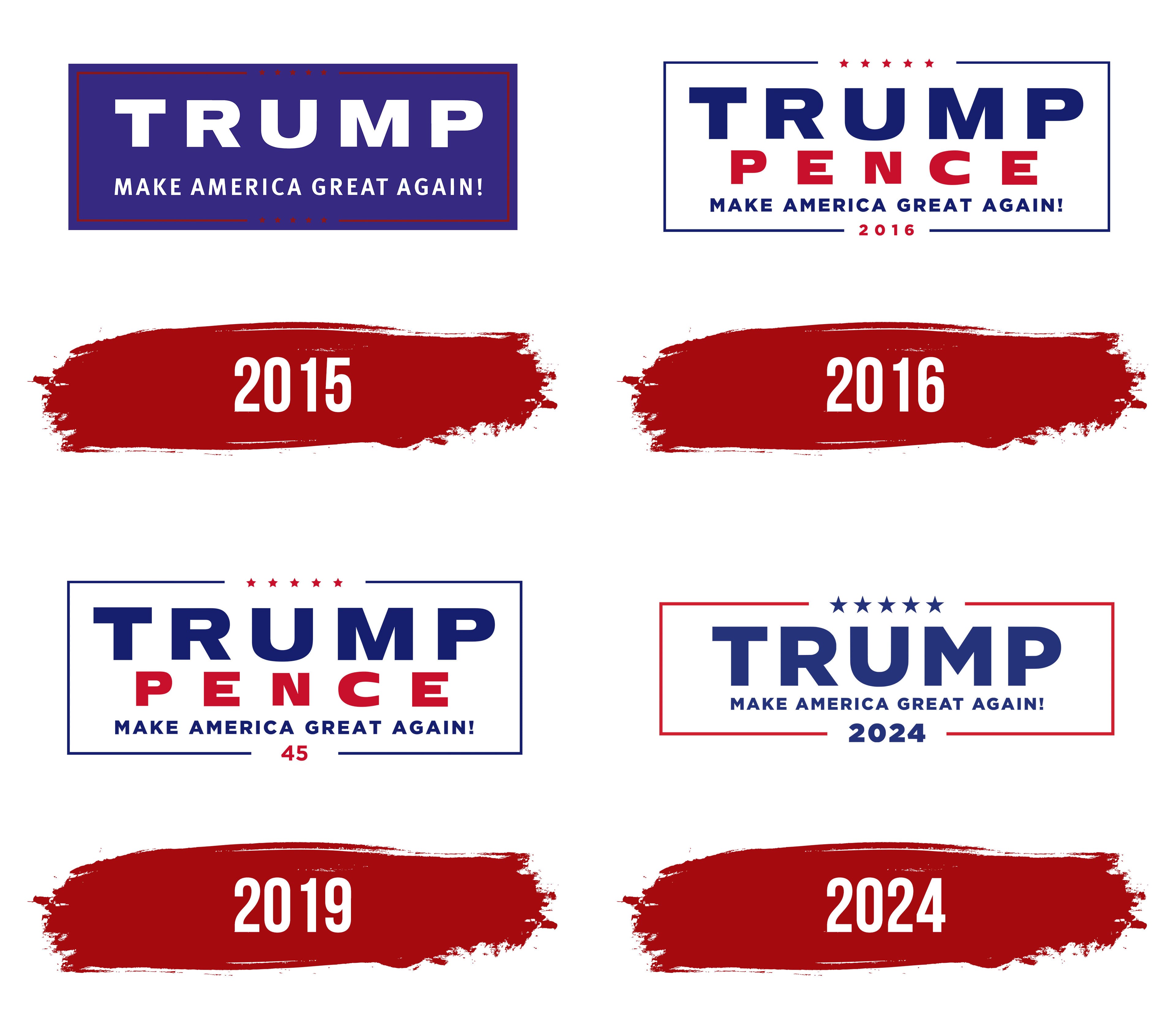
What is Trump?
He is a well-known American politician and businessman who served as President of the United States. He gained fame through his successful ventures in real estate, entertainment, and hospitality. He gained broad recognition from a reality TV show and his outspoken public speeches. His politics are characterized by a tough stance, focusing on national interests and immigration control, which has prompted both support and criticism.
2015
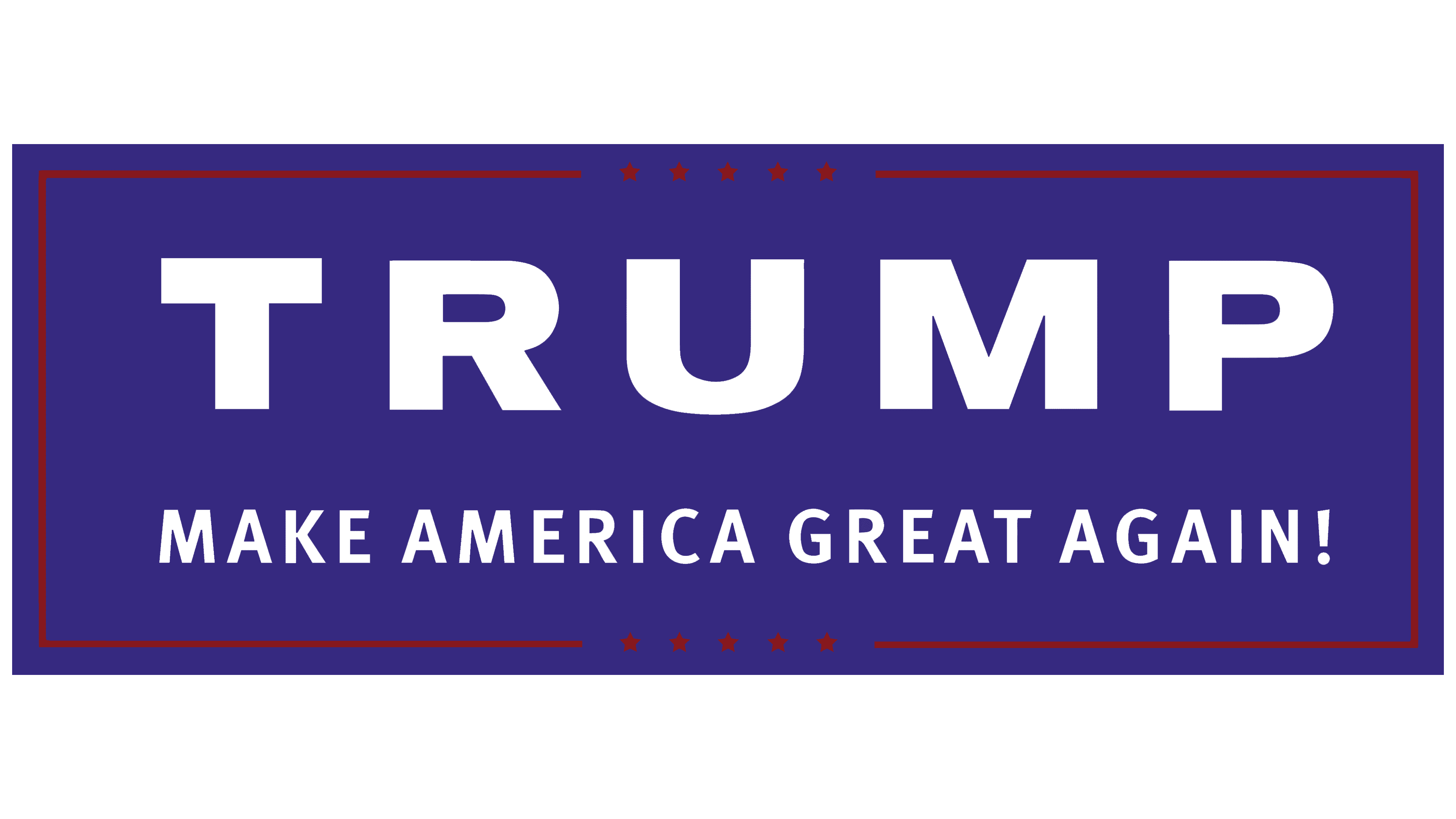
The 2015 logo for Donald Trump’s presidential campaign became a symbol of bold statements. The central element featured the politician’s surname in the massive Akzidenz-Grotesk font. Its expressive, solid lettering was chosen to visually convey stability, decisiveness, and conservative values.
The logo’s colors were typical for American politics: blue background, red lines and stars, and white letters. Blue symbolized authority; red signified ambition. Ten small five-pointed stars represented national unity and respect for the American flag.
Donald Trump coined the slogan “MAKE AMERICA GREAT AGAIN!” beneath his surname. Originally used by President Ronald Reagan in the 1980s, the Term Was revived by Trump in 2015, giving it new political momentum. This phrase became emblematic of his campaign, reminding supporters of traditional American values and his commitment to global leadership.
The logo was developed by Trump’s campaign team without external agency involvement, highlighting the candidate’s direct control over his image and messaging. The absence of intricate design emphasized the candidate’s name and campaign platform.
2016
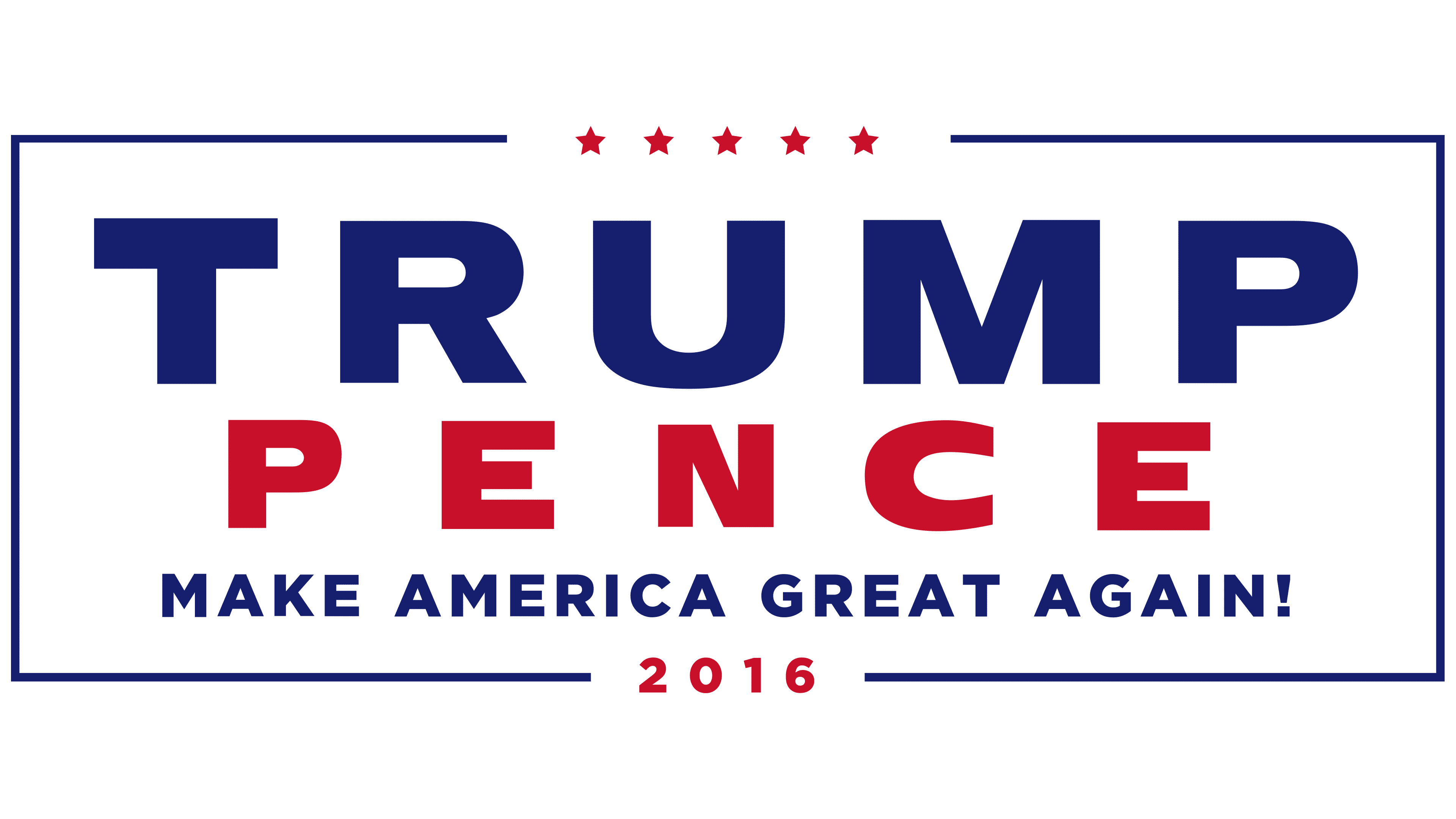
In 2016, Donald Trump’s campaign logo was updated to reflect political developments. Adding the surname “Pence” in bright red signaled Mike Pence as the new running mate. The color choice highlighted Pence’s conservative stance.
Trump’s campaign team updated the logo, maintaining the Akzidenz-Grotesk font and general layout. The surnames of both candidates appeared in contrasting colors, emphasizing unity despite their political nuances.
A new addition was the year “2016,” which marked the campaign’s relevance. The previous top red line was replaced by five stars referencing the U.S. flag.
This 2016 emblem reinforced the partnership between the candidates while preserving the original logo’s style and recognizability.
2019
A minor yet symbolic change appeared in 2019. Instead of the election year, the number “45” appeared in red, denoting Trump’s presidential order number. This detail reflected the campaign’s shift from promises to recognizing his incumbent status.
Using the presidential number is common in U.S. political symbolism, highlighting achievements and continuity.
Other logo components remained unchanged. Replacing the year with the presidency number underscored Trump’s established political status.
2024
After J. D. Vance announced his candidacy for vice president, his surname was added to Trump’s presidential campaign logo. The appearance of a second surname explicitly aligned the two candidates, emphasizing a unified visual style for the campaign.
The core structure of the mark remained the same. At the center is the surname “TRUMP”, set in large blue letters using the Gotham typeface. A rectangular frame surrounds the wordmark and includes two breaks. The upper break contains stars, while the lower break features the number “2024”, indicating the election year. The stars visually symbolize the American flag.
The surname “VANCE” is placed below the main name, rendered in red and smaller. The typeface matches the one used for “TRUMP”, preserving a consistent typographic foundation.
The campaign slogan “Make America Great Again!” remains unchanged and is written below the candidate’s surname in blue letters. The color scheme combines blue, red, and white. The overall logo composition reflects a visual direction already familiar from Trump’s previous election cycles.
Font and Colors
“TRUMP” is set in the heavy Gotham Bold font, designed by Tobias Frere-Jones and inspired by mid-20th-century American architecture. Gotham symbolizes authority and stability. The slogan “Make America Great Again!” uses Montserrat Regular, a typeface created by Julieta Ulanovsky, inspired by Buenos Aires street signage. The contrast between Gotham and Montserrat reflects the political message: authoritative surname and accessible slogan.
Trump employed precise shades from the U.S. national flag: Navy Blue, Old Glory Red, and white, colors traditionally used by political brands to express loyalty to heritage. Trump chose rich yet restrained shades of red and blue. Competitors opted for less formal palettes, with Cruz favoring expressive colors and Kasich choosing softer tones. Trump’s color scheme reflected the conservatism of his voter base.