


 Sodexo Logo PNG
The Sodexo logo is both expressive and friendly, reflecting the nature of a food service network that aims to welcome visitors and provide a pleasant stay, delicious food, and a comfortable atmosphere. The emblem captures all of this, setting a positive tone for customers.
Sodexo began in 1966 in Marseille, France, when Pierre Bellon founded Société d’Exploitation Hotelière. Coming from a family involved in marine catering, Bellon built the business around food services for hospitals, schools, companies, and local organizations. In the early years, he stayed closely involved in daily operations and often delivered meals to clients himself.
In 1968, the company changed its name to Sodexho, reflecting a wider service model than catering alone. During the 1970s, it expanded into Belgium, the Netherlands, Italy, Spain, and Germany. In 1975, Sodexho entered the Middle East with a contract for a desert base camp in Saudi Arabia. In 1983, it went public on the Paris stock exchange, raising funds for further expansion.
The 1990s and early 2000s brought a series of acquisitions. Sodexho bought Gardner Merchant in 1995, merged with Universal Ogden Services in 1997, acquired Wood Dining Services in 2000, and became Sodexho Alliance the same year. It launched STOP Hunger in 2001, acquired Universal Services in 2002, shortened its name to Sodexo in 2005, and expanded in India through Radhakrishna Hospitality Services Group in 2009.
In the 2010s, Sodexo moved further into facilities management, employee services, and event catering. It acquired Centerplate for $ 675 million, introduced Better Tomorrow 2025 in 2019, partnered with Dynamify in 2020, and set a 34 percent carbon-reduction target for 2017 to 2025. In 2022, it bought Frontline Food Services in Australia, and in 2023 it launched a global digital workplace management platform.
Meaning and History
What is Sodexo?
It is an international company that provides services to improve its clients’ and customers’ quality of life. These services include food, facilities management, employee benefits, and personal and home services. It operates in various sectors, including corporate, healthcare, education, government, and remote sites. The company provides comprehensive solutions that enhance well-being, efficiency, and productivity, whether catering services, cleaning and maintenance services, or employee recognition programs.
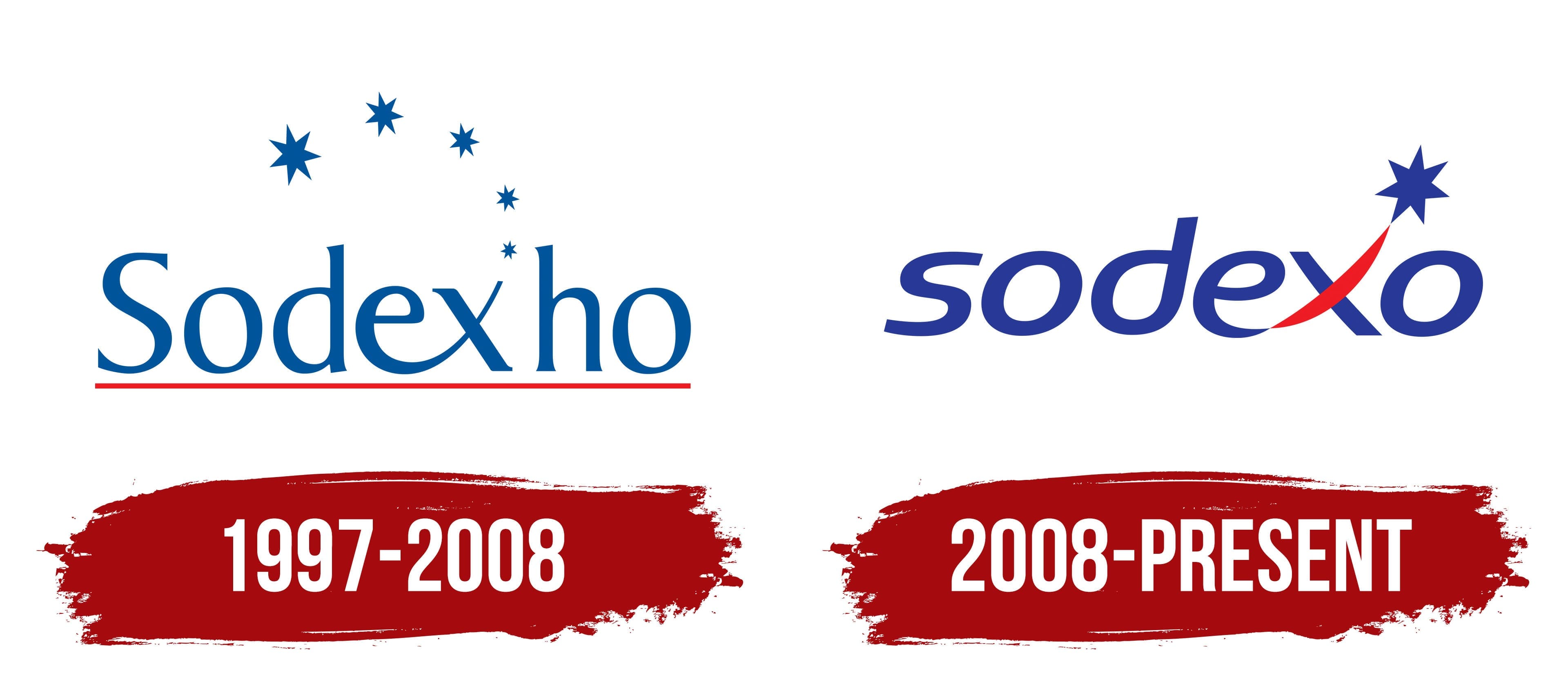
1997 – 2008
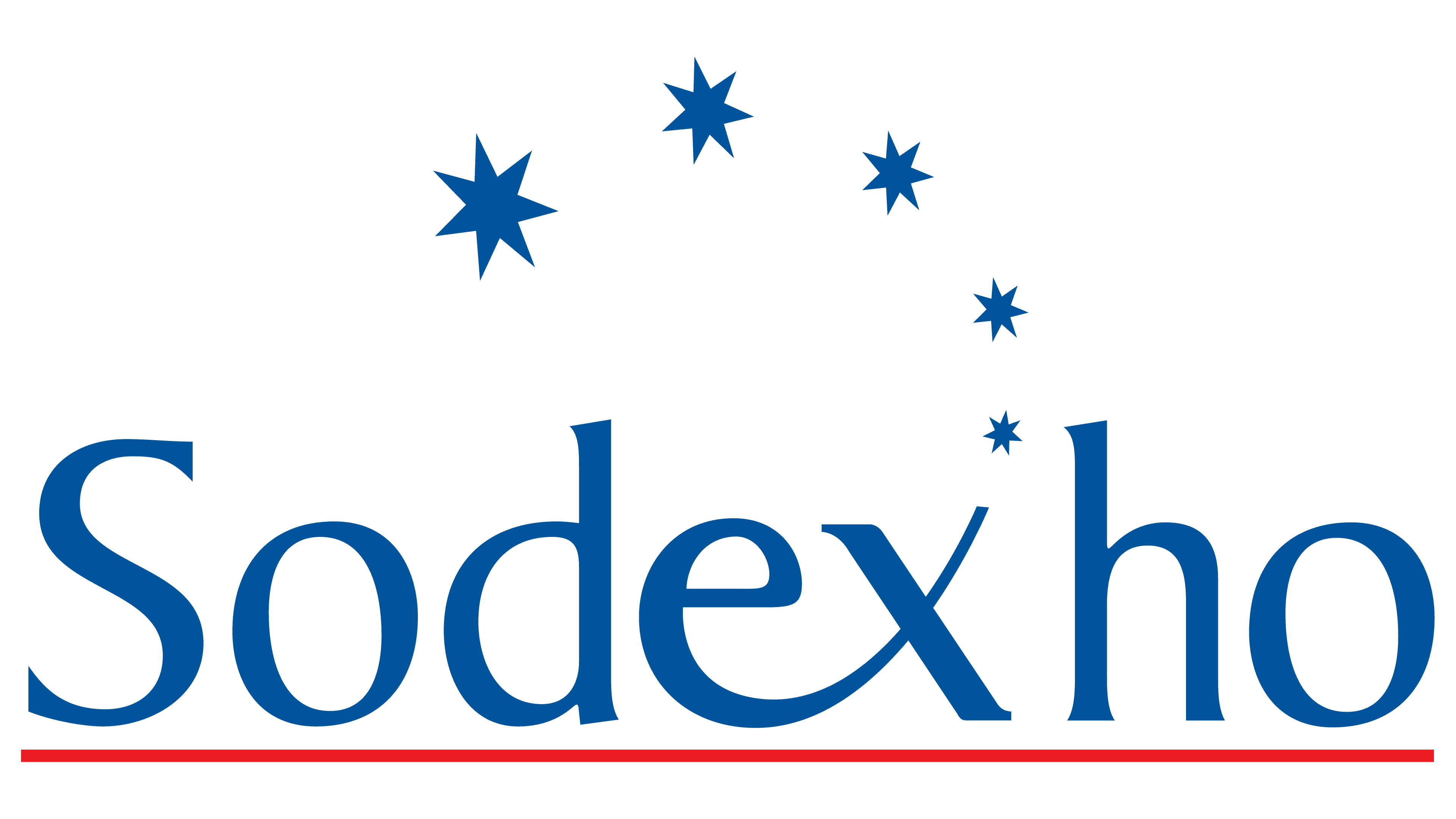
The key element of the Sodexo logo is its name. Other elements complement it, not merely adding decoration but fulfilling several important functions, as they:
- reveal the essence of the name;
- create a pleasant impression;
- Introduce visitors to the food service network.
- Turn the emblem into an eye-catching sign.
Additionally, the company establishes visual contact with potential clients through the accompanying details, evokes trust, and conveys its concept. Positive feelings are crucial in this business because the brand is linked to the common human factor of liking or disliking. Thus, the organization strives to attract as many visitors as possible so they repeatedly use its services.
The emblem features the company’s original name, “Sodexho,” which stands for “Société d’Exploitation Hotelière.” This is because, in its early days, the company also managed hotels. The inscription is arranged horizontally in a single line and is set in a thin serif font. The elegant typeface creates a pleasant aura and generates a positive impression. Even the serifs do not detract from this feeling, as they are very small and subtly widen at the ends.
All characters are perfectly straight and tall, alternating between thick and thin lines that add dynamism to the emblem. The proximity of the “e” and “x” is particularly interesting. Their lower strokes are connected, giving the impression that the glyphs are holding hands. This is an allegory for the trusting relationship between the service provider and the user. From the “x” extends a series of stars upward. This might hint at:
- exceptional living and dining conditions;
- five-star level service;
- The brand’s popularity among various celebrities.
The Sodexo emblem’s color scheme is red and blue. A thin red line underscores the name, while all other elements are blue. Red symbolizes peak enjoyment, joy, positivity, and passion. Blue represents reliability, stability, relaxation, and a drive for development.
2008 – today
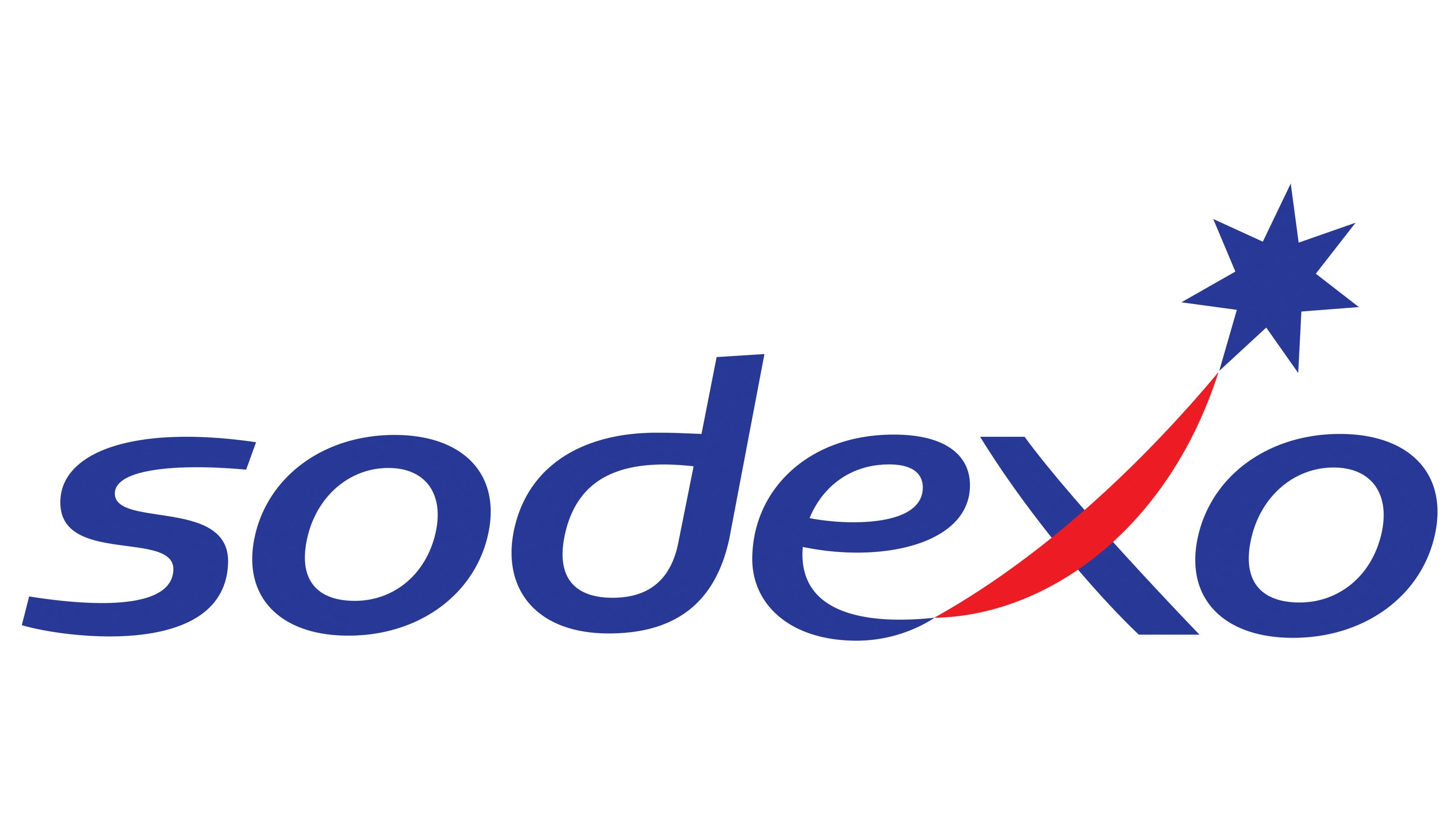
After a shareholders’ vote, the Sodexo logo received a new look. Changes were made to adapt the identity to the international market. Since the “xh” combination is difficult to pronounce correctly in various languages, the company decided to simplify its name by removing the “h.” The remaining letters are easy to pronounce and work well in every country because the vowels and consonants alternate harmoniously.
Another major change involves removing four stars, leaving just one out of the original five. It still sits at the upper right end of the “x.” This glyph continues to warmly greet guests and new clients of the food service network as if raising its hand to invite visitors. The letter appears to wave joyfully. Additionally, the designers moved the red stripe, so now half of the “x” is colored red, resembling a gentle smile.
The serif font was replaced with a sans-serif typeface featuring rounded letters tilted to the right. This typography adds dynamism and a sense of purpose to the emblem, showing that the company is confidently moving forward, guided by its lucky star depicted above the text. All glyphs are lowercase and sans-serif, indicating the network’s openness and dedication to pleasing clients. This makes the logo friendly and clean. The blue color became more saturated, while the red lightened, adding a touch of optimism. This contrast enhanced the logo’s brightness and expressiveness.