 Veolia Logo PNG
Clean water in the water supply system, waste collection and recycling, and the delivery of heat and energy form the foundation of the urban environment. Behind these processes lies a complex infrastructure that integrates municipal and industrial functions. The Veolia logo is associated with a company operating in water supply, energy, and waste management, in which resources undergo a cycle of use and return to circulation.
Veolia began operations in 1853. That year, by decree of Napoleon III, the company Compagnie Générale des Eaux was founded in France. Its purpose was to provide a water supply for Lyon and Nantes. The company received concessions in other cities and built water and sewer systems. By the end of the nineteenth century, the company had expanded beyond France, beginning work in the Ottoman Empire and Southern Europe.
In the 1970s, Compagnie Générale expanded its activities into construction and energy. In the 1980s, the company began waste processing. In 1998, it changed its name to Vivendi. Management aimed to create an international conglomerate that included media and telecommunications. By 2002, rising debt caused a crisis. The water business was spun off into a separate structure called Vivendi Environnement.
In 2003, the new direction was renamed Veolia Environnement. It included water supply, waste management, and energy services. In the following years, the company strengthened its position in international markets. It began operations in the United States, Asia, and Latin America. Its clients reached more than one hundred million people.
In 2012, under the leadership of Antoine Frérot, the company carried out a restructuring. In 2015, the transport division Transdev was sold. In 2018, the brand adopted a new short name, Veolia.
In 2020, the company proposed acquiring its competitor Suez. The deal was valued at 11.3 billion euros. Negotiations lasted nearly two years. In 2022, the transaction was completed.
In 2024, the company invested in plastic recycling and the development of chemical recycling technologies.
The company operates in about forty countries. It provides water to 100 million people and processes about 50 million tons of waste annually.
Meaning and History
What is Veolia?
An international company from France holding leading positions in the field of public utilities. Its main activities cover three areas: water supply and wastewater treatment, waste management, and energy. The organization provides water to about 100 million people and serves cities, industrial enterprises, and utilities worldwide. It owns facilities for processing solid and hazardous waste under the Veolia Propreté brand. In the energy segment, the company produces and distributes heat and electricity and manages heating and cooling systems under the Veolia Énergie brand.
1998 – 2003
The name Vivendi Environnement appeared in 1999 after the group’s environmental divisions were consolidated into a separate organization. It included water supply, waste management, energy services, and transportation. The new name reflected a broad range of operations extending beyond the water industry.
The transformation began almost 150 years before the renaming. Compagnie Générale des Eaux translates as “General Water Company.” Beginning in the second half of the 20th century, the company expanded into waste management, heating services, and energy. By the late 1990s, it had developed into a major infrastructure group. The former name was replaced by Vivendi in 1998, and the environmental divisions received a shared name one year later.
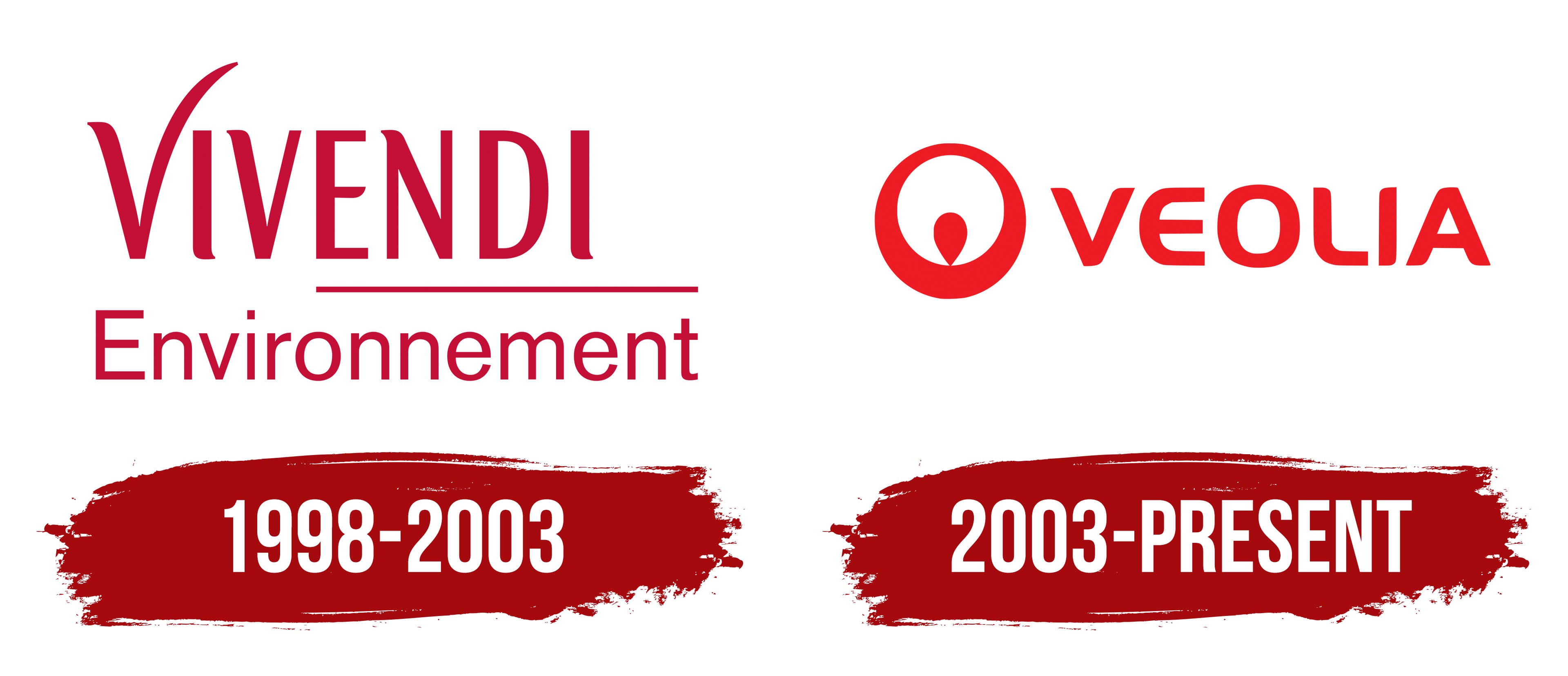
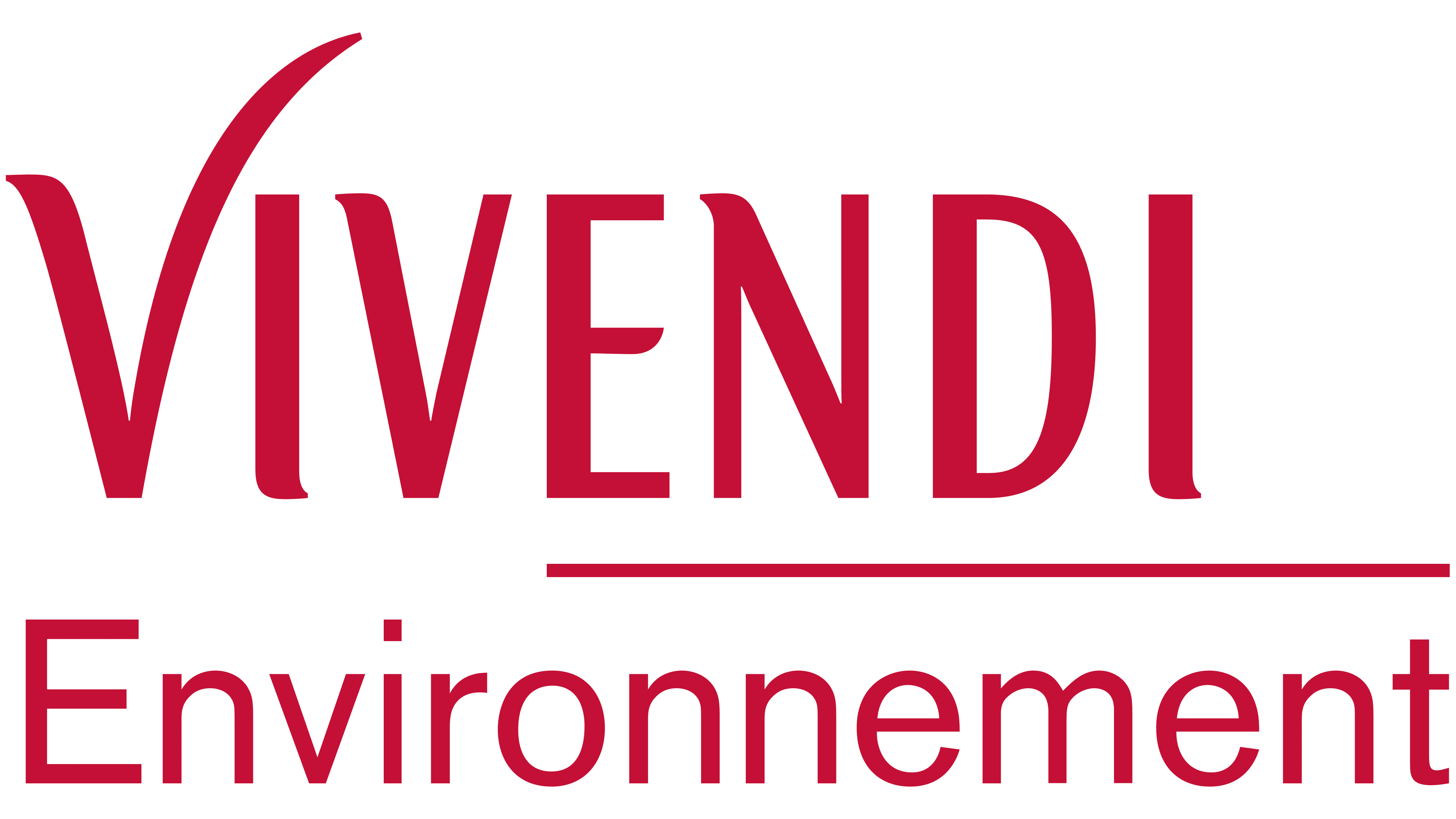
The logo consisted of two dark red lines of text. The word VIVENDI appeared on the upper line in elongated uppercase letters with thin serifs. The initial “V” resembled a check mark and differed in form from the remaining letters. A thin horizontal line ran beneath the letters “ENDI,” separating the upper and lower lines.
The word Environnement appeared below the line. An uppercase “E” was followed by smaller lowercase letters. The lower line used a thin sans-serif typeface. The upper wordmark identified the division’s connection to the group. In contrast, the lower word identified the business area of the combined operations.
2003 – today
The red ring containing a drop-shaped figure became part of Veolia’s identity following the name change from Vivendi Environnement. The group adopted the name Veolia Environnement in April 2003. Two years later, its main divisions moved under the shared brand. The system covered water supply, waste management, transportation, and energy. The rebranding united the company’s international operations under one name.
The new name was created for use across different countries and markets. Its short pronunciation worked in many languages. Its neutral meaning covered all of the group’s business areas.
A red ring with a thicker lower section appears on the left. Inside it is a drop-shaped figure pointing downward and connected to the outer circle. Its contours resemble a drop of water, a comma, and a swirling flow. The form is associated with water supply, waste management, transportation, and energy.
The word VEOLIA appears on the right in uppercase red sans-serif letters. The letters have equal height and uniform stroke width. The wordmark is arranged horizontally. Red distinguished the brand from water companies that used blue shades. It was suitable for equipment, garbage trucks, treatment facilities, heating plants, and urban infrastructure. Following the rebranding, a single color system covered all divisions of the group.