 West Virginia Power Logo PNG
The West Virginia Power logo conveys the atmosphere of baseball games, with a primary focus on team spirit and fan support. It highlights the team’s perseverance in overcoming challenges driven by their passion for the sport.
Charleston’s baseball history began in 1910 with the Class D Charleston Statesmen, renamed the Senators in 1913. After interruptions, the club returned in 1931 as an affiliate of the Cincinnati Reds. A 1944 fire destroyed Kanawha Park, and Watt Powell Park opened there in 1949. Promoted to Triple-A in 1952, the Senators won the 1958 American Association title while linked to the Detroit Tigers.
Baseball returned in 1971 when Bob Levine acquired the Columbus Jets franchise and named the Charleston Charlies after his father. Pittsburgh Pirates became the first MLB partner. With future Hall of Famer Dave Parker on the roster, the Charlies won the 1973 International League championship. Under the Houston Astros, they captured another Governors’ Cup in 1977 before leaving Charleston in 1984.
The Class A Charleston Wheelers arrived in 1987 and won the South Atlantic League title in 1990. Renamed Charleston AlleyCats in 1994 and West Virginia AlleyCats in 2001, the team faced falling attendance and outdated facilities at Watt Powell Park.
On April 14, 2005, the club moved into the $23 million Appalachian Power Park and became West Virginia Power. Milwaukee Brewers supplied the first affiliation there, with Ryan Braun and Lorenzo Cain among future stars. Power won division titles in 2007 and 2008, then changed partners from 2009 to 2018. After losing affiliated status in 2021, the club entered the independent Atlantic League as the Charleston Dirty Birds, named for miners’ warning canaries.
Meaning and History
What is West Virginia Power?
A minor league baseball team competing in the South Atlantic League. Home games are played at Appalachian Power Park in Charleston, West Virginia. The team relocated from Georgia to West Virginia, and its name reflects the region’s historical ties to the energy industry. The club develops young players who move on to higher leagues.
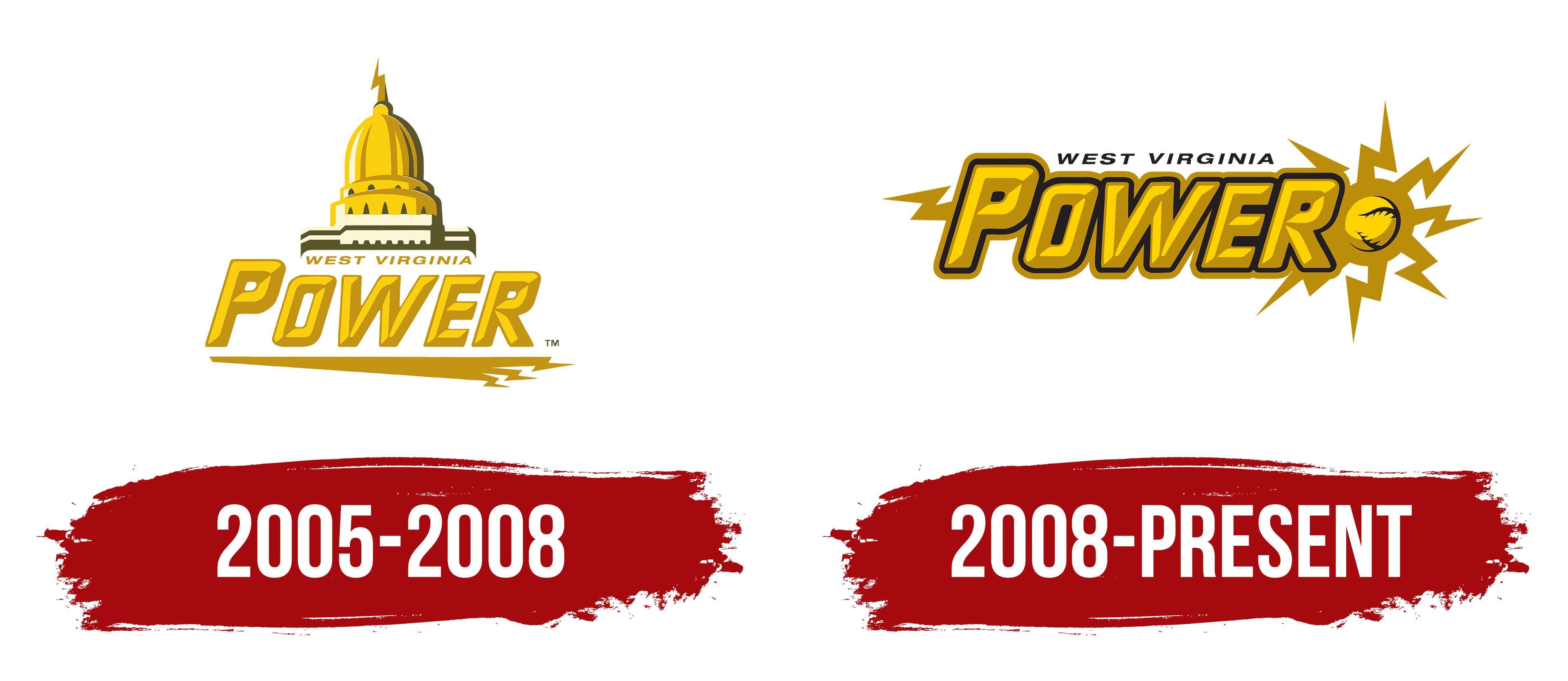
2005 – 2008
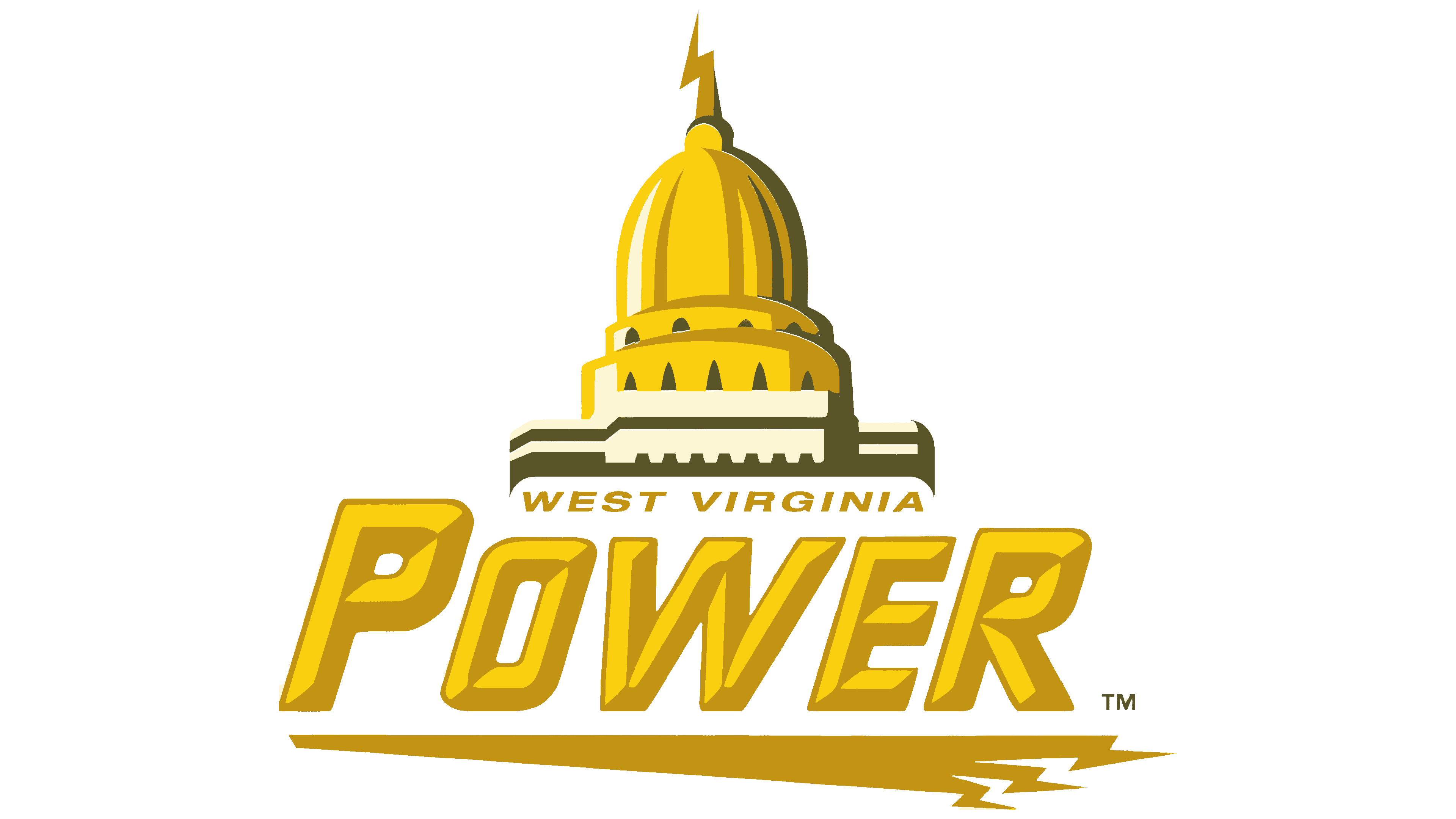
In designing the West Virginia Power’s debut logo, the focus was on regional identity and the team’s connection to the state. The design combined symbols that reflected both the sport’s energy and the character of the team’s hometown.
The main element was the golden dome of the Capitol building in Charleston. It referenced West Virginia and underscored the team’s connection to its hometown. At the top of the dome was a lightning bolt, associated with the name Power and symbolizing energy, dynamism, and strength.
The word “POWER” was set in an italicized font with a three-dimensional effect. The typography referenced the style of sports graphics from the late 1990s and early 2000s, conveying an impression of intensity and competitive spirit. The elongated and tense letterforms enhanced the sense of speed and vigor.
The color scheme combined gold, yellow, and olive tones. Gold symbolized the richness of the state’s natural resources and its industrial heritage, while the darker shades visually balanced the design, lending it stability and depth.
The words “West Virginia” were placed in the center of the logo. The font had a strict square geometry that gave the composition structure and formality. This inscription established the club’s geographic identity and completed the team’s visual image.
2008 – today

The change in the West Virginia Power logo marked a shift from architectural symbolism to a sports-oriented theme. The team abandoned the Capitol dome image and focused instead on baseball-related elements. The main symbol became a golden baseball surrounded by lightning bolts. It conveyed the game’s energy and motion, reflecting the connection between the team’s name and its athletic character.
The typographic part was redesigned. The font became more dynamic. The letters were slanted to the right. A black outline along the edges enhanced contrast and emphasized the inscription’s three-dimensional quality, making it visually strong.
The color palette featured gold and black, with darker accents becoming increasingly pronounced. The contrast between the shades created a sense of tension and power. At the same time, the gold maintained continuity with the previous version, continuing the theme of West Virginia’s regional wealth and natural resources.
The words West Virginia were placed at the top of the logo. Their shape was compact, and the font more restrained and geometric. This part of the design provided structural balance, linking the emotional energy of the main text with the identity’s formal elements.