 Darden Restaurants Logo PNG
Restaurant chains focused on family dining are built around an easy-to-understand menu, consistent food quality, and efficient dining room operations. Behind these establishments is a group that manages concepts, monitors standards, and expands the chain across different regions. The Darden Restaurants logo is associated with the company that manages the Olive Garden, LongHorn Steakhouse, and Yard House brands and is responsible for their operations and development.
Darden Restaurants was founded in 1968. In Lakeland, Florida, Bill Darden opened the first Red Lobster restaurant. The establishment offered seafood at affordable prices. By the late 1970s, the chain had grown to hundreds of restaurants after General Mills acquired it.
In 1982, General Mills launched a new brand, Olive Garden. It was focused on Italian cuisine and a family dining format. The concept gained recognition nationwide.
In 1995, the restaurant division was spun off into an independent public company called Darden Restaurants. The name was chosen in honor of the founder. The new company managed the Red Lobster and Olive Garden brands. Its shares began trading on the New York Stock Exchange.
In the late 1990s and 2000s, Darden expanded its brand portfolio. The network added Bahama Breeze, LongHorn Steakhouse, and Yard House. By 2010, the company managed several restaurant chains in different categories, including family-style establishments and premium steakhouses.
In 2014, Darden sold the Red Lobster brand for $2.1 billion. After that, the company focused on developing Olive Garden and LongHorn Steakhouse. In the following years, restaurant menus and interiors were updated. Operational processes and service standards improved.
Since 2017, the company has strengthened its position by acquiring the Cheddar’s Scratch Kitchen chain.
The company operates about 1,900 restaurants in North America. Its brands include Olive Garden, LongHorn Steakhouse, Cheddar’s Scratch Kitchen, Yard House, The Capital Grille, Seasons 52, Bahama Breeze, and Eddie V’s. It remains one of the largest restaurant operators in the region.
Meaning and History
What is Darden Restaurants?
The largest restaurant operator in the United States unites eight brands, including Olive Garden, LongHorn Steakhouse, Yard House, The Capital Grille, Seasons 52, Bahama Breeze, Eddie V’s, and Cheddar’s Scratch Kitchen. The network includes more than 1,800 locations in fifty states, Canada, and several countries in Latin America, Asia, and the Middle East, some of which operate under franchise agreements. The company operates full-service restaurants featuring table service. Revenue comes from sales, franchise fees, and product licensing under the Olive Garden and LongHorn brands.
1995 – 2009
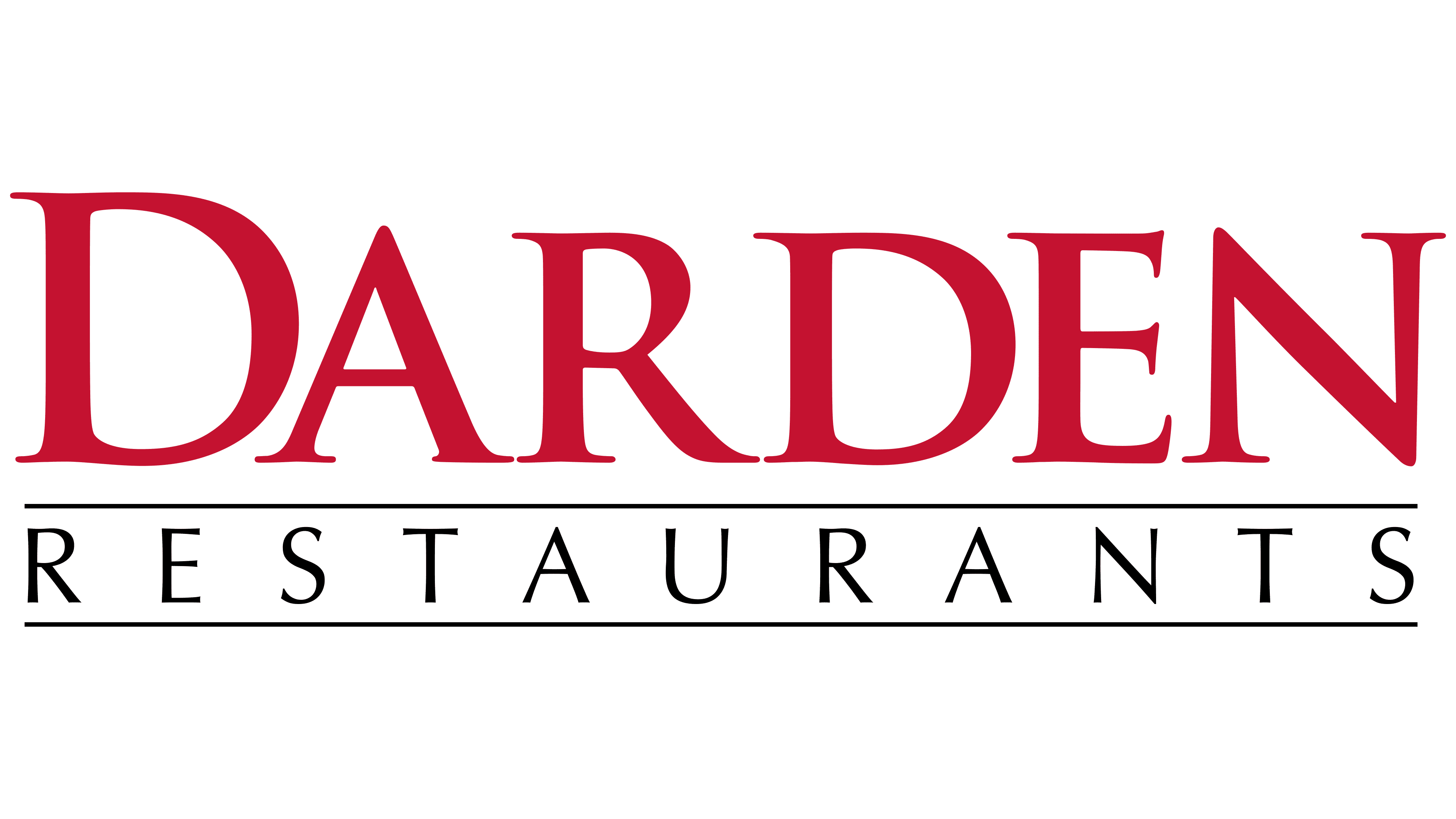
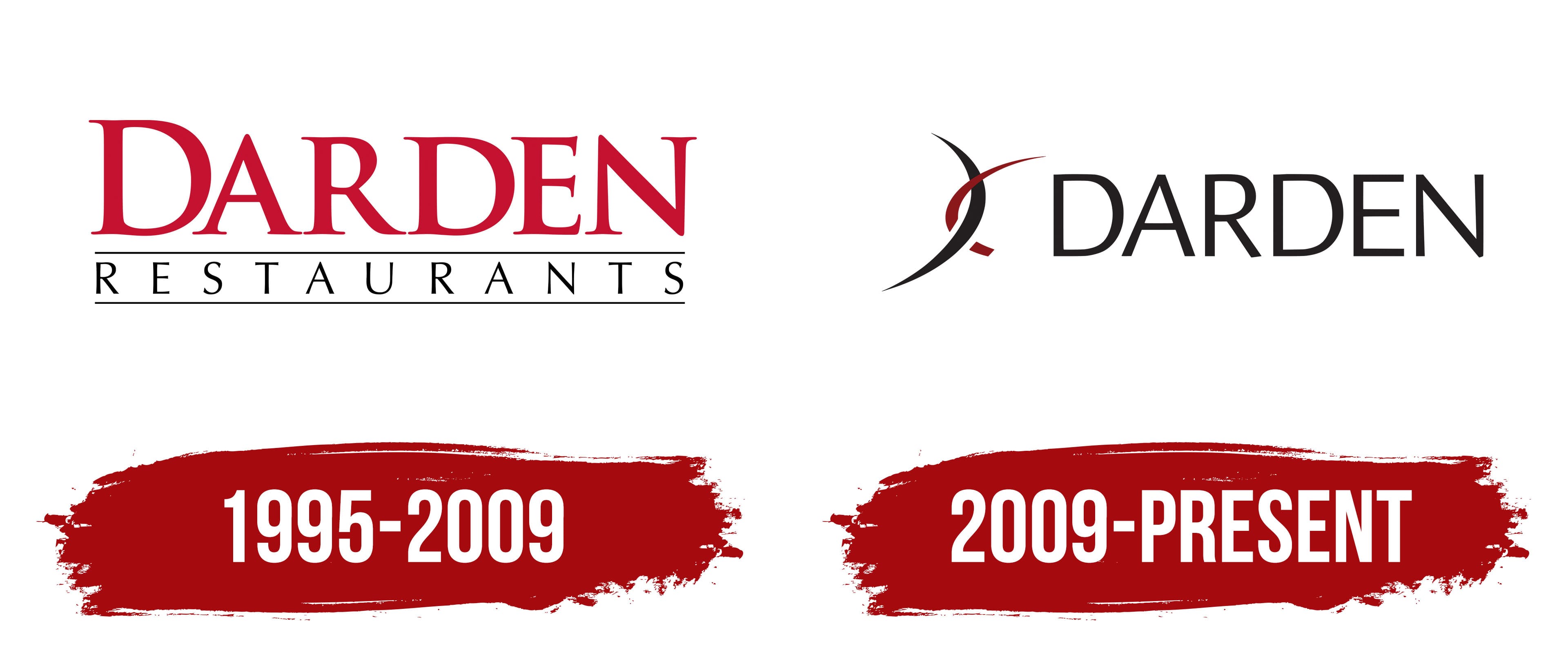
The first Darden Restaurants logo appeared in 1995, when the restaurant division of General Mills became an independent publicly traded company. The corporate identity distinguished the group from the restaurant chains within it. The name was based on Bill Darden’s last name. RESTAURANTS identified the company’s field of business.
The business began in 1938. At age 19, William “Bill” Darden opened a small restaurant called The Green Frog in Waycross, Georgia. In 1968, he and Charley Woodsby opened the first Red Lobster in Lakeland, Florida. Red Lobster Inns of America was incorporated in March. General Mills acquired the chain in 1970. It later became the foundation of a restaurant division containing several brands.
Darden Restaurants, Inc. was incorporated in Florida in March 1995. The company separated from General Mills and began operating independently on May 31. The corporation was named after the founder of Red Lobster, who played a major role in developing General Mills’ restaurant business. In the group’s history, 1968 marks the opening of Red Lobster, while 1995 marks the formation of Darden Restaurants.
The 1995-2009 logo consisted of two lines. DARDEN appeared at the top in red uppercase serif letters. Thick strokes and narrow spacing gave the wordmark a dense appearance. The initial “D” was enlarged.
RESTAURANTS appeared below in black uppercase letters set in a thin sans-serif typeface with wide spacing. Thin horizontal lines ran above and below the word. The red DARDEN name occupied the primary level, while the lower line identified the group’s restaurant business. The logo remained in use until 2009.
2009 – today
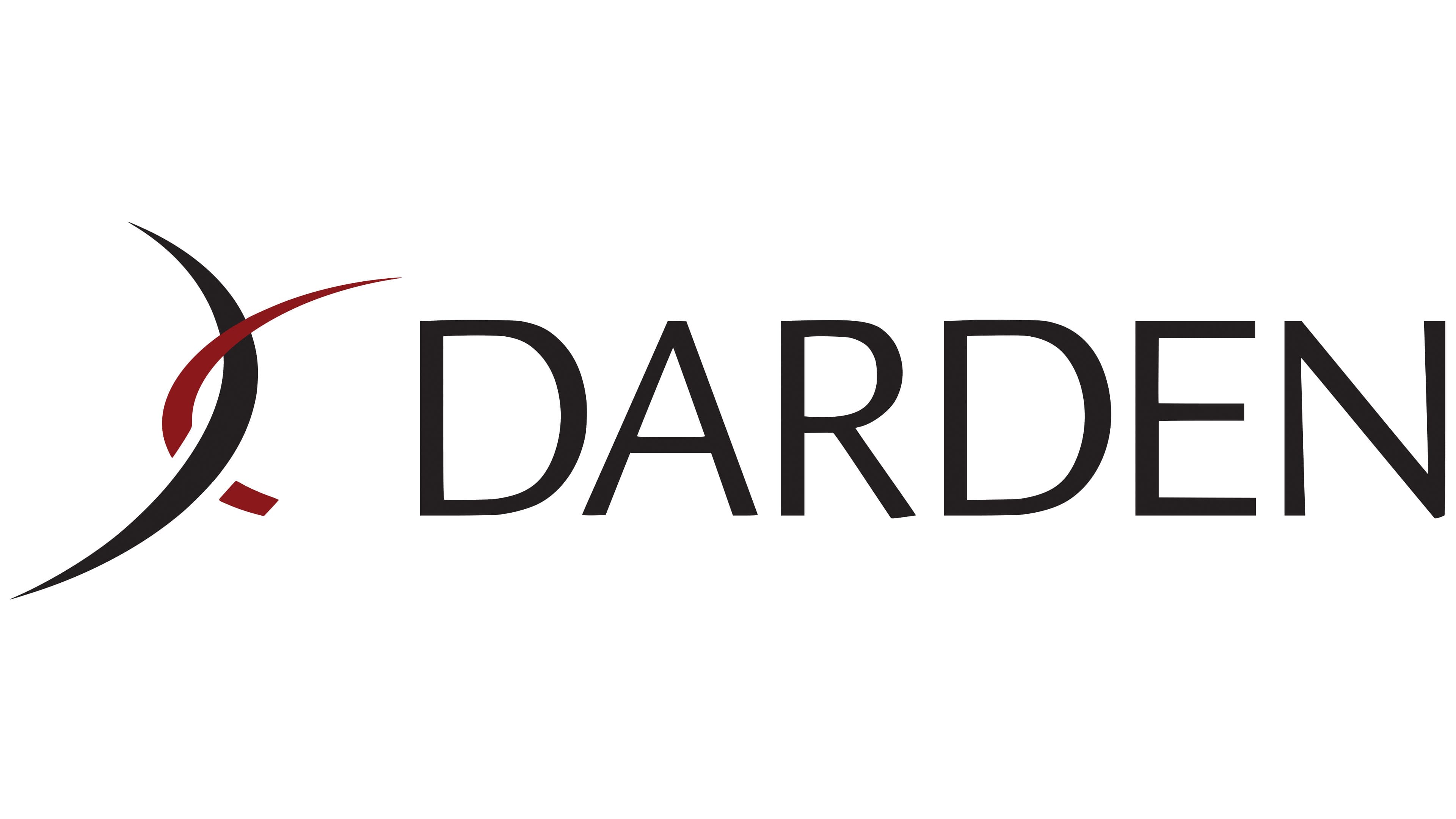
Darden Restaurants updated its corporate logo in 2009 for the multibrand group. Olive Garden, Red Lobster, LongHorn Steakhouse, The Capital Grille, Bahama Breeze, and Seasons 52 continued using their separate names and emblems. The Darden identity represented the parent company to partners and investors. At the same time, the restaurant chains retained their familiar images for guests.
The name was shortened to DARDEN and changed to a sans-serif typeface. An abstract two-color emblem appeared on the left. The shorter form suited a parent corporation with several restaurant formats and separated its name from those of the individual establishments.
The emblem consists of two intersecting arcs with flowing curves. A long dark line points upward and forms the foundation of the figure. A burgundy arc facing the opposite direction appears above it. The lines intersect near the center, while their ends extend in different directions. The identity uses the shades Falu Red and Raisin Black. The second color is close to black.
The black word DARDEN appears on the right in uppercase letters. The thin sans-serif typeface has uniformly thick strokes. The wordmark and emblem form a horizontal block. Compared with the 1995 version, the name became shorter and received more open space.
The parent company uses the logo in reports, investor materials, and corporate publications. The restaurant chains use separate emblems based on their cuisine, price range, and audience. The division helps distinguish the owner from the establishments within the group.
After selling Red Lobster in 2014, the company continued operating under the Darden name. The name already represented the entire publicly traded group and preserved Bill Darden’s last name. The 2009 logo remained in corporate materials and later extended to acquired restaurant brands.