


 Fritos Logo PNG
The Fritos logo is a true ode to bold flavor and sharp culinary sensations. The thin chip slices, perfectly balanced in texture, delight every sense with their crunch, rich seasoning, and full-bodied aromas. The emblem visually conveys the creation of one of the most delicious and sought-after snacks, where every element, from the perfect shape to the explosive taste, comes together harmoniously. It symbolizes the enjoyment of every bite, showcasing how expertly the ingredients are combined to deliver an unforgettable gastronomic experience.
Fritos began in 1932, when Charles Elmer Doolin bought a corn-chip recipe from a Mexican cafe owner in San Antonio, Texas. He refined the formula in his kitchen and named the product after the Spanish word for “fried.” In 1933, Doolin opened a small production business, while his mother, Daisy Dean Doolin, packed the chips into bags for local stores and cafeterias.
During the 1930s and 1940s, Doolin expanded production across Texas and promoted the product directly to retailers. A factory opened in Los Angeles in 1950, giving the business access to national distribution and wider radio and television advertising. In 1961, the company merged with H.W. Lay & Company, producer of Lay’s, creating Frito-Lay and a broader distribution network.
In 1965, the business merged with Pepsi-Cola to form PepsiCo and later expanded into international markets. During the 1960s and 1970s, the range added barbecue, cheddar cheese, and chili cheese varieties. Scoops appeared in the 1980s and 1990s as a dipping shape, while later years brought new packaging and limited-edition flavors.
In the 2000s, the brand responded to changing demand by experimenting with flavors and product formats. Marketing moved toward digital and social media during the 2010s, and special packaging marked the 85th anniversary in 2018. From 2020 to 2022, development continued across new tastes and shapes. By 2023, Fritos remained part of the parent company’s snack portfolio.
Meaning and History
What is Fritos?
Corn chips are the quintessential American food. These simple corn chips are made with corn, oil, and salt. The result is a rustic, incredibly tasty, pure, authentic corn flavor. They stand out in the chip aisle for their unique twist and hearty crunch. They are used in various homemade recipes, such as casseroles and walking tacos.
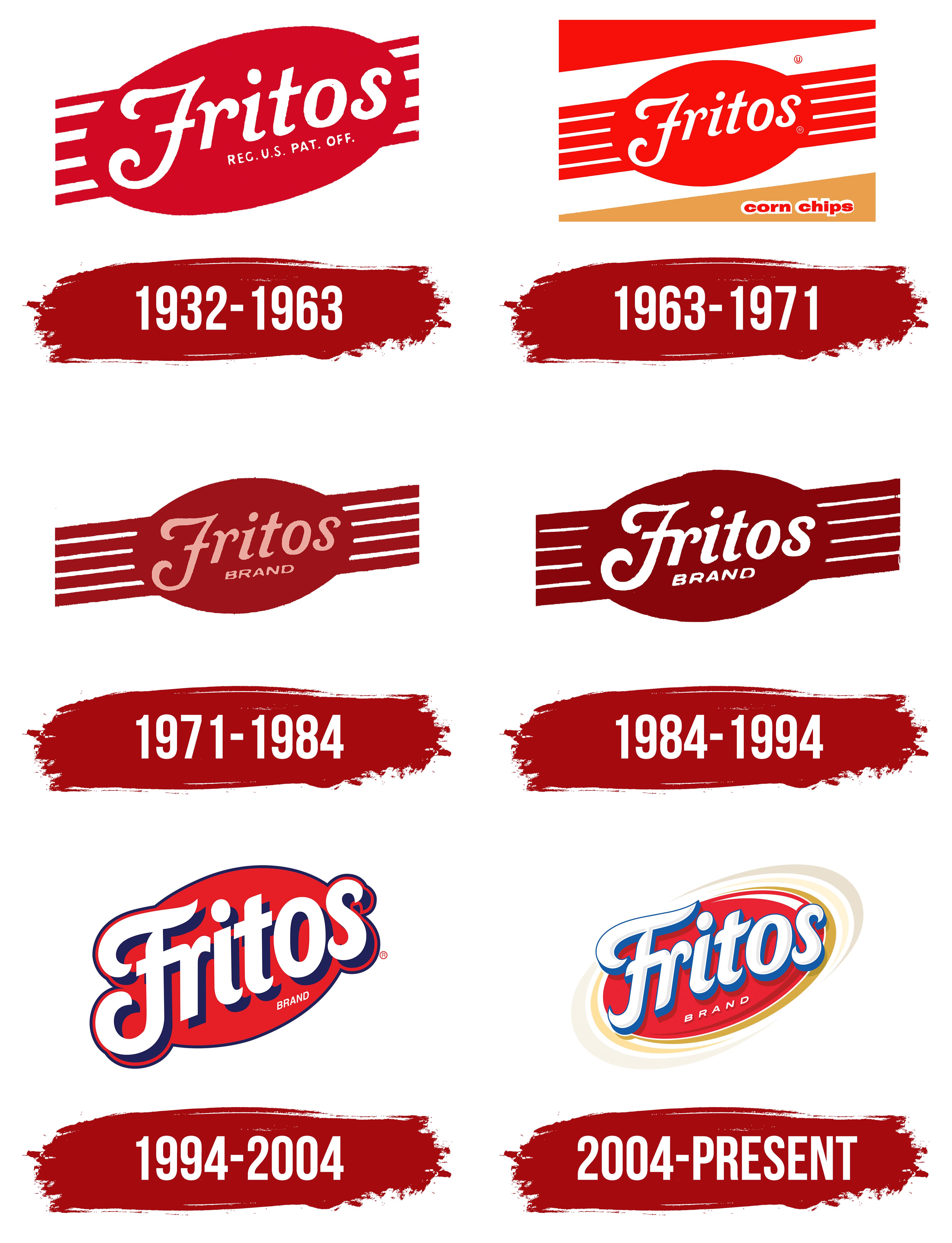
1932 – 1963
The company quickly found a successful visual identity for its brand, which has since undergone only minor changes. The first logo’s main element was a red ribbon that ran diagonally from bottom to top. It consisted of five evenly spaced red stripes, creating the impression of:
- A premium ribbon symbolizing the highest quality of the chips and the launch of a new brand.
- A conveyor emphasizing the continuous production process.
- The extrusion process is used to shape and slice the chips.
Each stripe represented a specific characteristic of the product: crunch, originality, softness, richness of flavor combinations, and affordability. A star symbolized each of these features, and the five stripes signified a five-star rating, hinting at the chips’ superior quality.
At the center of the ribbon was a red oval, representing the product itself. The brand name was placed on the oval in white letters with slightly curved edges, symbolizing the curve of the thin chip slices. The red logo embodied the product’s bold, delicious flavor, suggesting its popularity and spiciness.
1963 – 1971
After the merger of Frito and H.W. Lay & Company, the visual style was slightly modernized. The oval in the image became smaller, allowing the stripes to lengthen and fit better into the overall design. The ribbon and oval now share the same angle, and the shape more closely resembles the chips’ actual appearance. The white lettering symbolizes purity and freshness, while all additional symbols were removed, giving the logo a cleaner, more streamlined look.
As a result of the update, the logo became more harmonious and refined, and the product appeared neat and compact. This design creates the impression among customers that each package contains a larger quantity of chips, thereby increasing the desire to purchase.
1971 – 1984
The merger of Frito-Lay with Pepsi-Cola and the increasing competition among chip manufacturers heightened the need to modernize the brand’s visual style and make it more appealing. The logo’s color was changed to a rich dark red, symbolizing the brand’s maturity and experience and helping it stand out among competitors. Beneath the main name, a thin inscription read “brand” in square capitals. This element emphasized the company’s broader positioning and highlighted its uniqueness, making the chips more memorable to consumers and helping them stand out.
1984 – 1994
The emblem gained a new texture that conveys the chips’ wavy curves. These waves are created during frying, emphasizing their uniqueness and appetizing appearance. The oval was enlarged and slightly shifted left to visually highlight the product’s richness and satisfaction. The deep burgundy shade in the logo symbolizes cooking in hot oil, evoking the sensation of a crispy, golden crust, an essential quality of this snack.
1994 – 2004
By the time PepsiCo spun off its snack production into the separate Frito-Lay Company, with North American and international divisions, the brand underwent a significant rebranding. For the first time, the logo was a simple red oval, with a large white inscription inside. Interestingly, the first and last letters extend beyond the oval’s outline, symbolizing continuous forward movement and the pursuit of flavor perfection. The letters are raised above the base, creating a light shadow that emphasizes the product’s popularity and the lightness and crunch consumers appreciate.
2004 – today
The Fritos logo features a bright, dynamic design that evokes associations of fun, flavor, and energy. At the center of the composition is the word “Fritos,” rendered in a playful and three-dimensional style. The letters appear embossed, creating a sense of softness and a creamy texture, subtly hinting at the delicious snacks and their tasty toppings. This 3D effect adds dynamism and modernity to the emblem.
The primary color is red, symbolizing passion, energy, and appetite. The logo within the red oval draws attention and enhances associations with the product’s flavor and aroma. A swirl of smooth beige and yellow lines surrounds the vibrant red oval. These lines mimic the shape of twisted chips, emphasizing the product’s corn origin and signature crunch. The swirling lines’ visual dynamism suggests motion and speed, making the brand appear livelier and more youthful.
The font is retro-inspired but updated with a three-dimensional effect. It has a traditional look that nods to the brand’s long history, but it doesn’t feel outdated. This gives the impression that the brand remains loyal to its roots while staying in step with the times, offering modern consumers what they love.
The yellow and beige tones in the swirl symbolize the corn base from which the chips are made. These colors evoke a sense of naturalness and warmth, adding a homely touch to each snack.
The creation of this visual symbol is tied to the company’s restructuring and its desire to make the brand more modern and appealing to younger audiences. The logo was refreshed, focusing on the brand name while retaining references to traditional production methods and classic flavors. It became more dynamic and vibrant, helping the brand stand out on supermarket shelves and remain memorable to consumers.