 Gorilla Tag Logo PNG
The Gorilla Tag Logo captures the game’s energy and fun, combining virtual reality and physical activity. A simple idea has become a favorite form of entertainment, attracting players with its unique approach and complete immersion.
Gorilla Tag began in January 2020 as a personal VR experiment by Kerestell Smith, known online as LemmingVR. Inspired by Echo Arena from Ready At Dawn, Smith wanted to create movement based on real hand gestures without controllers, teleportation, or traditional movement systems. The prototype became a game of tag where players moved by pushing against surfaces with their hands.
The game entered early access on Steam on February 12, 2021, and later appeared in Oculus App Lab. Without a marketing campaign, Gorilla Tag spread through Reddit, social media, Twitch, and YouTube videos showing players climbing and running like virtual gorillas. By the end of 2021, the game had reached hundreds of thousands of users.
In late 2021, Gorilla Tag introduced cosmetic purchases for avatar customization. In August 2022, Smith founded Another Axiom and brought in David Yee, formerly from Meta, and David Neubelt from Ready At Dawn. The team expanded the project while keeping the original gameplay model.
Gorilla Tag received a full Meta Quest release on December 15, 2022, and left Steam Early Access on January 1, 2023. By June 2024, the game had passed 10 million unique players and generated over $100 million in revenue. A PlayStation VR2 version followed in November 2024. The game competed with VRChat while Another Axiom developed its next project, Orion Drift.
Meaning and History

What is Gorilla Tag?
This is an exciting game in virtual reality, where participants turn into gorillas and compete in an unusual format of “catch-up.” Instead of using the usual joystick, players use only their hands to cling to surfaces, push off, move through the virtual jungle, jump from tree to tree, climb walls, and swing on branches like a real monkey. In the game, one of the participants becomes the “leader” and must catch up with the others, handing them his role, while the others try to run away and hold out as long as possible.
2021 – 2022
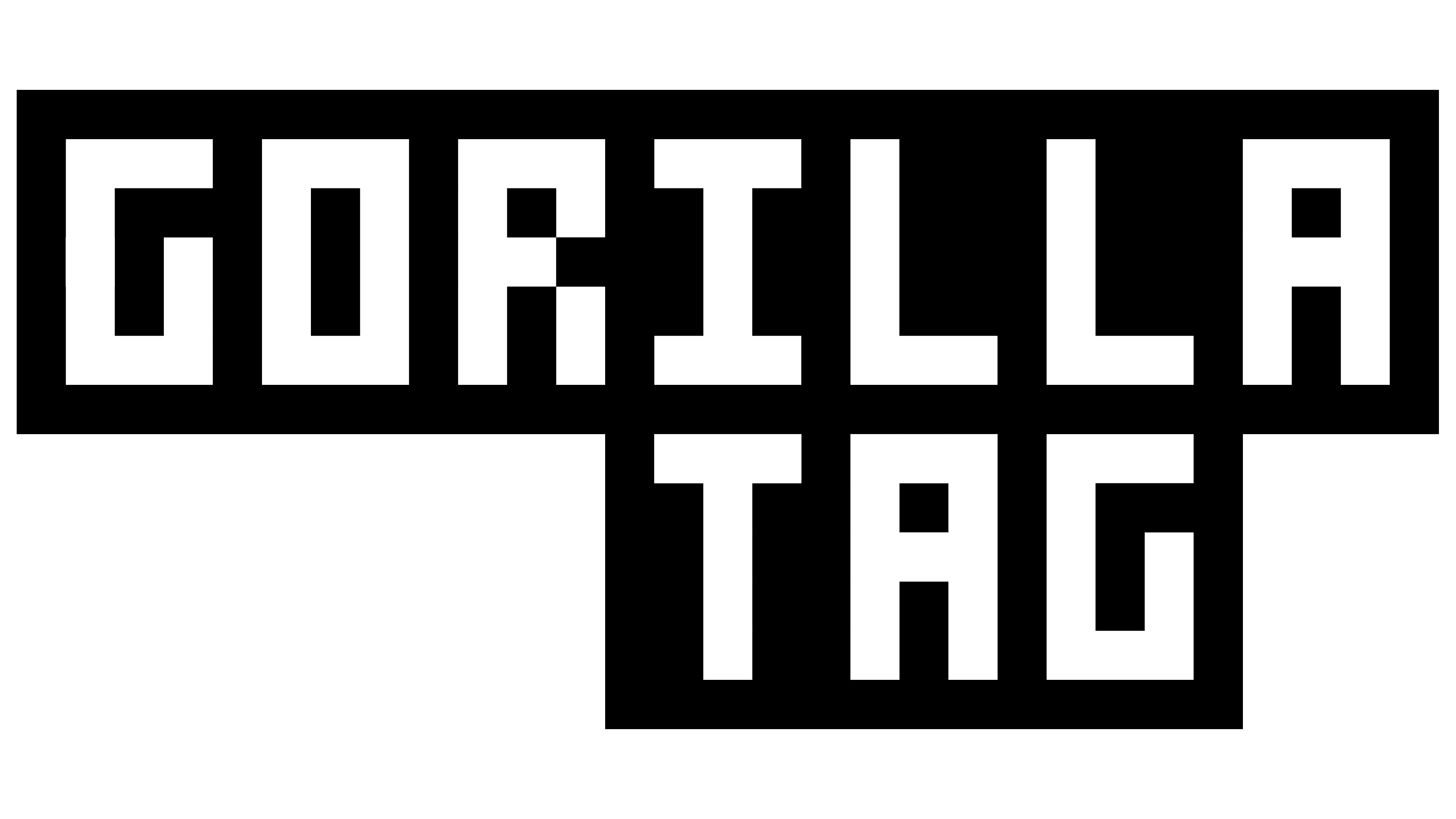
The Gorilla Tag logo reflects its nature: minimalism, pixel aesthetics, and strict structure. The design hints at a virtual world where only movement and speed matter. The game is based entirely on hand movement: no legs, no extra buttons.
The title is arranged in two lines. The word “GORILLA” is displayed in large letters on top, while “TAG” is slightly offset below. The letters are rectangular and precise, with sharp angles and contrasting lines. The style resembles retro video games from the 1980s, with simple, geometric graphics.
The color palette is deliberately minimal: only black and white. This adds to the visual rigidity and strictness, reinforcing the overall impression of the logo as something straightforward. The simplicity of the shapes and the angularity of the characters visually connect the emblem to Gorilla Tag’s unique mechanics, in which movement is achieved solely through hands and virtual space.
2022 – today
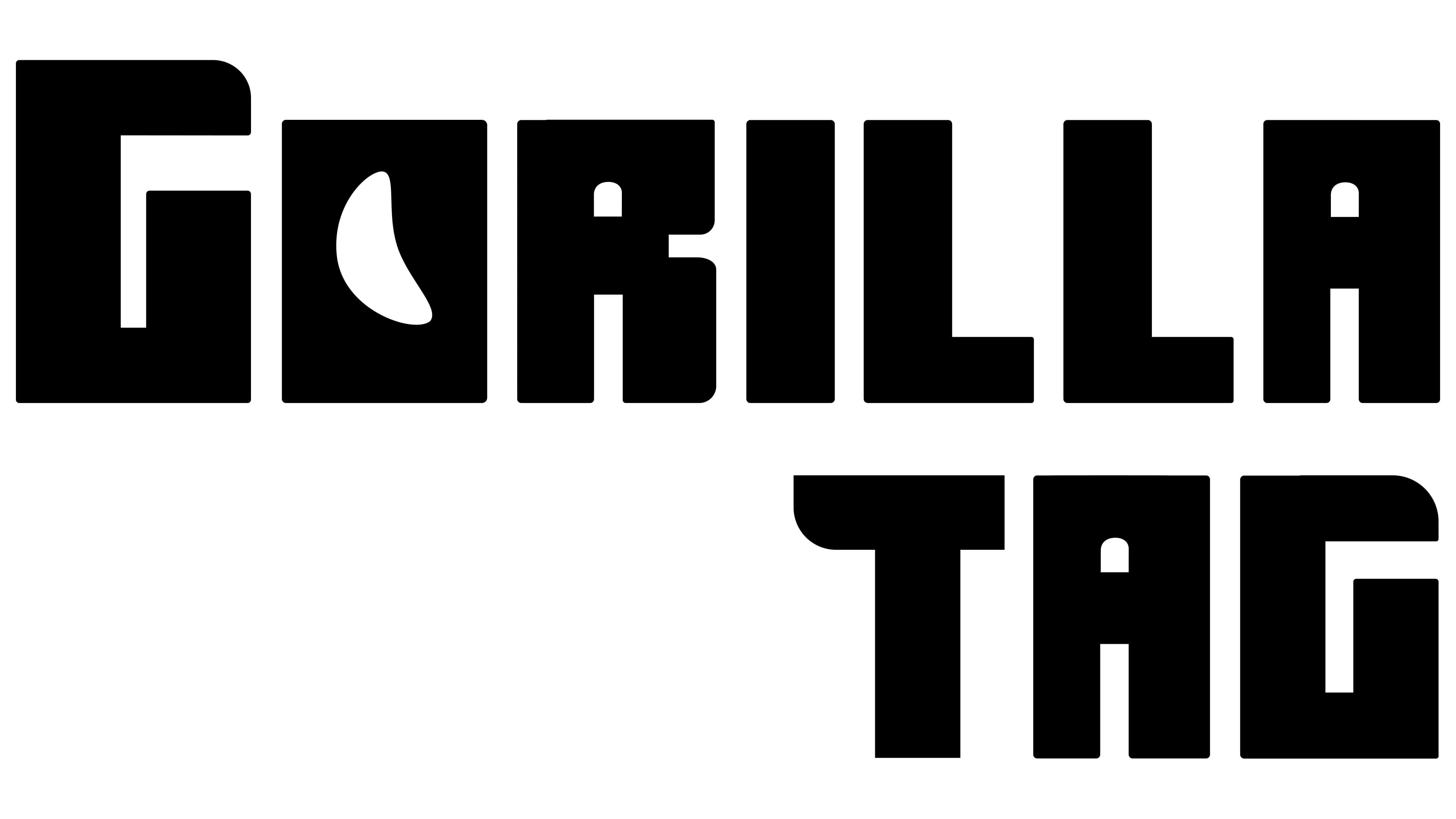
The new Gorilla Tag logo incorporates more game-like details and feels softer in perception. It appears less strict due to small yet interesting changes that align with the game’s core concept.
The structure remains recognizable: the words “GORILLA” and “TAG” are still stacked in two lines. However, the font has become smoother while maintaining its geometric and bold appearance. The letters are still blocky and wide, but rounded edges soften the look. The emblem feels less harsh while retaining its strength and visual impact.
The most intriguing detail is the letter “O,” which now features a stylized white oval inside, resembling a banana. This playful touch adds humor and a fun gaming atmosphere, perfectly fitting the image of virtual gorillas moving solely with their hands.
The colors remain limited to black and white, with no additional shades, preserving the game’s minimalist style and ease of recognition.