


 Ketel One Logo PNG
The Ketel One logo emphasizes the brand’s traditional character and quality. Its restrained, strict style demonstrates the company’s commitment to artisanal production and high-quality products.
Ketel One traces its history to 1691, when Joan Nolet, from a family of French Huguenot refugees, opened a distillery in Schiedam. The Dutch port offered grain, trade routes, and water suited to genever production. By the 18th century, about 400 distilleries operated there. In 1793, Jacobus Nolet built the Whale windmill to process grain for the city.
The family entered shipping in 1867 and began exporting spirits to the United States. A Maryland distillery followed in 1902, but Prohibition ended the venture in 1919. Carolus Nolet, representing the tenth generation, took control in 1979 and used family records of the earlier American business to plan another entry into that market. He aimed to compete with Absolut and Stolichnaya in the US market.
In 1983, Carolus visited bars in San Francisco and other US cities to learn what bartenders wanted from vodka. He returned to Schiedam and developed a spirit combining copper pot stills with column distillation, intended for cocktails. The name came from Distilleerketel No. 1, the distillery’s oldest copper still. Promotion relied on direct relationships with bartenders rather than mass advertising.
Carl Nolet Jr. founded Nolet Spirits USA in 1991. In 2008, Diageo paid about $900 million for a 50 percent stake, gaining a distribution partnership while the family kept production in Schiedam. Ketel One Botanical launched in 2018. The distillery later passed to the eleventh generation, Bob and Carl Nolet, sons of Carolus.
Meaning and History
What is Ketel One?
It is a premium Dutch vodka produced by a family-run business for centuries. The brand’s name comes from an antique copper distillation still that is still in use today. Its production combines modern technology with traditional copper-pot distillation, resulting in a smooth, velvety flavor with citrus notes. Compared to Eastern European vodkas, it is less harsh, offering an almost creamy aftertaste.
1983 – today

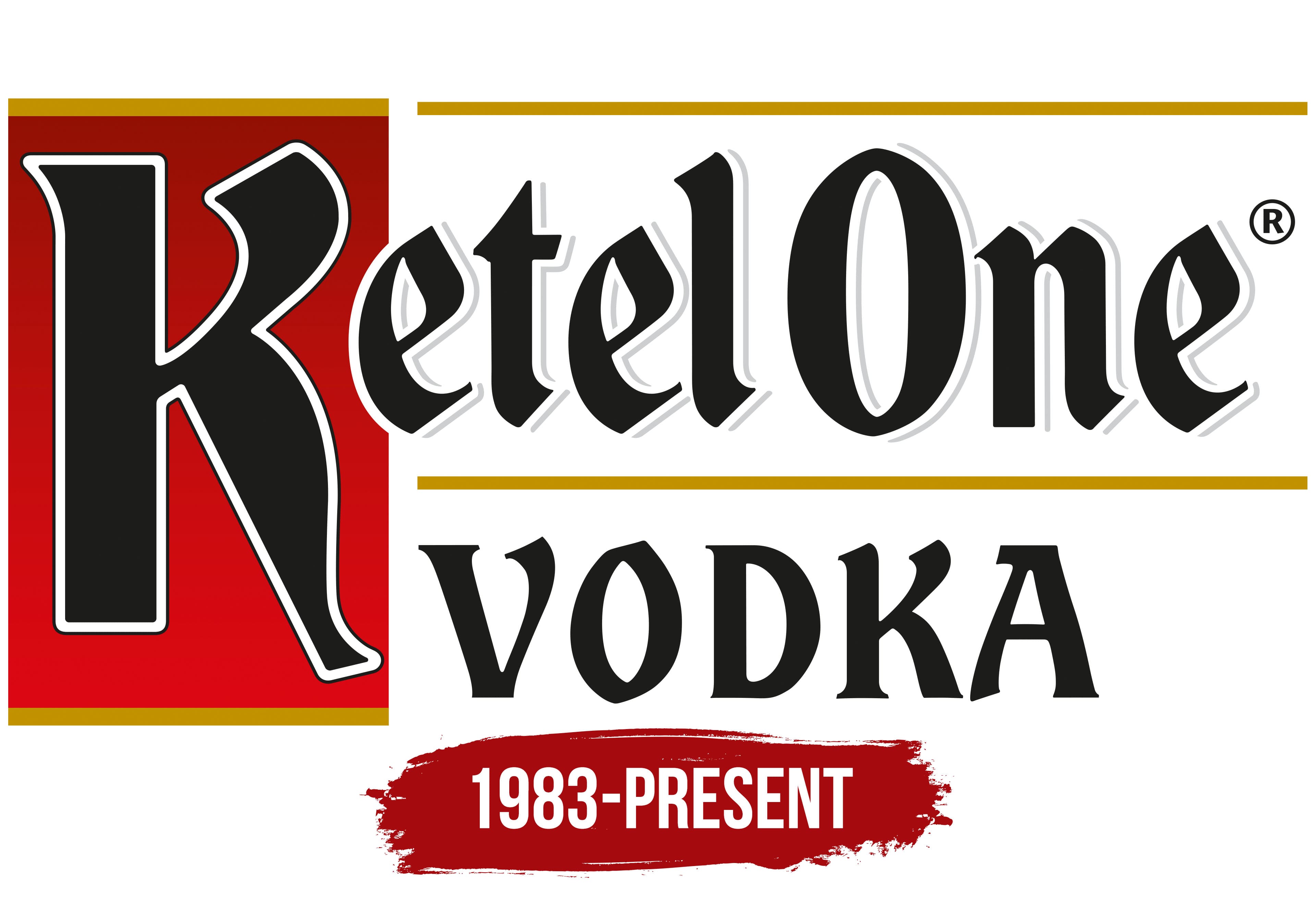
The Ketel One logo has never undergone visual transformations, remaining true to its original composition and color scheme. The brand’s name comes from the historic copper pot still “Distilleerketel No. 1,” located at the Nolet family distillery in Schiedam, Netherlands. This was once featured on the label design, emphasizing the brand’s commitment to centuries-old production traditions.
The core of the logo is a large black letter “K” with a thin white outline, set against a deep red rectangular background. The red vertical frame symbolizes the strength, stability, and recognition of the brand’s products. Extending from the “K” is the word “etel One,” rendered in a smaller size and styled to resemble a metallic surface through a glossy black-and-white gradient effect with pronounced highlight imitations.
The lower part of the design features the word “VODKA” in a bold, contrasting typeface with uppercase letters, conveying clarity and confidence. Horizontal gold lines above and below frame this section, visually highlighting it and underscoring the spirit’s premium quality.
The custom logotype combines elements of Gothic styling, sharp serifs, and contrasting strokes, lending it a sense of refinement. During the “Dear Ketel One Drinker” advertising campaign from 2003 to 2008, the studio Atomic Type created a custom font inspired by the main logotype and based on the classic Bradley typeface. However, this typeface was used exclusively in advertising and printed materials, not on bottles or product packaging.
The color palette, comprising red, black, white, and gold, was selected to evoke associations with exceptional quality, prestige, and tradition. Black and red reinforce the brand’s authority, while the white outline adds clarity and contrast, enhancing the overall visual appeal. The gold accents reinforce the image of a premium-class product.
The Ketel One identity demonstrates continuity, reliability, and the transmission of brand values across decades without radical change.
