 Castlevania Logo PNG
The Castlevania logo conveys the atmosphere of dark castles, eternal battles, and mysticism. From the very beginning, the series’ creators immersed players in a captivating Gothic fantasy world, where intricate storytelling and haunting environments became essential elements of the experience. Over time, the universe expanded, characters gained depth, and the game became an iconic part of pop culture.
In 1986, Konami released Akumajō Dracula for Japan’s Famicom Disk System, marking the beginning of the Castlevania franchise. Known simply as Castlevania overseas, the game’s atmospheric soundtrack, composed by Kinuyo Yamashita, contributed to its success upon its 1987 release on the NES in North America and Europe.
The sequel, Simon’s Quest (1988), introduced non-linear exploration and RPG mechanics, adding innovations such as a day-night cycle that influenced gameplay. The third game, Dracula’s Curse (1989-1990), featured branching story paths and multiple playable characters, solidifying its reputation as a classic among NES games.
In 1991, the series transitioned to the Super Nintendo with Super Castlevania IV, offering refined controls and improved graphics. Portable entries, such as The Adventure on Game Boy (1993-1994), expanded the reach of the Castlevania series.
A turning point occurred with Symphony of the Night (1997) on PlayStation, directed by Koji Igarashi. Its fusion of RPG elements with exploration-based gameplay coined the term “Metroidvania,” influencing numerous later titles.
From 2001 to 2008, Konami released notable Game Boy Advance and Nintendo DS titles, including Aria of Sorrow and Order of Ecclesia, which each evolved the series’ gameplay mechanics. A significant shift occurred with Lords of Shadow (2010), a 3D reboot developed by MercurySteam under the guidance of Hideo Kojima, followed by sequels in 2013 and 2014.
In 2017, Netflix premiered an animated adaptation inspired by Dracula’s Curse, sparking renewed interest in the Castlevania franchise. Konami subsequently launched an Anniversary Collection in 2019, compiling classic games, and an Advance Collection in 2021, preserving key handheld titles.
Meaning and History
What is Castlevania?
This is a series of video games and related animated projects, comics, and merchandise. The story follows a clan of vampire hunters as they battle Dracula and other creatures of darkness. The games are known for their dark, gothic style, challenging gameplay that combines platforming and role-playing elements, and a soundtrack that blends classical and rock influences. The narrative reinterprets vampire legends and mythological creatures, spanning multiple generations of characters and their battles against evil forces.
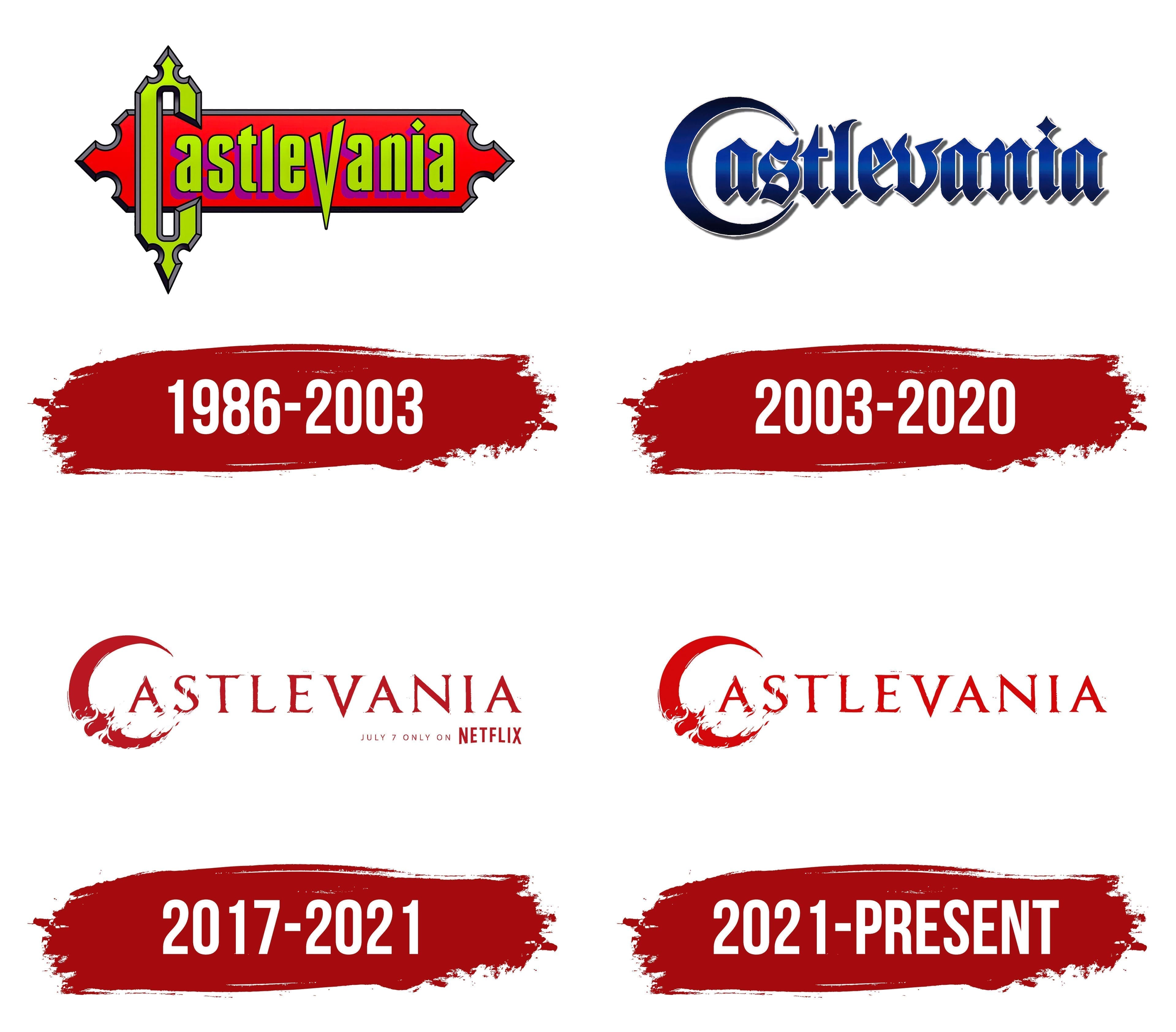
1986 – 2003
When Akumajou Dracula was released on the Famicom Disk System, the audience also saw the logo that became the symbol of the Castlevania franchise. Konami’s in-house team of artists created it, and the style was connected with the direction set in the 1980s by art director Tom duBois, who worked on covers and promotional materials for the Western market. The mark shaped the visual aesthetic that remained in the series for almost twenty years.
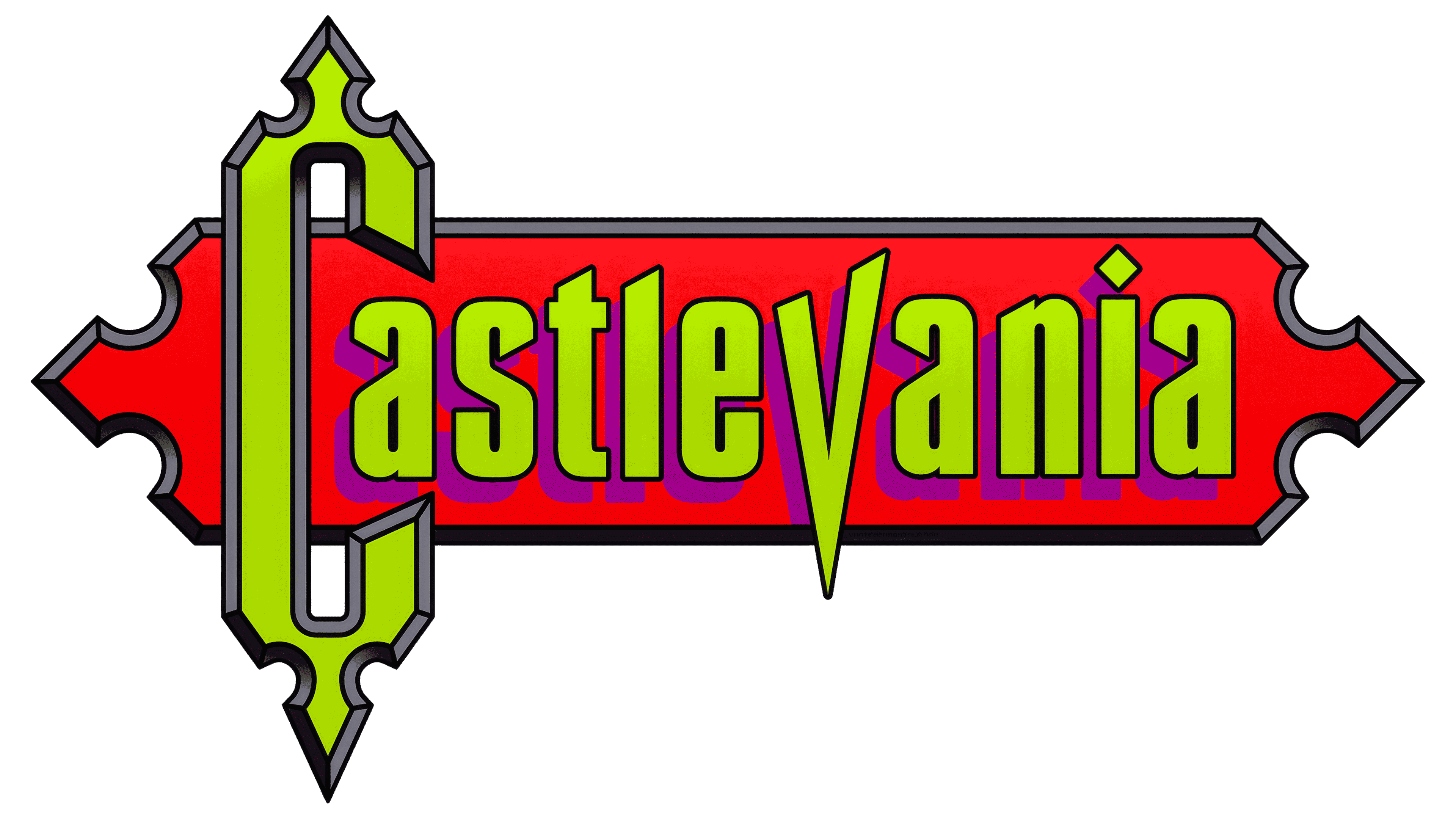
The logo’s form resembles elements of medieval architecture and heraldic shields. The basis was an elongated rectangle of deep red with pointed protrusions on the sides, visually associated with towers and fortified castle walls. Inside was the game’s title, written in a custom sans-serif font. Structurally, the letters were crafted in a Gothic style, reinforcing the dark fantasy atmosphere that pervades the series.
The emphasis was on the letters “C” and “V.” The first letter was stylized as a spire or stained-glass element extending beyond the rectangular frame, creating asymmetry and dynamism. The second letter, elongated downward and pointed, added a mystical tone.
The color scheme was based on contrast. The red background referred to themes of blood and danger. The letters were painted in acid green and complemented with a purple shadow, creating an illusion of volume. Dark gray and black outline lines reinforced the sense of depth and emphasized the contrast. The palette formed an anxious atmosphere that resonated with the gothic content of the games in the series.
This Castlevania logo was used in the first part as well as in Castlevania II: Simon’s Quest, Super Castlevania IV, Symphony of the Night, and other projects. It became an integral part of the franchise’s visual identity and remained a constant presence until the late 1990s. Today, the mark is perceived as a symbol of nostalgia. It is included in collector’s editions and re-releases, confirming its significance in the brand’s history and the enduring quality of the developed aesthetic.
2003 – 2020

The appearance of Castlevania: Lament of Innocence on the PlayStation 2 marked a significant update to the series’ visual style, prompting a redesign of the logo. Konami’s in-house team abandoned the neon palette of earlier versions and proposed a design with a dark, metallic aesthetic. The idea was explained as a means of strengthening the Gothic horror atmosphere, as reflected in the plots of later games.
The main change was the construction of the mark. The emblem lost the shield and complex frame structure, becoming an independent text composition. The visual accent shifted to the letter “C,” which took the shape of a crescent. It became a symbol of nocturnal mysticism, referring to the image of the crescent moon.
If the earlier version was built on grotesque fantasy, the new one was rooted in blackletter tradition. The font was inspired by Fette Fraktur and Goudy Text, but was adapted to suit the brand’s specific needs. Individual details enhanced its expressiveness. A diamond-shaped dot above the letter “i,” a sharpened top on the “t,” and a break in the upper part of the letter “l.” The mark was tied to the aesthetic of medieval manuscripts and handwritten inscriptions.
The palette changed tone. Metallic dark blue replaced the earlier green and red. The color, interacting with the gradient texture, created the impression of volume and heavy metal, correlating with the visual environment of the games, where weapons and architecture were presented in a similar style. A white outline reinforced the contrast and ensured the mark’s visibility on any surface.
The overall gothic direction of that period was largely connected with Ayami Kojima. Although she did not work on the logo, her artistic influence was felt in the brand’s atmosphere, and the visual language she set in her illustrations became part of Castlevania’s style.
The new version was used in games of the sixth and seventh console generations, including Portrait of Ruin, Order of Ecclesia, and Lords of Shadow. It became a symbol of the series’ transition to a new stage, where the focus shifted to a more mature audience and to a deeper aesthetic development of the visual concept.
2017 – 2021 (TV series)

Work on the Castlevania animated series for Netflix was accompanied by the creation of a new mark that differed from previous game versions. The project’s artistic style was handled by Powerhouse Animation Studios, Frederator Studios, and Shankar Animation under the supervision of Sam Deats. Their task was to adapt the franchise’s visual language for an adult audience, strengthen the dark-horror atmosphere, and integrate the mark into the modern media environment of a streaming platform.
The key shift was the turn to minimalism. The team abandoned the heavy metallic look of previous years and relied on a thin calligraphic form. The main text was written in a serif font that conveyed the structure of old engravings and the texture of printed paper. The shape of the letters created an impression of damaged contours, reminiscent of scratches or blade marks. They emphasized the dark fantasy theme and conveyed a sense of fragility linked to danger.
A special role was given to the first letter. The red “C” was transformed into a crescent, its edge stretched into ragged lines resembling fiery flares. The silhouette evoked associations with both the moon and bloody claw marks. The letter “C” served as an emotional accent, tying together the series’ symbolism of mysticism, violence, and chaos.
The font underwent manual adaptation. The artists added textural irregularities to achieve a unique character and references to old typography. As a result, the mark gave each letter an atmospheric effect.
The palette was reduced to a minimum. A slightly muted red was used, serving as a metaphor for blood, cruelty, and the drama of the story.
At the bottom of the composition, an information line was added: “July 7 only on Netflix.” It was set in a thin, neutral sans-serif font with no decorative details to avoid drawing attention away from the main text. The Netflix logo appeared in its standard form, unchanged, confirming the partnership and indicating the release’s exclusivity.
This version of the Castlevania logo for Netflix exemplifies how minimalism, craftsmanship, and symbolism can be effectively combined. It emphasized the series’ genre, reinforced the dramatic atmosphere, and secured the project’s visual positioning in the media space.
2021 – today (video games)
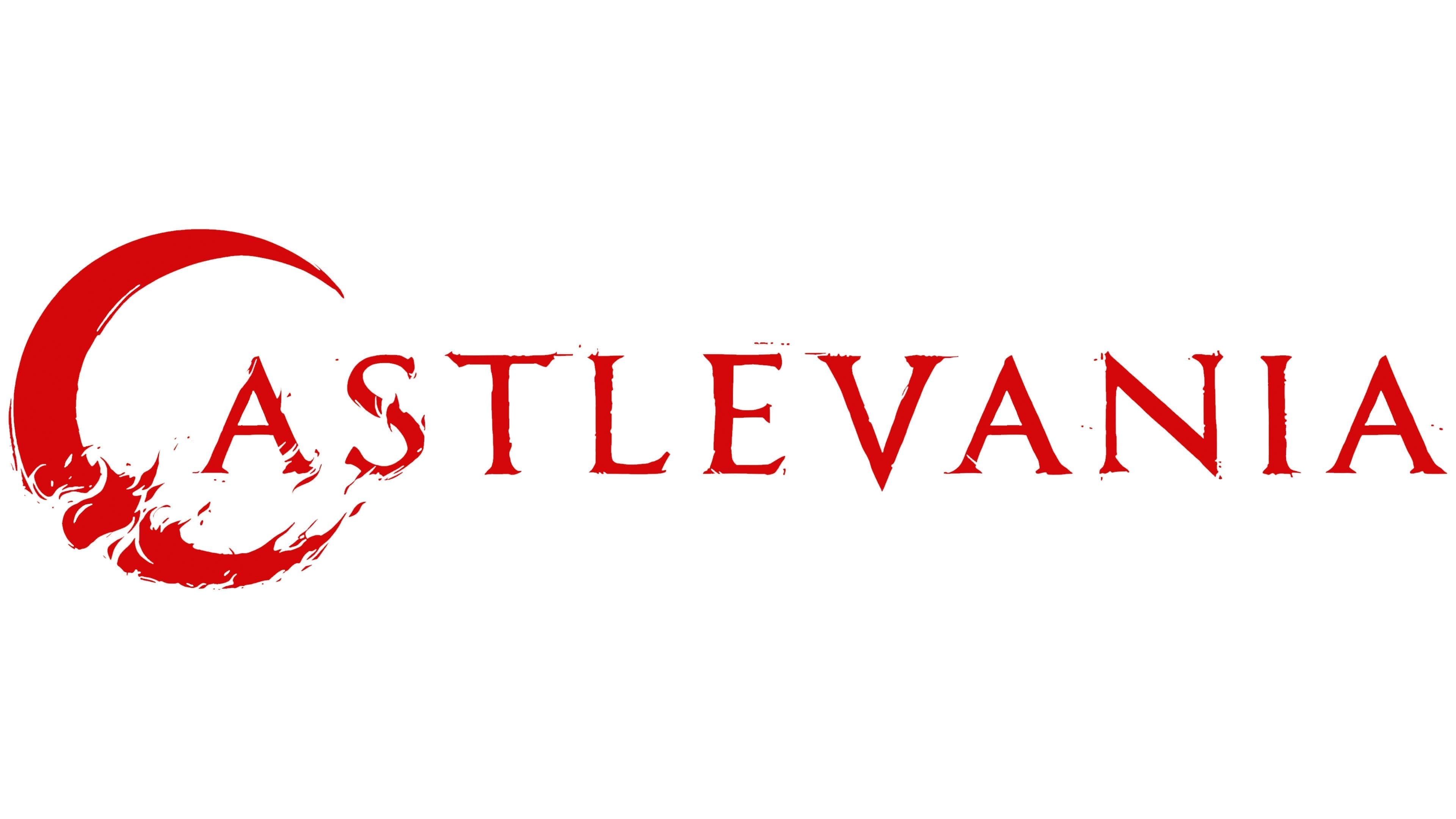
With the release of Castlevania: Nocturne, the series’ logo was adapted to maintain continuity with the original Netflix style while reflecting the new storyline. Specialists at Powerhouse Animation again created the updated visual concept under the direction of art director Sam Deats.
The main idea of the new emblem was preserved. The composition remained horizontal, with an emphasis on the large letter “C” designed as a crescent. Its visual trail took on an elongated, calm brushstroke structure.
Using the previous serif font as a base, the designers reduced the degree of letter “wear”. The edges of the glyphs became less ragged, and the surface texture was smoother. The font acquired a shade of classical fantasy elegance, reminiscent of Cinzel and Trajan, but carefully tailored to the brand’s unique style.
The color palette remained within the recognizable red spectrum, but the tone became lighter and brighter, losing the excessive darkness of the past. Red remained tied to central plot elements such as blood, revolution, and chaos, which permeate Nocturne’s narrative.
The updated Castlevania logo exemplifies a balanced approach to redesign, where legacy and new creative goals coexist in a unified and harmonious visual field.