


 JBS Logo PNG
Meat products undergo processing, packaging, and delivery, forming a staple of daily diets in many countries. Supply chains encompass farms, processing plants, and logistics, ensuring a constant supply of goods to stores and restaurants. The JBS logo is associated with a company that processes meat and supplies products to the global market.
JBS was founded in 1953 by José Batista Sobrinho in Teresópolis, Rio de Janeiro. Initially, the business focused on cattle purchasing and meat sales under the Casa de Carnes Mineira brand. Since 1957, the company has supplied meat products to Brasília’s construction industry. In 1970, the company acquired its first beef processing plant in Formosa. During this time, the Friboi brand appeared.
In the 1980s, the company began expanding throughout Brazil. In 1996, the company opened a plant in Andradina, marking the first step toward entering the American market. In 2004, the company moved its headquarters to São Paulo. By 2006, the company operated twenty-six plants in Brazil and Argentina.
In 2007, JBS launched its initial public offering on the São Paulo Stock Exchange. In the same year, it acquired Swift and Company enterprises in the United States and Australia. By 2009, JBS became the world’s largest beef producer after purchasing the Bertin Group. In 2010, the company acquired Pilgrim’s Pride, a major poultry producer.
Since 2013, JBS has strengthened its presence in the international market. The company acquired Seara Brasil, XL Foods in Canada, and Tyson de México. In 2015, it purchased Cargill’s pork business. In 2016, JBS entered the automation market by acquiring Scott Technology.
In 2017, a corruption scandal led to a $3.2 billion fine. Despite this, the company continued to develop, acquiring GNP Company, Moy Park, and Tulip.
Since 2021, JBS has entered the alternative protein market. Its portfolio includes Vivera and BioTech Foods. During the same period, the company expanded into aquaculture by acquiring Huon Aquaculture. The company listed its shares on the New York Stock Exchange after approval from the U.S. Securities and Exchange Commission.
Meaning and History
What is JBS?
A Brazilian international corporation that is the world’s largest meat producer, operating more than 500 facilities in 20 countries. Annual revenue exceeds $ 70 billion, and the company employs about 260,000 people. It grew from a family butcher shop in Anápolis, expanding through the acquisitions of Swift & Company, Pilgrim’s Pride, Primo, Moy Park, and Agrosuper. Its structure includes beef, pork, poultry, lamb, and fish production, as well as leather goods and processed products. The largest segments are the North American market and the Pilgrim’s Pride brand.
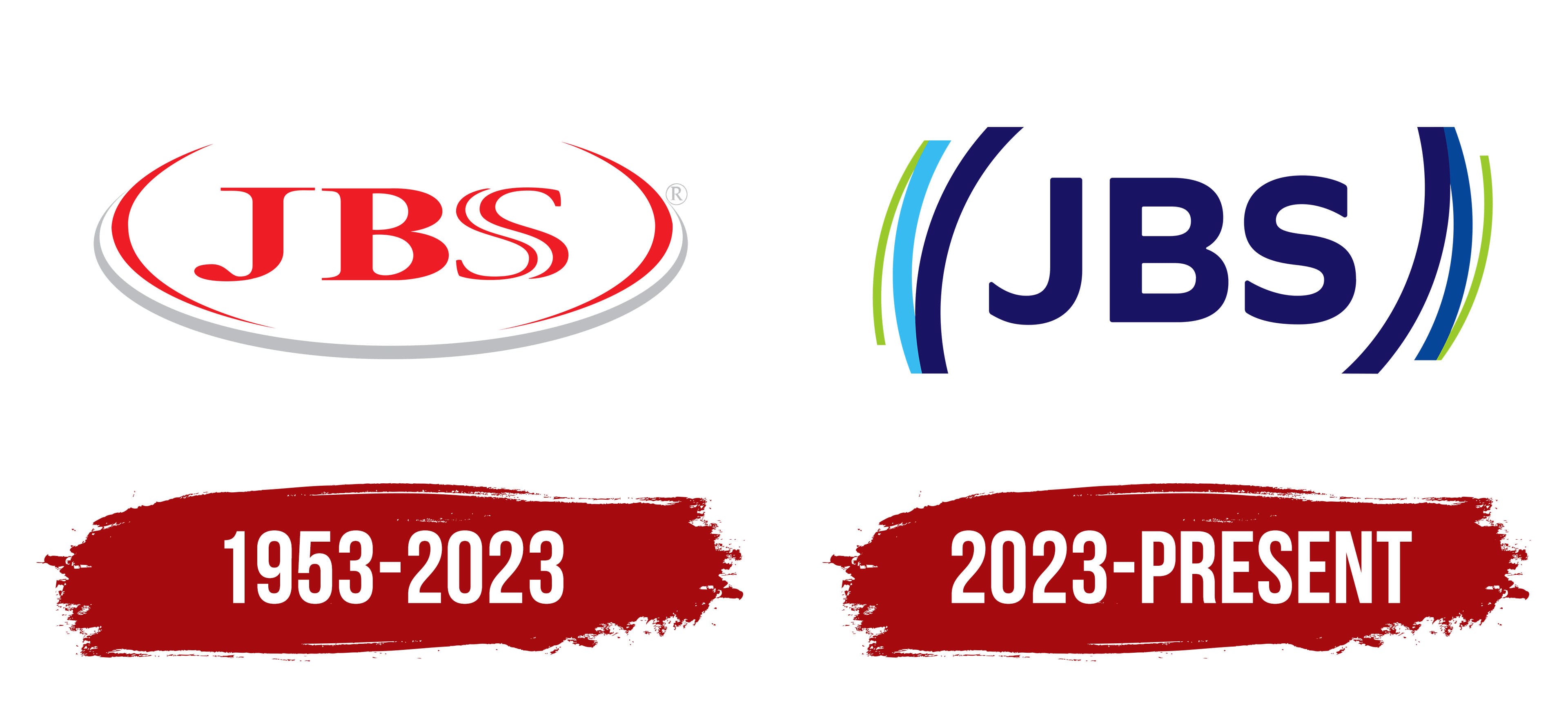
1953 – 2023
The name JBS was formed from the initials of José Batista Sobrinho, the founder of the international food group. It replaced Friboi as the parent company’s name. The company kept the previous name for its consumer beef brand. The separation coincided with the business’s growth and preparations to expand further into international markets.
Batista Sobrinho, known as Zé Mineiro, opened Casa de Carnes Mineira in Anápolis, Goiás, in 1953. In 1957, meat deliveries to workers building Brasília helped the business grow. In 1970, he acquired his first processing plant in Formosa and created the Friboi brand. Its name combined the Portuguese words frigorífico, meaning “refrigerated meat processing plant,” and boi, meaning “bull.”
The company used the Friboi name for decades. Friboi Ltda. was established on December 10, 1998, and began operations in 1999. On March 2, 2006, the company adopted the legal name JBS S.A. In 2007, the group completed its initial public offering in Brazil. It became the first publicly traded company in the Brazilian meat processing industry. A red JBS logo was already being used in materials associated with the public offering.
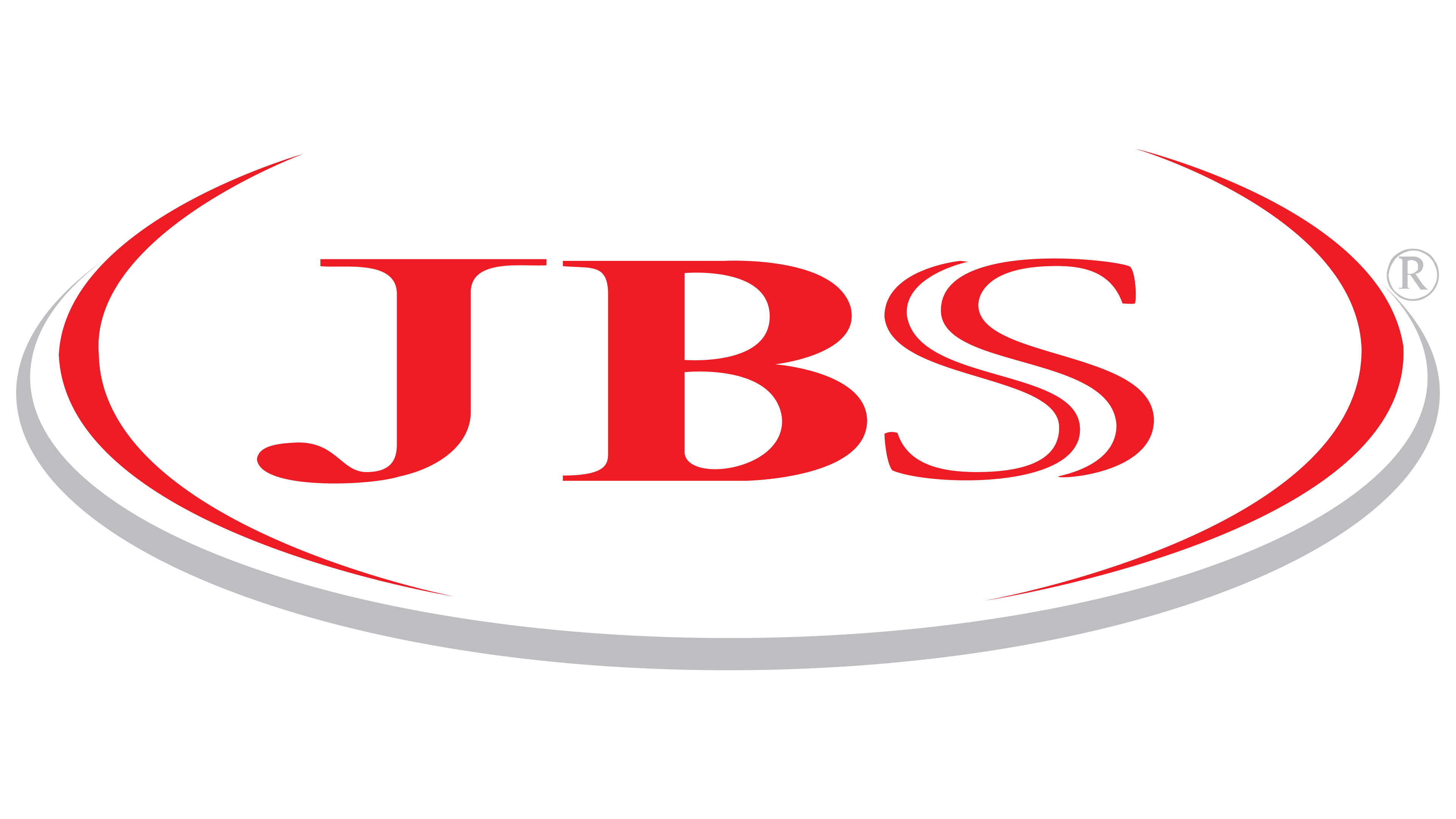
The logo featured large serif initials with alternating thick and thin strokes. The letter “S” had a double outline formed by two lines. Short red arcs appeared on both sides of the wordmark, while a long gray arc ran underneath. Together, they formed an elongated oval with an open top. The gray arc resembled a shadow and gave the frame a three-dimensional appearance. The red letters occupied most of the space inside it.
The logo accompanied the group’s international acquisitions. In 2007, JBS acquired Swift & Company, including its operations in the United States and Australia. Other meat and food companies later joined the group. As its geographic reach and product range expanded, the group retained separate product brands. The group used Friboi, Swift, Seara, Pilgrim’s, and other names for products, while JBS represented the parent company.
2023 – today
JBS unveiled a new logo on October 16, 2023, to mark the company’s 70th anniversary. This first major identity modernization in years reflected the changes the business had undergone over the previous decade. CEO Gilberto Tomazoni associated the update with the scale of those changes and JBS’s position as an international food group producing various categories of protein products.
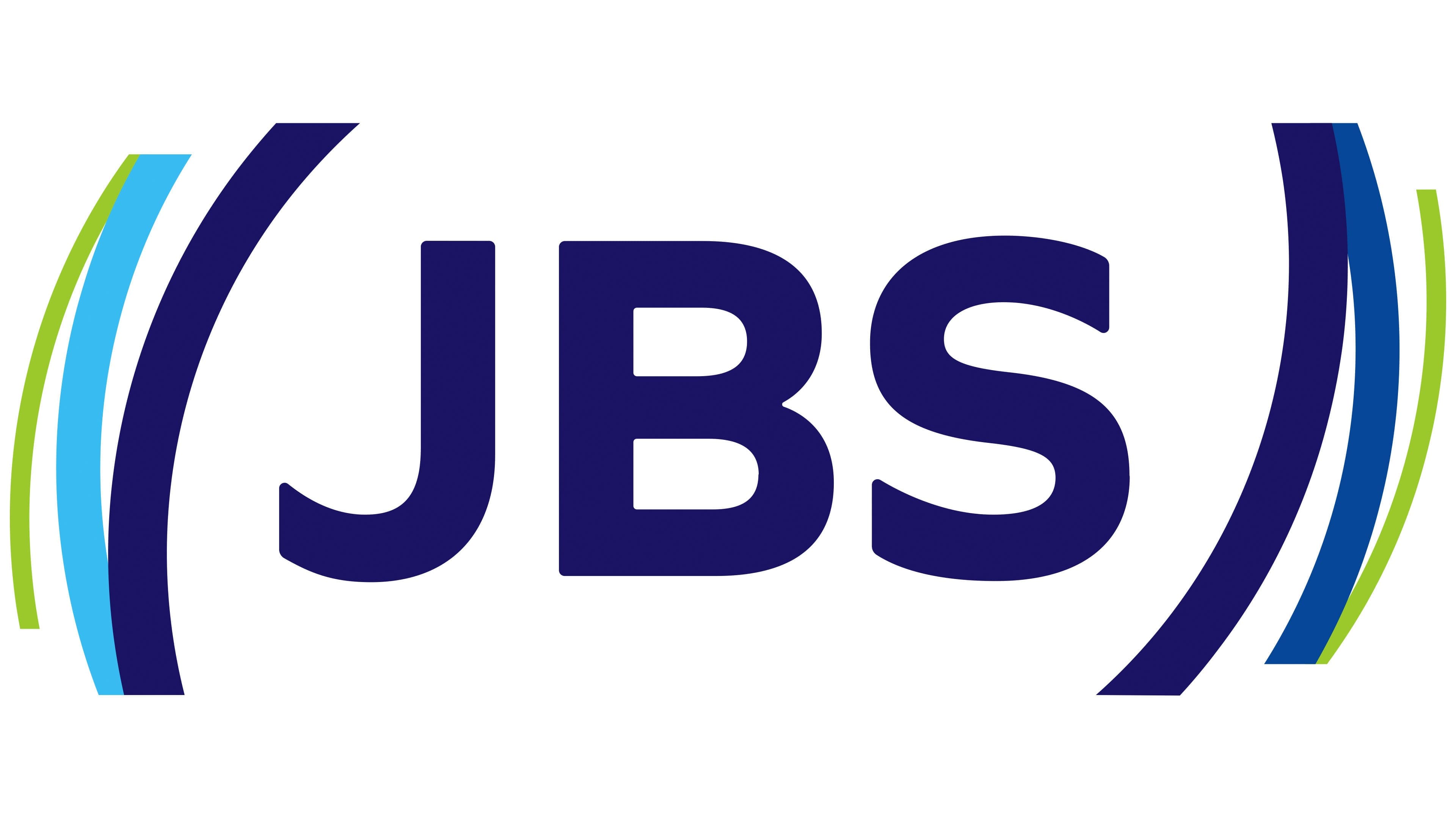
The designers transformed the previous oval frame into two groups of arcs positioned on either side of the name. Their shapes resemble brackets, and they represent hands, protection, and care for customers and consumers. Dark blue uppercase letters spelling “JBS” stand in the center. A heavy sans-serif typeface replaced the former serif letters with rounded forms and uniform stroke widths.
The red oval and gray shadow were removed. Three slightly angled arcs with touching edges were placed on both the left and right sides of the wordmark. Open space remained above and below the name. The curves of the side lines maintained a connection with the ellipse used in the previous logo.
The arcs closest to the letters use the same dark blue color as the wordmark. JBS associates the color with the strength of its relationships with partners, employees, and other stakeholders. The next line is light blue on the left and blue on the right. The different shades represent the variety of protein products and the business’s geographic reach. The outer light green arcs represent the group’s commitments to environmental protection, social responsibility, governance, and the economy. The alternating colored lines provide a foundation for animation and for use across digital media.
Development took three years. JBS’s internal teams and the FutureBrand agency worked on the identity. Everton Mocarzel, Arnaldo Bastos, and Nelio Bernardelli led the agency’s creative direction. Bernardelli helped create the design with Felipe Souza. Francisco Fernandes led the animation. Implementation began at the headquarters in São Paulo, after which the new identity was gradually introduced across the group’s divisions in different countries.