


 Legendary Entertainment Logo PNG
The Legendary Entertainment Logo accompanies movies and TV series, promising unforgettable stories and vivid emotions. The company combines scale and depth, giving viewers universes where epic blockbusters coexist with exciting series and inviting everyone to embark on their own adventure.
Thomas Tull, a New York investor, developed Legendary Entertainment and applied portfolio financing to film production. Legendary Pictures, Inc. was registered in California in 2000, and Tull later raised about $500 million from ABRY Partners, AIG Direct Investments, and Bank of America Capital Investors. The company began production as a private-capital-backed studio.
In 2005, Legendary signed a seven-year agreement with Warner Bros. to co-finance and produce up to 40 films. The partnership began with Batman Begins and continued through The Dark Knight trilogy, 300, Watchmen, Inception, and The Hangover. In 2010, Tull and investors, including Fidelity Investments and Fortress Investment Group, bought out the original backers and took control.
After the agreement expired in 2013, Legendary moved to Universal Pictures under a five-year deal starting in 2014. Godzilla earned $529 million and launched the MonsterVerse, while Jurassic World reached $1.67 billion in 2015. Tull secured the Godzilla rights from Toho and helped negotiate the use of King Kong.
Dalian Wanda Group acquired Legendary for $3.5 billion in January 2016. Tull left in 2017, and Joshua Grode became chief executive later that year. After the Universal partnership ended in 2019, Legendary resumed work on Kong: Skull Island and Godzilla vs. Kong. Apollo Global Management bought a minority stake in 2022 and acquired Wanda’s holding in 2024.
Meaning and History
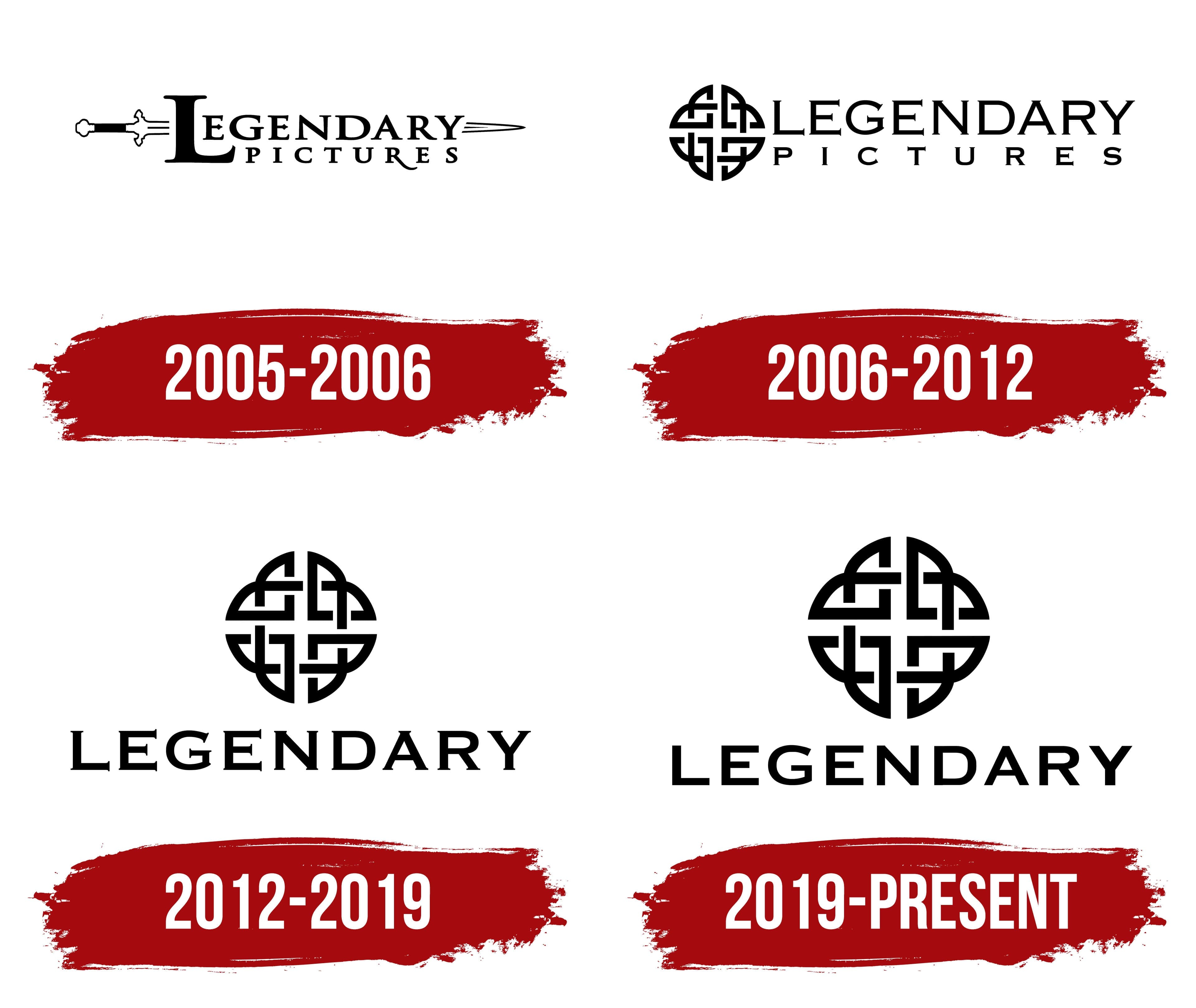
What is Legendary Entertainment?
It is a production company specializing in creating large-scale films, including science fiction, fantasy, and adventure stories. Its projects are known for spectacular special effects, elaborate fictional worlds, and the participation of famous actors and directors. In addition to cinema, the company produces digital content, comics, and TV series, expanding its stories beyond the big screen.
2005 – 2006
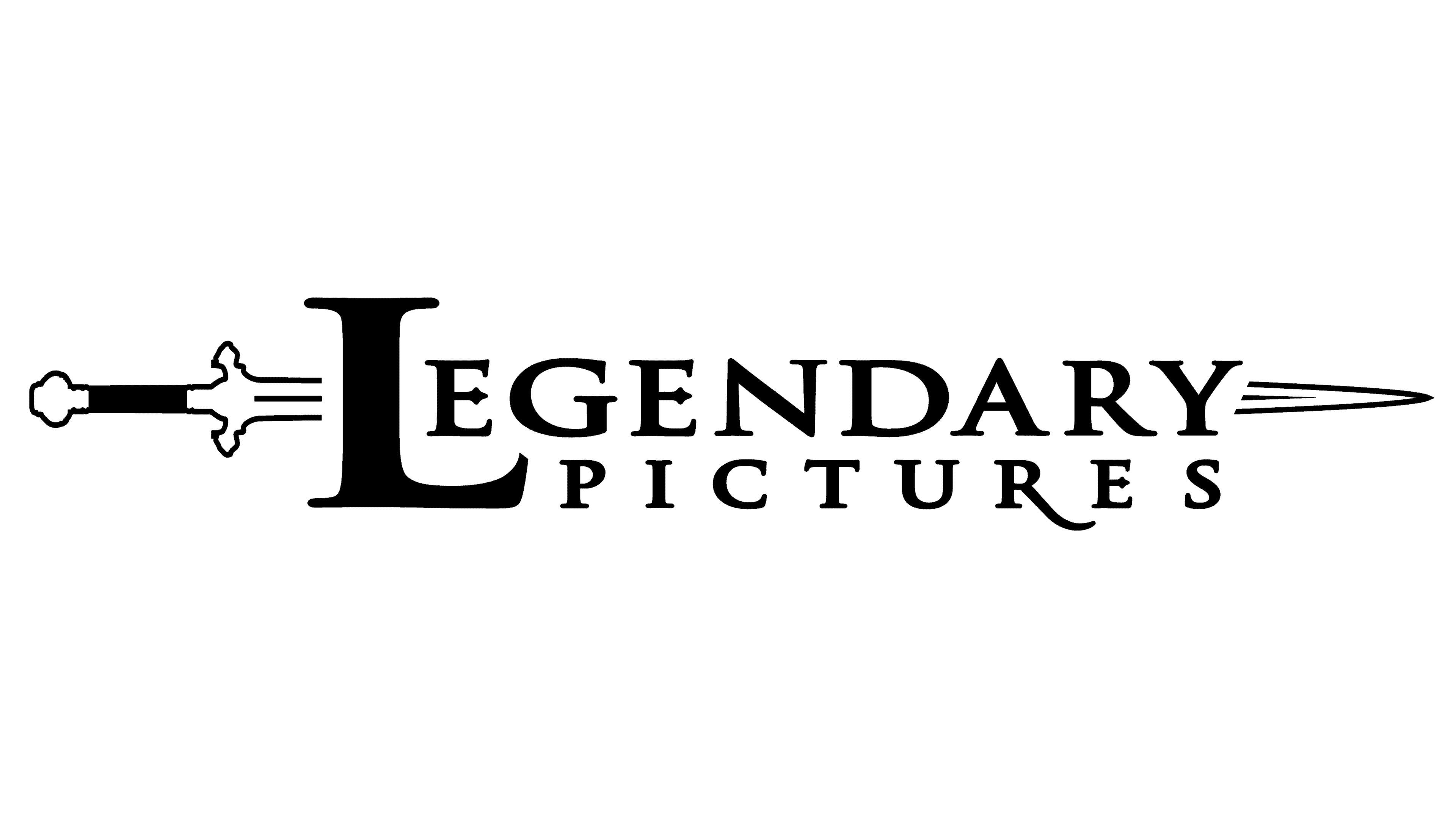
Legendary Pictures emerged as a studio producing films and TV series recognized for their powerful, sometimes even epic, atmosphere. The initial impression of its logo aligns perfectly with its name: it evokes King Arthur’s sword or a knight from ancient legends.
The letter “L” is the most prominent, resembling a stone column serving as the foundation of the entire composition. A sword is embedded within this letter: the hilt on the left, the blade pointing right. This establishes a direct connection between the imagery and the brand name legends, heroic stories, and adventures. The sword has a simple shape, without embellishments or intricate details, corresponding to the studio’s focus on producing large-scale, serious films without unnecessary ornamentation.
The serif font of the word “LEGENDARY” is strict and classic, reminiscent of old books or the opening credits of the studio’s films. Below it, the word “PICTURES” appears slightly smaller but is styled similarly. This combination merges cinematic tradition with a modern approach to content creation for film and television.
The sword’s monumental nature and the classic font style reflect the company’s essence. This studio has produced large-scale films, historical and fantasy blockbusters, disaster films, and epic dramas, making the sword a fitting symbol in its emblem.
2006 – 2012
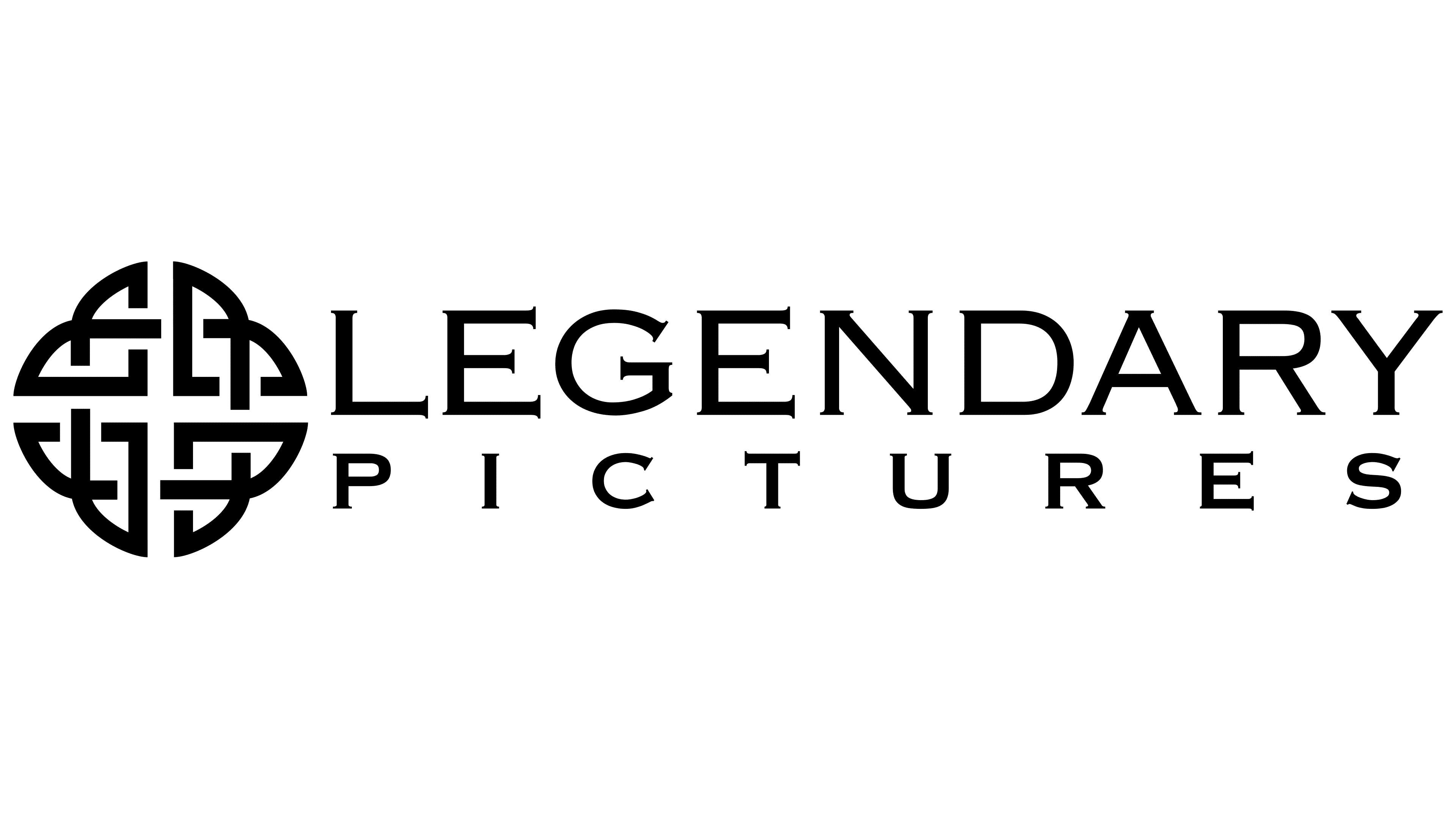
The company abandoned the sword in favor of something less specific yet rich in meaning. A new symbol appeared, a Celtic knot composed of interwoven lines. Many might wonder: Why this symbol? Why such a drastic change? The answer likely lies in the studio’s focus on films and series inspired by mythology, history, and epic narratives, themes closely associated with Celtic designs.
The intertwined lines of the symbol create a cohesive and balanced look, resembling an endless flow of stories the company tells through cinema. The new pattern replaced the sword, suggesting that the studio had broadened its focus on heroic, battle-centric themes and large-scale fantasy and historical films.
The font remained strict and serifed, maintaining a traditional and solid appearance. The name “LEGENDARY” is again larger, while “PICTURES” appears smaller, with wide spacing between the letters. The composition became simpler.
The logo remained black and white. In this way, the company replaced the sword with a more symbolic and universal knot, representing the infinite nature of stories united by the common themes of legends and myths, reinforcing the studio’s grand cinematic vision.
2012 – 2019
Legendary took a minimalist approach in the new logo, simply removing the word “PICTURES.” The result was a single word, LEGENDARY, written in large, all-caps letters. This made the emblem easier to perceive, preventing the eye from jumping between different text elements.
The Celtic knot remained an interwoven symbol with no beginning or end, composed of precise lines and open spaces. The studio continued to produce epic fantasy, adventure, and historical projects.
The company shifted its focus: it had evolved into a full-fledged media company producing films, TV series, and digital content, making “PICTURES” unnecessary. A single word and a recognizable symbol were sufficient to convey the company’s core identity without further explanation.
2019 – today
Legendary Entertainment updated its logo, slightly adjusting the proportions and font. Everything now appears simpler and more modern. The phrase comes to mind: the fewer the words, the greater the impact.
The circular Celtic symbol was slightly enlarged, giving it a stronger and more massive presence. Inside it, as before, are four interwoven segments resembling ancient ornaments.
The company name is now in a completely different font, simple, modern, and sans serif. The letters are clean, evenly spaced, and have a light, balanced appearance. The typography has shed its classical rigidity, conveying openness to new audiences and to a range of content, including films, TV series, and digital projects. The text has also been slightly reduced in size, allowing more prominence to the symbol.
Legendary Entertainer Logo