


 Life Cereal Logo PNG
The Life Cereal logo symbolizes life in its vibrant expression. Each product reflects the company’s core philosophy: high-quality products are the key to health. Therefore, the logo uses natural and harmonious colors. The glossy texture of the letters indicates perfection, reflecting the full value of healthy breakfasts.
Life Cereal was introduced in 1961, when Quaker Oats expanded its breakfast cereal range with a product positioned as a healthier alternative to the sugary cereals that dominated the market. It used whole grains and contained less sugar than many competitors. The name “Life” was tied to nutrition and family breakfast, not just children’s advertising.
The cereal struggled during its early years, with low sales and limited recognition in a crowded category. Its situation changed in 1972 with the “Mikey likes it” commercial. The ad showed two older brothers giving the cereal to Mikey, a picky child known for rejecting food, and then watching him eat it. The spot ran for more than a decade and became one of the best-known cereal ads on American television.
After the campaign, Life Cereal gained a stronger place in the U.S. breakfast market. In 1978, Cinnamon Life was launched, adding a cinnamon flavor to the original formula. During the 1980s and 1990s, the brand kept its healthier positioning, promoted whole grains, vitamins, and minerals, and tested new packaging and flavor ideas.
In 2002, Vanilla Yogurt Crunch added yogurt pieces to the cereal line. During the 2010s, the brand focused on natural ingredients and avoided artificial flavors and colors. In 2020, a vintage-style package marked the 60th anniversary. In 2021, the recipe was updated with more nutritious grains and less added sugar. Life Strawberry followed in 2022, adding a fruit flavor aimed at younger buyers.
Meaning and History
Since 1969, Quaker Oats has offered children and adults a delicious, high-quality dry breakfast made from whole grains. These treats are found in every kitchen and pantry, making the original classic sweet flavor a cherished childhood treat.
The manufacturer keeps pace with the times by updating its product line. Cinnamon, vanilla, and other refined additions expand the range, offering customers choices for health and culinary enjoyment. The production does not stop at popular flavors; customers always look forward to exciting new offerings.
What is Life Cereal?
It is a brand of the Quaker Oats Company, a subsidiary of PepsiCo. It specializes in breakfast cereals, particularly its lightly sweetened whole-grain oatmeal squares. The brand emphasizes offering nutritious breakfast options. It offers a variety of flavors, including Original, Cinnamon, and Vanilla, catering to different taste preferences. The company’s products are widely recognized for their balance of flavor, making them popular among both children and adults.
1961 – 1970
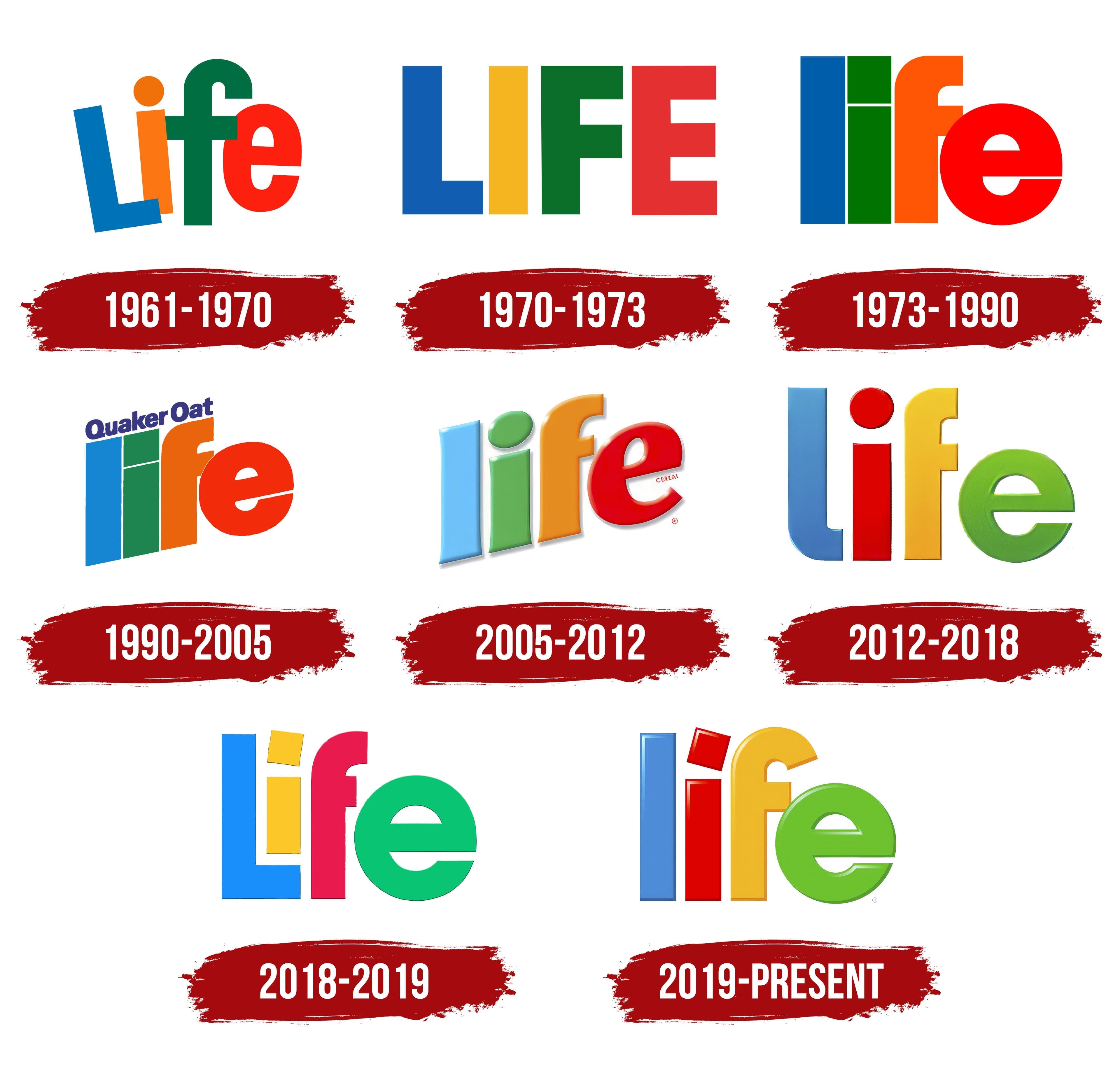
The new product’s presentation, specifically its first market appearance, was accompanied by the introduction of a logo, a symbol that was impossible to overlook. A variety of bright colors was used to individualize the lettering. This separation of textual elements within a single inscription was almost unheard of among competitors. The even, strict letters in different shades conveyed that life is a celebration and that high-quality food every morning ensures good health.
Blue, orange, green, and red: this color scheme was used by the producer of the tastiest dry breakfasts. The bright and vibrant colors embodied the quality of the products.
1970 – 1973
The company’s initial presentation logo focused on playfulness and dynamic lettering. In the updated version, restraint and precision prevail. Horizontal letter placement became the main style, and the color alternation changed, starting with the second vowel, shifting the visual priority.
The letters became wider, and the spacing between them decreased. The white background remained, creating a classic look. How did these transformations reflect on the product? Each year, it became tastier, as children excitedly told their parents. Adults, in turn, happily bought high-nutrition breakfasts.
1973 – 1990
In 1973, the brand underwent a transformation that affected all logo elements. The tone became more concise, and the motifs adopted a more naturalistic character. The shapes changed, and geometry became critically important.
The first two letters were rendered in bright blue and green tones, a departure from the previous alternation of warm and cool colors. Blue, green, orange, and red coexist in a new combination. The first two letters are perfectly straight, with a noticeably smooth texture. The other two letters have rounded corners and a sense of dynamism. The design’s uniqueness is evident in every element, highlighting the company’s pursuit of perfection.
1990 – 2005
The new presentation element’s styling provided customers with additional information. Just one phrase indicated superior taste and a wide variety of offerings. The textual element “Quaker Oat” highlighted the brand’s high competitiveness and stood out against the four letters arranged in a row at an angle, a configuration customers know well.
The logo’s verbal content was readable and noticeable, ensuring the product always caught the attention on grocery store shelves. Designers used more blue, making the color scheme multifaceted. Different shades of the first, perfectly straight letter “L” harmonized with the rich tone of the phrase “Quaker Oat.” Green, orange, and red are used for the other three letters, reflecting the brand’s consistency and the naturalness of its products.
The new logo can be described in a few words: it spoke of product quality and unique flavors. The connection between the brand and the company was emphasized by the word “Quaker.” Playfulness, ease, and the simplicity of the elements contributed to strong product recall.
2005 – 2012
In 2005, there was a certain return to the past. The brand’s development showed that the company did not deviate from its traditions and adhered to a unified philosophy of caring for customers and their physical well-being. This was always demonstrated to the target audience through various logo formats.
One of the most informative logo versions, which lasted for seven years, was a design considered one of the simplest of all periods. The brand’s four letters were written at an angle, gaining a new three-dimensional form. Their size was increased, enhancing visual impact and readability. The shades shifted from bright to contrasting. The sequence blue, green, orange, and red was used to clarify the word expression.
The distance between the letters “L,” “I,” “F,” and “E” increased due to the deep edges, adding volume and enhancing the logo’s visual appeal.
2012 – 2018
The letters’ shape transitioned to soft lines with rounded elements in the new period. Retaining features of its predecessor indicates tradition and reliability. The shapes’ geometry is massive and visually striking. The disappearance of the company name and the removal of additions enhanced the visual effect.
Blue and red served as accent tones, drawing attention and prompting readers to finish the text. The shadow became an innovative addition, giving the text significance. For the first time, yellow and green colors were used for the letters “f” and “e,” adding freshness and variety to the logo.
2018 – 2019
The new logo, introduced in 2018, resulted from changes and significant shifts in brand identity design. Parallelism became less interesting, so the first two letters were combined for the first time in the brand’s history. This adjacency symbolized that beloved cereals should always be within reach.
The first two letters maintain their proper form, while the others are smooth, similar, and rounded. The new design’s readability proved optimal, highlighting its innovation and modernity.
2019 – today
In 2019, the logo’s overall concept changed. The logo that lasted only a year was replaced by a new one that utilizes the maximum number of visual effects.
The letters became glossy and smooth, emphasizing the company’s main focus: creating perfect-quality breakfasts for the health of people of all ages and professions. Shadows play and shimmer in the sunlight, highlighting the superior taste quality of the products.
The colors are bright, aligning with highly competitive food products. The smooth shapes symbolize the company’s stability, while the slightly tilted square on the letter “i” adds playfulness and dynamism, appealing to modern customers.